South Florida luxury buyers are moving toward residential buildings that prioritize discretion, reliability, privacy, and daily service architecture over amenity spectacle.
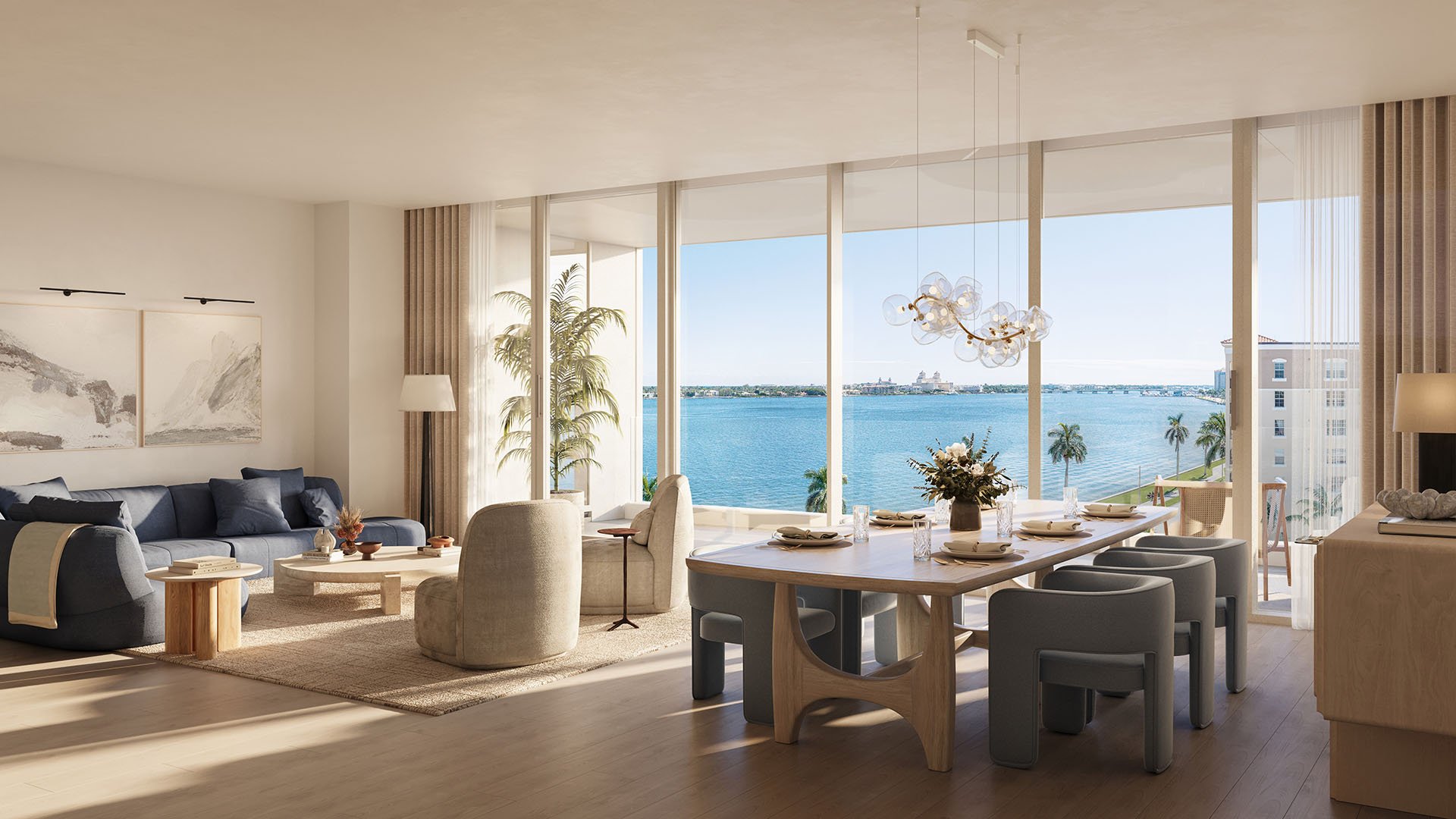
South Florida’s most sophisticated residential buyers are asking a quieter question than they did a decade ago. Not simply how dramatic the lobby feels, how photogenic the pool deck appears, or how many amenities can be counted on a sales sheet. The more consequential question is how well a building performs once the owner is actually living there.
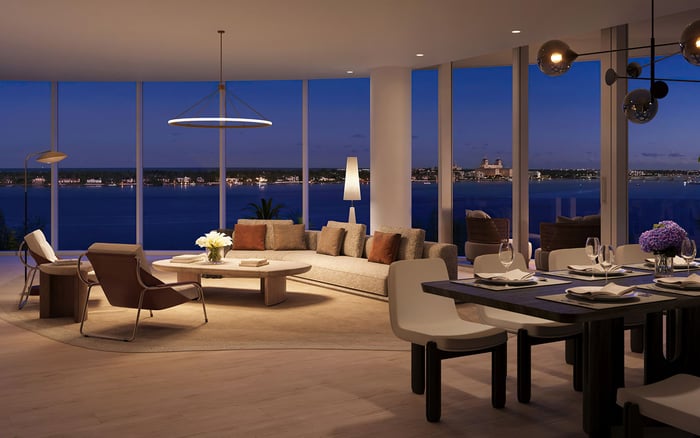
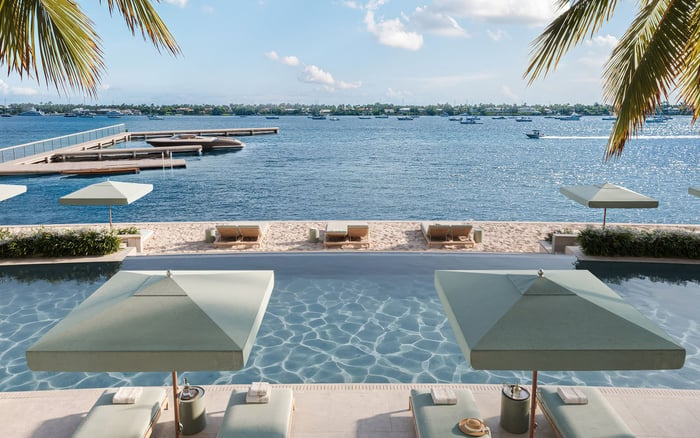
That shift is the lens through which Shorecrest Flagler Drive West Palm Beach, The Residences at 1428 Brickell, and Kempinski Residences Miami Design District become more than three separate project names. Together, they point to a recalibration in the region’s ultra-premium market: high-service living without excess theater.
High-service, low-theater is not an industry label here. It is a buyer-oriented way to describe a residential model where privacy, consistency, ease, and practical hospitality matter more than conspicuous display. For a primary resident, a long-stay owner, or a seasonal household seeking a seamless return to South Florida, the most valuable luxury is often the one that does not need to announce itself.
In the most mature luxury markets, status often moves from visible abundance to controlled experience. South Florida is now showing that evolution across distinct residential geographies. The buyer is not necessarily rejecting amenities. Rather, the buyer is becoming more selective about which amenities improve daily life and which exist primarily for theatrical impact.
A well-run arrival sequence, a discreet residential team, intuitive privacy, reliable building operations, and amenity spaces that are genuinely usable can carry more long-term value than a feature designed mainly for renderings. This matters in Brickell, where density and vertical living demand precision. It matters in West Palm Beach, where an increasingly refined residential audience wants calm and ease. It matters in the Design District, where design fluency and hospitality expectations meet.
This is also where Branded Residences face a higher standard. A recognizable name may create attention, but the lasting test is whether the service culture feels embedded in daily life rather than attached as a marketing layer. In that sense, the market is becoming more demanding, not less.
Shorecrest’s role in this conversation is important because it shows that the service-first movement is not confined to Miami’s urban core. West Palm Beach has become a serious luxury residential setting in its own right, and the Flagler Drive context gives Shorecrest a different rhythm from Brickell or the Design District.
The point is not resort-style spectacle. Shorecrest is best understood through operational quality, residential ease, privacy, and consistency. For buyers looking at West Palm Beach, the appeal is often tied to a more composed daily pattern. The experience should feel polished, but not overproduced. It should support life rather than constantly stage it.
That distinction is meaningful. Palm Beach County luxury has its own codes: discretion, comfort, and continuity. A building that fits those codes does not need to compete with Miami on theatrical intensity. Its value can come from how quietly and reliably it serves the owner.
Brickell asks a different question. In a dense, high-rise neighborhood, luxury is tested every day by movement, access, privacy, and the choreography of shared space. The Residences at 1428 Brickell anchors the Miami urban-core side of this comparison because it reflects a buyer expectation that seamless daily living now matters as much as, and often more than, photogenic amenity drama.
For a long-stay owner in Brickell, service architecture is not abstract. It is the difference between a building that feels composed and one that feels busy. It is how residents arrive, how staff interactions are managed, how amenity areas retain their usefulness, and how privacy is preserved inside a vertical environment.
This is why Brickell’s next luxury phase is less about simply being taller, shinier, or more visible. The premium increasingly sits in control. Buyers want the energy of Miami, but not the friction. They want a home that can operate at the speed of the city while preserving the calm of a private residence.
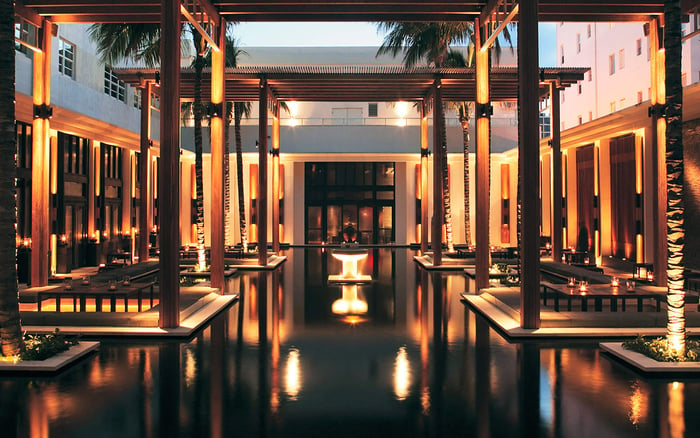
Kempinski Residences Miami Design District enters the conversation from another angle: the expectation that hospitality-informed living should feel refined rather than performative. The Design District is already associated with design literacy, luxury retail, art, and architectural attention. In that context, excess theater can feel redundant. The more compelling opportunity is restraint.
A project in this setting does not need to overwhelm the buyer with spectacle to feel luxurious. It needs to align with a neighborhood where taste is often expressed through curation. Service should be precise, spaces should feel considered, and the residential experience should support an owner who values access and culture without sacrificing privacy.
That is the broader significance of the Design District within this three-project comparison. It gives South Florida’s service-forward shift a third expression: not the waterfront composure of West Palm Beach, and not the dense urban verticality of Brickell, but a design-centered environment where hospitality expectations meet a more edited lifestyle.
For buyers, the practical takeaway is simple: evaluate luxury buildings by how they will feel on an ordinary Tuesday, not only by how they present during a private tour. Ask how the building handles arrival, privacy, service consistency, resident flow, and amenity usability. Ask whether the hospitality promise is operational or decorative.
The most compelling South Florida residences now understand that discretion is not a lack of ambition. It is a more advanced form of it. Shorecrest, 1428 Brickell, and Kempinski each point to a market where service is becoming less theatrical and more essential. That may be the clearest sign of luxury’s maturation across West Palm Beach, Brickell, and the Design District.
What does high-service, low-theater living mean? It means a residence prioritizes privacy, operational consistency, and daily ease over showy amenity spectacle.
Why is Shorecrest important to this trend? Shorecrest shows how West Palm Beach can express service-forward luxury through calm, privacy, and residential ease.
How does The Residences at 1428 Brickell fit the comparison? It represents the Brickell version of high-service living, where vertical density makes reliability and privacy especially important.
Why include Kempinski Residences Miami Design District? It brings the Design District into the discussion, where design culture and hospitality expectations favor a more edited luxury experience.
Is this trend only happening in Miami? No. Shorecrest illustrates that service-first luxury also extends into Palm Beach County and West Palm Beach.
Does low-theater mean fewer amenities? Not necessarily. It means amenities are judged by usefulness, discretion, and quality rather than visual drama alone.
Why does Brickell require a different service model? Brickell’s density makes arrivals, privacy, resident flow, and building operations central to the luxury experience.
Are Branded Residences part of this shift? Yes, but buyers increasingly expect the brand promise to translate into daily service, not just name recognition.
What should buyers ask before choosing a high-service building? They should ask how the building manages privacy, staffing, amenity use, arrivals, and long-term residential consistency.
What is the main lesson from these three projects? South Florida luxury is moving toward quieter confidence, where service quality carries more value than overt display.
For a tailored shortlist and next-step guidance, connect with MILLION.
If branded residences are on your mind — as a home or as an allocation — we would be glad to share what we are seeing, privately.
Begin a quiet conversation