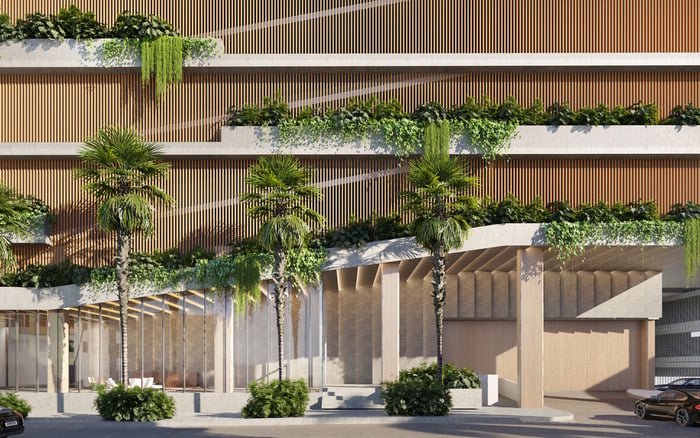
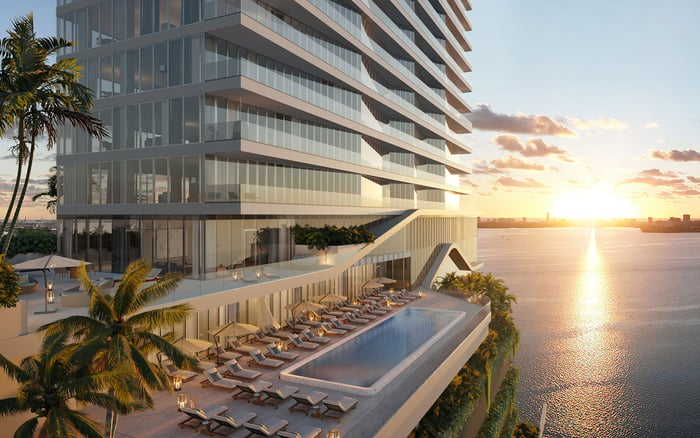
For end-users in Edgewater, the real contest may no longer be the tower with the longest amenity list. A quieter bayfront residence can feel more valuable in daily life if it delivers privacy, calmer common areas, lower carrying costs, and the kind of water outlook that cannot be replicated inland. In that context, The Cove Residences Edgewater enters the conversation less as a resort-style proposition and more as a potential sanctuary play.
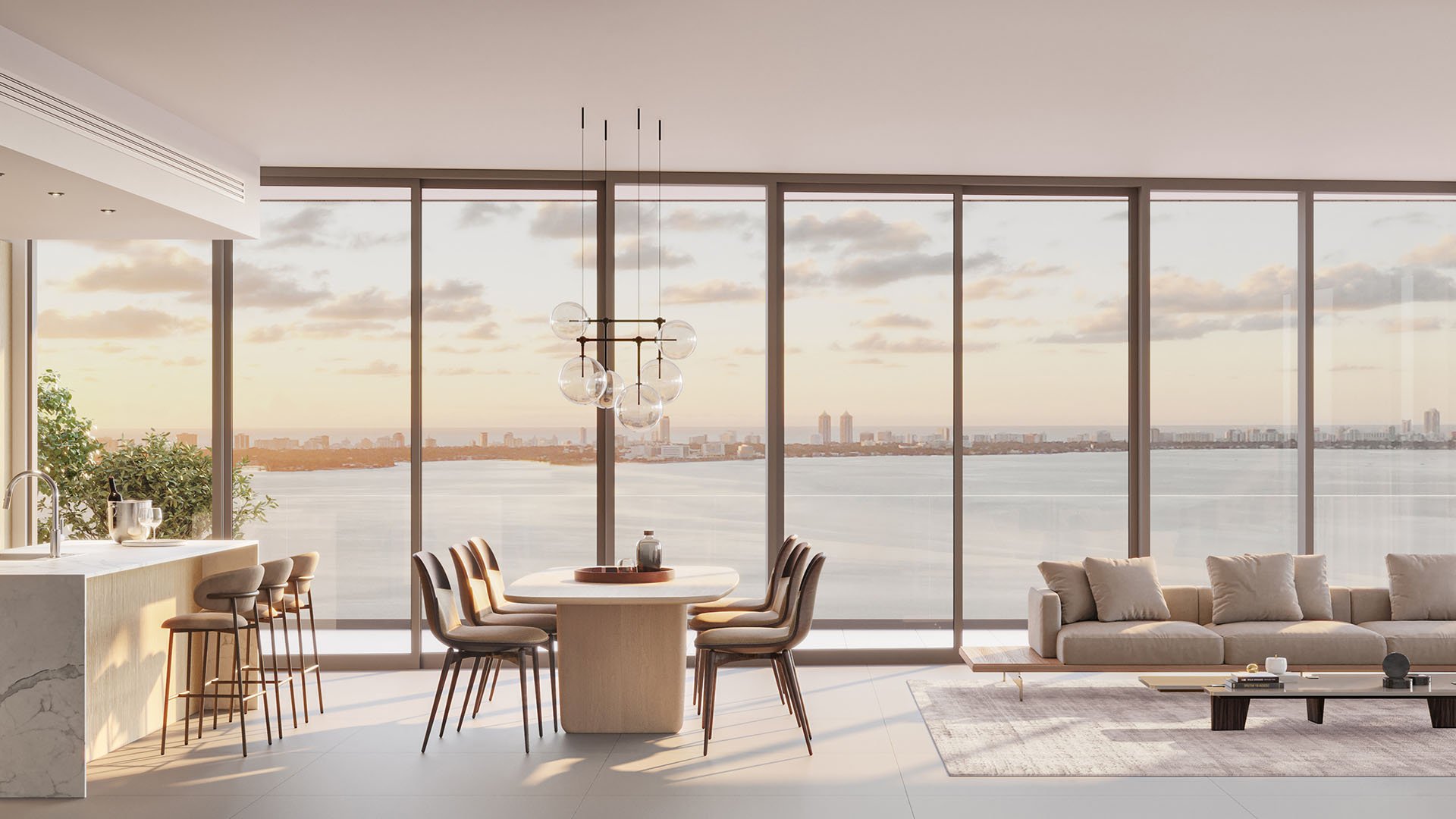
In Miami's luxury condominium market, bigger is not always better. For many end-users, especially those planning to live in a residence full time or for extended seasonal stays, the real measure of value is not the number of lounges, simulators, coworking rooms, or entertainment decks listed in a brochure. It is the quality of daily life.
That is the lens through which The Cove Residences Edgewater is most compelling. It has been presented publicly as a boutique bayfront concept in Edgewater, emphasizing privacy and waterfront living over a mega-resort amenity program. Specific project details still warrant restraint, but the broader premise is highly relevant to today's buyer: can a quieter bayfront tower outperform a more crowded, more heavily programmed building for the people who actually intend to live there?
For the right purchaser, the answer is yes.
At the upper end of the market, luxury has become more selective. The appetite for visual excess remains, but many affluent buyers are increasingly prioritizing discretion, ease, and control. A calm arrival sequence, fewer shared spaces, less elevator congestion, and a home that feels insulated from noise can matter more than access to ten different amenity zones used only occasionally.
This is especially true for buyers seeking a primary residence, a long-hold second home, or a waterfront apartment that must function with the comfort of a private house. In that framework, quiet luxury is not minimalism for its own sake. It is a preference for features that improve life every day: better views, more privacy, stronger service, and fewer interruptions.
That helps explain why boutique product continues to attract attention across South Florida. In Edgewater, buyers comparing a calmer bayfront proposition like The Cove Residences Edgewater with larger-profile neighbors may find that the quieter building is the more refined fit for actual living.
There are many luxury towers in Miami. There are far fewer residences with true waterfront positioning that can sustain a direct relationship to Biscayne Bay. That scarcity matters because location is the one amenity a future board cannot redesign and a competing developer cannot easily replicate.
If a residence opens directly to water views, morning light, and a broader visual horizon, that benefit is felt every day. By contrast, even an impressive amenity suite often fades into the background after the first year of ownership. Buyers understand this intuitively. The pool deck can be replicated. The lounge can be refreshed. The bay cannot.
This is where Edgewater has strengthened its appeal. The neighborhood sits close to Downtown, the Design District, Miami Beach access routes, and the city's evolving cultural core, yet its best waterfront addresses offer a calmer sensibility than denser mixed-use districts. Projects such as EDITION Edgewater and Villa Miami have reinforced the idea that the area can support highly private, design-led residential product. Even when amenity offerings differ, the bayfront address itself remains central to the value equation.
For end-users, a smaller amenity stack can be a practical advantage rather than a compromise. Expansive wellness floors, coworking programs, screening rooms, elaborate food-and-beverage components, and heavily programmed social areas are costly to build, operate, staff, and maintain. Those costs do not disappear after closing. They tend to resurface in monthly ownership expenses.
That matters because buyer sensitivity to recurring fees is real, particularly among owners planning to hold for many years. A building with a more streamlined amenity program may offer a cleaner long-term ownership profile if it pairs that restraint with excellent finishes, attentive service, and compelling waterfront placement.
This does not mean amenities are irrelevant. It means buyers are becoming more disciplined about which amenities genuinely improve their routines. A strong gym, polished service, private arrival, and in-residence convenience often matter more than a long menu of spaces that create traffic and operating burden.
There is also a psychological advantage. In quieter buildings, common areas can feel more residential and less theatrical. That distinction is subtle, but for many end-users it is decisive.
Privacy is one of the market's quietest and most powerful luxuries. Limited shared spaces, fewer congregation-heavy zones, and a building culture oriented toward residence rather than spectacle can create a dramatically different atmosphere.
In practical terms, that may mean calmer lobbies, less ambient noise, fewer outside visitors, and a more controlled sense of movement throughout the property. Buyers who have lived in high-amenity towers often understand this tradeoff well. The social energy can be appealing in theory, but less appealing when every weekend feels like a resort turnover.
For households downsizing from large homes, older affluent buyers, and clients seeking an elegant lock-and-leave residence, privacy often outweighs volume of programming. A boutique bayfront tower in Edgewater can therefore compete successfully not by offering more, but by offering less of the wrong things.
That same logic appears in other selective waterfront settings. The appeal of The Perigon Miami Beach is not simply that it is luxurious. It is that its luxury is tied to atmosphere, setting, and the integrity of the residential experience.
The strongest case for The Cove is not a claim of proven outperformance today. It is that Edgewater's bayfront scarcity, combined with buyer preference for privacy and a lower-friction daily lifestyle, creates a plausible path for quieter towers to outperform on end-user appeal.
That distinction matters. An investor may judge success through liquidity, branding, or short-term comparative velocity. An end-user evaluates it differently. The questions are more intimate: Will this feel peaceful in six months? Will the common areas remain elegant rather than overused? Will the monthly carrying profile still make sense years from now? Will the views and waterfront setting continue to justify the decision even after the novelty of the building fades?
A project positioned around serene waterfront living can answer those questions well if the execution is strong. In that sense, the quieter tower is not an anti-amenity proposition. It is a more edited one.
Not every luxury purchaser wants restraint. Some buyers genuinely prefer the energy of a grand hospitality-style building with abundant shared programming. But the Cove thesis is likely to resonate most with a specific end-user profile.
First, there is the buyer who sees a residence as a retreat rather than a venue. Second, there is the owner who values service but does not want to subsidize an oversized amenity ecosystem. Third, there is the purchaser who understands that true waterfront inventory in Edgewater is limited and believes enduring value follows what is difficult to replace.
This audience often overlaps with cash-heavy or large-down-payment buyers who are less dependent on aggressive financing and more focused on long-term quality of life. That can support a steadier ownership base and, potentially, a more stable building culture over time.
Ultimately, end-users do not live inside renderings. They live inside routines. The tower that wins is the one that continues to feel right after move-in, after the welcome events, and after the market moves on to the next launch.
In Edgewater, that may increasingly favor residences where the bay is the headline feature, not just one item in a long amenity appendix. If The Cove Residences Edgewater delivers a genuinely serene waterfront experience with thoughtful service, privacy-minded planning, and disciplined common-area design, then yes, a quieter bayfront tower can absolutely outperform bigger amenity stacks where it matters most: owner satisfaction.
Is The Cove Residences Edgewater best understood as an end-user play? It appears to be, especially for buyers prioritizing privacy, waterfront living, and a calmer day-to-day experience.
Does fewer amenities automatically mean weaker value? No. For many owners, fewer amenities can mean lower operating burden and a more residential atmosphere.
Why is bayfront positioning so important in Edgewater? Because true waterfront inventory is limited, and direct water exposure is the one luxury feature that cannot be easily recreated later.
Who is most likely to prefer a quieter tower? Full-time residents, seasonal end-users, downsizers, and buyers who value discretion over social programming are strong candidates.
Can a boutique tower compete with a larger branded project? Yes, if it offers superior privacy, better noise control, strong service, and a daily experience that feels more personal.
Are lower condo fees part of the appeal? Potentially, yes. A more streamlined amenity package can support a lighter long-term carrying profile.
Is quiet luxury just a design trend? No. In residential terms, it usually refers to privacy, ease, service, and comfort rather than visual understatement alone.
How should buyers compare The Cove with larger Edgewater towers? Focus on waterfront quality, privacy, service model, circulation, and likely long-term ownership costs rather than brochure length.
Does a smaller building always feel more exclusive? Not always, but fewer shared spaces and less crowding can create a more controlled and private environment.
What is the most important takeaway for an end-user? If the bayfront is genuine and the living experience is calm, a quieter tower may deliver better real-life value than a larger amenity stack.
For a confidential assessment and a building-by-building shortlist, connect with MILLION.
If branded residences are on your mind — as a home or as an allocation — we would be glad to share what we are seeing, privately.
Begin a quiet conversation