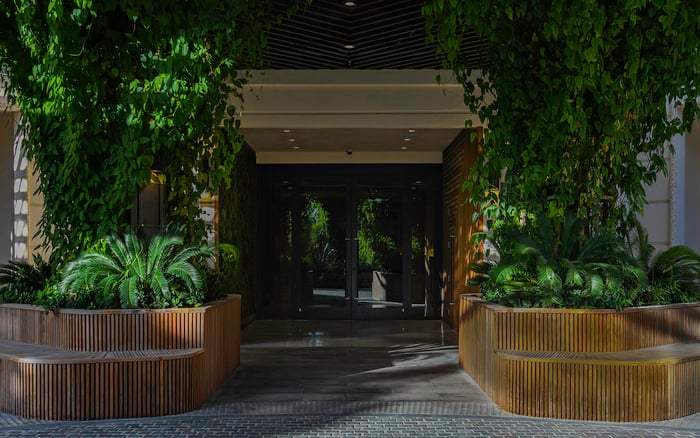
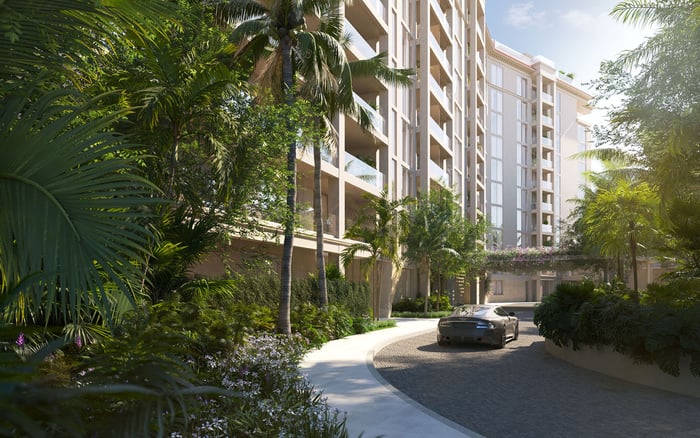
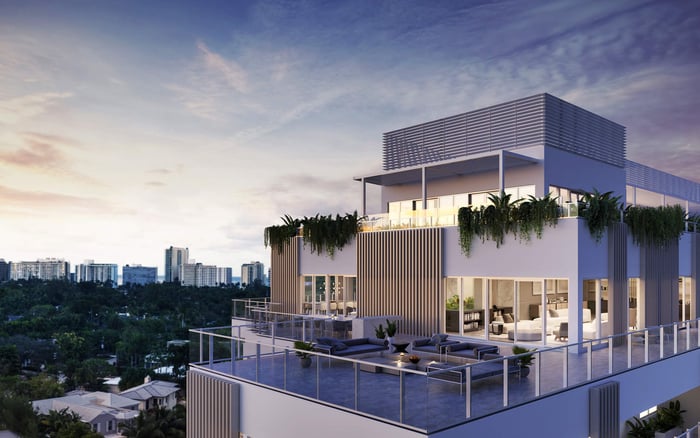
A buyer-focused analysis of Palazzo della Luna on Fisher Island, exploring how privacy, scarcity, restrained design, and discreet amenities may support resale liquidity in South Florida’s ultra-prime condominium market.
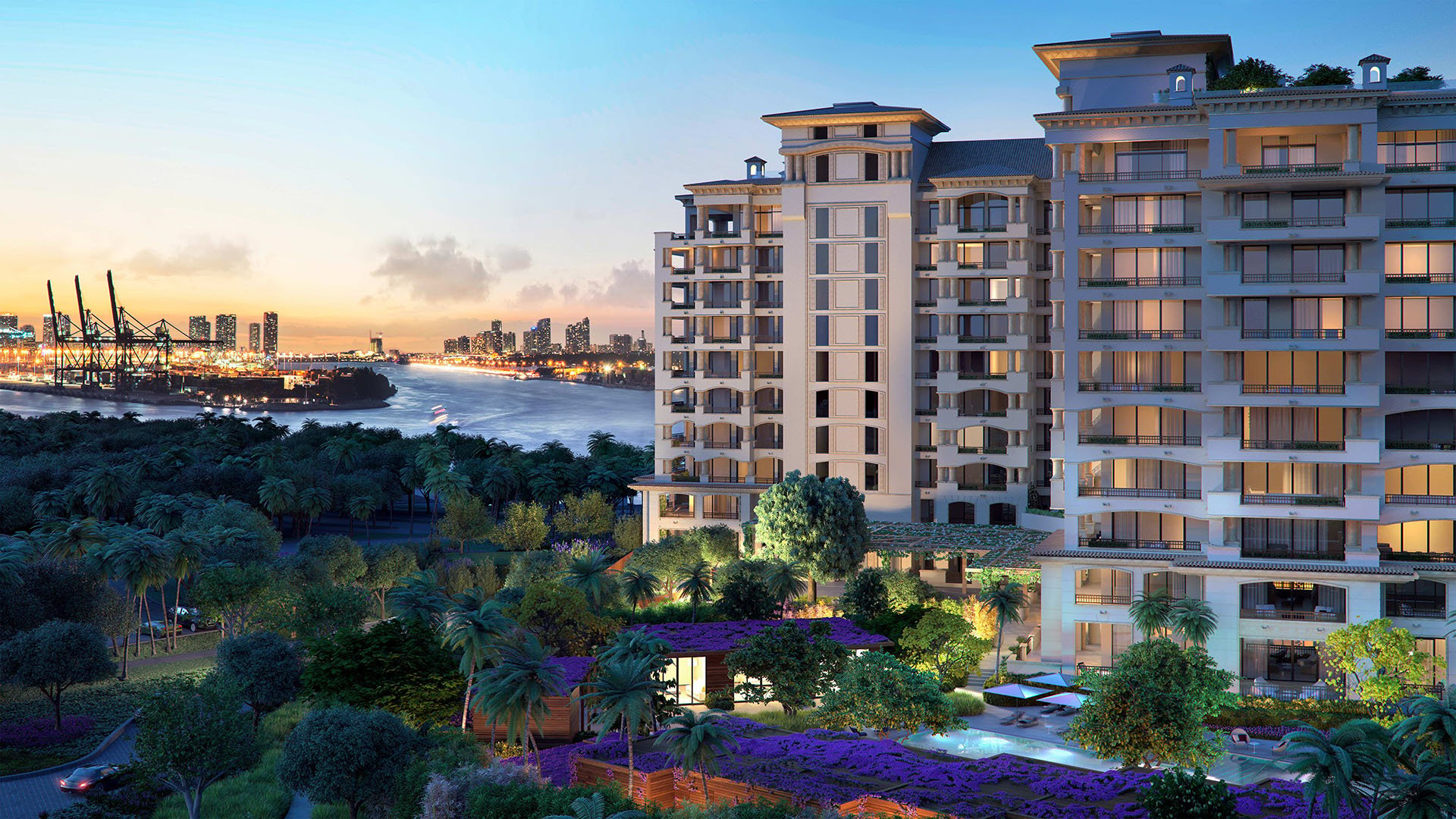
Palazzo della Luna invites a more disciplined question than whether a residence feels rare today. The sharper question is whether that rarity will remain legible to the next qualified buyer. On Fisher Island, where privacy and scarcity are already embedded in the address, quiet luxury becomes less a style preference than a liquidity argument.
In ultra-prime South Florida, resale liquidity is not defined only by a future asking price. It is shaped by buyer-pool depth, the speed with which a serious buyer can understand the value proposition, and the confidence that the residence will not feel visually dated when it returns to market. Palazzo della Luna sits at that intersection: private-island context, understated design, and an amenity environment oriented toward discretion rather than display.
The quiet-luxury thesis is straightforward. Restraint can travel farther than spectacle. Materials, comfort, neutral interiors, and low visual noise can be easier for sophisticated buyers to inherit than a highly personalized decorative statement. That does not guarantee performance, but it may reduce friction when a seller needs the next buyer to see the home as an asset, not a renovation project.
The Fisher Island setting is not background scenery in this case. It is central to the resale logic. For certain high-net-worth buyers, the private-island environment compresses several priorities into one decision: separation, security of lifestyle, controlled access, and a residential rhythm removed from the more public energy of mainland Miami and Miami Beach.
That context can support liquidity because it clarifies the buyer profile. A residence at Palazzo della Luna is not competing only on finishes or square footage. It is competing on the total promise of privacy, scarcity, and social quiet. In a market where many luxury properties are designed to be seen, the property’s discreet positioning may be precisely what makes it memorable.
This is also why governance and building culture matter. In the ultra-prime condominium segment, buyers are often purchasing predictability as much as architecture. They want to understand how the building lives, how amenities feel, and whether the shared environment protects the tone of the address. When those elements are aligned, lifestyle attributes can become financial attributes because they support buyer confidence.
The most resilient luxury interiors often leave room for the next owner’s imagination. Timeless architecture, neutral palettes, curated finishes, and an emphasis on material quality can widen the future audience because they do not force a buyer into someone else’s moment. In resale terms, that matters.
Trend-heavy luxury can photograph dramatically, but it can also narrow the buyer pool. A highly branded or visually loud interior may require a buyer to mentally discount the acquisition by the cost, time, and inconvenience of redesign. Quiet luxury works differently. It offers a base layer of credibility. The buyer can refine it, personalize it, or leave it largely intact.
For Palazzo della Luna, the case is not that understated design automatically creates faster absorption or stronger pricing. The more credible view is that it may support both in the right market conditions. In softer cycles, restrained design may help compress downside risk by lowering objections. In stronger cycles, it may help a residence move quickly because fewer buyers need to rationalize the aesthetic.
Liquidity in this tier is best understood through three lenses. The first is resale velocity: how quickly a qualified buyer can form conviction. The second is price resilience: how well the asset can defend its perceived value when market conditions become less generous. The third is buyer-pool depth: how many serious prospects can see themselves owning the residence without a major reset.
Palazzo della Luna’s quiet-luxury proposition speaks to all three. Privacy and scarcity help define the asset. Understated interiors may reduce aesthetic risk. The private-club ecosystem and discreet amenity program reinforce the lifestyle without relying on spectacle. Together, those qualities can make the property easier to understand and potentially easier to resell.
From a buyer’s perspective, this is where emotion and underwriting meet. The residence should feel deeply personal, but not so idiosyncratic that its future market becomes narrow. The strongest ultra-prime assets often balance identity with transferability. They feel specific enough to command desire, yet restrained enough to welcome the next owner.
Across South Florida’s ultra-prime condominium market, buyers often compare very different forms of luxury: waterfront energy, branded design, architectural prominence, resort programming, and private residential seclusion. Palazzo della Luna belongs to the last category. Its argument is not maximalism. Its argument is composure.
That matters for buyers who view a residence as both personal sanctuary and future exit. The property’s appeal depends heavily on Fisher Island’s private-island context, but its resale case depends on more than geography. It depends on whether the residence continues to feel current after design cycles shift. Quiet luxury seeks that durability.
From a taxonomy perspective, this is a Fisher Island story with Miami Beach buyer overlap, framed through resale, investment, exclusive-area access, and Palazzo della Luna Fisher Island specifically. The language is technical, but the buyer insight is practical: a quieter home can sometimes be the more liquid home because it asks less of the next owner.
The case for Palazzo della Luna is not simply that it is a trophy address. It is that its privacy, scarcity, understated design, and discreet shared environment may help the asset behave more intelligently over time. For a buyer planning to hold for years, that distinction is meaningful.
Quiet luxury should not be confused with minimalism alone. In this context, it is a system of decisions that can include proportion, finish quality, comfort, restraint, and the avoidance of visual excess. When those decisions are made well, they may preserve desirability across cycles.
For the South Florida ultra-prime buyer, the lesson is clear: liquidity is designed long before a listing returns to market. It is shaped by the address, the building culture, the amenity tone, and the ease with which the next buyer can say yes.
Why is Palazzo della Luna relevant to resale liquidity? It offers a case study in how privacy, scarcity, and understated design may reduce resale friction for ultra-prime buyers.
What does quiet luxury mean in this context? It means restraint, material quality, comfort, neutral design, and low visual noise rather than overt branding or spectacle.
Does quiet luxury guarantee stronger resale performance? No. It is better understood as a potential support for buyer confidence, not a guarantee of pricing or speed.
Why does Fisher Island matter to the thesis? The private-island setting is a core part of the property’s appeal and helps define the buyer profile.
How can design affect future buyer-pool depth? Timeless interiors and curated finishes can make it easier for more buyers to imagine ownership without major redesign.
What is resale velocity? It is the speed at which a qualified buyer can understand the value, build conviction, and move toward a purchase.
Why can trend-heavy luxury create resale friction? Highly specific design may require buyers to factor in renovation, personalization, and aesthetic risk.
How do amenities influence liquidity? A discreet amenity program can reinforce lifestyle value without overwhelming the residential character of the building.
Is Palazzo della Luna only a trophy property? The stronger reading is that it is also an asset whose design and setting may support a future exit strategy.
Who is the most natural buyer for this type of residence? A buyer who values privacy, restraint, long-term design relevance, and the private-island character of Fisher Island.
To compare the best-fit options with clarity, connect with MILLION.
If branded residences are on your mind — as a home or as an allocation — we would be glad to share what we are seeing, privately.
Begin a quiet conversation