A discreet buyer’s guide to evaluating view security in Downtown Miami, from sightline mapping and neighboring parcels to contract language and resale sensitivity.
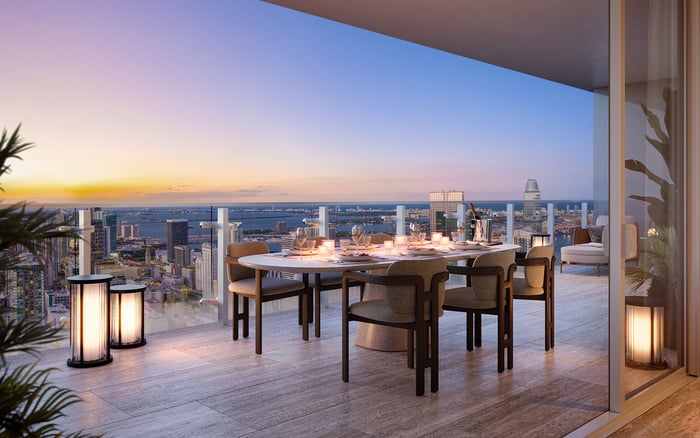
In Downtown Miami, a spectacular outlook can feel self-evident the moment the elevator doors open. Biscayne Bay, the Miami River, cruise ships, the skyline, and the glow of Brickell can make a residence feel immediately decided. Yet sophisticated buyers understand that a view is not a single asset. It is the sum of elevation, orientation, neighboring land, zoning context, architectural spacing, and future development risk.
That is why protected view corridors deserve a dedicated review before purchase. A protected view is not simply a beautiful view. It is a sightline with a defensible reason to believe it will remain meaningfully open over time. That reason may be physical, legal, practical, or market-based. The essential task is to distinguish enduring exposure from a temporary condition created by an underbuilt site next door.
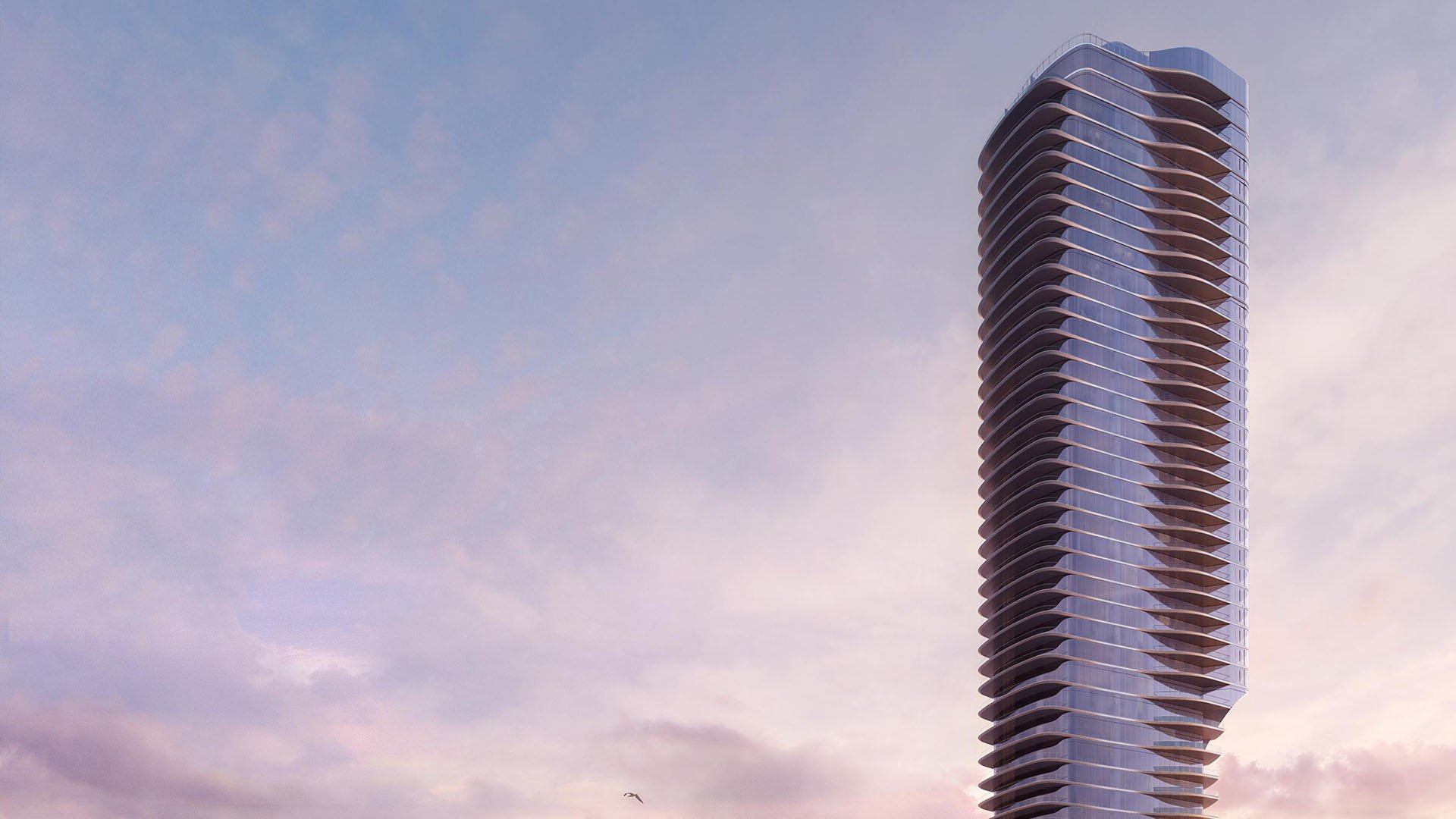
For buyers considering Downtown Miami, Brickell, or the waterfront edge of the urban core, this diligence can shape floor selection, line selection, negotiation strategy, and long-term resale confidence. It is especially relevant in trophy towers, where a seemingly small shift in angle may separate a broad bay panorama from a view framed by future glass.
The first step is to define exactly what view is being purchased. Buyers should stand in the actual residence, or as close to the future finished elevation as possible, and document the principal sightlines from the living room, primary suite, terrace, and kitchen. A view that reads beautifully from one corner of a great room may be far less compelling from the seating area where daily life actually happens.
In Downtown Miami, strong diligence separates direct views, oblique views, framed views, and borrowed views. A direct bay view has a different risk profile from a diagonal glimpse across several parcels. A river view may depend on a narrow opening between towers. A skyline view may be dramatic at night but less rare than water exposure during resale.
High floors often command a premium, but height alone is not a complete defense. A higher residence can still face a future tower, while a lower residence overlooking a civic space, broad roadway, or water edge may have a more durable angle. Buyers should evaluate the view geometry rather than assuming elevation automatically equals permanence.
A view corridor may be protected because nothing can reasonably be built in the path of the view, or because the line of sight crosses water, public space, a wide right of way, or a site with limited practical development potential. It may also be partially protected, with one portion of the view more secure than another.
The most dangerous category is the view that feels protected only because adjacent land is currently vacant, low-rise, or used in a way that appears permanent. In a dynamic urban market, present conditions should not be treated as permanent without further review. Buyers should ask which parcels sit in the sightline, how they are currently improved, whether assemblage is plausible, and what reasonable future massing could mean for light, privacy, and outlook.
For a Downtown Miami buyer comparing Waldorf Astoria Residences Downtown Miami with other vertical residences, the question is not only which tower is most iconic. It is which residence line, at which height, delivers the most resilient combination of water, skyline, and openness for the way the buyer intends to live.
The view from a terrace is emotional. The parcels below it are analytical. Before signing, buyers should study the land between the residence and the desired view. The key questions are practical: who controls it, how wide is it, what is built there today, and what kind of future structure could plausibly interrupt the corridor?
A narrow lot may still matter if it can be joined to a neighbor. A parking area may be visually harmless today but strategically important tomorrow. A low building may signal either stability or underutilization. Buyers do not need to become planners, but they should know enough to avoid paying a protected-view premium for an exposure that is merely unobstructed at the moment.
This is particularly important around Brickell, where premium residential towers compete on water, skyline, and urban energy. A purchaser considering The Residences at 1428 Brickell should evaluate how the chosen line frames its outlook and how adjacent development patterns may affect future privacy and light.
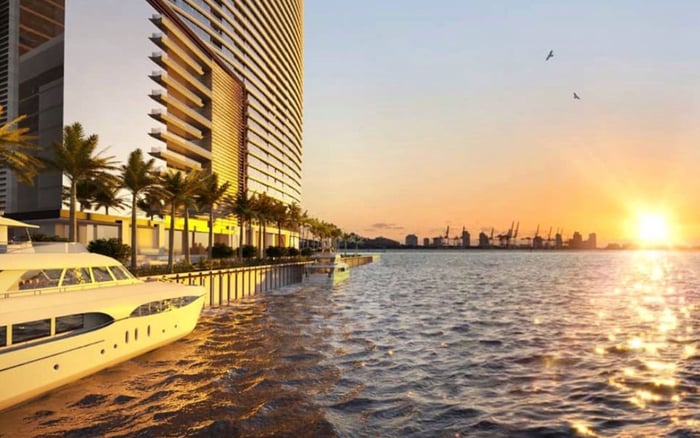
Not all water exposure carries the same value. A broad, centered water view can feel calm and cinematic. A sliver of bay between two buildings may photograph well but function differently in daily life. A river view may offer movement and atmosphere, while a bay view may offer horizon and serenity. Buyers should identify which experience they are actually seeking.
The same discipline applies to skyline views. In Downtown Miami, skyline exposure can be spectacular, especially after dark, but it may also be more replaceable than an open water corridor. The most valuable residences often combine layers: water, sky, architecture, and distance. The least secure rely on a single opening across a parcel that could change.
At Aston Martin Residences Downtown Miami, as with any luxury tower in the central waterfront market, buyers should think in terms of view composition. The question is not simply whether there is water, but how much of the daily living experience is oriented toward it.
A serious view review should include more than a floor plan. Buyers should request available renderings, line-of-sight materials, terrace perspectives, elevation diagrams, and any information that clarifies how the residence sits relative to its surroundings. In completed buildings, repeated in-person visits at different times of day are invaluable. Morning glare, afternoon heat, nighttime reflection, and neighboring interior visibility can all change the perceived quality of a view.
In new-construction purchases, buyers should be especially careful with renderings. Renderings may communicate design intent, but a buyer still needs to understand height, orientation, balcony depth, glass line, and surrounding context. If the purchase decision depends materially on a specific corridor, that assumption should be discussed before contract deadlines, not after closing.
For buyers considering Casa Bella by B&B Italia Downtown Miami, the design narrative may be compelling, but view diligence should remain practical. Which line faces the preferred exposure? What sits beyond it? How does the terrace mediate the outlook? These questions turn aesthetic interest into informed selection.
A view can be open without being private. In dense urban districts, the distance between towers matters as much as the subject of the view. Buyers should evaluate whether neighboring residences, hotel rooms, offices, or amenity decks look directly into the home. The most elegant view corridors create depth without a sense of exposure.
Privacy is also temporal. A residence may feel private during a daytime showing and more exposed after dark, when interiors are illuminated. Buyers should visit, when possible, at night and observe how reflective glass, neighboring lighting, and terrace positioning affect discretion.
This is one reason Brickell buyers often compare multiple lines within the same building before deciding. At 2200 Brickell, as in other urban luxury addresses, line selection can be as important as building selection. A quieter angle may offer greater day-to-day livability than a more obvious view with closer neighbors.
Luxury buyers should not rely on memory. If a view is central to the decision, the purchase file should include the materials reviewed, the unit line, the floor, the exposure, and any written representations that matter. The goal is not to turn every view into a guarantee. The goal is to create clarity about what the buyer understood, what was presented, and what remains uncertain.
This is especially important for resale strategy. Future buyers will ask the same questions. A residence with a well-documented view story is easier to position than one sold on adjectives alone. In a market where Downtown Miami continues to mature, disciplined documentation can help preserve confidence when neighboring cranes become part of the skyline.
Before committing, buyers should rank each candidate residence by view durability. The strongest category includes sightlines over water, major open spaces, or broad corridors where future obstruction appears limited. The middle category includes partially protected views with some vulnerable edges. The highest-risk category includes views across underbuilt parcels, narrow gaps, or areas where future massing could materially change the experience.
This hierarchy helps prevent overpaying for uncertainty. It can also justify paying more for the right residence. A premium is rational when the view is not only beautiful but more defensible than alternatives. In a Downtown Miami purchase, the best decision is often not the highest floor or the most dramatic rendering. It is the residence where beauty, privacy, and future resilience align.
What is a protected view corridor? It is a sightline with a reasonable basis for durability, such as exposure over water, open space, or another condition that limits future obstruction.
Can any Downtown Miami view be guaranteed? Buyers should be cautious about assuming a guarantee unless the relevant protection is clearly documented and reviewed in the purchase process.
Are higher floors always safer for views? Not always. Height helps, but orientation, neighboring parcels, and future tower placement can matter just as much.
What should I review before paying a view premium? Review the exact unit line, elevation, neighboring parcels, view angles, renderings, and any written materials tied to the exposure.
Is a bay view more valuable than a skyline view? It depends on breadth, permanence, privacy, and buyer preference, but open water exposure is often scrutinized closely because it is harder to replicate.
How should I evaluate a pre-construction view? Focus on elevation, orientation, surrounding land, terrace position, and any available line-of-sight materials rather than renderings alone.
Can a view change after closing? Yes. Nearby development, new towers, lighting, and changes in surrounding use can affect outlook, privacy, and livability.
Should my attorney review view-related language? Yes. If the view is central to the purchase, contract language and disclosures should be reviewed before key deadlines.
Do corner residences have better protected views? Sometimes. Corners may offer multiple exposures, but each angle should be evaluated independently for obstruction and privacy risk.
What is the best way to compare two view residences? Create a view-risk hierarchy that considers water exposure, neighboring parcels, privacy, height, and likely resale appeal.
When you're ready to tour or underwrite the options, connect with MILLION.
If branded residences are on your mind — as a home or as an allocation — we would be glad to share what we are seeing, privately.
Begin a quiet conversation