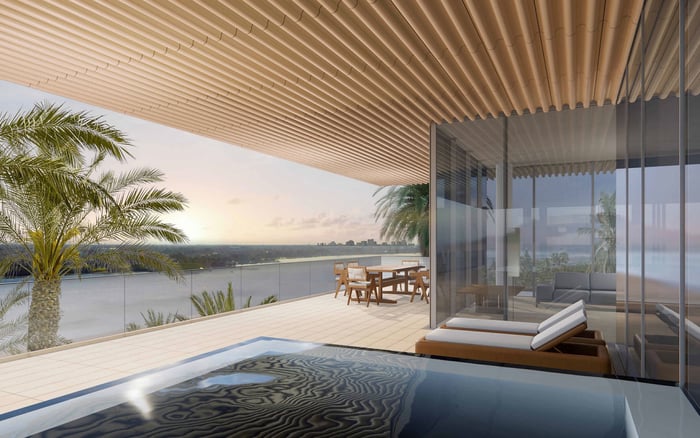
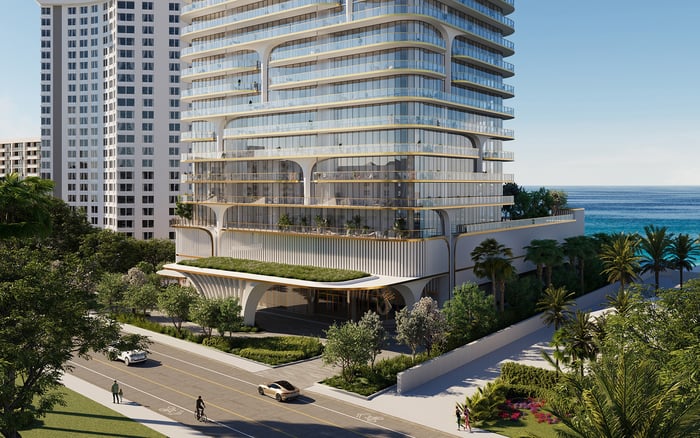
A discreet buyer’s comparison of The Berkeley Palm Beach and Oceana Key Biscayne, focused on scarcity, ownership costs, and long-term exit depth.
The question behind The Berkeley Palm Beach versus Oceana Key Biscayne is not simply which residence feels more seductive in a presentation. At the trophy level, every serious coastal condominium can be made to appear composed, sunlit, and inevitable. The sharper question is whether the purchase remains defensible when the buyer becomes the seller.
That is why the comparison should be framed around three forces: trophy scarcity, operating costs, and future buyer depth. The Berkeley Palm Beach sits in the Palm Beach conversation, where identity, social gravity, and limited emotional substitutes matter. Oceana Key Biscayne belongs to the Key Biscayne conversation, where island privacy and established coastal demand shape buyer psychology.
Neither should be judged only by finishes, lobby mood, or the confidence of a sales environment. The best ultra-luxury purchase is not the one that wins the afternoon. It is the one that still has a clear audience in a more selective market.
Scarcity is not just low supply. In South Florida luxury real estate, scarcity is the inability to easily recreate the full proposition. A buyer may find another floor plan, another terrace, or another sunrise. It is much harder to replace a highly specific social and geographic story.
For The Berkeley Palm Beach, the scarcity argument begins with the Palm Beach name itself. Palm Beach demand is often driven by a buyer who wants more than coastal frontage. The buyer is purchasing proximity to a particular lifestyle code, a restrained form of status, and a setting that is difficult to replicate elsewhere in Florida. In that sense, The Berkeley must be evaluated as part of a wider Palm Beach and West Palm Beach luxury corridor, where buyers compare not only buildings but also daily rhythm.
Oceana Key Biscayne carries a different scarcity logic. Key Biscayne is not a generic beach market. It is an island market with a self-contained identity, and for certain buyers that sense of separation is the asset. Key Biscayne functions as a defined search category, not merely a neighborhood substitute. The future buyer is likely to understand the island before comparing the building.
This is where a disciplined buyer should avoid false equivalence. Palm Beach scarcity is often narrative and social. Key Biscayne scarcity is often geographic and lifestyle-driven. Both can be powerful, but they attract different forms of conviction.
In a prior market cycle, many trophy buyers treated carrying costs as an afterthought. That posture is less rational today. Escalating ownership cost has become a central issue in South Florida’s ultra-luxury coastal condo market, and the two cost lines that deserve particular scrutiny are insurance and association costs.
This does not mean a buyer should avoid coastal condominiums. It means the underwriting must be adult. A beautiful residence with opaque or rising obligations can become less liquid even if the architecture remains appealing. Association costs shape the monthly ownership experience, while insurance dynamics can influence both budgeting and buyer confidence.
For a new or newly positioned purchase, the question is not merely what the first year looks like. It is how the building’s operating structure could be perceived by the next buyer. A buyer considering The Berkeley should ask how the Palm Beach premium interacts with long-term carrying expenses. A buyer considering Oceana should ask how an established island condominium proposition absorbs the same coastal cost pressures.
The point is not to predict exact future assessments or premiums. The point is to rank transparency and resilience alongside design. In the current market, operating costs are part of the luxury experience because they determine whether ownership feels effortless or administratively heavy.
The highest-quality buyer analysis begins with a simple exit question: who is the next buyer, and how many people like that buyer exist? Future buyer depth is the overlooked difference between a trophy residence that merely looks rare and one that trades with confidence.
For The Berkeley Palm Beach, future buyer depth depends on the continuing pull of the Palm Beach orbit. The strongest buyer is likely to be someone who already values the Palm Beach and West Palm Beach axis, who sees the area as a long-term lifestyle decision rather than a seasonal experiment. In the same mental map, buyers may also study South Flagler House West Palm Beach or The Bristol Palm Beach as references for how the broader waterfront and near-Palm Beach conversation is evolving.
For Oceana Key Biscayne, future buyer depth comes from a different pool. The likely buyer is not necessarily shopping every glamorous mainland address. The buyer may have a deliberate preference for an island environment, quieter separation, and a coastal lifestyle that feels residential rather than urban. Oceana Key Biscayne benefits when Key Biscayne remains a destination people specifically ask for, not a compromise they accept.
This distinction matters for investment thinking, even when the purchase is primarily personal. The deepest future audience is not always the broadest audience. Sometimes it is a smaller but more committed pool that knows exactly why it wants the address.
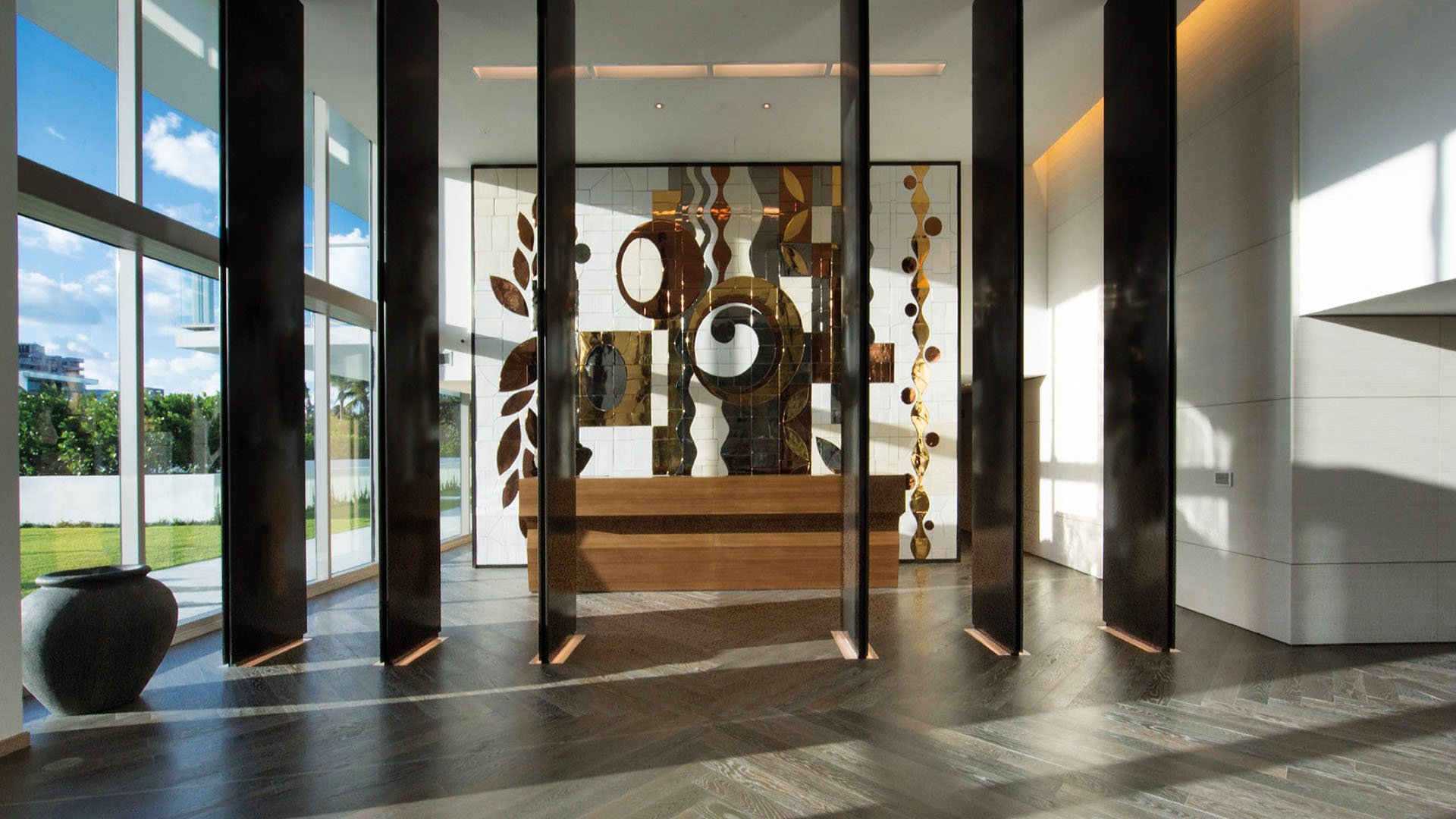
A sales gallery is designed to compress uncertainty. It translates a multi-year ownership decision into textures, models, lighting, and hospitality. That can be useful, but it can also distort judgment. The room is built to make the present feel resolved.
Before the sales gallery wins, a buyer should separate atmosphere from underwriting. Does the residence possess a scarcity story that a future buyer will immediately understand? Are operating costs likely to feel proportionate to the lifestyle delivered? Is the buyer pool narrow but committed, or broad but shallow? These questions matter more than the drink served during the appointment.
This is especially important in oceanfront markets, where emotional presentation can be powerful. Water, horizon, and privacy all affect perception. Yet even the most composed coastal residence must compete against carrying costs and future alternatives. The right answer may still be to buy, but it should be a conscious decision rather than a mood.
Choose The Berkeley Palm Beach if the Palm Beach narrative is central to the purchase. The better Berkeley buyer is not merely seeking a South Florida condominium. This buyer wants the social and geographic language of Palm Beach, with the expectation that future demand will continue to prize that identity.
Choose Oceana Key Biscayne if the island thesis is the core attraction. The better Oceana buyer is not looking for the most dramatic sales presentation in the region. This buyer values the Key Biscayne setting as a defined lifestyle, and expects future buyers to recognize that distinction.
The more sophisticated conclusion is that neither is universally superior. The superior purchase is the one whose scarcity aligns with your actual use, whose operating costs remain acceptable under stress, and whose future buyer pool is easiest to describe in one sentence.
If that sentence feels forced, pause. If it feels obvious, you may be looking at the right asset.
Is The Berkeley Palm Beach directly comparable to Oceana Key Biscayne? Yes, but only at the strategic level. They sit in different lifestyle markets, so the comparison should focus on scarcity, cost structure, and buyer depth.
What is the biggest risk in comparing the two? The biggest risk is letting presentation outweigh underwriting. A polished sales environment should not replace analysis of carrying costs and exit demand.
Why does trophy scarcity matter? Scarcity helps defend value when buyers become more selective. The key is whether the next buyer can understand the rarity quickly.
Are operating costs important for ultra-luxury buyers? Yes. Insurance and association costs are major drivers of ownership-cost escalation in South Florida coastal condominiums.
Does Palm Beach scarcity differ from Key Biscayne scarcity? Yes. Palm Beach is often tied to social and lifestyle narrative, while Key Biscayne is strongly tied to island identity and geographic separation.
Which property is better for investment purposes? The better investment is the one with clearer future buyer depth and a cost profile that remains acceptable over time.
Should oceanfront appeal be enough to justify a purchase? No. Oceanfront appeal is powerful, but it should be tested against long-term ownership costs and resale audience.
How should a buyer evaluate association costs? Treat them as part of the luxury proposition. They influence both monthly experience and how future buyers perceive value.
Is West Palm Beach relevant to The Berkeley Palm Beach? Yes. West Palm Beach is part of the broader area conversation for buyers assessing access, lifestyle, and long-term demand.
What is the cleanest decision rule? Buy the residence whose scarcity, costs, and future buyer profile you can explain with discipline, not the one that simply photographs best.
When you're ready to tour or underwrite the options, connect with MILLION.
If branded residences are on your mind — as a home or as an allocation — we would be glad to share what we are seeing, privately.
Begin a quiet conversation