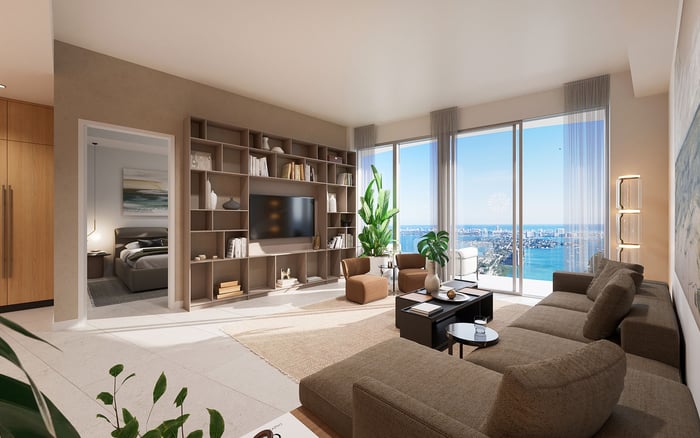
A discreet framework for Seattle households considering Edgewater, centered on residency planning, family routines, privacy, and disciplined condominium due diligence.

For Seattle buyers, evaluating Edgewater involves three distinct questions: whether Florida residency aligns with a carefully advised tax strategy, whether Miami supports the household’s daily rhythm, and whether a particular residence delivers the desired degree of discretion. A compelling home does not answer all three.
The disciplined approach is to pursue these inquiries in parallel. Legal and tax advisers should examine residency. Family members should test real routines. The buyer’s real-estate team should scrutinize the property, condominium documents, operating model, and ownership costs. Keeping these questions separate prevents an attractive water view from carrying more weight than it should.
Edgewater may enter the conversation as a primary residence, a second home, or a future base. Each use case rests on different assumptions about occupancy, staffing, schools, travel, and liquidity. Define the intended role before touring.
Purchasing a condominium alone does not establish tax residency. Before changing domicile, travel patterns, or ownership structures, buyers should obtain current, individualized guidance from qualified legal and tax professionals in every relevant jurisdiction.
The useful real-estate question is narrower: can the selected home credibly support the life the household intends to establish? Advisers may require detailed records and consistent conduct, so the residence should function as an authentic base rather than a symbolic address. Buyers should also seek guidance on homestead eligibility and protections rather than assume they apply automatically.
Build a calendar before making an offer. Include work obligations, school terms, medical care, family visits, board service, and international travel. Then ask counsel which records, filings, and actions are appropriate. The objective is alignment among legal advice, actual behavior, and the selected residence.
Family suitability is personal. A polished weekend can conceal the friction of an ordinary Tuesday, so rehearse the full day: morning departures, school or childcare logistics, work calls, exercise, groceries, appointments, dinner, and airport transfers. Repeat the exercise during the hours when the household expects to be active.
If education is central, evaluate current options directly and confirm admissions, calendars, transportation, and support services with the relevant institutions. Do not allow proximity on a map to substitute for a tested routine. Apply the same standard to healthcare, household staffing, pet care, and activities.
Translate lifestyle preferences into clear requirements. Some households prioritize a calm arrival and generous private space; others place greater value on services, entertaining, or easy access to multiple parts of Miami. Rank those priorities before comparing buildings.
Privacy is an operating condition, not a marketing adjective. During each visit, trace the complete arrival sequence: vehicle approach, lobby entry, guest registration, elevator circulation, deliveries, service access, and entry into the residence. Ask how owners, visitors, vendors, and staff are handled in practice.
Inside the home, study sightlines, bedroom separation, acoustic exposure, terrace relationships, and the visibility of interior spaces after dark. For waterfront residences, examine how neighboring towers, amenity decks, and circulation paths affect the sense of retreat. A high floor may alter exposure, but it is not an automatic solution.
Review building rules and security procedures with counsel and appropriate specialists. Privacy expectations must coexist with emergency access, maintenance, insurance requirements, and condominium governance. Buyers seeking substantial discretion should understand both the physical design and the building’s daily culture.
A useful first step is to compare distinct options without presuming that any brand or format is universally superior. Aria Reserve Miami, EDITION Edgewater, The Cove Residences Edgewater, and Villa Miami can anchor a focused discussion of fit.
For each candidate, request current information on residence availability, pricing, deposits, completion timing, association obligations, leasing restrictions, pet policies, parking, storage, services, and transfer procedures. New-construction opportunities demand particular attention to contract terms, delivery assumptions, finish specifications, and the distinction between renderings and binding commitments.
Use the same scorecard for every tour. Separate nonnegotiables from preferences, then assess privacy, family logistics, financial carrying costs, governance, and resale flexibility independently. This discipline limits the influence of presentation and keeps the decision grounded in actual use.
Before committing, coordinate a review involving real-estate counsel, tax counsel, financial advisers, insurance professionals, and property inspectors or construction specialists, as appropriate. Each professional should address a defined scope, with unresolved questions recorded in writing.
A prudent decision should remain convincing under three scenarios: full-time use, less frequent occupancy than planned, and a future sale. If the residence works only under the most optimistic assumptions, reconsider the price, structure, or property. The strongest choice is not merely impressive on arrival; it supports the household’s legal plan, family life, privacy threshold, and long-term flexibility.
Does buying an Edgewater condominium establish Florida tax residency? A purchase alone should not be treated as establishing residency. Obtain individualized advice from qualified legal and tax professionals.
Should tax planning begin before property tours? Yes. Early advice can clarify the intended use, ownership structure, documentation, and the questions the real-estate search must address.
Can a second home support a residency strategy? That depends on the household’s circumstances and applicable law. Counsel should evaluate actual conduct rather than labels used in marketing or conversation.
How should families assess school logistics? Confirm options, admissions, calendars, and transportation directly, then test the expected trip during realistic hours before committing.
What is the best way to evaluate daily privacy? Walk every owner, guest, delivery, and service route. Review sightlines, acoustics, access protocols, staffing practices, and building rules.
Is a higher floor always more private? Not necessarily. Orientation, neighboring buildings, terraces, elevators, amenity areas, and interior planning can be equally important.
What documents deserve close review? Ask counsel which contracts, condominium materials, budgets, rules, disclosures, and insurance information are relevant to the specific purchase.
How should buyers compare branded and non-branded residences? Compare actual services, costs, governance, layouts, privacy, and contractual obligations rather than relying on the name alone.
What should be tested during an Edgewater visit? Rehearse commuting, family schedules, arrivals, deliveries, parking, nearby appointments, and evening privacy under realistic conditions.
Who should join the buyer’s advisory team? The appropriate team may include real-estate and tax counsel, financial advisers, insurance professionals, and qualified property specialists.
If you'd like a private walkthrough and a curated shortlist, connect with MILLION.
If branded residences are on your mind — as a home or as an allocation — we would be glad to share what we are seeing, privately.
Begin a quiet conversation