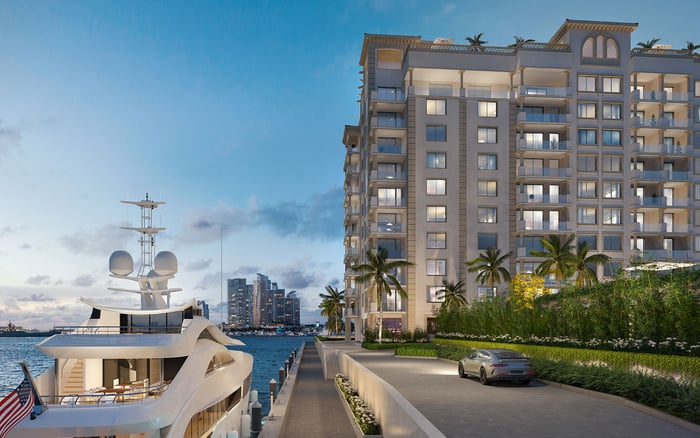
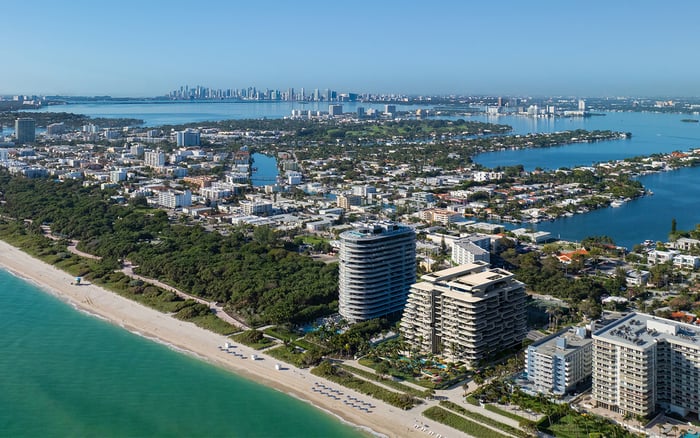
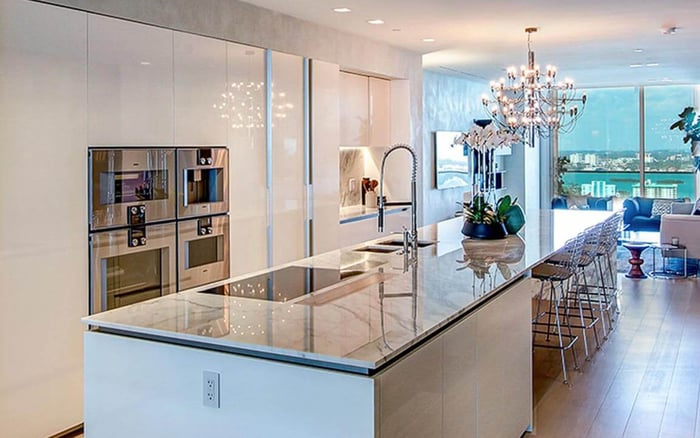
A buyer-focused comparison of Surfside and Bal Harbour, examining privacy, walkability, retail access, residential character, and likely fit across South Florida’s ultra-luxury coastal market.
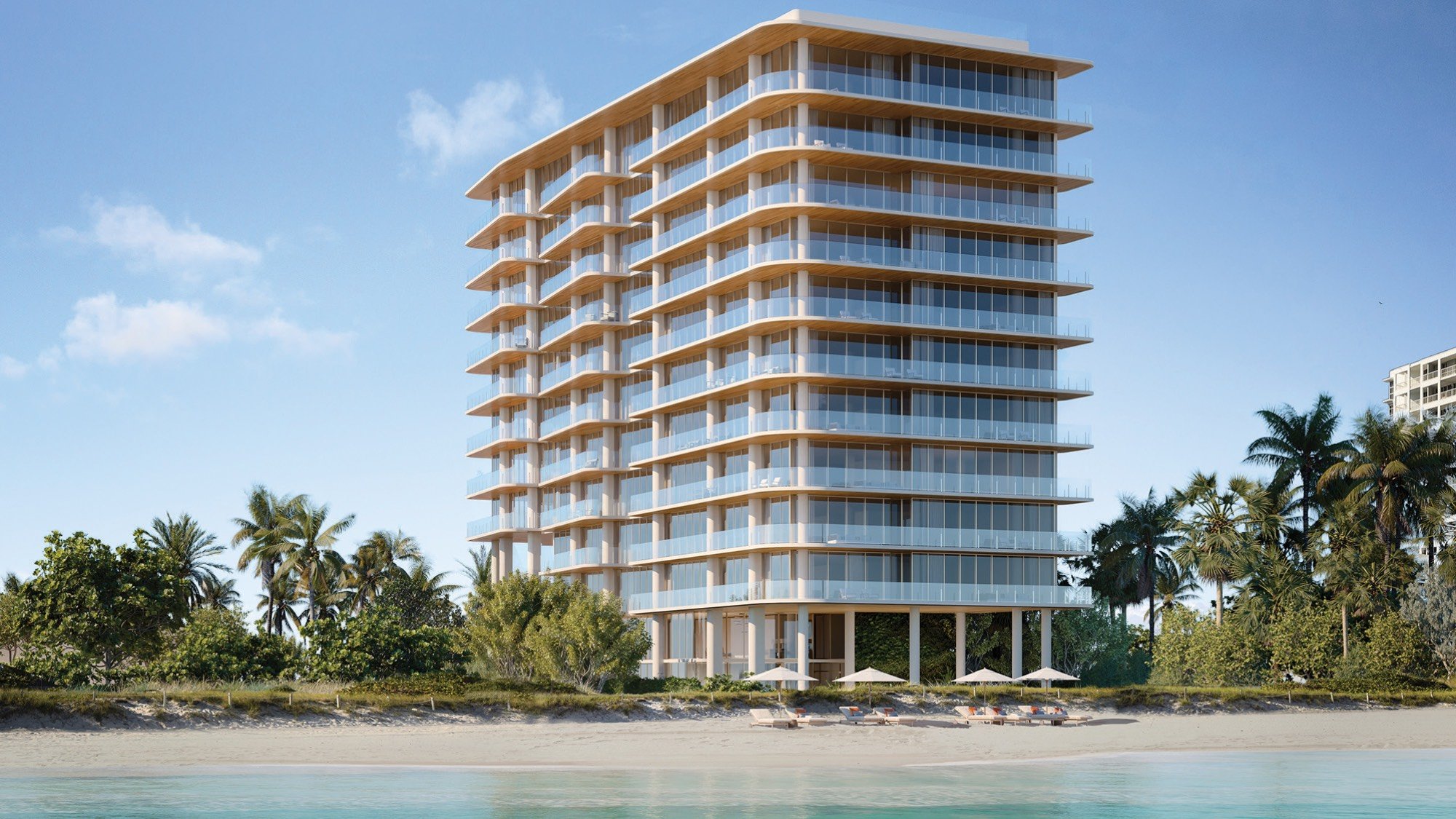
For a certain kind of South Florida buyer, Surfside and Bal Harbour may sit adjacent on a map yet feel fundamentally different in daily life. Both offer oceanfront positioning, established luxury appeal, and access to the same broader coastal corridor. What separates them is not whether either address is desirable, but how each one feels to inhabit.
Surfside is defined by restraint. It is a small oceanfront town with a quieter, more residential character than larger neighboring beach markets. Its appeal lies in a walkable, village-like setting, local parks, community amenities, and a beachfront setting that encourages a more personal, everyday relationship with the water. Buyers who prefer calm over spectacle often recognize that distinction immediately.
Bal Harbour, by contrast, is shaped by polish. It is an ultra-luxury oceanfront enclave long associated with high-end hospitality, designer shopping, and an elevated lifestyle. Beachfront ownership here is closely tied to proximity to refined retail and dining, giving the neighborhood a more curated and visibly luxurious daily tempo.
For clients working with MILLION Luxury, the question is rarely which place is better in the abstract. It is which setting best reflects the life they actually intend to live.
Surfside has a residential clarity that is increasingly difficult to find on the barrier island. The town’s identity is not anchored by a resort core or a heavy commercial program. Instead, it offers a lower-intensity beach lifestyle where owners can prioritize privacy, walkability, and a sense of local continuity.
That matters for buyers who want the ocean to feel close, but not theatrical. In Surfside, daily life tends to center on the beach itself, neighborhood routines, and the comfort of a smaller-scale municipality. The atmosphere feels more domestic than performative, which is precisely the point. Buyers seeking a second-home retreat often gravitate to this kind of setting because the luxury is embedded in the absence of friction.
The local residential inventory reflects that orientation. Surfside includes luxury condominiums and ocean-proximate homes, but the market reads more as a place to live than a destination to circulate through. Properties such as Ocean House Surfside, The Delmore Surfside, and Fendi Château Residences Surfside align naturally with buyers who want beachfront pedigree without sacrificing the quieter cadence that defines Surfside.
There is, of course, a trade-off. A calmer setting often means fewer immediate shopping and dining options within the neighborhood itself. For some buyers, that is an inconvenience. For others, especially those who value discretion, it is one of Surfside’s main strengths.
Bal Harbour offers a different proposition: beachfront ownership with a built-in luxury amenity ecosystem. Buyers here are not simply paying for an ocean address. They are also paying for walkable access to one of the region’s most established concentrations of designer boutiques, upscale restaurants, and branded hospitality.
That distinction is critical. In Bal Harbour, retail proximity is not an afterthought or a nearby convenience. It is central to the neighborhood’s identity. The shopping environment helps reinforce the area’s appeal for residents who value moving from residence to lunch, boutique, and beachfront setting without leaving the enclave. For buyers accustomed to service-driven urban luxury, this can feel more complete than a purely residential beach town.
The hospitality layer amplifies the effect. The presence of iconic resort environments strengthens Bal Harbour’s reputation as a polished destination, not just a residential address. That can be especially attractive to seasonal owners and purchasers who want their home to sit within a fully articulated luxury ecosystem.
Residential options such as Oceana Bal Harbour and Rivage Bal Harbour fit squarely within that worldview. They speak to buyers who expect both waterfront privacy and immediate access to luxury infrastructure. The trade-off is equally clear: stronger resort and retail integration can bring more activity and less of the secluded feeling some oceanfront buyers prize.
Surfside and Bal Harbour both sit within South Florida’s luxury coastal conversation, but they often express value differently. Surfside can attract buyers prioritizing residential calm, direct beach access, and a more discreet sense of place. Bal Harbour often appeals to buyers who want oceanfront ownership paired with a polished convenience layer that feels instantly legible.
For the buyer, the implication is not simply cost. It is value structure. In Surfside, much of the premium is attached to privacy, beachfront ease, and a quieter daily rhythm. In Bal Harbour, the premium more often includes a lifestyle package: oceanfront placement, refined walkability, and visible luxury infrastructure.
This distinction also matters for hybrid users. Surfside tends to attract those focused on a more residential experience, while Bal Harbour may feel more intuitive for buyers who prefer a destination-like atmosphere tied to hospitality and retail adjacency.
If you are choosing between Surfside and Bal Harbour, the most useful framework is behavioral rather than purely financial.
Choose Surfside if you want a more residential beach environment, lower density in feel, and fewer tourism-driven distractions. It is especially well suited to buyers who care about privacy, family orientation, and an everyday lifestyle centered on the shoreline rather than retail circulation. The appeal often overlaps with interest in neighborhoods and projects that prioritize seclusion and beachfront composure, from Arte Surfside to The Surf Club Four Seasons Surfside.
Choose Bal Harbour if your ideal day includes the beach, a polished lunch, designer shopping, and a higher-touch hospitality sensibility all within close reach. Buyers who want a resort-adjacent lifestyle anchored by luxury dining and retail often find Bal Harbour more intuitive. It is a particularly strong fit for second-home owners who prefer a fully serviced feeling over a village-like one.
The deepest mistake is to treat these communities as interchangeable simply because both are prestigious and oceanfront. They are not. Surfside is about serenity with luxury. Bal Harbour is about luxury with activity.
The most sophisticated buyers are rarely asking whether one neighborhood has status. Both do. The sharper question is what kind of quiet, or what kind of convenience, they are buying.
Surfside remains compelling because it preserves a rarer form of coastal living: elegant, walkable, and notably less commercial in spirit. Bal Harbour remains compelling because it delivers one of South Florida’s most seamless integrations of oceanfront ownership and luxury consumption. Neither proposition is inherently superior. Each is simply precise.
For some clients, the answer becomes obvious after a single afternoon spent walking the respective streetscapes. One place restores them. The other energizes them. At this level of the market, that emotional fit is often the most important metric of all.
Is Surfside quieter than Bal Harbour? Yes. Surfside generally feels more residential and less commercially active, making it a stronger fit for buyers seeking calm.
Does Bal Harbour offer better retail proximity? Yes. Bal Harbour is closely associated with walkable luxury shopping and dining, which shapes its everyday lifestyle appeal.
Which area feels more family-oriented? Surfside often feels more family-oriented because of its village-like scale and more residential tone.
Which neighborhood feels more resort-like? Bal Harbour. Its hospitality presence and polished amenity ecosystem create a more destination-style atmosphere.
Are both communities oceanfront? Yes. Both are prized for beachfront living, even though the daily experience differs between them.
Is Surfside better for buyers focused on privacy? In many cases, yes. Buyers who want fewer distractions and a quieter setting often gravitate toward Surfside.
Does Bal Harbour feel more service-driven? Yes. Many buyers are drawn to Bal Harbour because the neighborhood experience feels more curated and convenience-led.
Can Surfside still feel ultra-luxury despite being quieter? Absolutely. Its luxury expression is simply more discreet, centered on beachfront exclusivity and residential composure.
Is Bal Harbour a stronger fit for second-home buyers who want activity nearby? Often, yes. Buyers who want the beach plus walkable shopping, dining, and a polished social rhythm may prefer Bal Harbour.
How should buyers make the final choice? The clearest test is lifestyle fit: choose Surfside for serenity and choose Bal Harbour for polished convenience.
If you'd like a private walkthrough and a curated shortlist, connect with MILLION Luxury.
If branded residences are on your mind — as a home or as an allocation — we would be glad to share what we are seeing, privately.
Begin a quiet conversation