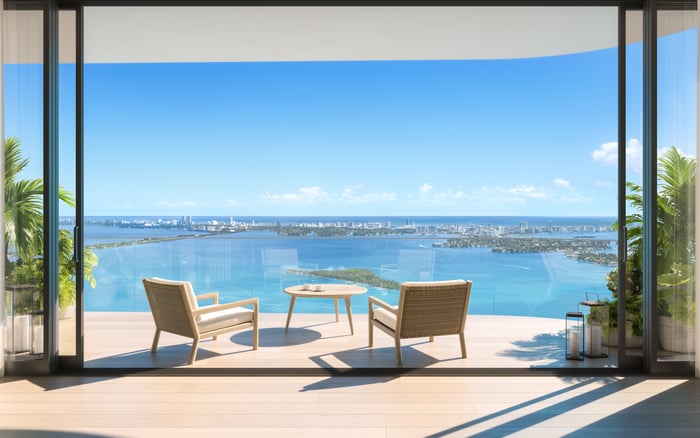
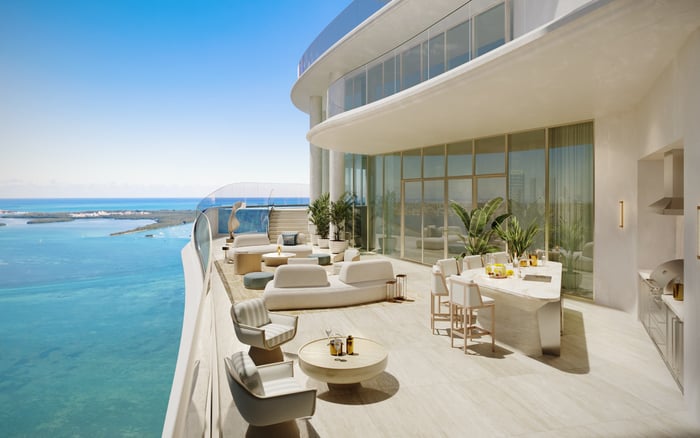
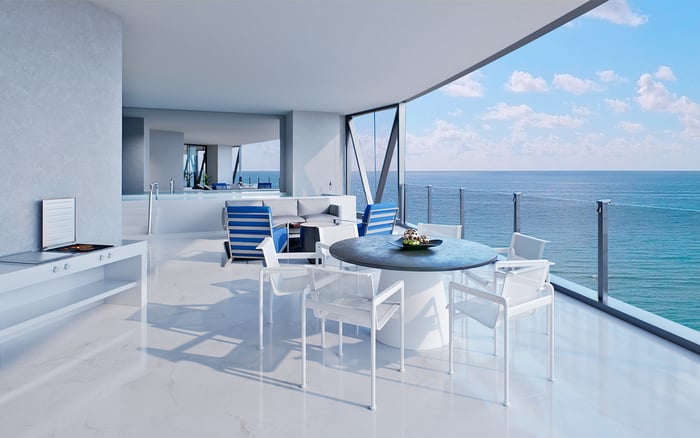
A buyer-focused comparison of St. Regis® Residences Sunny Isles and EDITION Edgewater, framed around downside discipline, club access, amenity privacy, and the daily rhythm of each neighborhood.
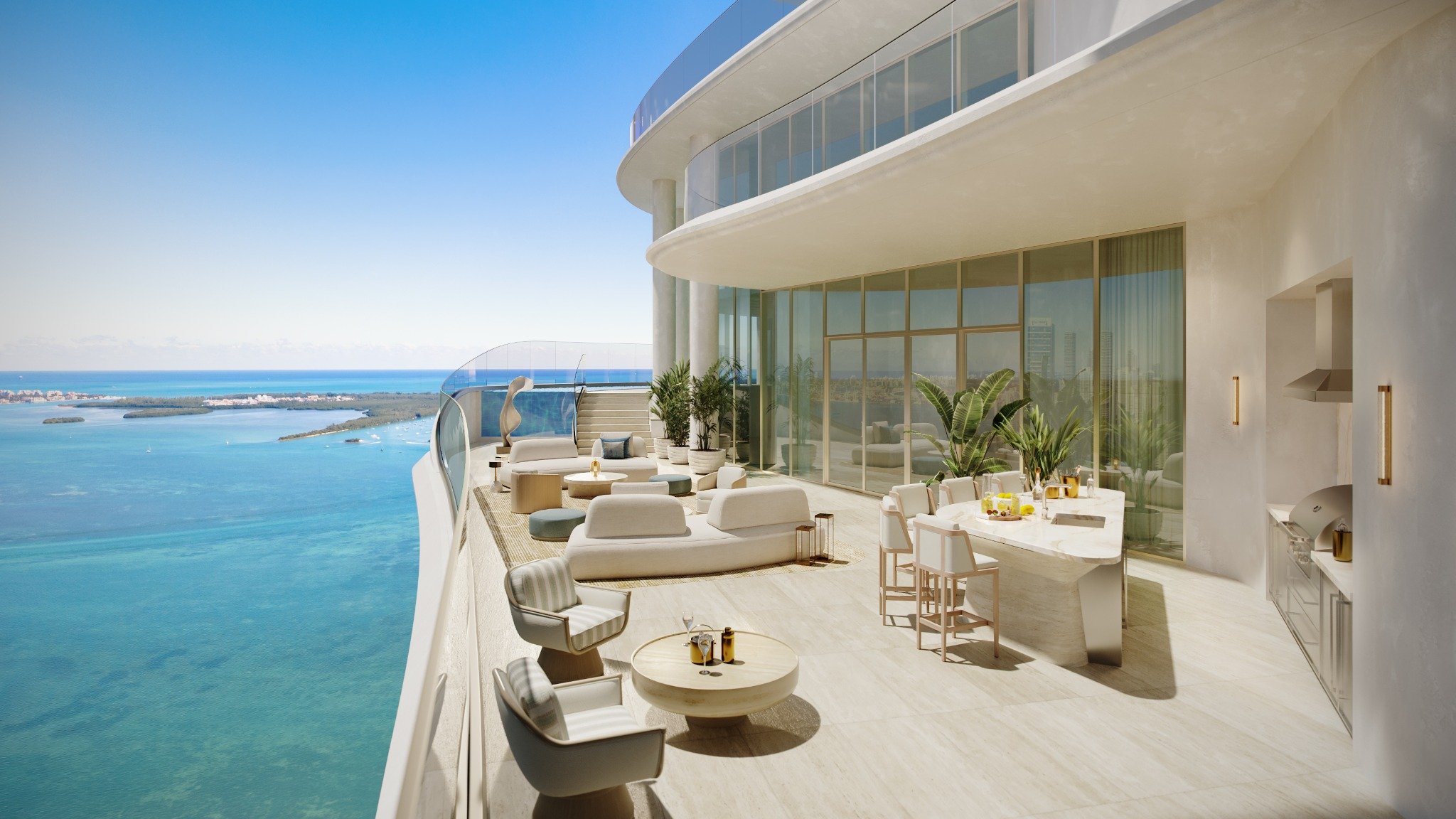
For a buyer weighing St. Regis® Residences Sunny Isles against EDITION Edgewater, the first discipline is resisting a purely emotional reading of the logos. Both names carry hospitality resonance, but a new-development purchase should be judged by how the residence lives, how the amenity promise ages, and how the location holds its audience across multiple market cycles.
That is especially true for buyers who want beauty without fragility. In South Florida, the premium end of the market rewards scarcity, service clarity, and day-to-day convenience. It can also punish purchases made on mood alone. A branded tower may photograph magnificently, yet the more important questions are quieter: Who will use the amenities at the same time you do? How private is private? What does the neighborhood feel like on a weekday morning, not only during a holiday week?
For search shorthand, this is a Sunny Isles, Edgewater, new-construction, oceanfront decision as much as it is a St. Regis® Residences Sunny Isles and EDITION Edgewater decision. The names open the conversation; the lifestyle mechanics should close it.
Club access can be one of the most seductive elements in a luxury residential presentation. It can also be one of the least understood. Buyers should distinguish between an ownership amenity, a membership-style privilege, a hotel-affiliated benefit, and a social-club environment with separate rules. The difference matters because access has value only if it is usable, durable, and aligned with your household’s habits.
A disciplined buyer should ask how access is structured, whether it is automatic or optional, whether guests are treated generously or narrowly, and whether privileges follow a future resale. The answer can affect both enjoyment and exit value. A club that feels effortless to the first buyer but opaque to the next can create friction at precisely the wrong moment.
The sharper question is not, “Which club is more glamorous?” It is, “Which access model will I actually use, and which model can be explained cleanly to the next owner?” If access is central to the value proposition, clarity is not a small detail. It is part of the asset.
Private amenities should be evaluated less like a brochure and more like a building operating system. The relevant question is not whether a property has impressive spaces. It is whether those spaces remain composed when the building is busy, whether residents feel separated from transient activity, and whether service can be delivered consistently without turning home into theater.
At the top of the market, privacy is not only about being unseen. It is about moving through a property without negotiation. Elevators, arrivals, pool decks, wellness areas, dining spaces, valet sequences, pet routines, and family logistics all matter. A residence can feel grand and still become inconvenient if too many functions collide.
For St. Regis® Residences Sunny Isles, a buyer may be drawn to a more resort-inflected residential imagination, with the emotional pull of coastal living and a brand associated with formal service. For EDITION Edgewater, the appeal may be a more urban, design-forward sensibility within a neighborhood rhythm that connects naturally to the broader city. Neither is automatically more disciplined. The stronger choice is the one whose amenity model matches how often you will be in residence, who will be with you, and how you prefer service to appear.
Neighborhood rhythm is often underestimated because it is harder to quantify than a view line or a floor plan. Yet it is one of the strongest indicators of whether a purchase remains pleasurable after closing. Sunny Isles tends to attract buyers who want a residential coastal cadence, a sense of retreat, and a lifestyle organized around sun, water, and resortlike continuity. Edgewater tends to speak to buyers who want a more urban rhythm, with a sense of proximity, movement, dining, culture, and city adjacency.
That distinction is not about better or worse. It is about temperament. A buyer who wants to wake into a quieter waterfront frame may read Sunny Isles as more restorative. A buyer who wants the city close at hand may find Edgewater more stimulating. The mistake is buying the weekend fantasy while ignoring the Tuesday routine.
For second-home owners, the question becomes how arrival feels. Do you want to decompress into a beach-oriented setting, or do you want to step into the momentum of Miami’s urban core? For primary residents, the test is even stricter: school patterns, commuting habits, fitness routines, social geography, and preferred restaurants should all be measured honestly.
Downside discipline does not mean pessimism. It means buying a residence whose appeal is not dependent on perfect market conditions. In new development, that starts with the fundamentals: plan efficiency, view resilience, ceiling-height impression, terrace usability, parking logic, storage, service circulation, carrying costs, and the likely buyer universe when you eventually sell.
Brand can create a premium, but fundamentals defend it. A difficult layout in a famous building remains difficult. An amenity package that looks extraordinary but becomes expensive to maintain can narrow the resale audience. A residence that works for only one highly specific lifestyle may be less liquid than one that can satisfy multiple buyer profiles.
Buyers comparing St. Regis® Residences Sunny Isles and EDITION Edgewater should therefore build a resale narrative before they sign. Who is the next buyer? A seasonal family? A design-led urban couple? An international owner seeking brand familiarity? A primary resident who wants turnkey service? If you cannot describe the future buyer in one or two clean sentences, the purchase may be more emotional than disciplined.
Choose St. Regis® Residences Sunny Isles if your highest priorities are a coastal address, a more retreat-oriented residential mood, and a service language that feels formal, polished, and residentially ceremonial. That buyer is often protecting quality of life as much as capital. The right unit should feel calm, intuitive, and scarce.
Choose EDITION Edgewater if your ideal residence is more connected to Miami’s urban energy, with a design-conscious atmosphere and a daily pattern that keeps the city close. That buyer may care less about seclusion and more about access, movement, and a sense of contemporary cultural proximity.
In either case, the disciplined move is to compare the lived experience before the visual drama. Walk through a hypothetical day. Where do guests arrive? Where do children, pets, or staff move? Where do you take a private call? How often will you use the club component? What will the monthly carrying cost feel like when the novelty settles?
The best new-development purchase is not the one with the loudest promise. It is the one whose privileges are legible, whose amenities are usable, whose neighborhood suits your ordinary life, and whose resale story remains credible even when the market becomes more selective.
Which project is better for a buyer focused on downside discipline? The better choice is the one with clearer use value, stronger layout logic, and a resale audience that is easy to define. Brand should support the fundamentals, not replace them.
How should I compare club access between the two? Ask whether access is automatic, optional, transferable, guest-friendly, and subject to separate fees or rules. The cleanest structure is usually easier to value later.
Are private amenities always a resale advantage? Not automatically. Amenities add value when they are well managed, appropriately scaled, and genuinely useful to residents.
Who is the likely Sunny Isles buyer? Often it is a buyer seeking a coastal, retreat-oriented lifestyle with a strong preference for water, privacy, and resortlike continuity.
Who is the likely Edgewater buyer? Often it is a buyer who wants a more urban residential rhythm, with proximity to Miami’s dining, cultural, and city-life patterns.
Should investors prioritize the brand name? Brand matters, but investors should focus on floor plan efficiency, view quality, carrying costs, and the breadth of the future buyer pool.
What is the biggest mistake in comparing these projects? The biggest mistake is comparing renderings instead of routines. Daily life reveals whether the purchase is durable.
How important are carrying costs? They are central to downside discipline because they affect both ownership comfort and resale sensitivity. Buyers should model them conservatively.
Can both projects make sense for second-home buyers? Yes, but for different reasons. One may feel more restorative, while the other may feel more connected to the city.
What is the best way to shortlist comparable options for touring? Start with location fit, delivery status, and daily lifestyle priorities, then compare stacks and elevations to validate views and privacy.
For a discreet conversation and a curated building-by-building shortlist, connect with MILLION.
If branded residences are on your mind — as a home or as an allocation — we would be glad to share what we are seeing, privately.
Begin a quiet conversation