Private fitness spaces are moving from lifestyle amenity to practical expectation in South Florida luxury real estate, where time, privacy, wellness, and climate-conscious daily living all shape how buyers assess value.
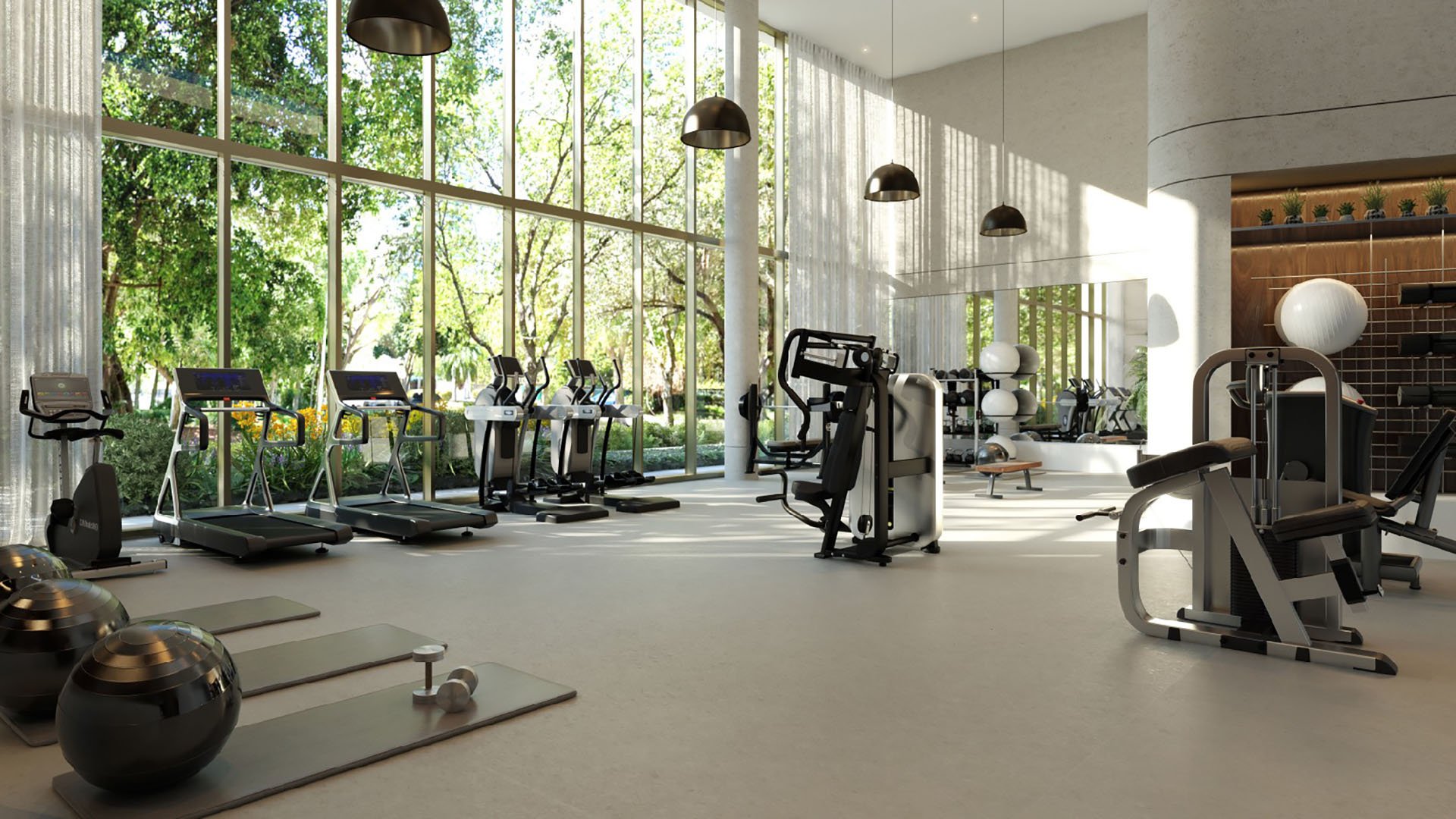
In South Florida luxury real estate, the private gym has moved beyond indulgence. It is no longer simply a polished amenity photographed beside a pool or spa deck. For many high-end buyers, it has become a practical layer of daily life, supporting privacy, health, schedule control, and the increasingly fluid relationship between home, work, and travel.
The shift is subtle but significant. A private gym once suggested excess, especially when it sat unused behind glass walls or occupied a forgotten room in a large residence. Today, the best fitness environments are designed with the same seriousness as a kitchen, primary suite, or outdoor living area. They are expected to function well, look refined, and serve a household consistently.
In a market shaped by waterfront towers, gated estates, branded residences, and resort-style services, the standard for wellness space has become more demanding. Buyers are not merely asking whether a building or home has fitness equipment. They are asking whether the gym feels private, usable, quiet, well ventilated, and suited to a disciplined routine.
The appeal begins with time. South Florida attracts residents who move between offices, airports, boats, schools, golf clubs, beach clubs, and seasonal social calendars. For them, convenience is not a soft benefit. It is part of the value proposition.
A private gym removes friction. There is no commute to a fitness club, no waiting for equipment, no need to adjust a routine around peak hours, and no exposure to a public environment when discretion is preferred. In Brickell, where vertical living and compressed schedules often define the weekday, the ability to train before a meeting or after a late return can meaningfully change how a residence performs.
Privacy matters as much as efficiency. Luxury buyers often want the option to work with a trainer without being observed, practice physical therapy in comfort, or maintain a wellness routine without turning it into a social event. In that sense, the private gym aligns with other desirable residential features: direct elevator access, service entries, secure parking, and quiet outdoor terraces. It gives the owner greater control over daily life.
The new buyer is more informed. A room with a treadmill and mirrored wall is rarely enough. Serious fitness spaces are assessed for proportions, ceiling height, flooring, acoustic control, air circulation, natural light, and the relationship among strength training, cardio, stretching, and recovery.
Equipment depth also matters. A gym that serves only light cardio may satisfy a guest suite, but it may not satisfy a household that trains regularly. Buyers look for spaces that can accommodate functional training, free weights, Pilates-inspired work, mobility routines, and trainer-led sessions. The room must feel strong enough for real use, yet refined enough to belong within a luxury residence.
The most successful gyms avoid visual clutter. They rely on durable materials, intuitive layouts, concealed storage, and lighting that flatters both movement and architecture. In Aventura and other family-oriented luxury enclaves, that flexibility can be especially valuable because the same space may serve different generations with different routines.
Service is another differentiator. In a private residence, buyers consider maintenance, equipment replacement, temperature control, and whether the space can be cleaned without disrupting the household. In a condominium or branded residential setting, they consider staffing, reservation structure, crowding, and how the gym integrates with broader wellness offerings.
South Florida’s climate is one of its great luxuries, but it also makes controlled indoor fitness more desirable. Outdoor exercise can be beautiful, especially near the ocean, bay, or Intracoastal, yet heat, humidity, rain, and seasonal intensity can complicate consistency. A private gym protects the routine.
For waterfront buyers, this is especially relevant. A morning swim, beach walk, or tennis session may be part of the lifestyle, but controlled training space adds reliability. It allows owners to maintain strength, conditioning, and recovery regardless of weather. In Broward, where luxury inventory ranges from oceanfront condominiums to waterfront single-family homes, fitness space increasingly functions as a practical companion to outdoor living rather than a replacement for it.
The same logic applies across Downtown Miami, Boca Raton, Palm Beach, and the barrier islands within the core South Florida luxury market. The highest-end homes are not evaluated only by views and finishes. They are judged by how completely they support a resident’s day. A private gym contributes to that completeness.
The private gym means different things depending on property type. In a single-family home, it may be a dedicated interior room, a converted guest space, a pavilion near the pool area, or a wellness suite connected to sauna, steam, massage, or recovery zones. The best versions feel intentional, not improvised.
In condominiums, the conversation is more nuanced. Many luxury towers offer shared fitness centers, but buyers still value privacy within the building. A well-designed residential gym can feel almost private when access is controlled, scale is generous, and the space is managed with care. Some buyers may also want enough room within the residence for a compact personal setup, particularly for stretching, cycling, or trainer-guided sessions.
New-construction buyers tend to focus on whether wellness is integrated from the beginning. They look for gyms that are not treated as leftover amenity square footage, but as part of a coherent lifestyle platform. This includes adjacency to spa areas, locker rooms, outdoor terraces, lap pools, treatment rooms, or quiet lounges. When these pieces are planned together, the building feels more complete.
A private gym does not replace location, architecture, water views, or floor plan quality. Those fundamentals remain central. But in the ultra-premium segment, value is often built through layers of convenience and control. A home that supports daily wellness can feel more livable, more current, and more resilient to changing buyer preferences.
For sellers, a credible fitness space can help a residence read as contemporary. For developers, the gym is no longer a secondary amenity solved by attractive equipment alone. For buyers, it is a signal. It shows whether the property understands modern luxury as something lived every day, not simply displayed.
The strongest private gyms in South Florida share a quiet confidence. They do not rely on spectacle. They work beautifully, respect privacy, and make the resident’s routine easier. That is why they are becoming a practical luxury standard.
Are private gyms now expected in luxury South Florida residences? Increasingly, yes. In the upper tier, buyers often view a serious fitness space as part of a complete daily living environment.
Is a private gym more important in a house or condominium? It depends on the buyer. Estate buyers may want a dedicated in-home room, while condominium buyers may prioritize a refined, well-managed building gym.
What makes a private gym feel truly luxurious? Privacy, good proportions, ventilation, acoustic control, quality equipment, and a calm design language matter more than showy finishes.
Does a private gym add resale value? It can strengthen perceived value when it is well designed and useful. Poorly planned fitness rooms may have less impact.
Should buyers prioritize equipment or layout? Layout should come first. Equipment can be changed, but ceiling height, flooring, circulation, and room size are harder to correct.
Can a compact gym still feel premium? Yes. A smaller space can be highly effective if it is quiet, well lit, organized, and tailored to the owner’s actual routine.
Why does climate make private gyms more useful in South Florida? Heat, humidity, and rain can interrupt outdoor routines. A private indoor space helps maintain consistency throughout the year.
Are recovery areas part of the modern gym standard? Often, yes. Stretching zones, massage rooms, sauna, steam, and cold-plunge concepts can elevate a fitness suite.
What should investors notice about gym amenities? They should look for durability, management quality, and whether the amenity genuinely serves residents rather than simply photographs well.
How should buyers compare fitness spaces between properties? Consider privacy, access, crowding, maintenance, equipment range, and how naturally the space fits into daily life.
If you'd like a private walkthrough and a curated shortlist, connect with MILLION.
If branded residences are on your mind — as a home or as an allocation — we would be glad to share what we are seeing, privately.
Begin a quiet conversation