From branded towers in Miami to legacy estates in Palm Beach and privacy-first waterfront living in Naples, the region’s ultra-luxury market is staying active as buyers underwrite lifestyle, resilience, and long-term value.
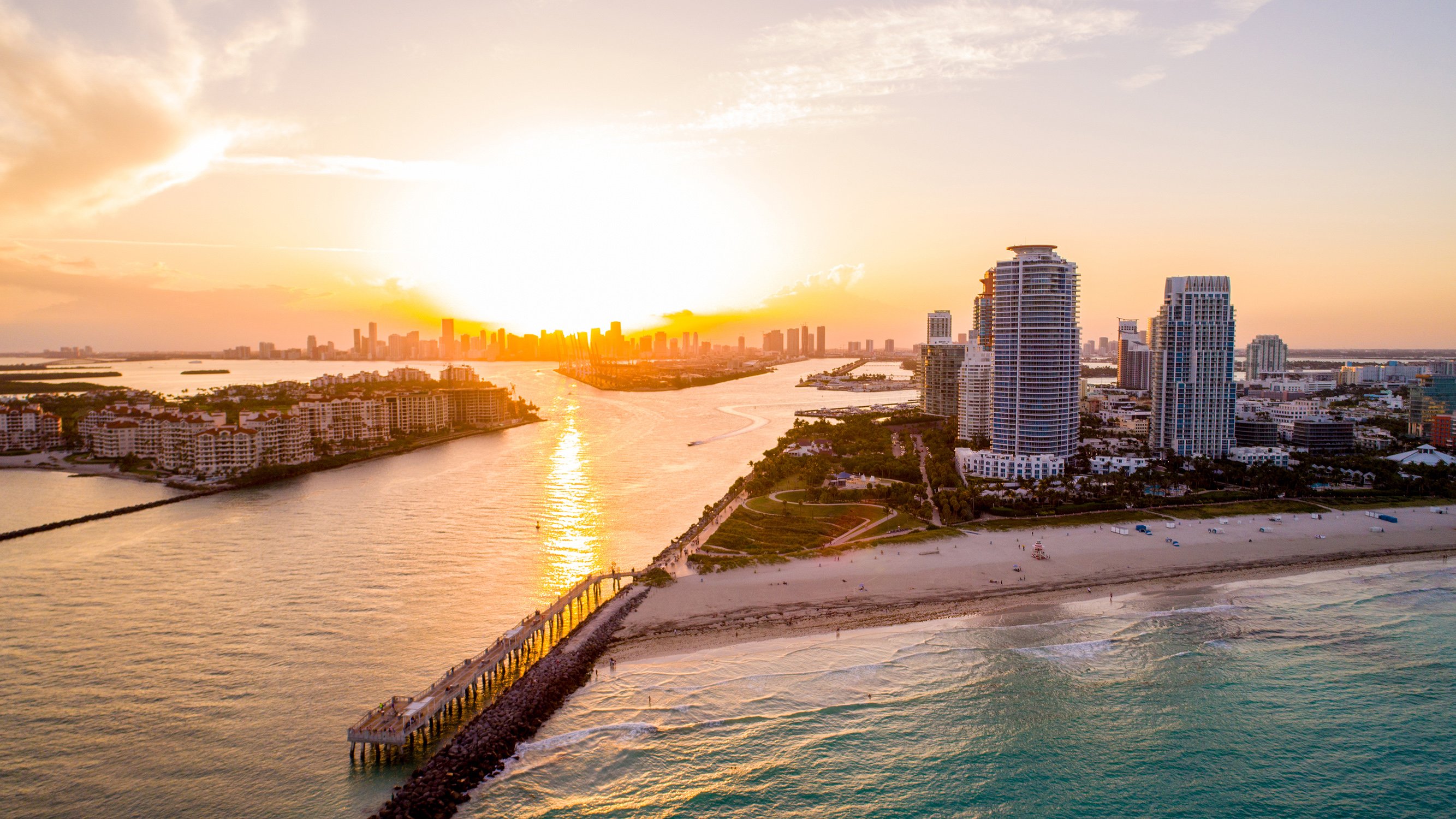
South Florida luxury has always moved in micro-markets, but 2025 sharpened the borders. Ultra-luxury demand remained notably liquid across Miami-Dade, Broward, and Palm Beach counties, with roughly 262 sales above $10 million in the first nine months of 2025 and a full-year pace tracking just under the 2021 peak. Translation: the top tier is still closing meaningful volume, even as buyers press harder on terms, condition, and long-term carrying costs.
That is why the “Golden Triangle” framework resonates with today’s buyer. Miami delivers global-city access and a deep new-construction pipeline. Palm Beach remains the legacy address with entrenched social infrastructure. Naples offers privacy, a strong waterfront orientation, and a club-and-golf lifestyle that stays consistent across cycles. These are not interchangeable products, and sophisticated buyers increasingly compare them side by side before committing.
A second throughline is prime value per square meter. In a world where London, New York, and Monaco set the headline narrative, prime Miami continues to read as comparatively efficient. MILLION Luxury has cited that about $1 million buys roughly 58 square meters in prime Miami, compared with materially less in New York, London, and Monaco. For global buyers, that gap is not a talking point. It is a rational input in portfolio decisions, especially for those reweighting toward a U.S. coastal market that still feels underpriced relative to its lifestyle, service standards, and year-round use.
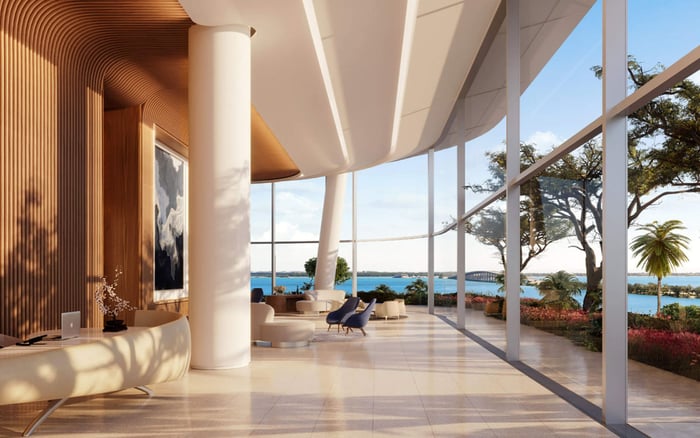
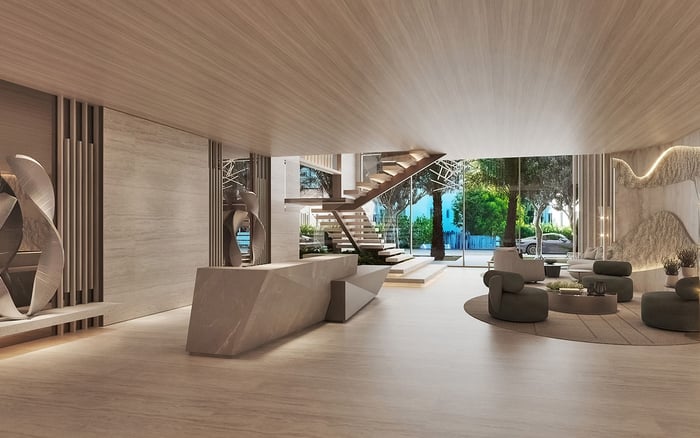
Miami’s 2026 luxury conversation is less about whether demand exists and more about what kind of demand is winning. The clearest preference is for residences that operate like well-run private clubs: turnkey service, high design, strong privacy protocols, and an arrival experience that signals discretion.
That taste profile helps explain why branded and design-led towers have become the city’s center of gravity. MILLION Luxury has flagged Miami’s ultra-luxury development pipeline as being led by branded names across Brickell, Downtown, and Miami Beach. For buyers, the appeal is straightforward: predictable standards, institutional-grade property management, and a resale story that travels internationally.
Pricing, however, is not one story. In 2025, Miami’s luxury condo pricing showed signs of moderation at the median level for $1 million-plus condos, while higher-end activity stayed active. This nuance matters for underwriting. Buyers who want negotiating room may find it in the broader luxury set, especially where floor plan, view orientation, or finishes require compromise. By contrast, the $2 million-plus segment has shown enough sales velocity to keep best-in-class inventory competitive, particularly when the building’s operating profile is clean and the product reads as turnkey.
Within that context, residences tied to a clear lifestyle ecosystem often feel more like a long-term hold than a short trade. Brickell’s branded corridor is one example. Another is the newer wave of trophy buildings that treat wellness, hospitality, and design as core infrastructure rather than optional amenities. If your goal is a Miami base that presents as international, the market’s attention has concentrated on projects that combine service, discretion, and a recognizable identity.
Miami Beach is where luxury becomes most sensitive to scarcity, neighborhood definition, and walkability. In 2025, the signal was not that demand simply “returned” to the Beach. It is that demand became more selective, with buyers paying for differentiation and passing quickly on anything that feels generic or operationally uncertain.
Nowhere is that clearer than South-of-fifth, where ocean proximity, a compact footprint, and a high-service lifestyle converge. In 2025, South-of-fifth posted standout year-over-year gains in price per square foot, reinforcing the idea that the best-positioned, best-finished product is being treated as a scarce asset rather than a cyclical one. The market is not rewarding every listing equally. It is paying up for specific advantages: view corridors, quieter blocks, architectural pedigree, strong building operations, and the kind of privacy that is difficult to retrofit.
This is also where new construction and next-generation renovations intersect. Buyers who prioritize a contemporary, amenitized experience are tracking a tight set of new offerings and high-design repositionings. On the branded side, Casa Cipriani Miami Beach reflects the direction of travel: hospitality-forward living with a members-club sensibility. For buyers who prefer a more residential modern tower expression, Five Park Miami Beach speaks to the continued appetite for new inventory in a submarket that rarely gets it.
For those drawn to an oceanfront lifestyle with an emphasis on service, Setai Residences Miami Beach reflects the durable appeal of hospitality-anchored living in a market where the best-run buildings often hold value through transitions. And as the Beach continues to evolve, Shore Club Private Collections Miami Beach underscores a broader reality: buyers are underwriting not only the residence, but also the operating identity of the property and the consistency of the experience it promises.
If Miami Beach is about walkable glamour, Fisher Island is about controlled access and a different social cadence altogether. Pricing here tends to function as a signal to the wider market. When Fisher Island is strong, it often reflects confidence at the top of the buyer stack.
Market reporting has placed Fisher Island’s median pricing around $2,708 per square foot and a median sale price around $11.2 million, with meaningful year-over-year gains cited. Even without overreading a single snapshot, the takeaway is clear: the island’s combination of separation, security, and yacht-centric lifestyle remains one of the most legible luxury propositions in the United States.
For buyers, Fisher Island is also a useful reminder that “Miami” is not one market. A Brickell high-rise, a South-of-fifth condominium, and a Fisher Island residence represent fundamentally different assets with different liquidity patterns, renter demand, and lifestyle alignment. The most disciplined buyers treat them as separate categories, then underwrite accordingly.
Palm Beach remains a destination market in the purest sense: established estates, a social calendar, and a legacy identity that is difficult to replicate elsewhere. Its relevance in the current cycle is reinforced by two practical dynamics that continue to shape buyer behavior.
First is Florida as a domicile strategy. For high earners, Florida’s tax residency profile is frequently cited as a motivator, and Palm Beach offers an especially established ecosystem for those who want to pair that advantage with tradition, privacy, and proximity to finance and philanthropy.
Second is the strength across the broader county. In late 2025, Palm Beach County activity rebounded meaningfully, with year-over-year gains in overall residential sales and an even stronger lift in $1 million-plus transactions. That breadth matters because it supports the move-up ladder, which tends to feed liquidity into the upper tiers.
Zooming out further, West Palm Beach stands out on price performance. Luxury home prices were reported up roughly 187.3 percent over the last decade as of late 2025, with a luxury median around $4.04 million. For buyers evaluating the county, that sets up a two-part narrative: Palm Beach as the enduring legacy play, and West Palm as a momentum node with increasing luxury infrastructure.
In practical terms, buyers who want newer product and a more urban rhythm often evaluate modern towers along waterfront and downtown corridors. Alba West Palm Beach is an example of the residence type that aligns with that profile: contemporary, lock-and-leave convenience, and a location positioned to support a full-time lifestyle.
Naples is often discussed as a separate universe from Miami and Palm Beach, and that separation is part of the appeal. It offers a version of Florida luxury that is less about visibility and more about living well behind the gate, on the water, or on the fairway.
In 2025, the Naples Marco Island luxury segment reportedly sold about 23.5 percent faster year over year, pointing to resilient high-end demand. At the very top, the market delivered an unmistakable proof point: a beachfront Gordon Drive property reportedly sold for $133 million, cited among the most expensive U.S. home sales of the year. Even for buyers shopping well below that level, these moments matter because they anchor price psychology and reinforce the idea that the ultra-prime tier can clear at scale.
Neighborhood identity in Naples also remains unusually legible. Coverage of its most expensive areas repeatedly emphasizes waterfront and club orientation, with names like Port Royal, Aqualane Shores, Park Shore, and Old Naples often cited as defining the ultra-prime tier. Port Royal, in particular, is regularly characterized as the pinnacle enclave, with very high median pricing and an enduring reputation for privacy.
For a buyer comparing the triangle, Naples is the clearest expression of lifestyle certainty: boating, golf, and a daily rhythm that does not require city energy to feel complete. That predictability is often what second-home buyers are truly purchasing.
Across all three markets, the strongest purchases tend to reflect what buyers are truly underwriting heading into 2026. The headline is not simply price. It is durability: the day-to-day realities of ownership, the operating integrity of the asset, and the ability to exit cleanly if priorities change.
Insurance affordability has become a real consideration across Florida, particularly for coastal exposure. For condominium buyers, the question is often less about a personal policy and more about the building’s broader operating profile: reserves, maintenance discipline, assessment history, and how ownership plans for a higher-cost risk environment. In practice, that means buyers scrutinize budgets, study governance, and favor buildings that demonstrate proactive stewardship.
Florida’s international buyer base remains meaningful, especially in South Florida. That demand typically concentrates in markets with recognizable branding, strong service, and an ownership experience that feels manageable from abroad. Even domestic buyers benefit from this structure, because a deep international bid can support resale liquidity and stabilize demand when local conditions soften.
A generational shift is also shaping expectations. The luxury market continues to discuss intergenerational wealth transfer and what it means for housing preferences. In real terms, it shows up as higher standards for wellness infrastructure, privacy, and a residence that can function as both retreat and entertaining venue. Buyers are not only selecting a floor plan. They are selecting an operating philosophy, a service culture, and a building identity that holds up over time.
Rather than asking which market is “best,” high-net-worth buyers often do better by mapping the decision to a primary use case and being candid about trade-offs.
If you want global connectivity, restaurant depth, and a portfolio-friendly condominium, Miami tends to win on urban energy and breadth of product types, from branded towers to established luxury buildings with proven resale history. If you want tradition, social infrastructure, and a legacy address, Palm Beach remains difficult to substitute, particularly for buyers who value heritage and long-standing community rhythm. If you want quiet, predictable luxury with a clear tie to waterfront and club life, Naples is often the most emotionally satisfying choice, especially for those prioritizing privacy and routine over nightlife.
The common denominator is clarity. The strongest purchases in 2026 will likely be made by buyers who can articulate whether they are buying a lifestyle base, a long-term store of value, a tax-residency anchor, or a family asset intended to hold through cycles. When the use case is clear, the underwriting becomes cleaner, and the market’s micro-differences become advantages rather than friction.
Is the $10 million-plus market still active in South Florida? Yes. 2025 activity indicated an ultra-luxury pace close to record levels, supporting the view that liquidity at the top remains intact.
Why do buyers compare Miami to other global cities? Prime Miami has been cited as offering more square meters per $1 million than several major peers, reinforcing the perception that it remains relatively efficient for a global lifestyle market.
Where are Miami Beach premiums most concentrated? Submarkets like South-of-fifth have shown standout price-per-square-foot gains, with buyers paying for scarcity, walkability, and highly differentiated buildings.
What is driving Palm Beach County luxury demand? A mix of lifestyle priorities, financial migration dynamics, and late-2025 strength in higher-end activity, including notable momentum in $1 million-plus transactions.
What should second-home buyers in Naples prioritize? Along with location, prioritize privacy, waterfront orientation, and the operating realities of ownership, including insurance and ongoing carrying costs.
For private guidance on South Florida’s top-tier addresses, visit MILLION Luxury.
If branded residences are on your mind — as a home or as an allocation — we would be glad to share what we are seeing, privately.
Begin a quiet conversation