In South Florida, resilience is no longer a back-of-house conversation. It is a value driver that shapes purchase decisions, insurance outcomes, and day-to-day livability, especially along Oceanfront corridors where wind, water, and power continuity matter most.
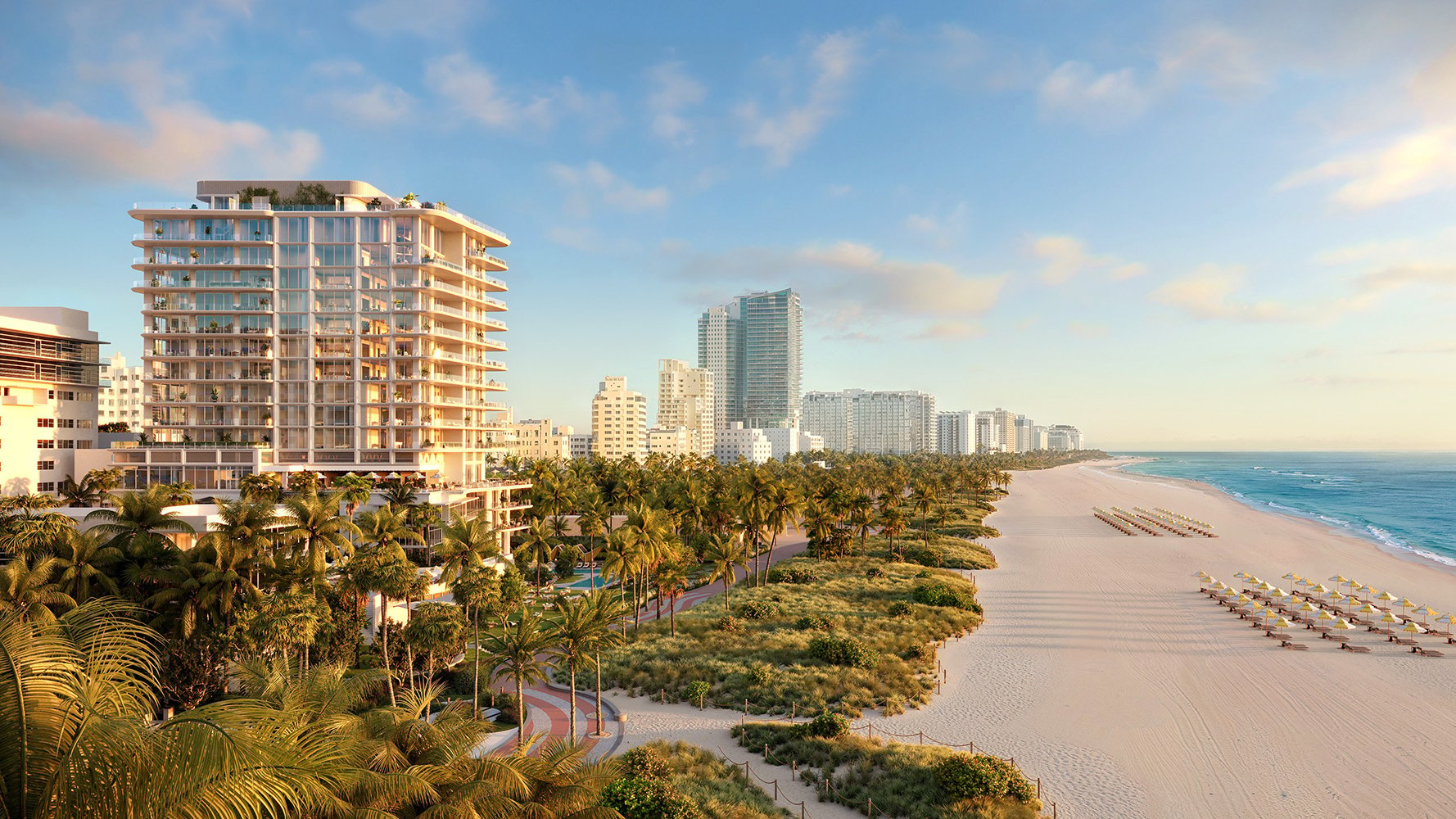
South Florida has always sold light, water, and perspective. What has changed is the definition of “turnkey.” Today’s most discerning buyers treat resilience the way they treat ceiling height, elevator privacy, and a flawlessly discreet lobby scent: as a core specification that should be designed in, verified, and maintained.
This shift is not only emotional. It is economic. Florida’s statewide Florida Building Code, effective March 1, 2002, replaced a patchwork of local rules and raised minimum wind-resistance requirements. In parallel, research on modern, code-era construction has repeatedly shown materially lower storm losses than older housing stock. In a market where severe weather can cascade into outages, supply disruptions, and insurance volatility, “strong bones” increasingly reads as lifestyle protection.
For buyers, the goal is not a fantasy of invulnerability. It is to select a home and a building culture that reduces the likelihood of damage, compresses recovery time, and protects the routines that define luxury living.
When brokers highlight “newer construction,” the subtext is often code. The statewide Florida Building Code created a consistent performance floor, particularly for wind resistance. That baseline has quantifiable benefits at a state scale. FEMA has estimated that the code avoids more than $1 billion in building-damage losses annually in Florida, including avoided losses from hurricane winds and floods.
The next layer is enforcement. Strong administration and enforcement of the code has been associated with an additional roughly 15 percent to 25 percent reduction in losses beyond baseline protections. For a buyer, that translates to a more nuanced question set than “What year was it built?” It also includes: “How disciplined is this jurisdiction?” and “How meticulous is this building’s own culture of maintenance, inspection, and documentation?”
A practical mental model:
Engineers tend to start at the top for a reason. In high-wind events, the roof system is a primary point of failure, and once the envelope is compromised, interior damage can escalate quickly.
One concept that clarifies the stakes is the “continuous load path.” In plain terms, it means the roof, walls, and foundation are tied together with engineered connections so wind loads can transfer safely to the ground. Buyers do not need to memorize connector types to benefit from this idea. They simply need to recognize that the best-performing homes and buildings think in systems, not in one-off upgrades.
That systems mindset is increasingly shaped by the Insurance Institute for Business and Home Safety (IBHS) FORTIFIED Home program. IBHS released an updated 2025 FORTIFIED Home Standard, effective for use starting January 1, 2025, with a transition period ending November 1, 2025. The updates reflect newer research on high winds and wind-driven rain, including tighter roof-deck fastening patterns expanding beyond coastal hurricane zones and requirements that roof-mounted vents meet wind-driven-rain performance testing.
For luxury buyers, the takeaway is simple and actionable: evaluate how the roof assembly was specified, inspected, and maintained, and whether the project team treats the roof as an integrated system rather than a surface.
Windows and doors sit at the intersection of design and storm performance. Impact windows and doors are designed for coastal storms using laminated glass and reinforced frames to resist wind pressure and windborne debris. Certification commonly references standards such as ASTM E1996, with testing that can include missile impact and cyclic pressure differentials that simulate storm loads.
Budget expectations should be grounded. Reported typical installed hurricane or impact window cost is around $1,250 per window, with common ranges roughly $1,175 to $1,350 per window depending on window and home factors. Florida pricing varies widely by scope and product choices, with ranges commonly cited around $700 to $1,600 per window installed.
In a luxury context, the decision is rarely about passing a test alone. It is also about how a glazing package supports acoustics, solar control, hardware feel, and the visual quiet of an uninterrupted view. Ask for product specifications and installation documentation, and observe the building’s habits: does management keep records, schedule periodic inspections, and maintain seals and hardware, or is the envelope treated as a one-time purchase?
Wind is dramatic, but water is often the more expensive storyline. Coastal living in South Florida requires a plan for rain intrusion, drainage performance, and the building’s readiness for the gray hours after a major event, when street access can be limited and services strained.
Resilient buildings prioritize:
At the macro level, the scale of risk is sobering. AccuWeather estimated the 2024 hurricane season produced about a $500 billion total damage-and-economic-loss price tag. For a buyer, that figure is not a reason to retreat from Oceanfront markets. It is a reminder that prudent specification and preparedness are the price of entry for a certain lifestyle.
For many residents, the most immediate disruption is loss of power. Severe storms are a leading driver of major outages, and standby generators are positioned as automatic backup power that turns on within seconds when the grid fails.
For single-family homes, whole-house standby generator projects typically total about $7,000 to $15,000 installed, including the generator, transfer switch, and labor, with costs rising for larger homes and more complex installs. Battery systems occupy a different lane. Home battery systems are commonly priced in the several-thousand-to-tens-of-thousands range installed, and industry pricing discussions often cite averages around $10,000 and above, sometimes alongside available tax incentives.
In condos, individual owners rarely control building-wide power architecture. The diligence shifts to the association and the physical plant. Ask what loads are supported during outages, for how long, and under what fuel or maintenance assumptions. Elevators, chilled water, fire systems, and controlled access are not “amenities” during a storm week. They are the infrastructure that keeps a high-rise livable.
Resilience is also a paperwork asset. Florida requires residential property insurers to offer premium discounts or credits for hurricane loss-mitigation features, including wind-mitigation methods aligned with code. A Florida wind mitigation inspection is commonly used to document features for insurance credits and discounts, and insurers may apply credits based on the inspection results.
For buyers, two points matter.
First, do not treat documentation as a closing nuisance. Treat it like provenance. A home that can prove roof-to-wall connections, opening protections, and other mitigation measures is often easier to underwrite.
Second, understand the difference between “has impact glass” and “has documentation that aligns with the credit structure.” The details matter, and they are simplest to collect before you own the asset.
Luxury buyers often move between two worlds: the controlled ecosystem of a tower and the autonomy of a house. Each calls for a different diligence lens.
In a single-family home, you can directly invest in roof upgrades, impact openings, a generator, or batteries, and tune the property to your risk tolerance.
In a condo, the association’s decisions define your envelope and your continuity plan. Ask for clarity on:
This is where “new construction” can be meaningful, not as a trend, but as an indicator that the building likely reflects more current standards and detailing habits.
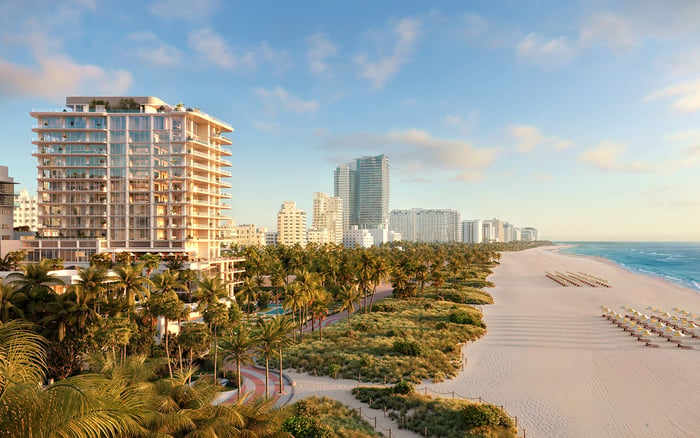
Miami Beach is a market where aesthetics and exposure coexist. Buyers gravitate to buildings that feel curated while also being serious about envelope performance and operations.
Within that landscape, it is common to see luxury buyers compare lifestyle formats such as condo-hotel offerings versus traditional condominium ownership. Regardless of format, your advantage comes from understanding what sits behind the finishes.
For those drawn to branded, service-rich environments, properties such as Casa Cipriani Miami Beach bring hospitality expectations into a residential frame, which can sharpen attention on operations, staffing, and preparedness routines.
On the Oceanfront side of Miami Beach, some buyers also benchmark newer boutique choices like 57 Ocean Miami Beach alongside established luxury addresses, watching how a building’s envelope, glazing, and maintenance culture expresses itself over time.
In the same conversation, iconic, design-led residences such as Faena House Miami Beach illustrate a broader point: in South Florida, design excellence is most compelling when paired with disciplined building science and a management team that treats resilience as a service standard.
Finally, for buyers who want a strong balance of privacy, brand stewardship, and a clear operational playbook, The Ritz-Carlton Residences® Miami Beach offers another reference point in the market’s ongoing evolution toward performance-aware luxury.
Storm resilience can be evaluated with a handful of high-signal questions that do not require technical fluency:
These questions are less about fear and more about control. The luxury buyer’s objective is to purchase a view and a lifestyle, not a recurring recovery project.
Does a post-2002 build automatically mean it is storm-proof? No. It signals a stronger minimum code baseline, but enforcement, detailing, and maintenance still determine performance.
Why do professionals focus so much on the roof? Roof failures can quickly compromise the entire envelope, escalating water intrusion and interior loss.
What does “continuous load path” mean in plain terms? It means the structure is tied together so wind forces can travel safely from the roof down to the foundation.
What is changing with the 2025 FORTIFIED Home Standard? Updates reflect newer wind and rain research, including roof fastening patterns and stricter performance expectations for vents and related roof details.
Are impact windows mainly about debris impact? They are designed to resist both debris impact and wind pressure, helping keep the building envelope intact.
What should I budget for impact windows in Florida? Reported ranges vary widely, often cited around $700 to $1,600 per window installed, with typical installed costs frequently discussed near $1,250 per window.
Do insurance discounts exist for wind mitigation features in Florida? Yes. Florida requires insurers to offer premium discounts or credits for certain hurricane loss-mitigation features.
What is a Florida wind mitigation inspection? It is an inspection used to document mitigation features so insurers can apply credits based on the results.
What does a whole-house standby generator typically cost? Projects are often discussed in the roughly $7,000 to $15,000 installed range, depending on size and installation complexity.
In a condo, what matters most during an outage? Building-wide emergency power scope, testing routines, and which essential systems remain operational.
Explore South Florida residences with MILLION Luxury.
If branded residences are on your mind — as a home or as an allocation — we would be glad to share what we are seeing, privately.
Begin a quiet conversation