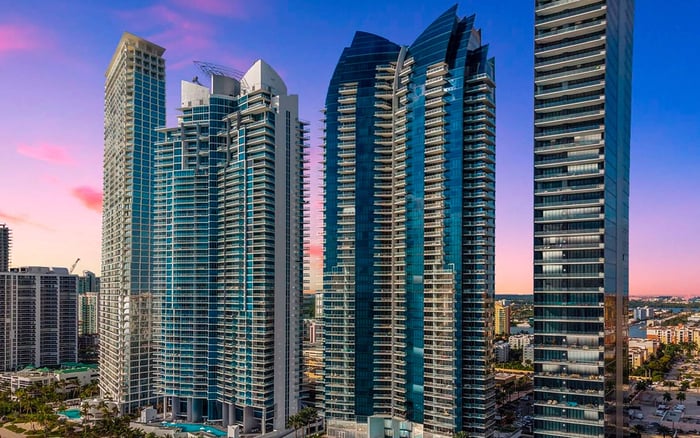
South Florida’s next wave of luxury residences is being shaped by branded towers, boutique waterfront inventories, and a widening geographic center of gravity from Brickell to West Palm Beach. With many deliveries targeted for 2027 and beyond, the opportunity set is less about chasing a single headline building and more about selecting the right micro-market, service model, and timeline fit.
For South Florida luxury buyers, “new development” has often meant a familiar menu: a few established neighborhoods, a predictable amenity checklist, and a delivery timeline that felt comparatively easy to model. The 2027-and-beyond pipeline reads differently. Across Brickell, Downtown, Miami Beach, North Bay Village, Aventura, and West Palm Beach, the market is moving away from sheer volume and toward sharper positioning. The themes are consistent: branded residences that lean on real hospitality operations, boutique inventories that prioritize privacy over unit count, and mixed-use environments designed for everyday living rather than occasional visits.
This is also a cycle where the calendar matters as much as the view. Many projects are publicly discussed with 2027 delivery targets, while others extend into 2028 and, in certain cases, 2030. For end users, that spread can shape family planning, school decisions, and even how you think about tax residency and seasonal living. For investors, it shifts the math on carry costs, opportunity cost, and the likelihood that additional supply will arrive before your building closes.
Another notable change is the emphasis on identity, not just finishes. Developers are leaning into design collaborations, luxury brand partnerships, and distinct service models to separate towers that might otherwise compete for the same buyer. Practically, that means your shortlist is best built from lifestyle fundamentals first: how you want to live, how the building will operate day to day, and what degree of privacy you expect. Only then should you narrow by floorplan, exposure, and price.
Brickell remains South Florida’s most efficient luxury ecosystem: a dense mix of finance, dining, waterfront greenspace, and walkability within a compact radius. The late-decade pipeline here is less about simply adding residences and more about assembling a complete “live-work-stay” proposition. Mixed-use programming and brand-led amenity concepts are becoming the differentiators.
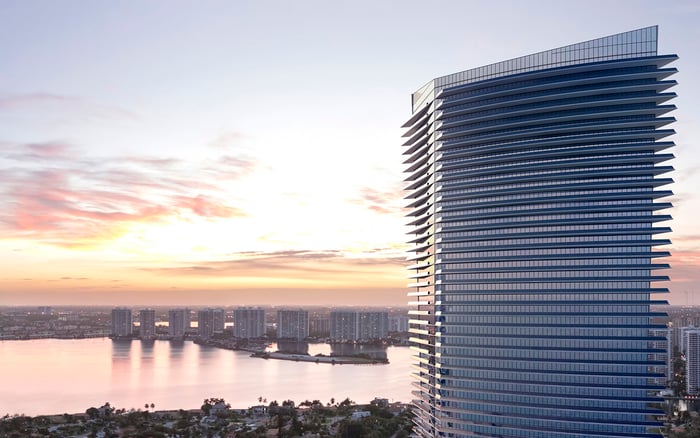
A widely covered example is Mercedes-Benz Places Miami, presented as a 67-story mixed-use tower with a large residential count and a target initial occupancy in 2027. The buyer takeaway is not only the brand association. It is the attempt to create a node: retail, hospitality-adjacent programming, and a self-contained convenience layer that can matter to frequent travelers and second-home owners. If you want a full-service feel but prefer something less formal than a classic hotel-branded building, this is the lane the concept aims to occupy.
Brickell Key offers a contrasting value proposition. It has long traded on a calmer, more residential atmosphere, while still being minutes from Brickell’s core. The Residences at Mandarin Oriental, Miami have been publicly presented as a high-rise branded project with architecture by Kohn Pedersen Fox and interiors by Tristan Auer, with completion discussed as 2030. A longer runway can be a feature for buyers prioritizing design pedigree and a fully realized waterfront, campus-like experience. In a market where “new” often arrives quickly, extended timelines can indicate greater complexity in planning, detailing, and operations.
In Brickell, disciplined underwriting should include daily-life logistics. Ask how drop-off, valet circulation, deliveries, and resident-only spaces are intended to function during peak neighborhood congestion. In a high-density district, operational clarity is not a minor detail. It is a core component of luxury.
Downtown Miami continues to concentrate skyline-scale projects and mixed hotel-residential concepts, often marketed to a global buyer base. One of the most publicized is the Waldorf Astoria Residences Miami, promoted as a 100-story, 1,049-foot tower combining residences with a Waldorf Astoria hotel and discussed with a 2027 completion expectation. Even if you are not personally driven by “tallest” narratives, supertall living typically aligns with a specific profile: international, view-driven, and interested in a building where hospitality is an operating model rather than a marketing accent.
Nearby, other hospitality-branded concepts have also been widely marketed for late-decade delivery, including The Standard’s residential program in Brickell, discussed as a roughly 45-story project with several hundred residences and a 2027 target. For buyers, the decision is not simply aesthetic. It is governance and control: how social energy is curated, what the resident-versus-public split looks like, and how privacy is preserved while still delivering the lifestyle implied by the name.
Downtown is also where pricing can reflect narrative premiums: record-setting height, brand affiliation, and perceived scarcity of certain view corridors. If your goal is primary-residence calm, focus on how the hotel component, events, and public-facing activation intersect with your preferred pace. If your goal is long-term desirability, keep the lens on durable variables: transit access, proximity to the waterfront, and an amenity stack that remains relevant after novelty fades.
On Miami Beach, luxury is often defined by constraint. Oceanfront sites are limited, historic assets carry cultural weight, and any new residential offering is evaluated against an unusually high bar for privacy, service, and arrival experience.
The Raleigh site, positioned as Rosewood Residences The Raleigh Miami Beach, has been discussed as a restoration and redevelopment into a Rosewood-branded oceanfront residential campus, with completion often cited around 2027. The “campus” framing is meaningful because it suggests a different lifestyle than a single tower: landscaped arrival sequences, hospitality services, and a true sense of retreat that can be difficult to create on a tight urban parcel.
In North Beach, the conversation includes more explicit mixed-use investment. Reporting around 71 NoBe, planned at 400 71st Street, describes a program including 277 apartments and roughly 30,000 square feet of retail, with an anticipated 2027 completion and a reported $94 million construction loan. Even if you are not considering it as a purchase option, projects like this can still influence the high-end ecosystem by adding retail, improving streetscapes, and strengthening the daily-life layer that shapes neighborhood momentum.
Also within the broader North Beach pipeline, 7200 Collins has been marketed as a beachfront-oriented condominium development with completion anticipated in Q4 2027 and entry pricing positioned at the lower end of the new-construction spectrum. For buyers seeking Miami Beach proximity with a contemporary building, North Beach remains one of the few places where “new” and “walkable” can still align without South of Fifth pricing.
For buyers who want proximity to Miami’s core without constant exposure, North Bay Village and Edgewater have become compelling adjacent submarkets. Both lean waterfront, both offer strong access, and both increasingly attract a buyer who prioritizes privacy as much as location.
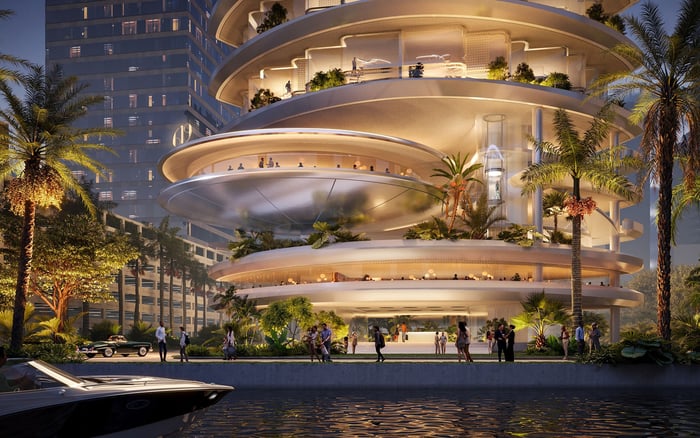
North Bay Village has emerged as a laboratory for brand identity. Pagani Residences have been marketed as the first Pagani-branded residential project, planned as a roughly 28-story tower with approximately 70 residences and delivery discussed for 2028. The appeal is direct: design-led differentiation and a small resident population that can feel closer to a private club than a mega-tower. For the right buyer, intimacy is not a compromise. It is the point.
Edgewater’s luxury trajectory is being shaped by large-format waterfront living with a more residential rhythm than Brickell. Villa Miami has been presented as a low unit-count luxury tower, with marketing that emphasizes privacy and expansive residences and a completion target discussed as 2027. In a market where many new buildings increase density to make the numbers work, limited inventory can translate into tangible advantages: fewer elevator stops, fewer shared spaces, and a stronger sense of ownership.
When evaluating boutique towers, look beyond the headline unit count. Ask how service staffing is planned, how storage and deliveries are handled, and how the building intends to manage typical South Florida usage patterns, including seasonal returns and extended absences.
Aventura continues to attract buyers who want refined residential living with immediate access to dining, shopping, and efficient north-south connectivity. The next wave in this submarket leans boutique rather than bulky, with a focus on curated communities and a more controlled residential experience.
Avenia Aventura has been marketed as a Fendi Casa-branded boutique tower with a very limited residence count, pricing positioned in trophy territory, and completion discussed for 2027. For buyers who are brand-aware but not brand-dependent, boutique branded residences can offer a strong balance: design coherence, an amenity mix that feels curated rather than inflated, and the quiet confidence that comes from a smaller community.
In Aventura, the practical checklist should include view permanence and ease of arrival. Some of the most satisfying residences are those that feel elevated without feeling complicated: straightforward access, secure entry, and proximity to the places you actually frequent, not just the ones you reference.
If Miami remains the headline, West Palm Beach is increasingly part of the broader South Florida thesis. The waterfront corridor is drawing major capital and ambitious, large-scale projects, with multiple developments discussed with 2027 delivery targets.
South Flagler House, a two-tower waterfront project at 1355 South Flagler Drive, has been reported with a targeted 2027 completion and a reported $600 million construction loan. Olara, at 1919 North Flagler Drive, has similarly been reported as a two-tower waterfront condo development with completion anticipated in 2027 and a reported $380 million construction loan. Buyers should always verify current timelines, but public reporting of large construction loans often signals a different level of execution confidence than a concept-only launch.
For those who prioritize a globally recognized service standard, The Ritz-Carlton Residences® West Palm Beach have been discussed with completion in or around early 2028. In a market where branding can be overused, legacy hospitality names tend to matter most in the everyday: staffing, training, and consistency. For primary residents, that can translate into lived ease. For second-home owners, it can translate into peace of mind.
A 2027-and-beyond purchase is not only about loving a rendering. It is about aligning a long timeline with real preferences and a realistic risk posture.
Start by being explicit about what you are actually buying. Is your thesis a view, a service model, or a neighborhood? A supertall in Downtown can be a view thesis. A boutique building in Edgewater can be a privacy thesis. A branded waterfront project in West Palm Beach can be an operations thesis. Naming your priority early makes later decisions cleaner.
Next, interrogate the operating reality. Branded residences can be exceptional, but only if the brand’s role is clearly defined and resident privacy is protected. Ask which spaces are public-facing, which are strictly resident-only, and how arrival, security, and access control are designed. The difference between a quiet luxury building and a busy lifestyle property is often operational, not architectural.
Then, be honest about timeline flexibility. If you need a specific move-in window, prioritize projects publicly targeting 2027 rather than those discussed for 2028 or 2030. If you can wait, a longer runway may deliver a more differentiated product, particularly where complexity and detailing are part of the promise.
Finally, compare inventory profiles. Larger towers can offer more liquidity and more price discovery across line tiers. Boutique buildings can offer scarcity and discretion. Neither is inherently “better.” The better choice is the one that matches how you live, how you travel, and what you want your building to feel like on an ordinary Tuesday, not just on closing day.
Which South Florida areas have the deepest 2027 pipeline? Brickell and Downtown continue to concentrate branded and skyline-scale projects, while Miami Beach and North Beach skew toward scarcity and mixed-use improvements. West Palm Beach is emerging as a true trophy corridor.
Is pre-construction still attractive for luxury buyers? Yes, when you value early selection and customization and are comfortable with timeline risk. The advantage is securing position and optionality; the discipline is underwriting delivery timing, operations, and neighborhood change.
Do branded residences always command a premium? Often, but the lasting premium typically comes from service execution and privacy, not the logo. Evaluate how the brand is integrated into staffing and how resident-only spaces are protected.
What matters most in a 2027-plus purchase decision? Clarity on lifestyle: your daily rhythm, the arrival experience, view permanence, and the operating model you are choosing to live with for years.
For tailored guidance on South Florida’s next generation of residences, connect with MILLION Luxury.
If branded residences are on your mind — as a home or as an allocation — we would be glad to share what we are seeing, privately.
Begin a quiet conversation