A practical design guide for full-time Sixth & Rio owners considering discreet red-light therapy placement inside a luxury Fort Lauderdale condominium residence.
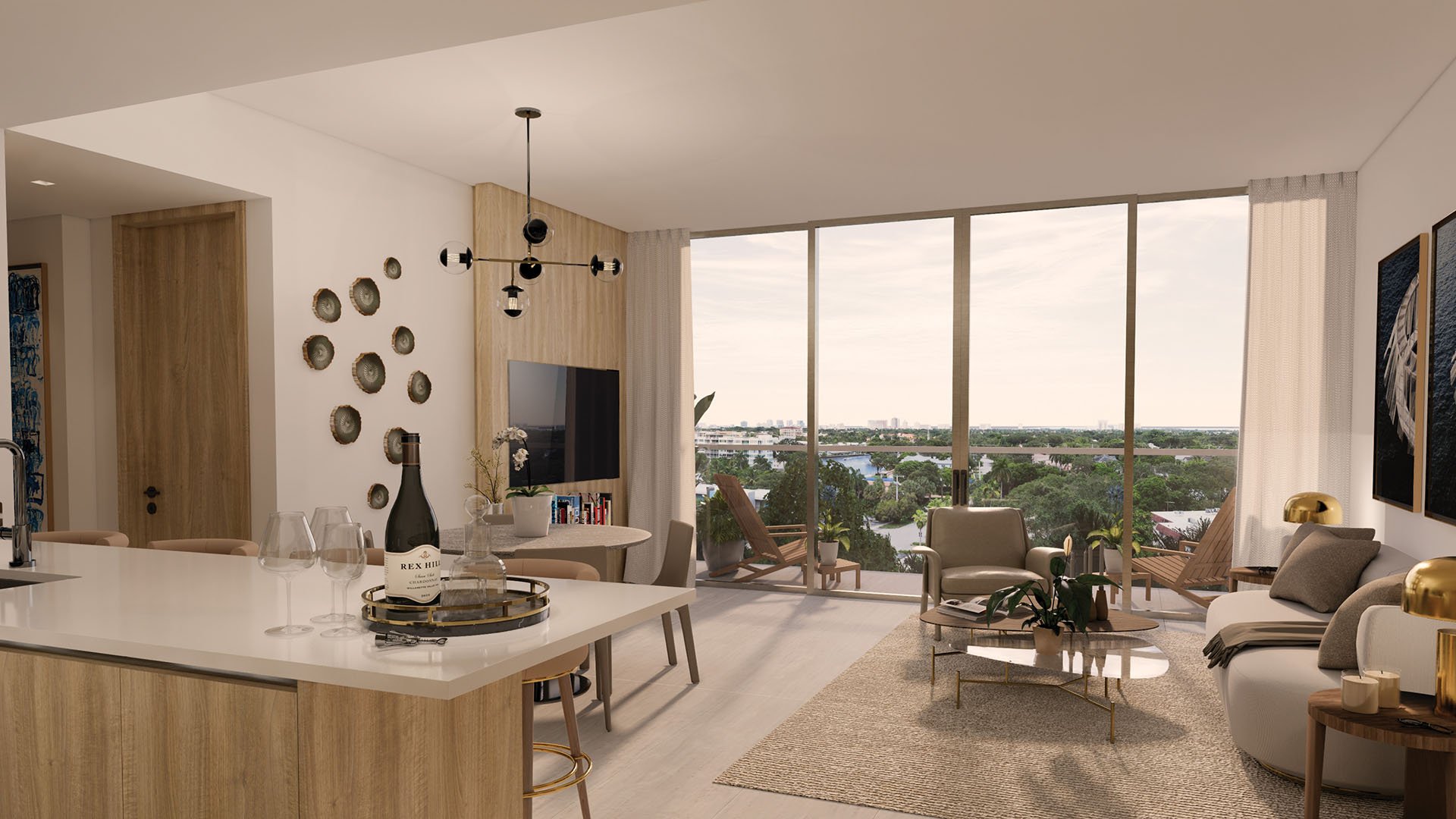
At Sixth & Rio Fort Lauderdale, red-light therapy belongs in the same conversation as lighting control, storage, acoustics, privacy, and finish preservation. For a full-time owner, the question is not simply which panel to buy. It is where the device can live without disrupting the rhythm of a polished Fort Lauderdale condominium residence.
That distinction matters. Even a compact red-light therapy setup has a visual presence. In use, it produces a conspicuous glow that can reflect off glass, polished surfaces, mirrors, and view corridors. In a luxury condominium, especially one intended for daily living rather than occasional stays, wellness equipment should feel integrated, not improvised.
For South Florida owners, the strongest approach is discreet infrastructure. The device should be easy enough to use consistently, private enough to limit visual spill, and flexible enough to respect association rules, electrical standards, and future resale expectations. In practical ownership terms, the conversation sits at the intersection of Sixth & Rio Fort Lauderdale, Fort Lauderdale living, Broward condominium expectations, new-construction finish discipline, resale flexibility, and balcony privacy awareness.
The best placement begins with when the device will actually be used. A full-time owner may want short sessions in the morning, after workouts, after time outdoors, or before winding down in the evening. That routine should determine the room before aesthetics do.
If the equipment must be dragged from storage, plugged into an awkward outlet, and angled around furniture, it will feel temporary. If it remains permanently visible in a public-facing space, it may weaken the calm of the interior. The goal is a middle path: accessible, discreet, and visually quiet when not in use.
Owners should also consider who shares the residence. A couple, family, visiting guests, or household staff can all change the ideal location. Red-light therapy is not an activity most owners want exposed to the entry sequence, dining area, or main salon. Privacy should be designed in from the start.
For many Sixth & Rio owners, the primary suite is the most practical location. It already supports personal routines, dressing, rest, grooming, and evening transitions. It also provides separation from the main entertaining areas, helping keep the red glow from becoming part of the residence’s public identity.
A full-body freestanding tower may work near a dressing area if there is adequate clearance and a nearby outlet. A smaller targeted device can live inside a cabinet or closet and be brought out when needed. A wall-mounted panel requires more caution because any attachment to walls or built-in surfaces should be evaluated against condominium rules and the residence’s finish strategy.
The primary suite also solves for timing. Morning and evening sessions can occur without crossing through the living room or interrupting guests. For an owner using the residence as a true home, not simply a seasonal address, that convenience is often the difference between a wellness intention and a sustainable routine.
A flex den or home office can be an elegant solution if the residence layout supports it. These spaces are typically less ceremonial than the living room and more adaptable than a bedroom. A short scheduled session can fit between calls, after exercise, or before a shower without turning the entire residence into a wellness studio.
The advantage is control. Window treatments can reduce glow spill, doors can create privacy, and storage can be planned with less pressure than in a formal room. A freestanding device can sit behind a screen, inside a closet, or beside a desk zone if it does not compromise circulation.
For full-time owners, the den also accommodates routine without over-customization. Portable and minimally invasive setups tend to preserve optionality. That matters in a luxury condominium, where a future buyer may value the same room as an office, reading room, media space, or guest overflow area.
Spa-style bathrooms may seem like the natural home for red-light therapy. The association is intuitive: bathing, grooming, recovery, and self-care already live there. But bathrooms introduce the most practical constraints.
Humidity, electrical safety, outlet placement, device ventilation, and clear floor space all need careful review. A device that performs well in a dry bedroom may not be appropriate near steam, splash zones, damp towels, or enclosed cabinetry. Owners should follow the manufacturer’s distance, power, ventilation, and eye-protection guidance, and avoid any placement that feels improvised around water.
The bathroom can still work for smaller targeted devices if they are stored properly and used in a dry, controlled area. Full-body panels are more demanding. They require stance distance, stable positioning, and heat management, which may make the primary suite or den the better choice.
The living room is usually the least convincing location for red-light therapy in a refined condominium. It is the room most associated with views, conversation, entertaining, art, and evening atmosphere. A visible panel or tower can shift the mood from residential elegance to equipment display.
Glass-heavy view corridors create another issue. Red light can reflect against windows and glossy surfaces, especially after sunset. Even a short session may be visually louder than expected. In a Fort Lauderdale residence where riverfront or city outlooks are part of the daily experience, owners should protect the clarity of those sightlines.
This does not mean wellness equipment has no place in a luxury home. It means the equipment should defer to the architecture. Public rooms should remain composed, while private rooms do the heavier work of routine and recovery.
Different devices require different planning. A small targeted unit may need little more than a drawer, a stable surface, and a convenient outlet. A freestanding tower needs floor area, stability, and a place to disappear visually when not in use. A wall-mounted full-body panel is the most spatially and administratively demanding.
Before committing to any installation, owners should consider whether the device requires wall anchoring, electrical changes, surface modification, or any work that could affect the slab, walls, exterior appearance, or building systems. In a condominium, those questions are not decorative. They are part of ownership discipline.
Portable setups can be especially attractive at Sixth & Rio because they preserve flexibility. They allow an owner to test real behavior before designing around a device. They also make it easier to adjust as routines change, furniture changes, or resale considerations become more important.
Red-light therapy placement should be treated as a design, electrical, privacy, and association-compliance issue. Owners should avoid unapproved modifications and should not assume that a wellness upgrade is automatically exempt from building standards.
Luxury finishes deserve restraint. A panel mounted in the wrong location can compromise a wall surface. A cord running across a room can undermine the entire design language. A device visible from the main entry can make a residence feel less curated. The best solution is often the quietest one: a private zone, proper power access, concealed storage, and no unnecessary construction.
For owners thinking long term, resale flexibility is part of the wellness equation. A future buyer may appreciate a residence that supports self-care, but may not want a permanent built-in tied to a specific device or routine. The more reversible the setup, the more elegantly it can coexist with luxury ownership.
Where is the best place for red-light therapy at Sixth & Rio? The primary suite or a flex den is usually the strongest choice because both offer privacy, routine convenience, and better control of visible glow.
Should I place a red-light panel in the living room? It is generally less ideal because the red glow can conflict with entertaining spaces, glass reflections, and a polished condominium aesthetic.
Can a bathroom work for red-light therapy? It can work for some smaller devices, but humidity, outlet location, ventilation, and electrical safety need careful review.
Is a wall-mounted panel a good idea in a condominium? It may be possible, but any wall attachment or electrical change should be reviewed against condominium rules and building standards.
Are portable devices better for full-time owners? Portable devices can be practical because they allow daily use while preserving flexibility, finishes, and future resale optionality.
How should owners manage the red glow? Choose a private room, use window treatments where appropriate, and avoid direct exposure into view corridors or open living areas.
Can a home office double as a wellness zone? Yes, a flex den or home office can support short scheduled sessions without making wellness equipment part of the main entertaining space.
Should red-light therapy be built into cabinetry? Built-ins should be approached cautiously because devices need ventilation, access, and future flexibility if equipment or ownership needs change.
What safety guidance should owners follow? Owners should follow the manufacturer’s instructions for distance, power, ventilation, and eye protection, and avoid improvised electrical setups.
Does placement affect resale appeal? Yes, discreet and reversible placement is more likely to preserve the residence’s luxury presentation for a future buyer.
To compare the best-fit options with clarity, connect with MILLION.
If branded residences are on your mind — as a home or as an allocation — we would be glad to share what we are seeing, privately.
Begin a quiet conversation