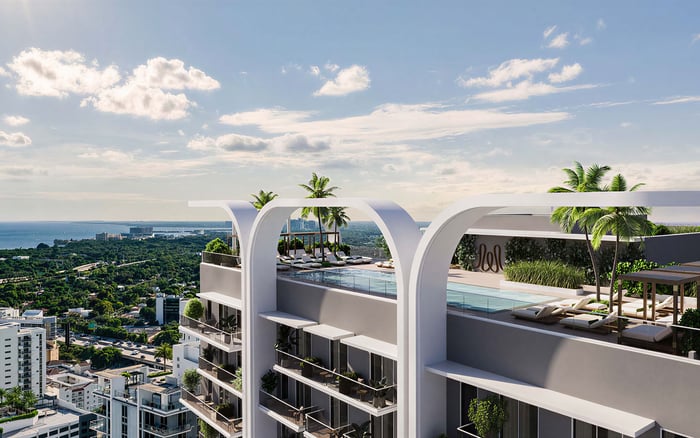
In Miami’s luxury condo market, the most seductive view is not always the safest signal. Association litigation can influence financing, insurance, carrying costs, resale confidence, and negotiation power, making legal diligence as important as skyline exposure.

In Miami, views have always carried emotional force. A sunrise over the Atlantic, the glassy shimmer of Biscayne Bay, or the kinetic skyline of Brickell can define the first impression of a condominium residence. Yet sophisticated buyers increasingly understand that the most important question may not be what the windows frame, but what the association file reveals.
Association litigation can alter the rhythm of a purchase. It may influence lender comfort, insurance review, reserve planning, closing timelines, and future resale confidence. For a buyer considering a primary residence, second home, or investment-grade pied-à-terre, litigation is not a legal footnote. It is part of the asset’s architecture.
The strongest Miami condo search now blends desire with discipline. A compelling water view still matters, especially in buildings where outdoor space, orientation, and privacy shape daily life. But when litigation is active, unresolved, or poorly explained, prudent buyers often pause before allowing a panorama to lead the decision.
A view is visible immediately. Litigation requires interpretation. That asymmetry is precisely why it deserves priority. Buyers can tour a residence in minutes, but understanding the health of a condominium association requires document review, direct questions, and legal counsel capable of weighing the potential implications.
Association litigation can arise in many contexts, including construction claims, vendor disputes, disagreements among owners, insurance matters, or governance issues. Not every case signals distress. Some disputes may be routine, narrow, or already moving toward resolution. Others may point to deeper questions about maintenance, reserves, assessments, or building operations.
For a luxury buyer, the distinction matters. The premium paid for a preferred line, a high floor, or a coveted exposure can be diluted if uncertainty makes the residence harder to finance, insure, lease, or resell. A dramatic terrace may win the showing, but clean governance often wins the closing.
This is especially relevant for buyers filtering by Brickell, Miami Beach, Sunny Isles, water views, resale residences, or new construction. Each search category can produce exceptional residences, but each also requires a distinct diligence lens. A newly delivered building may invite questions about turnover and early warranties. An established tower may require attention to reserves, capital planning, and maintenance history. A waterfront building may deserve heightened focus on building systems, insurance posture, and long-range upkeep.
The most prepared buyers do not wait until the contract is nearly firm to investigate the association. They request and review the core condominium materials early, then treat open questions as part of the negotiation rather than an afterthought.
Key documents typically include condominium disclosures, recent association meeting minutes, financial statements, budgets, reserve information, insurance summaries, special assessment notices, pending litigation disclosures, and board communications where available. The goal is not to become the association’s attorney. The goal is to understand whether the building’s legal and financial profile aligns with the price, the buyer’s risk tolerance, and the intended use of the property.
Meeting minutes can be particularly revealing. They may show whether an issue is being handled transparently, whether owners are receiving clear communication, and whether the board is managing the matter with discipline. Budgets and reserves can help a buyer determine whether litigation is isolated or connected to broader capital needs.
A buyer should also ask whether the litigation involves the association as plaintiff, defendant, or both. The distinction can shape interpretation. A claim brought to protect the association’s interests may be viewed differently from a claim suggesting exposure against the association. The nature of the case, the parties, the insurance response, and the status of the matter all deserve careful review.
Even cash buyers should care about litigation. The absence of a mortgage does not eliminate market perception. Future buyers may use financing, and their lenders may scrutinize the same association disclosures. If a building becomes harder for financed buyers to purchase into, the buyer pool can narrow, influencing resale strategy.
A cash buyer may feel insulated at acquisition, but liquidity matters in luxury real estate. The ability to exit cleanly, refinance, or hold without unexpected friction is part of the asset’s appeal. Litigation that appears manageable today can still affect timing, negotiation leverage, or buyer confidence later.
This does not mean a buyer should automatically avoid every building with a pending matter. In some cases, litigation may be well documented, appropriately insured, and financially contained. In others, the uncertainty may be too large relative to the premium being paid. The essential point is proportionality. A rare residence may justify a more complex diligence process, but the legal narrative must still make sense.
There are moments when a view remains powerful enough to influence the decision. A unique corner residence, a protected sightline, or an exceptional terrace can create long-term value that is difficult to replicate. In Miami, where light, water, and privacy are central to the luxury experience, orientation can be a defining attribute.
But the view should win only after the association file has been understood. If the litigation is limited, counsel is comfortable, the association is communicating clearly, and the financial posture appears aligned with the buyer’s expectations, the emotional dimension of the residence can return to the foreground.
The best outcomes occur when both sides of the decision support each other. The residence feels exceptional, and the building reads as professionally governed. The line is strong, the documents are coherent, and the buyer can move from attraction to conviction.
Before writing an offer, buyers should ask whether there is pending or threatened litigation, what the dispute concerns, whether insurance is involved, and whether the association expects financial exposure beyond existing resources. They should also ask whether any special assessments are pending, recently passed, or under discussion.
Timing matters as well. A case near resolution may present a different risk profile than a newly filed dispute with unclear scope. Buyers should ask whether settlement discussions exist, whether repairs or capital projects are linked to the litigation, and whether owners have received consistent updates.
The contract strategy should reflect the answers. Inspection and document review periods should allow time for professional review. If the buyer needs financing, lender questions should be addressed early. If the buyer is paying cash, diligence should remain rigorous because the next buyer may not be.
In South Florida’s premium condominium market, luxury is no longer defined only by the visible. It is also defined by the unseen systems that allow ownership to feel effortless. Governance, reserves, insurance, communication, and legal posture all contribute to the quality of the experience.
A buyer who prioritizes association litigation over the view is not being pessimistic. The buyer is protecting the elegance of the decision. The most desirable residence is not merely the one with the best outlook. It is the one where beauty, building stewardship, and future marketability align.
For Miami buyers, that means slowing down precisely when emotion accelerates. Stand on the balcony. Take in the water, the skyline, the palms, the light. Then return to the documents. In the luxury tier, restraint is not a lack of enthusiasm. It is the discipline that preserves it.
Should litigation automatically disqualify a Miami condo? No. Some litigation is narrow or manageable, but it should always be reviewed with qualified counsel before a buyer proceeds.
Why can litigation matter more than a view? A view influences enjoyment and desirability, while litigation can affect financing, carrying costs, resale confidence, and closing certainty.
What documents should a buyer request first? Buyers should review disclosures, meeting minutes, budgets, reserves, insurance information, assessment notices, and litigation summaries when available.
Can cash buyers ignore association litigation? No. Cash may simplify the purchase, but future resale, refinancing, and market perception can still be affected.
Is new construction less risky than resale? Not necessarily. New construction and resale each require different diligence, including governance, warranties, reserves, and maintenance review.
Does litigation always lead to a special assessment? No. The possibility depends on the nature of the dispute, insurance response, reserves, and the association’s financial position.
When should an attorney get involved? Ideally before the buyer’s review period expires, and early enough to evaluate documents, risks, and possible contract protections.
Can litigation affect mortgage approval? It can. Some lenders may ask additional questions about pending matters, insurance, reserves, or the association’s financial exposure.
Should a buyer still pay a premium for a water view? A water-view premium can be justified when the association profile is sound and the buyer understands the building’s legal posture.
What is the smartest approach in competitive Miami markets? Move quickly on the residence, but keep document review disciplined so the final decision is both emotional and financially controlled.
For a discreet conversation and a curated building-by-building shortlist, connect with MILLION.
If branded residences are on your mind — as a home or as an allocation — we would be glad to share what we are seeing, privately.
Begin a quiet conversation