A discreet buyer’s guide for Singapore-based families and globally mobile wealth considering Bal Harbour, Surfside, Brickell and South Florida luxury residences.
For a Singapore-based buyer, South Florida is rarely a casual purchase. It is more often a deliberate lifestyle allocation, shaped by family mobility, education planning, capital preservation, privacy, and the desire for a residence that performs gracefully across seasons. Bal Harbour sits at the refined end of that conversation: discreet, coastal, service-oriented, and close to the larger Miami ecosystem without feeling absorbed by it.
The most sophisticated buyers do not begin with a building. They begin with a framework. Is the residence primarily for family use, long-horizon ownership, occasional retreat, or future relocation flexibility? Will the asset be held personally, through a structure, or as part of a wider succession plan? Those answers should be addressed before touring, because they influence everything from deposit comfort to insurance review, governance standards, and eventual resale positioning.
This article belongs in the practical realm of Buyer's Guides rather than trend-chasing. The goal is not to suggest that one market is replacing another. It is to clarify how a globally mobile buyer can evaluate Bal Harbour and the surrounding South Florida luxury corridor with discipline.
Bal Harbour appeals to buyers who prefer quiet luxury over visibility. The residential experience is intimate, and the best purchase decisions tend to reward patience. A buyer comparing trophy apartments, ocean-view homes, and branded residences should consider not only architecture and finish, but also how the building feels on an ordinary Tuesday: arrival sequence, staff tone, elevator privacy, amenity rhythm, and the quality of neighboring ownership.
In Bal Harbour, the emotional pull is often immediate, but the underwriting should remain measured. A residence such as Rivage Bal Harbour may enter the conversation for buyers studying the new-development side of the market, while Oceana Bal Harbour may be considered by those comparing established luxury environments. The point is not to chase the newest name. It is to understand which residential culture fits the family.
For buyers arriving from Singapore, the private-banking mindset can be useful. Treat each property as a balance of liquidity, carrying cost, personal utility, and scarcity of experience. The best home may not be the most dramatic one. It may be the residence whose building governance, floor plan, staff discretion, and location make ownership feel effortless.
Before a contract is signed, cross-border buyers should coordinate tax, legal, banking, insurance, and estate-planning advice. This is not a formality. The method of ownership can affect privacy, transfer planning, financing, and future disposition. A buyer should understand what funds will be used, how they will move, what documentation may be requested, and how the purchase fits within the family’s wider asset map.
Currency exposure also deserves attention. A residence priced in U.S. dollars can feel different over time depending on exchange-rate movements and the buyer’s income, investment portfolio, and liabilities. Sophisticated families often separate the lifestyle decision from the funding decision, then bring them back together only after counsel has reviewed the full picture.
Financing should be approached with similar restraint. Some buyers prefer cash for certainty and speed. Others prefer leverage for portfolio flexibility. Neither approach is inherently superior. The right answer depends on liquidity, residency goals, risk tolerance, and how long the family expects to hold the home.
Waterfront ownership carries its own form of beauty and responsibility. The view may be the reason a buyer falls in love, but the building’s underlying condition, insurance posture, reserves, maintenance culture, and governance should drive the final decision. A polished lobby is not a substitute for careful document review.
Buyers should ask how the property is managed, how assessments are handled, and how the association communicates with residents. They should also understand the practical realities of coastal living, from service access to seasonal occupancy patterns. In the ultra-luxury segment, the best buildings often distinguish themselves less through marketing language than through consistency: staff retention, quiet common areas, clean financial administration, and a resident culture that respects privacy.
For a buyer who wants proximity to Bal Harbour but prefers a slightly different atmosphere, Surfside can be a natural comparison. The Delmore Surfside may be part of a broader review for buyers considering the northern beaches, where scale, design language, and neighborhood feel can vary significantly from one address to the next.
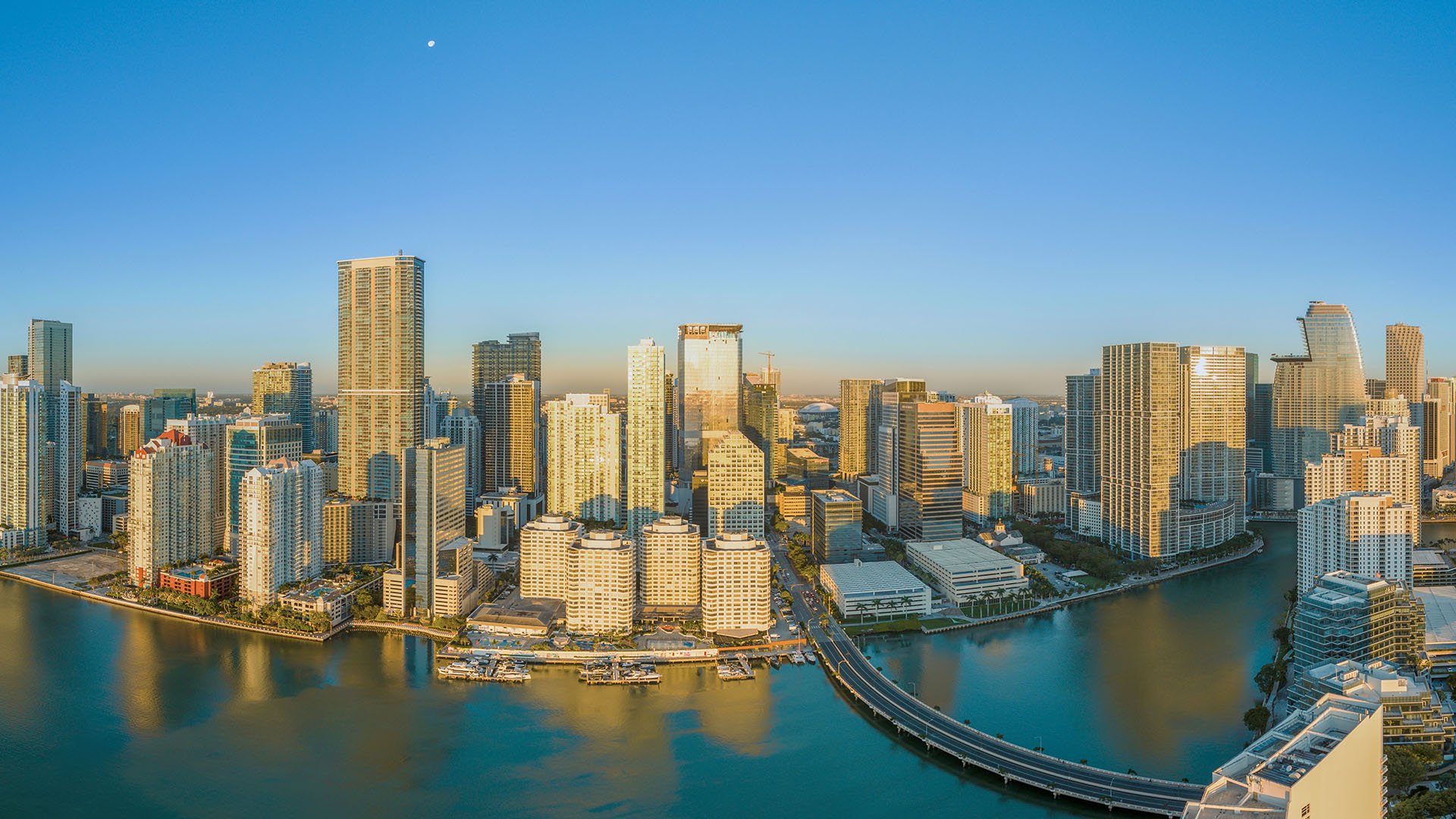
Not every Singapore-linked buyer will choose Bal Harbour first. Some will want the energy of Brickell, especially if the purchase is connected to business travel, finance, dining, or a more vertical city lifestyle. Brickell offers a different ownership thesis: less resort-like, more urban, and often better suited to buyers who want immediate access to Miami’s business core.
A residence such as The Residences at 1428 Brickell can serve as a useful point of comparison when weighing city living against the quieter waterfront rhythm of Bal Harbour. The key question is not which location is more prestigious. It is which location the family will actually use.
For some buyers, the answer may be a two-step strategy: secure a Miami base first, then later refine into a more permanent coastal residence. For others, the emotional clarity of Bal Harbour will make the decision immediate. Either way, touring both settings can help prevent a costly mismatch between image and daily life.
Investment thinking matters, but it should not flatten the purchase into a spreadsheet. Ultra-prime residential real estate is partly about utility, privacy, and personal enjoyment. A home that materially improves the family’s time together can justify itself differently from a purely financial asset.
Still, discipline is essential. Buyers should compare recent availability, building reputation, floor-plan rarity, view quality, renovation exposure, and the depth of future buyer demand. They should also consider exit flexibility. A highly personalized residence may be wonderful for its owner but less liquid later if design choices narrow the audience.
The most resilient decisions tend to pair emotional conviction with conservative assumptions. Do not underwrite perfection. Underwrite a realistic holding period, a sober view of carrying costs, and a clear reason why the residence will remain desirable when market language changes.
Is Bal Harbour suitable for a Singapore-based family seeking a U.S. residence? It can be, provided the family values privacy, coastal living, and a quieter luxury environment. The decision should be coordinated with legal, tax, and estate advisers.
Should buyers choose Bal Harbour or Brickell first? Bal Harbour suits a resort-like residential rhythm, while Brickell suits a more urban lifestyle. Touring both can clarify which setting the family will actually use.
What should cross-border buyers review before making an offer? Ownership structure, funding route, tax treatment, estate planning, insurance, and building documents should all be reviewed before contract deadlines become urgent.
Is cash always better than financing? Not necessarily. Cash can simplify execution, while financing may preserve liquidity. The right choice depends on the buyer’s broader financial plan.
How important is building governance in Bal Harbour? It is central. Governance, reserves, maintenance culture, and resident standards can affect both daily enjoyment and long-term ownership quality.
Should a buyer focus only on new construction? No. New development may offer contemporary design, but established buildings can offer proven operations and a clearer sense of resident culture.
How should buyers think about waterfront residences? The view is only one part of the decision. Insurance, maintenance, building condition, and association management deserve equal attention.
Can Surfside be an alternative to Bal Harbour? Yes. Surfside can appeal to buyers who want proximity to Bal Harbour with a different neighborhood feel. The comparison should be made building by building.
What makes a purchase more defensible from an investment perspective? Scarcity, floor-plan quality, view strength, governance, and realistic carrying-cost assumptions all contribute to a more durable decision.
When should a buyer assemble advisers? Advisers should be engaged before serious negotiations begin. Early coordination helps avoid rushed decisions once the right residence appears.
When you're ready to tour or underwrite the options, connect with MILLION.
If branded residences are on your mind — as a home or as an allocation — we would be glad to share what we are seeing, privately.
Begin a quiet conversation