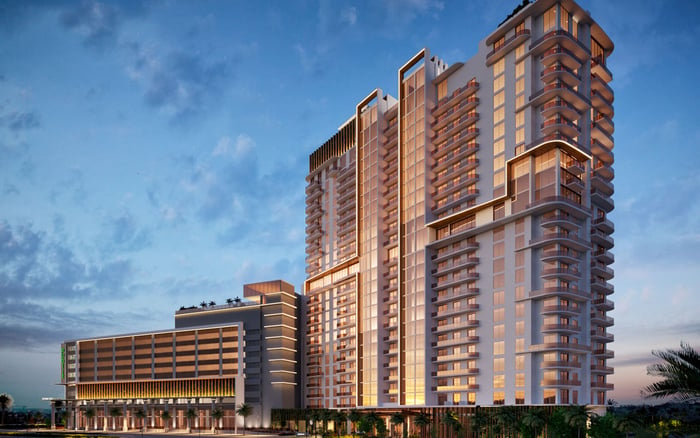
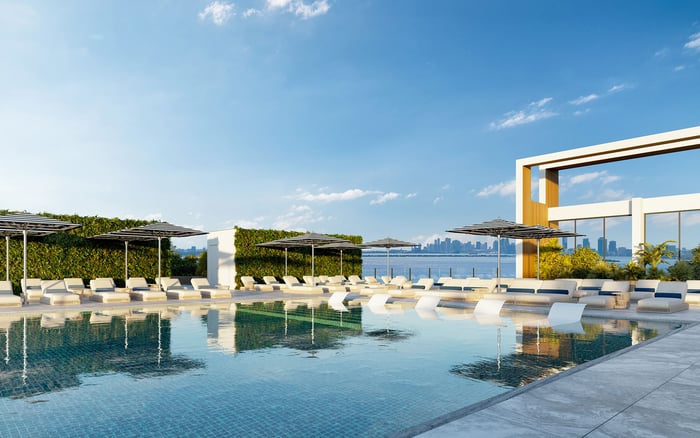
A discreet buyer framework comparing Shoma Bay in North Bay Village with Oceana Key Biscayne across full-time living, seasonal use, rental restrictions, carrying expectations, and long-term optionality.
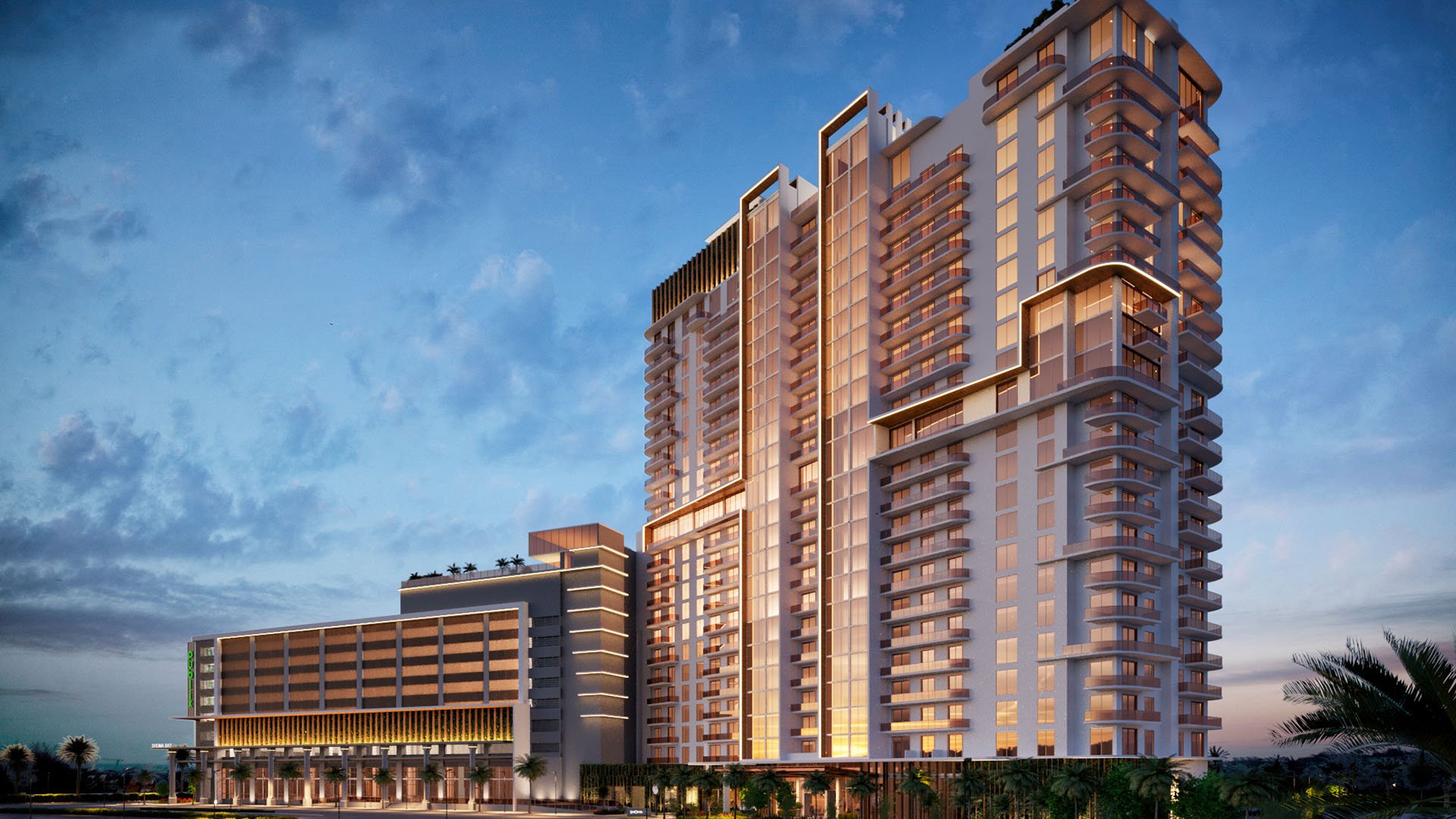
Shoma Bay North Bay Village and Oceana Key Biscayne is not a simple comparison between two waterfront addresses. It is a test of how a buyer expects to live in South Florida in 2026: full-time, seasonally, flexibly, privately, or with a disciplined measure of rental offset. Both properties speak to luxury, water, and lifestyle, but they occupy very different positions in the market.
Shoma Bay represents the North Bay Village side of the equation: newer, pre-construction, mixed-use, waterfront, and tied to an emerging bayfront submarket. Oceana Key Biscayne represents the completed beachfront condominium in a mature island community, where the appeal is less about reinvention and more about established residential gravity.
In internal shorthand, this is a Shoma Bay North Bay Village versus Oceana Key Biscayne decision, but the real taxonomy is broader: North Bay Village optionality, Key Biscayne permanence, pre-construction timing, and long-term rental discipline. The correct answer depends less on which property feels more glamorous and more on whether the ownership structure matches the buyer’s intended use.
For a full-time or co-primary owner, Oceana Key Biscayne has the clearer residential thesis. It is positioned as an ultra-luxury beachfront property within a mature island community, and that matters. Buyers seeking daily routines, residential calm, beach access, and a building culture oriented toward end users will often place a premium on the predictability of a completed, established luxury condominium.
That does not make Shoma Bay less compelling. It makes the premise different. Shoma Bay is the newer-construction bet on North Bay Village’s continued maturation, with contemporary amenities, lifestyle programming, and the energy of a waterfront mixed-use concept. A buyer who wants to participate in an evolving bayfront neighborhood may find that more compelling than buying into a fully formed island environment.
The distinction is not purely emotional. Full-time owners tend to scrutinize sound, traffic patterns, elevator experience, service rhythm, neighbors, school and family logistics, and the feel of a building on ordinary weekdays. Oceana Key Biscayne is the more proven residential environment. Shoma Bay is more about future-facing convenience, design freshness, and the possibility that today’s emerging location becomes tomorrow’s better-understood address.
Seasonal buyers often misread the South Florida condominium market by focusing first on views and amenities, then only later on rules. That sequence should be reversed. If the residence will be used for winter months, holidays, school breaks, or spontaneous long weekends, the buyer must understand how the building treats access, guest use, leasing, approvals, and turnover.
Shoma Bay appears better aligned with flexibility for a mobile or hybrid owner. Its appeal is tied to contemporary lifestyle programming and a use profile that may feel more natural for buyers who do not plan to live in residence every month of the year. It is also presented as a comparatively lower-entry-price alternative to established ultra-prime Key Biscayne beachfront product, which may matter for buyers who want Miami exposure without anchoring all capital in a mature resort-island setting.
Oceana Key Biscayne, by contrast, appears better aligned with private, low-turnover resort-residential ownership. It is the stronger fit for a seasonal owner who wants the residence to feel personal, quiet, and protected, not constantly re-optimized for rental yield. The value proposition is stability and scarcity of feel, rather than maximum flexibility.
Neither property should be treated as a hotel-condo or a dedicated short-term-rental building. Buyers should not assume nightly turnover or informal leasing flexibility. This is especially important for buyers who mentally underwrite a residence with expected rental income before confirming the governing documents.
Oceana Key Biscayne is framed as the stricter rental-restriction choice, which makes it more appropriate for personal use than for a buyer seeking frequent leasing flexibility. That restriction profile may be part of the appeal for end users. A building with tighter rental culture can support privacy, continuity, and a more residential atmosphere.
Shoma Bay should still be approached with diligence, not assumptions. Its broader appeal includes flexibility, but buyers need to verify lease minimums, approval procedures, guest-use rules, pet policies, transfer fees, and any restrictions that affect seasonal or investor-style ownership. A marketing impression is not a substitute for condominium documents, especially when the economic plan relies on rental income.
The cleaner underwriting question is simple: if the unit could not be rented as often as hoped, would the purchase still make sense as a lifestyle asset? If the answer is yes, the buyer has room to be patient. If the answer is no, the rental rules become the center of the decision, not a footnote.
Shoma Bay is presented as the lower-entry-price alternative relative to established ultra-prime Key Biscayne beachfront product. For buyers managing allocation across multiple homes, businesses, or family offices, that can be meaningful. A lower entry point may allow more tolerance for neighborhood evolution, construction timelines, and future market absorption.
Oceana Key Biscayne asks the buyer to accept a different tradeoff: a completed beachfront condominium in a mature luxury setting, with the expectation of higher carrying costs and less rental optionality. The premium is not only for the real estate, but also for the known environment, residential depth, and established island identity.
Exit logic also differs. Shoma Bay’s future resale story will likely depend on how convincingly North Bay Village continues to mature as a luxury bayfront destination and how buyers perceive the building’s use flexibility. Oceana Key Biscayne’s exit story leans on established beachfront positioning, private residential appeal, and Key Biscayne’s enduring identity as a mature island market.
A sophisticated buyer should not ask which one will appreciate more in isolation. The sharper question is which asset will be easier to hold through market cycles because the owner actually uses it in the way the building is designed to be used.
Choose Shoma Bay if the priority is newer construction, contemporary amenities, a more flexible ownership posture, and participation in an evolving North Bay Village setting. It is the more natural fit for buyers who want optionality and are comfortable with the dynamics of an emerging bayfront submarket.
Choose Oceana Key Biscayne if the priority is a completed ultra-luxury beachfront condominium, full-time or co-primary use, privacy, and a mature island residential environment. It is better aligned with buyers who want lower turnover, stronger personal-use orientation, and a community culture that feels more settled.
For 2026 buyers, the smartest decision is not to force one property into the other’s role. Shoma Bay should not be evaluated as if it were an established Key Biscayne beachfront condominium. Oceana Key Biscayne should not be evaluated as if it were a flexible new mixed-use bayfront play. Each has a coherent buyer, but the buyer must be honest about use before negotiating price.
Which option is better for full-time ownership? Oceana Key Biscayne is the more proven full-time or co-primary ownership fit because it sits in a mature beachfront island community.
Which option is better for seasonal use? Shoma Bay appears better aligned with flexibility, while Oceana Key Biscayne favors private, low-turnover seasonal ownership.
Can buyers assume short-term rental use at either property? No. Neither property should be treated as a hotel-condo or dedicated short-term-rental building.
Is Shoma Bay the newer-construction option? Yes. Shoma Bay is framed as the newer, pre-construction North Bay Village alternative for 2026-oriented buyers.
Is Oceana Key Biscayne already completed? Yes. Oceana Key Biscayne is positioned as a completed ultra-luxury beachfront condominium.
Which option has the stricter rental posture? Oceana Key Biscayne is framed as the stricter rental-restriction choice and is better suited to personal use.
Why might a buyer prefer Shoma Bay? A buyer may prefer Shoma Bay for optionality, contemporary amenities, and exposure to an evolving bayfront neighborhood.
Why might a buyer prefer Oceana Key Biscayne? A buyer may prefer Oceana Key Biscayne for established luxury, beachfront living, and a deeper residential setting.
What should rental-focused buyers verify first? They should verify lease minimums, approval rules, guest-use policies, and all rental restrictions in the condominium documents.
What is the central 2026 decision point? The central test is whether the property fits the buyer’s intended mix of primary residence, seasonal use, rental flexibility, and exit optionality.
For a confidential assessment and a building-by-building shortlist, connect with MILLION.
If branded residences are on your mind — as a home or as an allocation — we would be glad to share what we are seeing, privately.
Begin a quiet conversation