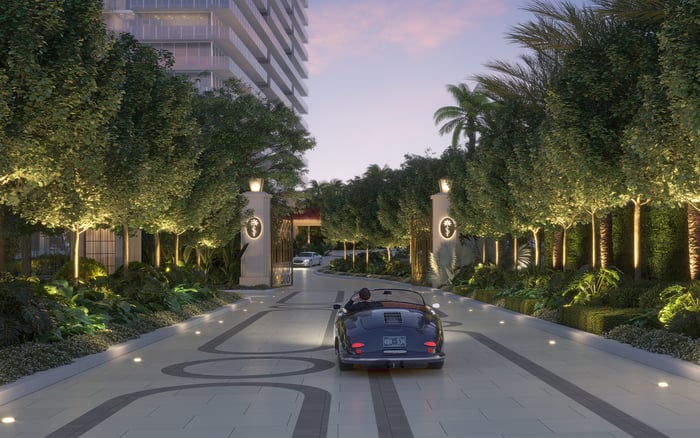
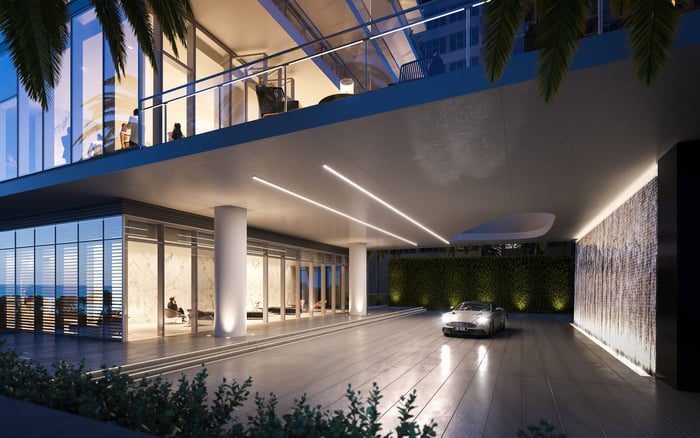
A discreet buyer’s guide to the full-time ownership decision between Shell Bay by Auberge Hallandale and a Brickell bayfront lifestyle, focused on daily amenity use, governance, insurance, taxes, resilience, and carrying-cost discipline.
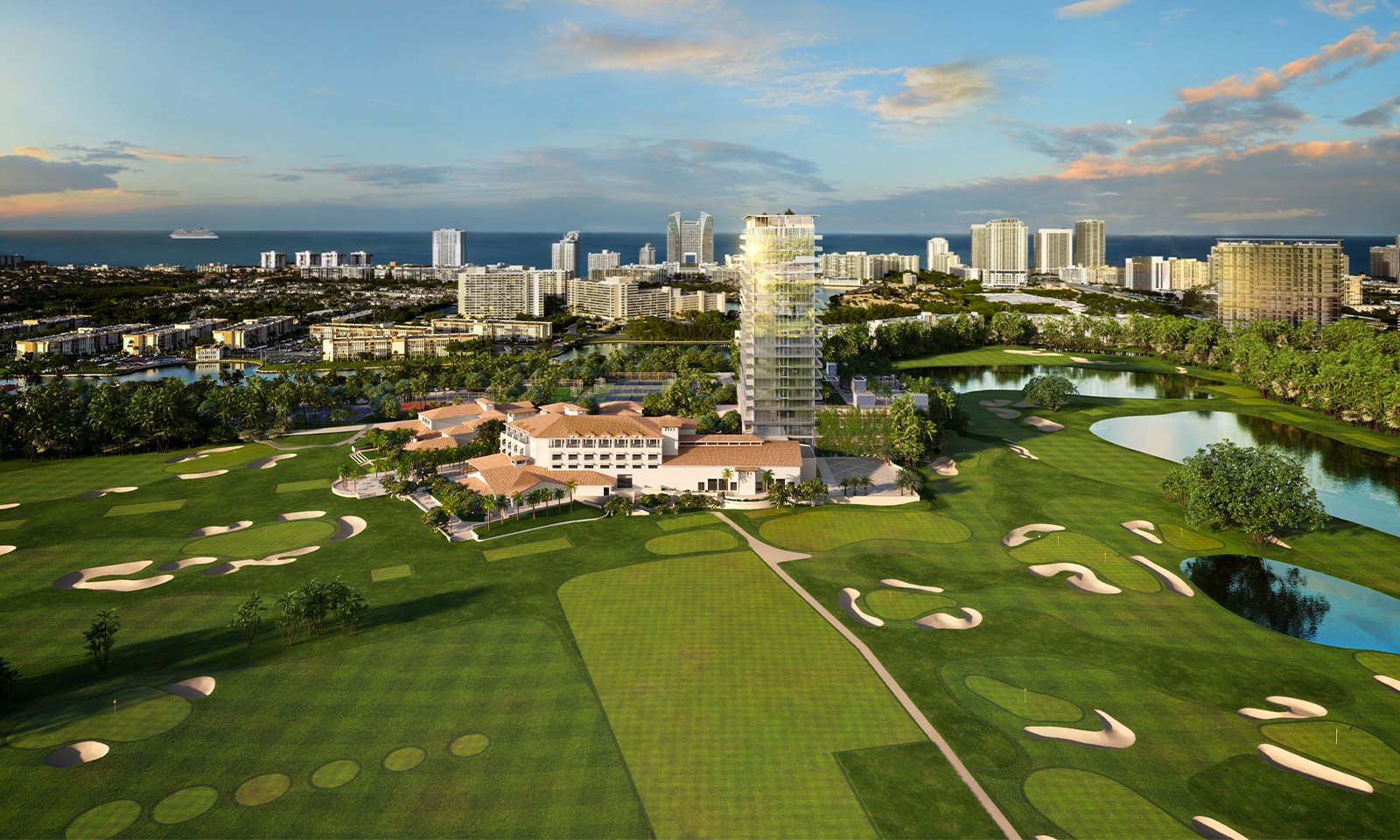
The most revealing way to compare Shell Bay by Auberge Hallandale with Viceroy Brickell is not to ask which feels more glamorous on arrival. It is to ask which one still feels right on an ordinary Tuesday morning, six months after closing, when novelty has become routine.
Shell Bay by Auberge Hallandale belongs to the resort-minded side of the South Florida ownership equation. It speaks to buyers drawn to an immersive club atmosphere, brand-led service, and the ocean-adjacent drama that makes a residence feel removed from the daily city grid. Viceroy Brickell, by contrast, sits in the imagination as the Brickell counterpoint: a more urban, bayfront mode of living, with calm water outlooks, vertical convenience, and proximity to the rhythms of Miami’s financial and dining core.
For a second-home buyer, the emotional pull may be enough. For a full-time owner, the standard is higher. The right residence must justify its service model, monthly obligations, governance culture, and long-term resilience. The question is not only where you want to wake up. It is what kind of lifestyle you are prepared to fund every month.
Shell Bay by Auberge Hallandale is best understood as a coastal, club-oriented proposition, not merely a luxury tower with amenities. Its appeal is experiential: a full-service environment designed for owners who want resort language to shape daily life rather than remain in the background as an occasional indulgence.
That distinction matters. A brand-heavy amenity program can be compelling when an owner uses it consistently. It can feel inefficient when the pool, wellness spaces, dining, service culture, and club-like features become infrequent conveniences rather than daily habits. Full-time buyers should be candid about their patterns. Do you want staff familiarity? Do you entertain often? Do you expect your residence to operate with the ease of a private resort? Or do you prefer privacy first, with services available but not central to your routine?
Hallandale also occupies a particular South Florida position, shaped by both Miami-Dade energy and Broward practicality. That geography gives it a distinct identity: close enough to major luxury corridors to feel connected, yet separate enough to offer a different cadence. The Hallandale buyer is often looking for relief from the urban tower experience without leaving the region’s broader social and cultural orbit.
Oceanfront appeal should be evaluated with discipline. As a lifestyle idea, oceanfront living delivers theater: light, horizon, breeze, and a sense of arrival. But for primary-residence ownership, beauty is only part of the underwriting. Insurance exposure, maintenance assumptions, building reserves, and long-term resilience deserve equal attention.
The Brickell side of the decision is less about escape and more about compression. It is the appeal of living close to business, dining, wellness, friends, and waterfront quiet within a single vertical neighborhood. Viceroy Brickell fits that broader mental category for buyers weighing a bayfront urban home against the more immersive resort identity of Shell Bay.
Brickell has its own luxury logic. It rewards owners who value efficiency, access, and a walkable or chauffeured daily pattern. The view experience is different as well. Bayfront calm is less cinematic than open-ocean drama, but it can be more soothing for full-time living. Waterview premiums are not simply about spectacle. They are about how a home regulates mood, light, and pace over hundreds of days, not a handful of weekends.
For some owners, Brickell’s energy is the point. For others, it becomes visual and logistical noise. The full-time test is therefore personal and precise: would you rather return each day to a resort environment that feels apart from the city, or to a bayfront tower that keeps the city within reach?
At the upper end of the market, the purchase price is only the first line item. Sophisticated owners focus on the durability of the ownership experience. Monthly assessments, insurance structure, tax realities, service expectations, and future capital needs all shape whether a residence feels elegant or burdensome over time.
For Shell Bay, carrying-cost transparency is central because the lifestyle promise is service-rich. A deeper amenity platform often means a deeper operating model. That can be entirely appropriate for owners who actively use the offering. It becomes less persuasive when the amenities are admired more than lived.
For Brickell, the equation may look different, but it is not automatically simpler. Urban luxury towers can also carry substantial service, staffing, maintenance, and association obligations. The right comparison is not resort versus inexpensive. It is resort value versus urban value, measured against actual use.
Taxes must also be treated as part of the lifestyle cost, not an afterthought. Full-time buyers should consider how ownership expenses fit into broader estate, residency, and liquidity planning. A million-level residence should be enjoyable, but it should also be legible on a personal balance sheet.
In South Florida, governance is a luxury feature. A well-managed association or ownership structure can protect the experience as effectively as design, service, or view. Poor governance, by contrast, can erode confidence even in a beautiful building.
Primary-residence buyers should pay attention to how decisions are made, how reserves are discussed, how service standards are maintained, and whether the community’s financial posture matches its lifestyle promise. This is especially important where branded amenities and resort-level expectations are part of the value proposition.
Insurance is another practical screen. Coastal ownership carries exposure that cannot be wished away by architecture or branding. Buyers should understand how coverage, deductibles, and association-level policies interact with their own risk tolerance. The best luxury ownership conversations are not alarmist. They are clear.
Long-term resilience belongs in the same discussion. A South Florida home base should be evaluated for how it may perform through changing insurance markets, coastal conditions, maintenance cycles, and owner expectations. Broward and Miami-Dade buyers both understand that lifestyle and infrastructure now belong in the same sentence.
Shell Bay by Auberge Hallandale is likely to resonate with the owner who wants a residence to feel like a private resort system. The ideal buyer values service rituals, club atmosphere, coastal energy, and a more immersive environment than a purely urban tower can provide. This is not simply a vacation-property mindset. It is a daily-living choice.
Viceroy Brickell is likely to suit the owner who wants bayfront composure without giving up urban access. The Brickell buyer may be less interested in resort immersion and more interested in convenience, skyline energy, and the ability to move between home, work, dining, and culture with minimal friction.
Neither answer is inherently more luxurious. The better answer is the one that matches repeated behavior. New-construction buyers in South Florida often fall in love with renderings, amenities, and brand language. Full-time owners need to fall in love with operations, predictability, and the way a building behaves when life is routine.
Is Shell Bay by Auberge Hallandale better for full-time living or occasional use? It can make sense for full-time living if the owner will genuinely use the resort and club-style amenities as part of daily life.
How should buyers compare Shell Bay with Viceroy Brickell? Compare daily rhythm first: resort immersion and coastal separation versus bayfront calm and urban proximity.
Why do carrying costs matter so much in this decision? Full-time owners live with monthly costs continuously, so service value, insurance, taxes, and assessments must feel justified.
Is a branded amenity program always worth the premium? It is worth more to owners who use the amenities frequently and value a managed service culture every day.
What should primary-residence buyers ask about governance? They should understand decision-making, reserves, service standards, and how the community plans for long-term obligations.
Does coastal ownership require extra diligence? Yes. Insurance exposure, maintenance assumptions, and resilience should be reviewed carefully before committing.
Why might a buyer prefer Brickell over Hallandale? Brickell may suit buyers who want city access, bayfront views, and a more efficient vertical lifestyle.
Why might a buyer prefer Hallandale over Brickell? Hallandale may appeal to buyers seeking a more resort-like setting between Miami-Dade and Broward influences.
Should taxes be part of the lifestyle comparison? Yes. Tax realities are part of the true ownership cost and should be considered alongside amenities and views.
What is the core question for full-time owners? The core question is whether the residence’s lifestyle, governance, and carrying costs still feel right in everyday use.
To compare the best-fit options with clarity, connect with MILLION.
If branded residences are on your mind — as a home or as an allocation — we would be glad to share what we are seeing, privately.
Begin a quiet conversation