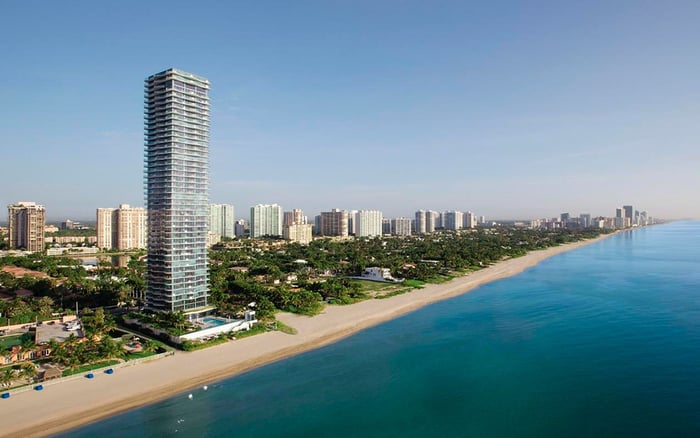
A buyer-focused guide to the inspection, engineering, reserve, warranty, and association-record questions that matter before purchasing at Shell Bay by Auberge Hallandale.

For buyers evaluating Shell Bay by Auberge Hallandale, the first question is not whether an old milestone inspection report exists. Shell Bay is positioned as a new or newly delivered luxury development, so purchasers should not expect the decades-long inspection archive associated with an aging coastal tower. The sharper inquiry is whether the project has a complete, well-organized record of design, permitting, construction inspections, approvals, commissioning, closeout documents, and certificate-of-occupancy history.
That distinction matters. In Hallandale and across Broward, sophisticated buyers no longer treat building safety as an abstract association issue to revisit years after closing. They bring it into contract review, pricing discussions, financing comfort, insurance evaluation, and long-term ownership planning. For an investment buyer or a second-home owner, the diligence question is the same: what does the paper trail reveal about how the building was designed, reviewed, delivered, documented, and prepared for future structural obligations?
The core request should be direct: what engineering, structural, municipal, and construction closeout records are available before a buyer signs or becomes non-contingent? At a branded luxury project, the answer should extend beyond polished marketing language. Buyers should ask whether Shell Bay has engineering reports, structural peer reviews, threshold inspection records, commissioning materials, municipal inspection records, or other technical documentation that can be shared through the appropriate review process.
A buyer should also ask who served as the structural engineer of record, contractor, architect, and principal consultants, and whether any relevant reports or closeout documents can be reviewed by the buyer’s own counsel, engineer, or condo-document reviewer. The purpose is not to second-guess every construction decision. It is to confirm that the project’s documentation is complete enough to support future maintenance, reserve planning, warranty claims, and eventual milestone inspection review.
This same mindset is increasingly relevant for buyers comparing other branded or coastal residences, from 2000 Ocean Hallandale Beach to Auberge Beach Residences & Spa Fort Lauderdale. The luxury buyer is not only purchasing views, service, and amenity access. The buyer is purchasing into a building governance system that must preserve technical knowledge over time.
For a new development, the most relevant inspection history is often its quality-control history. Buyers should ask how construction oversight was documented, how municipal approvals were obtained, and how the developer is preserving records for the condominium association. If a future milestone inspection is years away, the association’s ability to respond intelligently will depend on what records are retained now.
Ask whether the developer-controlled association has formal policies for retaining construction records, engineering documents, warranties, maintenance logs, inspection correspondence, and turnover materials. Just as important, ask whether future owners will have access to a complete records library after control transfers from the developer to the condominium association. A missing file can become expensive later, especially when engineers, insurers, lenders, or association boards need to understand the original construction baseline.
For oceanfront or near-coastal assets, buyers should also ask whether specific components require heightened monitoring because of exposure, water, salt air, drainage patterns, or intensive amenity use. Garages, podium decks, pools, terraces, balconies, seawalls, drainage systems, façade assemblies, and waterproofing systems all deserve careful questioning. This is not an accusation that a problem exists. It is disciplined ownership planning in a coastal environment.
Before closing, a buyer should ask whether any construction defects, water-intrusion issues, concrete concerns, façade items, balcony issues, or warranty claims have already been identified during delivery. If issues exist, the next questions are whether they have been corrected, whether responsibility is documented, whether warranty rights are preserved, and whether the association will receive the relevant correspondence.
Luxury projects often involve complicated shared structures, hospitality-style amenities, club facilities, and layered operating arrangements. Buyers should ask whether those components are governed by the same condominium association budget or by separate entities. The answer affects who pays for future inspections, monitoring, repairs, replacements, insurance obligations, and reserve contributions.
That is particularly important in a market where purchasers may also be reviewing projects such as Four Seasons Hotel & Private Residences Fort Lauderdale and Armani Casa Residences Pompano Beach. The ownership experience can be highly refined, but the documents still need to explain which entity maintains which component, how costs are allocated, and how future structural or life-safety obligations will be funded.
The condominium documents, proposed budgets, reserve schedules, and any engineering-based reserve studies should be reviewed with the same seriousness as the floor plan. Buyers should ask whether future structural, façade, roof, waterproofing, garage, balcony, and life-safety costs are contemplated in the reserve framework. If there is a separate amenity, club, or shared-facility structure, ask whether its inspection and repair obligations are funded separately.
A buyer should also ask how the association expects to prepare financially for the building’s first future milestone inspection and any related structural-integrity reserve obligations. The answer may not be a final dollar amount today, especially for a new development, but there should be an organized philosophy: preserve records, monitor components, fund reserves responsibly, and avoid pushing predictable costs into surprise assessments.
Lender, insurer, title, and condo-document questions can also be revealing. Ask whether any reviewers have raised concerns about inspection history, reserve planning, structural documentation, warranties, or association records. A clean answer builds confidence. A vague answer does not necessarily end the conversation, but it should prompt deeper review before contingencies expire.
Milestone-inspection diligence is not a box to check after closing. It belongs in the purchase process. Buyers can use the answers to negotiate timing, request contingencies, involve specialists, evaluate long-term carrying costs, and decide whether the ownership structure matches their risk tolerance.
At Shell Bay by Auberge Hallandale, the most valuable question may be simple: if the first future milestone inspection were being prepared tomorrow, would the association already have the records, consultants, budgets, warranties, and maintenance history needed to respond with confidence? If the answer is yes, that supports the premium nature of the asset. If the answer is incomplete, the buyer should know before committing capital.
Should Shell Bay have a long milestone inspection history already? Not necessarily. As a new or newly delivered luxury development, the more relevant history is the construction, approval, engineering, and closeout record.
What documents should I ask for first? Start with engineering reports, structural peer reviews, threshold inspection records, municipal inspection records, commissioning materials, and closeout documents if available.
Who should review the technical records for me? Your real estate attorney, condo-document reviewer, and a qualified engineer can help interpret the documents before contract deadlines expire.
Should I ask about the structural engineer and contractor? Yes. Buyers should ask who the structural engineer of record, contractor, architect, and key consultants were, and what documents they produced.
What if there is no milestone inspection report yet? That may be normal for a new project. The issue is whether the building has a strong paper trail that will support future inspections.
Should I ask about water intrusion or façade issues? Yes. Ask whether any water-intrusion, concrete, façade, balcony, waterproofing, or warranty concerns have been identified during delivery.
Why do reserves matter in a new building? Reserves show whether the association is preparing for future structural, roof, façade, waterproofing, and life-safety costs rather than reacting later.
Do amenities affect inspection costs? They can. Buyers should ask whether club facilities, pools, terraces, garages, and shared structures are funded by the same association or separate entities.
Should lender or insurer questions concern me? They deserve attention. Ask whether reviewers have raised questions about inspection, reserve, warranty, or structural documentation.
How should I use these answers before buying? Use them to shape contingencies, negotiation, financing comfort, and long-term ownership planning before you commit to the purchase.
To compare the best-fit options with clarity, connect with MILLION.
If branded residences are on your mind — as a home or as an allocation — we would be glad to share what we are seeing, privately.
Begin a quiet conversation