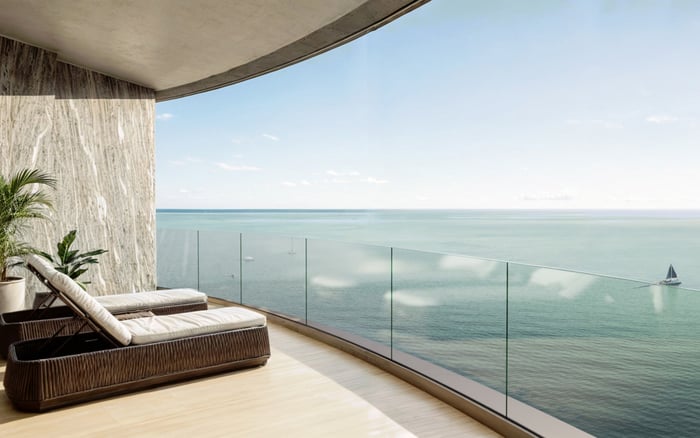
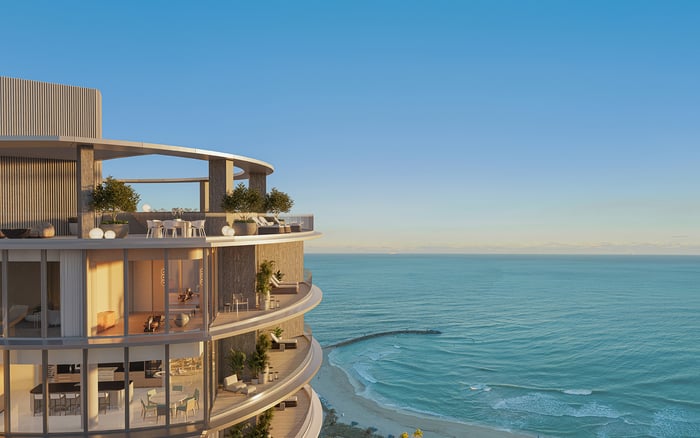
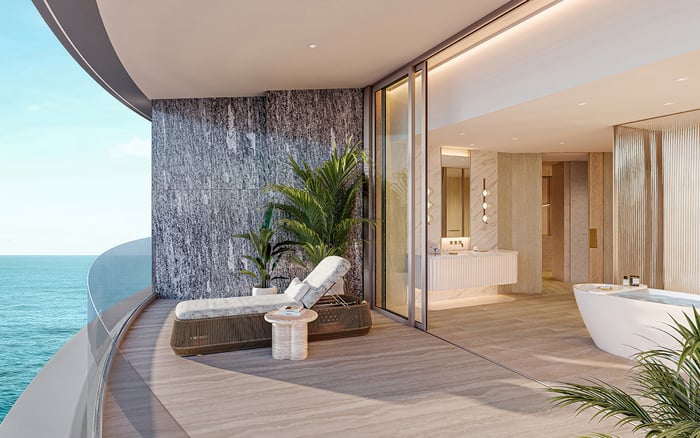
A discreet buyer’s comparison of Rivage Bal Harbour and Oceana Key Biscayne, focused on the practical penthouse questions that matter most: interior scale, roof and terrace rights, outdoor-room usability, and whether daily life can feel closer to a private home than a conventional condominium.
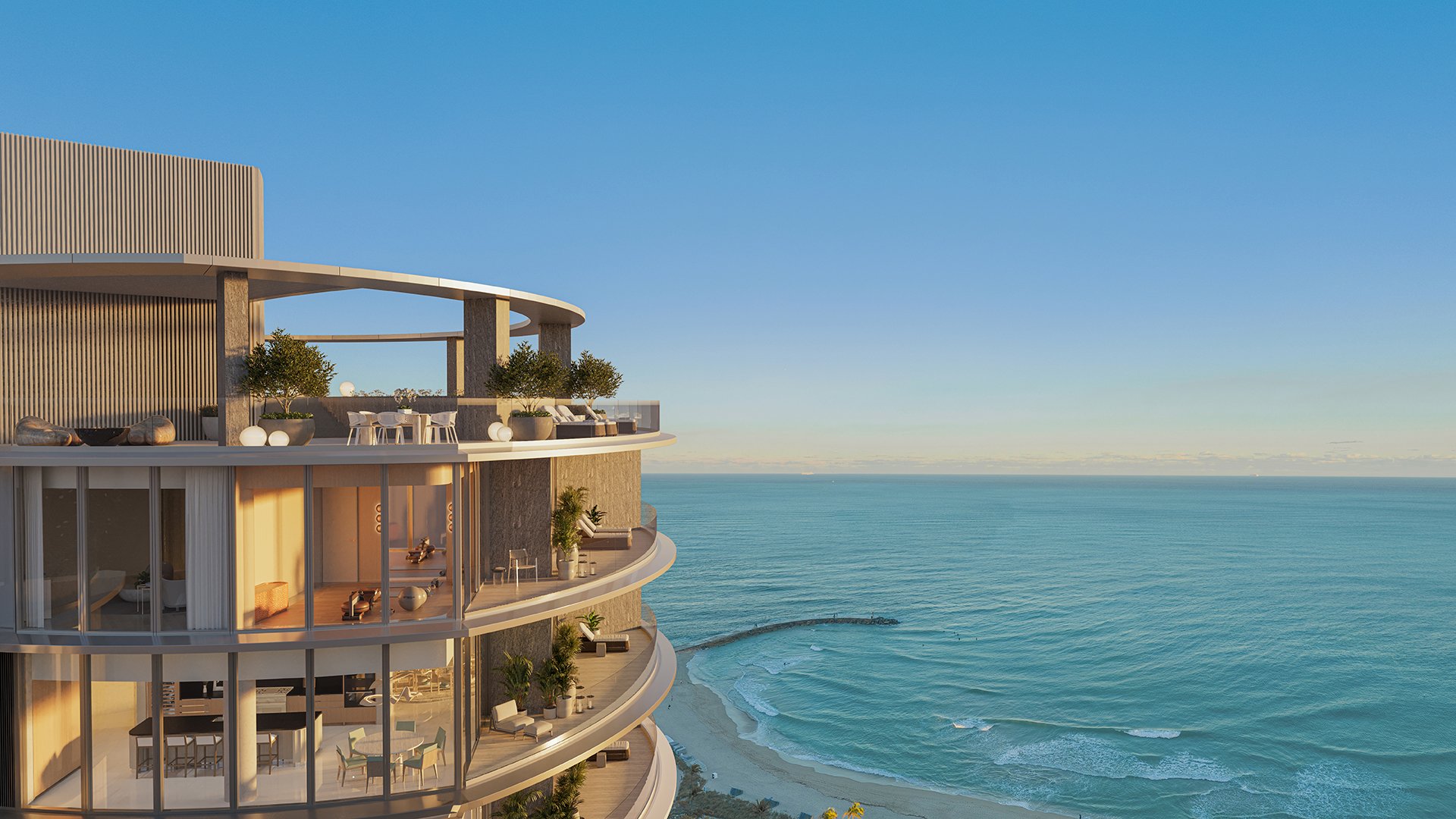
At the very top of the South Florida condominium market, the question is rarely whether a penthouse is simply large. The sharper question is whether it lives like a house. That means rooms with genuine separation, not just volume; terraces with daily purpose, not only view value; and legal clarity around exterior space, especially when a listing or presentation uses language such as private roof, roof terrace, exclusive-use area, or limited common element.
That is the lens for comparing Rivage Bal Harbour with Oceana Key Biscayne. Rivage belongs to the Bal Harbour oceanfront conversation, where buyers tend to prize privacy, direct coastal presence, and a highly polished residential rhythm. Oceana Key Biscayne is a different proposition, shaped by island-style living, ocean orientation, and the quieter resort cadence of Key Biscayne.
A Bal Harbour buyer and a Key Biscayne buyer may both ask for a penthouse, but they are often asking for different versions of house-like life in the sky.
Without relying on a current, verified penthouse floor-plan package for both properties, the analysis should not become a contest of exact square footage. The better test is functional scale. Does the arrival sequence feel ceremonial or compressed? Can formal entertaining, family living, staff circulation, and bedroom privacy coexist without friction? Is there service or support space that allows the residence to operate elegantly when occupied full-time or during an extended season?
At Rivage, the house-like test should focus on whether the penthouse plan provides expansive entertaining areas, meaningful bedroom separation, large terraces, and practical back-of-house space. The Bal Harbour buyer is often comparing the penthouse with a waterfront estate alternative. The residence therefore needs more than glamour. It needs circulation logic, acoustic separation, places for guests to gather, and private areas that remain private when the home is hosting.
At Oceana Key Biscayne, the same test carries a more relaxed island inflection. The residence should be read through terrace use, ocean-view orientation, and whether the primary living spaces open in a way that supports long lunches, family weekends, and indoor-outdoor routines. In this context, house-like living is less about formality and more about ease, proportion, and the feeling that ocean-facing exterior spaces are part of everyday life.
For penthouse buyers, roof language deserves careful attention. In Florida condominium documents, a private roof, roof terrace, exclusive-use area, and limited common element can mean very different things. A buyer should not assume that marketing language confirms ownership, alteration rights, furnishing rights, mechanical rights, or maintenance obligations.
For Rivage, it is important not to say that a penthouse buyer owns the roof unless that point is confirmed in the governing documents, deed, survey, or association-approved limited-common-element materials. For Oceana Key Biscayne, the same caution applies. A terrace can be visually private and still be governed by condominium rules, maintenance responsibilities, use restrictions, or approval requirements.
The practical review should include the current floor plan, terrace plan, recorded condominium declaration, bylaws, association rules, any amendments, alteration history, and written confirmation of roof or terrace maintenance obligations. A buyer should also ask what can be added, enclosed, shaded, landscaped, lit, or mechanically improved, and what requires association consent. The distinction may affect not only lifestyle, but also insurance, future resale, and renovation strategy.
These questions are not unique to this comparison. Buyers looking across the northern oceanfront corridor, including Oceana Bal Harbour or The Delmore Surfside, should apply the same discipline. In the ultra-premium market, exterior rights are part of the asset, but only the documents define them.
A terrace can photograph beautifully and still be difficult to use. Both Bal Harbour and Key Biscayne are coastal settings, which means exposure, breezes, sun angle, and rain direction can transform the way outdoor space lives. The strongest penthouse is not necessarily the one with the most exposed perimeter. It is the one that combines view, depth, cover, and protection in a way that supports real furnishing and repeated use.
For Rivage, buyers should distinguish between large open terraces and true outdoor rooms. A wind-protected outdoor room has usable depth, overhead cover, side protection, furniture-friendly proportions, and adjacency to the right interior rooms. If dining is intended outdoors, the terrace should relate naturally to the kitchen or entertaining zone. If lounging is the goal, the space should not feel like a narrow balcony with spectacular but impractical exposure.
For Oceana Key Biscayne, the analysis is similar, though the lifestyle expectation may be more resort-island in tone. Ocean-facing terraces can be extraordinary, but the buyer should test whether they are comfortable for breakfast, reading, dinner, or evening entertaining when conditions are breezy. A protected corner, covered zone, or deeply usable terrace bay can have more daily value than a larger, fully exposed area.
Rivage Bal Harbour is likely to appeal to the buyer who wants the discipline of oceanfront luxury-condo living in Bal Harbour, with a penthouse plan that can support formal entertaining, privacy, and architectural composure. The ideal plan would feel closer to a horizontal estate in the sky, with enough room for guests and family to move independently.
Oceana Key Biscayne is likely to resonate with the buyer who wants island-style luxury-condo living, strong ocean orientation, and an easier relationship between indoor rooms and outdoor living. The right penthouse there should feel less like an urban trophy and more like a resort residence with daily outdoor rituals.
The final decision should not be reduced to which residence is larger. The more sophisticated answer is which one best combines interior volume, legally usable private exterior rights, and outdoor spaces that remain comfortable in real coastal conditions. For a buyer moving from a single-family home, that combination is what determines whether the penthouse is merely impressive or genuinely livable.
Is Rivage Bal Harbour or Oceana Key Biscayne better for house-like penthouse living? It depends on the floor plan, terrace design, and legal exterior rights. Rivage reads more Bal Harbour oceanfront, while Oceana Key Biscayne has a more island-resort character.
Should buyers compare these penthouses by square footage first? Square footage matters, but functional scale matters more. Room separation, service space, terrace usability, and privacy often define how large a penthouse actually feels.
Are roof rights the same as a private terrace? No. Roof rights, private terraces, exclusive-use areas, and limited common elements can carry different legal meanings in condominium documents.
Can a buyer assume a penthouse owns the roof? No. Ownership or exclusive use should be verified through the deed, declaration, survey, association documents, or recorded amendments.
Why is wind protection so important in these buildings? Coastal terraces can be beautiful but exposed. A protected outdoor room is more likely to support dining, lounging, and entertaining throughout the season.
What makes a terrace function like an outdoor room? Usable depth, overhead cover, side protection, furniture-friendly proportions, and a strong connection to interior living areas are the key factors.
What should Rivage buyers study most closely? Buyers should study the current floor plan, terrace plan, roof or exterior-use language, association rules, and maintenance obligations.
What should Oceana Key Biscayne buyers study most closely? Buyers should review terrace usability, ocean orientation, legal exterior rights, alteration history, and association limits on outdoor improvements.
Is a larger open terrace always better? Not necessarily. A smaller, more protected terrace can be more valuable in daily life than a larger space that is too exposed to use comfortably.
Can a penthouse truly replace a waterfront house? It can for the right buyer, but only if the plan offers privacy, support space, meaningful outdoor areas, and legally clear exterior rights.
When you're ready to tour or underwrite the options, connect with MILLION.
If branded residences are on your mind — as a home or as an allocation — we would be glad to share what we are seeing, privately.
Begin a quiet conversation