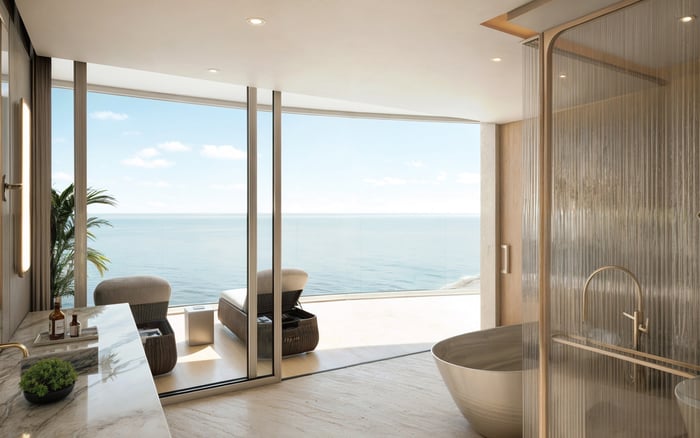
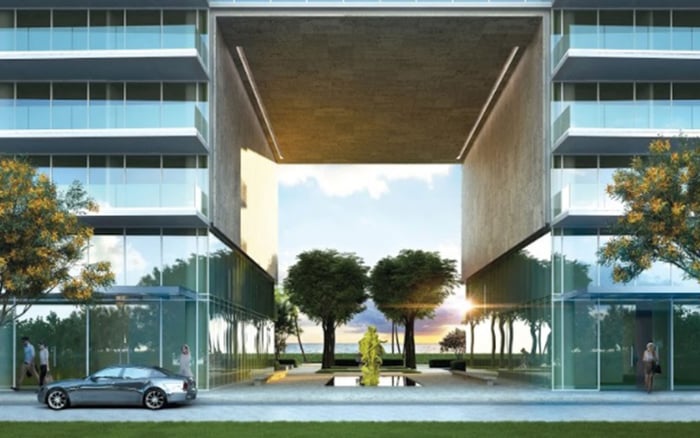
Bal Harbour offers a refined lens for evaluating privacy, exposure, and glass-wall living in South Florida luxury residences, where the best plans balance views with discretion.
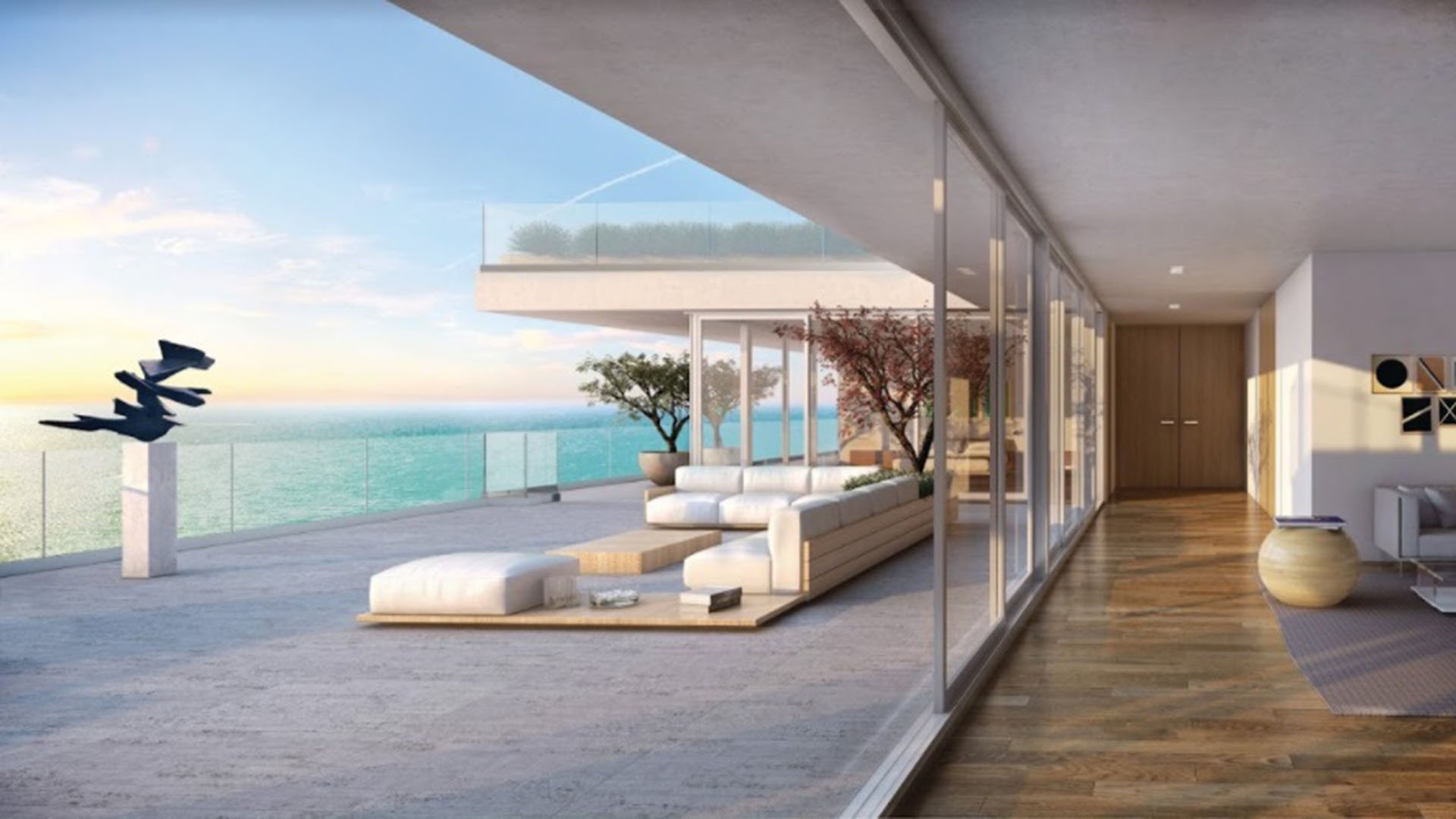
In South Florida’s highest tier of condominium living, privacy is no longer defined only by a gate, a doorman, or a private elevator. The more sophisticated question is spatial: who can see into the residence, from which angle, at what time of day, and how comfortably the home allows its owner to live with glass.
Bal Harbour is especially useful for this conversation because it places the luxury buyer in a disciplined frame of mind. The setting invites openness, views, and light, while the buyer still expects the discretion of a private house. That tension sits at the center of modern waterfront living: expansive glass is desirable until it begins to feel exposed, and height is valuable only when the plan makes it livable.
The strongest residences solve this not through a single feature, but through a sequence of decisions. Arrival, elevator separation, corridor length, room placement, terrace depth, glazing, and sightline control all matter. A buyer comparing Rivage Bal Harbour with other South Florida addresses should therefore look beyond finishes and ask how the residence performs over a full day of living.
Whole-floor living is often discussed as a status marker, but its deeper value is architectural. When a residence occupies an entire level, the home can reduce shared thresholds and sharpen the owner’s sense of control. There is less ambiguity around who is nearby, where people circulate, and how guests arrive.
The benefit is not merely silence. It is psychological ease. A whole-floor plan can create a clearer separation between public arrival and private retreat, between entertaining rooms and bedrooms, and between glass-facing areas and more protected interior zones. The best layouts do not force the owner to choose between openness and concealment. They give each moment its proper degree of exposure.
This is why buyers focused on Bal Harbour often study floor plates with unusual care. A larger residence is not automatically more private. A better organized residence is. If the plan allows a guest to move naturally toward living spaces without crossing bedroom corridors, if service functions can operate discreetly, and if primary rooms face views rather than neighboring windows, the home begins to feel settled.
Neighbor exposure is easy to underestimate in a glass-walled residence. Buyers may stand in a sales gallery or completed home and focus on the view, only to realize later that diagonal sightlines can be more consequential than direct ones. A residence can feel private from straight ahead, yet exposed from the side.
The remedy is layered design. Angled building forms, recessed terraces, deeper outdoor rooms, careful landscaping where applicable, and the placement of opaque walls all help determine how private the home feels. In this context, terrace depth is not simply a lifestyle amenity. It can act as a buffer, a shading device, and a social threshold between interior life and the surrounding skyline.
This is where comparisons with nearby projects become instructive. A buyer considering Oceana Bal Harbour may also look to Surfside or Miami Beach to understand how different buildings handle transparency, neighbor angles, and outdoor rooms. The lesson is not that one approach is universally superior. The lesson is that exposure must be studied in plan, section, and real daily use.
Glass is seductive because it promises continuous connection to water, sky, and horizon. Yet comfort depends on more than a broad pane of glass. The most livable glass-walled homes manage brightness, heat, reflection, furniture placement, and evening privacy. If the interior feels like a display case after sunset, the architecture has not gone far enough.
Buyers should ask how the residence will feel in the morning, in the late afternoon, and at night. Are there shaded places to sit? Can art and furnishings be protected from excessive glare? Does the living room allow multiple furniture layouts, or does the glass dictate everything? Are bedrooms serene, or are they overly exposed to neighboring towers and terrace activity?
The phrase flow-through units often appears in buyer conversations because cross-light and dual exposures can be highly desirable. Still, a flow-through plan must be evaluated carefully. The finest examples use opposing exposures to improve air, light, and spatial variety while preserving intimate rooms. Less successful plans create too many moments where the owner feels visible from both sides.
Bal Harbour’s luxury language is quieter than the rhetoric surrounding many high-rise markets. For the discreet buyer, that is part of the draw. The question is not only whether a residence is impressive, but whether it allows the owner to disappear when desired. A home should be able to host beautifully and then retreat into calm.
That duality is the essence of the best South Florida residential design. The living room may open generously to water and sky, but the primary suite should feel protected. The terrace may be large enough for conversation, but not so exposed that every dinner feels visible. The elevator arrival may feel ceremonial, but not theatrical.
In a buyer’s vocabulary, tags such as Bal-harbour, Oceanfront, and Terrace are not decorative labels. They point to questions of lifestyle performance. Does the home allow private outdoor living? Does the view come with manageable exposure? Does the plan support both entertaining and withdrawal?
Bal Harbour is rarely considered in isolation. Buyers often compare it with Surfside, Miami Beach, Sunny Isles, Fisher Island, and select waterfront enclaves farther north or south. Each market offers a different answer to the same problem: how to combine openness with privacy in a region built around light and water.
In Surfside, projects such as Arte Surfside and The Delmore Surfside can enter the conversation for buyers who want a low-key coastal sensibility while still studying the same concerns around glass, arrival, and neighbor exposure. The point of comparison is not only location. It is how the architecture choreographs visibility.
For a Bal Harbour buyer, the right due diligence is experiential. Visit at different times of day when possible. Stand at the glass, then step back into the room. Look diagonally, not just directly outward. Imagine evening lighting. Consider whether window treatments will be used occasionally or constantly. A residence that requires constant concealment may not be delivering the freedom that glass is meant to provide.
The most important question is not whether the residence has glass walls. It is whether the glass has been made livable. Strong plans tend to share several qualities: controlled arrival, limited shared circulation, thoughtful bedroom placement, deep or well-proportioned terraces, and a balance of transparent and solid surfaces.
Buyers should also consider the social rhythm of the building. A private residence can be compromised by awkward amenity adjacencies, visible pool decks, or neighboring outdoor spaces that overlook primary rooms. Conversely, a carefully composed building can make even highly transparent interiors feel calm.
The best Bal Harbour homes understand that luxury is not constant exposure. Luxury is control. It is the ability to open the residence fully when desired, to filter light when needed, and to withdraw without leaving the view behind.
Why is whole-floor living important for privacy? It can reduce shared thresholds and make arrival, circulation, and room separation feel more controlled.
Does a higher floor always mean better privacy? Not always. Diagonal sightlines, neighboring towers, terrace placement, and room orientation can matter as much as height.
What should buyers study in a glass-walled residence? They should study glare, heat, evening visibility, furniture placement, and whether window treatments feel optional or necessary.
Are terraces part of the privacy strategy? Yes. A well-proportioned terrace can create distance, shade, and a softer transition between interior rooms and the outside view.
Why compare Bal Harbour with Surfside? The two markets can help buyers understand different approaches to coastal privacy, glass, and low-key luxury living.
Is a larger residence automatically more private? No. Plan quality, circulation, and exposure control are often more important than total size.
What makes neighbor exposure difficult to judge? Exposure is often diagonal or seasonal in feeling, so it may not be obvious from a single viewpoint or one visit.
How should a buyer evaluate bedrooms in a glass residence? Bedrooms should feel serene and protected, with views that do not compromise comfort or nighttime privacy.
Can flow-through layouts still feel private? Yes, if the plan balances dual exposures with protected zones and avoids making the owner feel visible from both sides.
What is the ultimate test of glass-wall comfort? The home should feel open when desired and discreet when needed, without forcing constant reliance on shades.
For a tailored shortlist and next-step guidance, connect with MILLION.
If branded residences are on your mind — as a home or as an allocation — we would be glad to share what we are seeing, privately.
Begin a quiet conversation