An analytical comparison of low-rise village-style living and high-rise tower culture through the lens of school-day logistics, staff movement, service access, and family privacy.
For South Florida families, the most revealing luxury test often happens before breakfast. The school bag is missing, the driver is waiting, a nanny is arriving, a delivery is scheduled, and the household has ten minutes to move from private life into public rhythm. In that compressed window, architecture becomes culture.
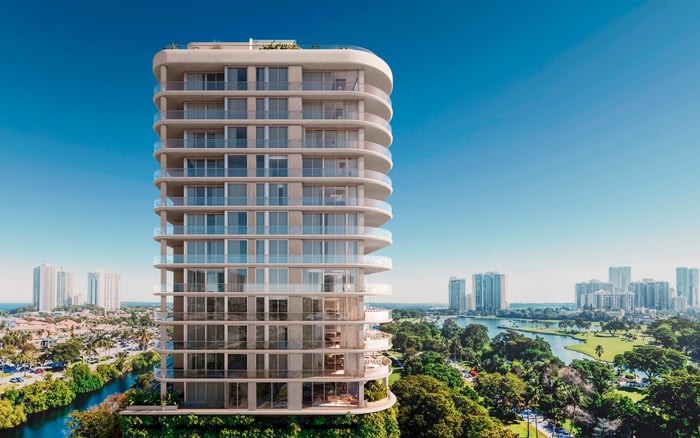
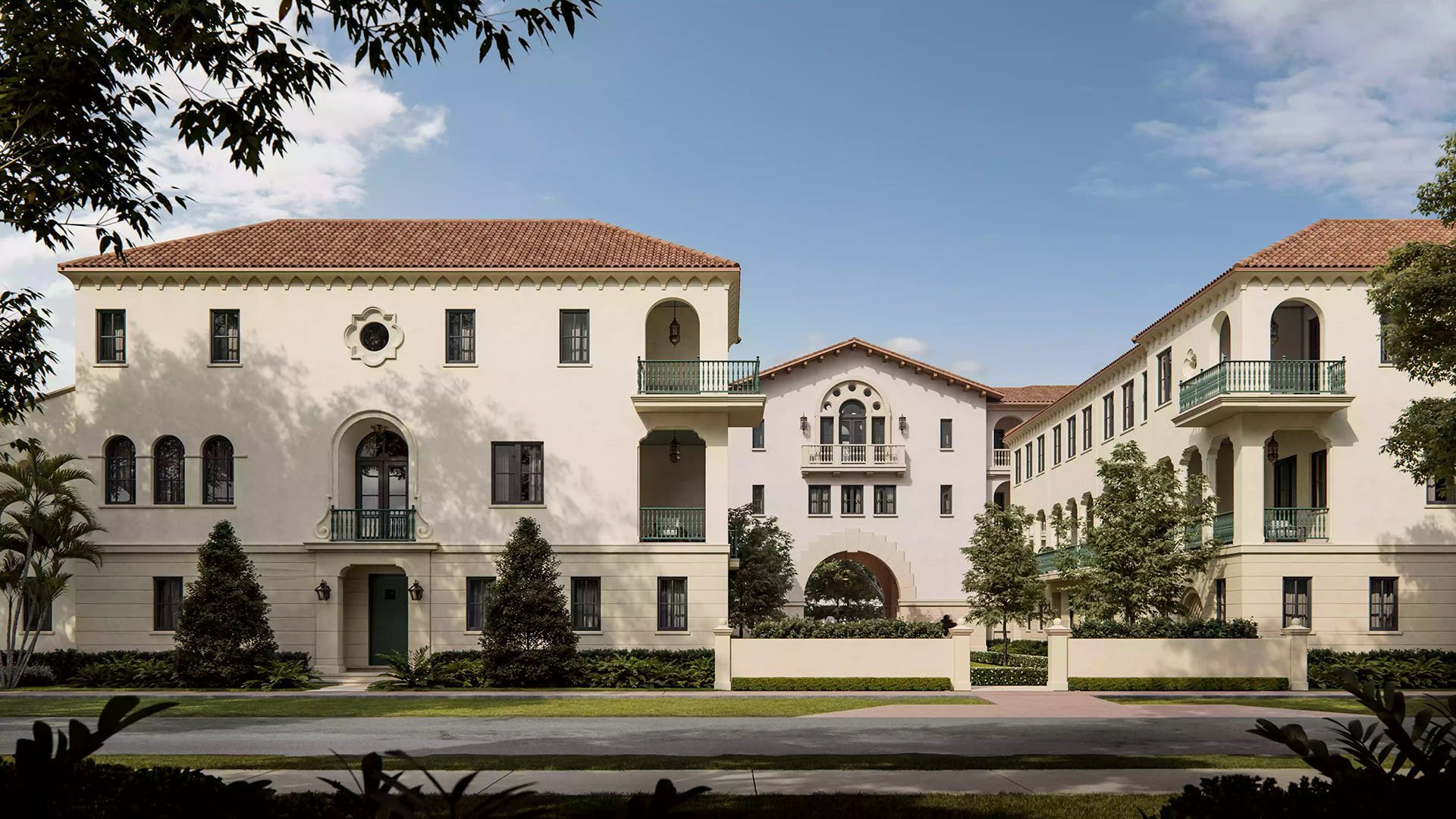
That is why The Village at Coral Gables and Avenia Aventura are best understood not simply as residential addresses, but as two distinct operating systems. One is framed as a low-rise, village-style environment, closer in spirit to neighborhood integration and lower-rise movement patterns. The other is framed as a contemporary high-rise tower, where vertical circulation, controlled access, and tower-style privacy shape daily behavior.
This comparison is not about declaring one model superior. It is about understanding how a family actually lives between 7 a.m. and 7 p.m., when school-day logistics, household staff, service providers, guests, packages, and privacy boundaries all converge.
In a village-style setting, the first advantage is psychological. Movement can feel less institutional and more residential, with a rhythm that suggests returning to a neighborhood rather than entering a managed vertical building. For families with young children, that can make the morning sequence feel less like a transfer through checkpoints and more like a progression through familiar passages.
At The Village at Coral Gables, the lower-rise archetype invites buyers to consider proximity, pace, and neighborly visibility. The question is not only how quickly one reaches the car, but how naturally the household shifts from home to school-day mode. Private-school mornings are often judged by small frictions: where a caregiver waits, whether a child can move calmly, and how much public exposure the family experiences while leaving.
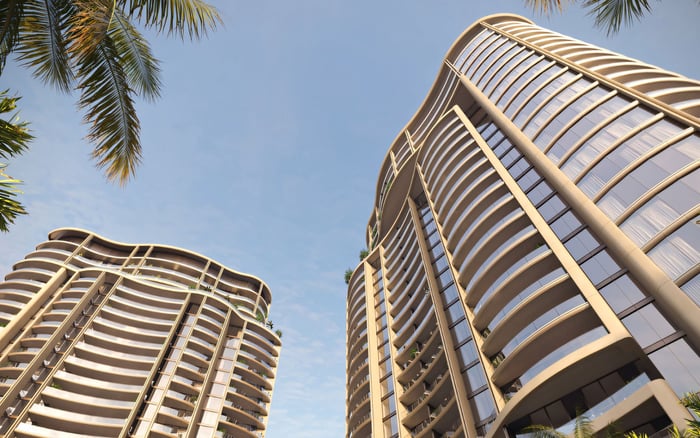
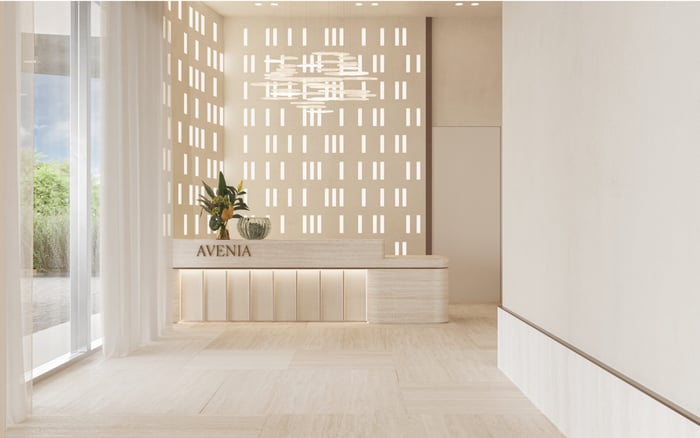
In a high-rise tower model such as Avenia Aventura, the sequence is different. The tower can offer a clearer sense of separation between residence, lobby, arrival, and street. That separation can be valuable for families who prefer controlled movement and a more formal threshold between private home life and the outside world. Aventura buyers who prize discretion may see that controlled sequence as a benefit rather than a delay.
Vertical circulation is one of the quietest but most consequential parts of luxury family life. In a high-rise environment, the elevator is not merely a convenience. It is part of the household schedule. It influences when a family leaves, how staff coordinates arrivals, and whether a forgotten item becomes a minor inconvenience or a full disruption.
That does not make the tower model inefficient. It makes it more procedural. The benefit is structure: controlled access, clearer thresholds, and a stronger sense of privacy between the residence and the building at large. The tradeoff is dependence on shared vertical systems, especially during school-day peaks, service windows, and social hours.
Low-rise environments work differently. Lower floors are not just a view preference; they can affect how quickly a resident feels connected to the ground plane. In a village-style model, the daily journey may involve fewer psychological layers between private interior and the outside routine. For some households, that can reduce morning stress. For others, it may feel more visible and socially exposed.
High floors, by contrast, often appeal to buyers who prefer distance, outlook, and stronger separation from everyday movement. In a tower such as Avenia Aventura, that vertical distance can become part of the privacy proposition.
The true measure of a family residence is often how well it accommodates the people who keep the household functioning. Nannies, housekeepers, tutors, drivers, service providers, and deliveries all create daily circulation. A residence may photograph beautifully, but if staff movement is awkward, the family feels it immediately.
The Village at Coral Gables suggests a lower-rise culture where household support can be considered through the lens of neighborhood-like movement. The question for a buyer is whether the setting feels intuitive for recurring arrivals and departures, and whether that ease supports the family’s daily tempo.
Avenia Aventura, as a tower archetype, places staff circulation within a more controlled vertical framework. That can help preserve privacy and order, especially for households that prefer formal access patterns. It can also require more coordination. The decision becomes personal: does the family value seamless informality, or controlled choreography?
This same test applies across nearby new-construction choices. A Coral Gables buyer also studying Ponce Park Coral Gables and Cora Merrick Park may ask similar operational questions, even when the architectural expression differs.
Village-style living tends to create a subtler privacy equation. Because the setting can feel more neighborhood-like, residents may encounter familiar faces more often. That can be comforting for families who want a sense of belonging, especially when children, caregivers, and neighbors move through recurring daily patterns.
The same sociability may feel less ideal for households that value maximum anonymity. Some families prefer to be known by staff but not overly seen by neighbors. Others appreciate a setting where children recognize familiar adults and the building culture feels more residential than formal.
Tower living in Aventura tends to clarify boundaries. A high-rise can make privacy feel architectural: vertical separation, controlled points of access, and a stronger distinction between the home and shared space. For families who host staff, receive frequent deliveries, or maintain a high public profile, that structure can be reassuring.
Yet privacy is never only about being unseen. It is also about predictability. If a family knows how arrivals work, how service providers move, and where social contact is likely to occur, the building culture becomes easier to manage.
The buyer best suited to The Village at Coral Gables may be seeking a softer residential rhythm: lower-rise movement, neighborhood integration, and a sense that school-day life can unfold with less vertical formality. The buyer best suited to Avenia Aventura may prefer a contemporary tower culture, where access, privacy, and circulation feel more deliberate.
Neither choice should be reduced to amenities or finishes. For family buyers, the more revealing questions are operational. How does the household leave on a rushed morning? Where does a nanny enter? How do deliveries intersect with family privacy? Does the building encourage casual neighbor recognition, or protect a more formal separation?
South Florida’s luxury market increasingly rewards this kind of thinking. The next generation of buyers is not only purchasing square footage or design language. They are purchasing rhythm, discretion, and the ability for a complex household to move elegantly through an ordinary day.
What is the main difference between The Village at Coral Gables and Avenia Aventura? The Village at Coral Gables is framed as a low-rise, village-style model, while Avenia Aventura is framed as a contemporary high-rise tower model.
Why does building culture matter for families? Building culture affects how children, parents, staff, guests, and deliveries move through the residence during daily routines.
Is this comparison mainly about amenities? No. The more important lens is form, circulation, access, privacy, and how each model supports school-day life.
How can a low-rise setting help school mornings? A lower-rise, neighborhood-like setting may reduce the sense of vertical dependency and make movement feel more intuitive.
How can a tower setting help family privacy? A tower can create stronger separation between private residence, shared areas, arrival points, and the street.
Why is staff circulation so important? Nannies, housekeepers, service providers, and deliveries shape the household’s daily rhythm, especially during school weeks.
Does village-style living mean less privacy? Not necessarily. It may create more neighbor visibility, but privacy depends on how access, movement, and social expectations are managed.
Does high-rise living always add friction? Not always. It can add procedural steps, but those steps may also support controlled access and predictability.
Which model is better for private-school families? The better model depends on whether the family values lower-rise ease or a more controlled tower sequence during school-day routines.
What is the best way to shortlist comparable options for touring? Start with location fit, delivery status, and daily lifestyle priorities, then compare stacks and elevations to validate views and privacy.
When you're ready to tour or underwrite the options, connect with MILLION.
If branded residences are on your mind — as a home or as an allocation — we would be glad to share what we are seeing, privately.
Begin a quiet conversation