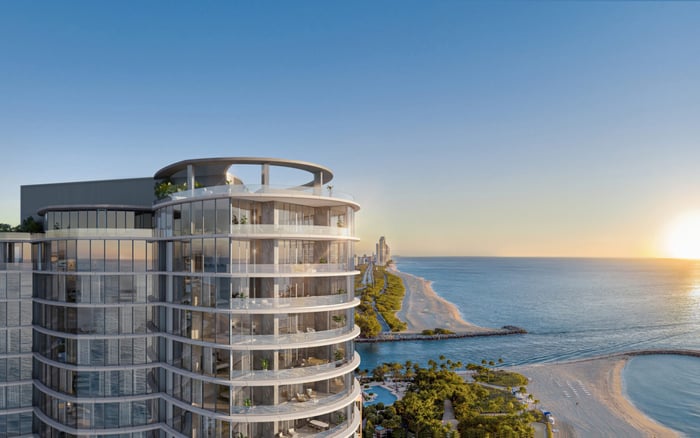
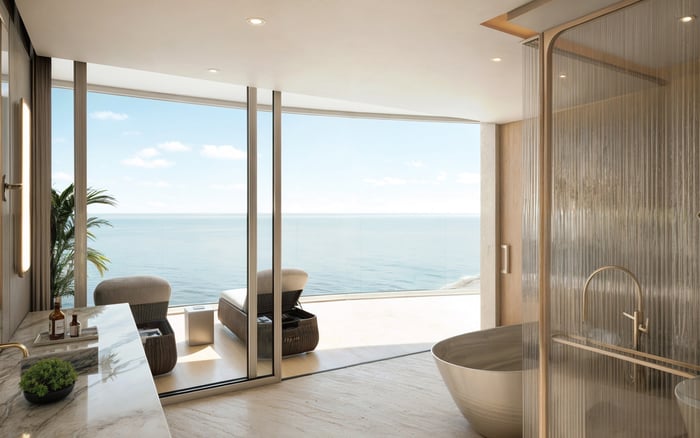
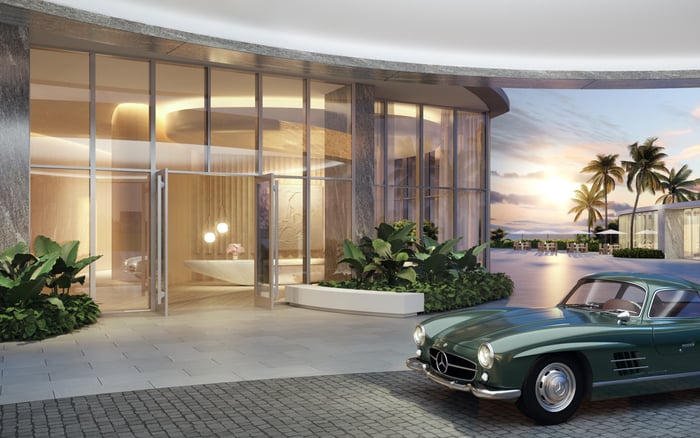
Rivage Bal Harbour is examined through the lens of art ownership, where ceiling height, wall planes, delivery logistics, terrace living, security, and long-term maintenance all shape whether an oceanfront residence can function as a true lock-and-leave home for collectors.
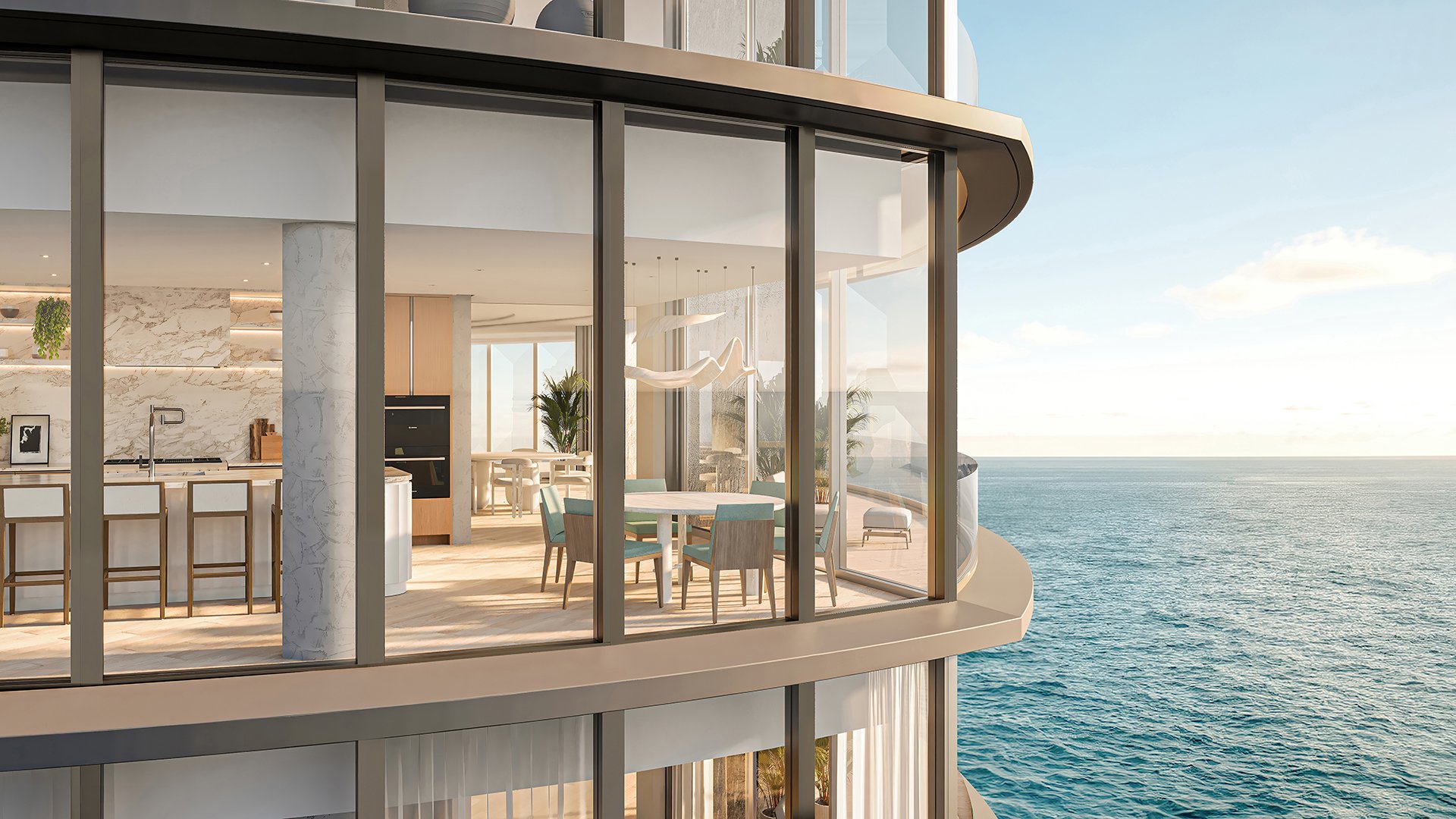
For many oceanfront buyers, ceiling height reads as visual luxury: a way to make rooms feel larger, brighter, and more ceremonial. For art collectors, it is more precise. Height determines whether a major canvas can breathe. It affects the placement of sculpture, the scale of lighting, the distance between a work and a view, and the way a residence performs when it is closed for months at a time.
That is why Rivage Bal Harbour is a useful case study. Positioned as a new ultra-luxury oceanfront condominium on Collins Avenue, the project is not simply offering beachfront access. It presents a low-density tower with a limited number of large-format residences, including expansive multi-bedroom homes, penthouse residences, and full-floor or near-full-floor configurations.
Those proportions invite a more sophisticated buyer question. Can a residence be both an elegant seasonal retreat and a proper setting for high-value art, furniture, and collectibles? In South Florida’s most refined beachfront buildings, the answer depends less on a single ceiling measurement than on a complete ownership system.
Rivage’s substantial interior square footage matters because collectors rarely think in isolated rooms. They think in sequences: entry, gallery wall, salon, dining area, principal suite, terrace threshold, and the approach to a signature view. A larger condominium can offer the wall space and spatial rhythm that typical layouts struggle to provide.
Yet the more ambitious the residence, the more technical the art conversation becomes. Uninterrupted wall planes are essential. So is the relationship between solid surfaces and glass. Rivage’s glass-forward architectural language is central to its appeal, with direct Atlantic Ocean exposure and Intracoastal-facing views, but panoramic glazing can also reduce the number of surfaces suitable for display.
This is the productive tension at the heart of the building: oceanfront drama versus gallery-grade control. A buyer should not assume that a larger home automatically solves the art question. It may create the opportunity, but the plan, lighting, circulation, and maintenance strategy determine whether that opportunity is realized.
Lock-and-leave living is often described through amenities, but for art owners the standard is more demanding. The residence must remain stable, secure, and manageable during seasonal absences. Building management, security, access control, and maintenance reliability become part of the value proposition.
A collector leaving for an extended period may care less about a beautiful lobby than about predictable staff access, careful vendor coordination, consistent oversight, and clear protocols for routine checks. The same owner may also want confidence that an oversized work can be delivered, moved through the building, installed safely, insured appropriately, and monitored over time.
This is where Rivage’s low-density positioning becomes relevant. A limited number of large-format residences suggests a lifestyle calibrated to privacy and scale. It does not eliminate the need for diligence, but it aligns with the expectations of buyers who own multiple homes and expect a beachfront residence to function without daily supervision.
Large private terraces are central to the Rivage concept, extending living areas toward ocean and skyline views. For a non-collector, that may be enough. For an art-focused buyer, the terrace condition has to be studied in relation to interior walls and display zones.
The best art residences create a deliberate pause between exterior spectacle and interior focus. A deep terrace can soften light, support outdoor living, and help frame the view. It can also influence how interiors are furnished, where art is hung, and how delicate pieces are protected from glare and environmental changes at the glass line.
Buyers comparing Bal Harbour with neighboring coastal addresses may also consider Oceana Bal Harbour, Arte Surfside, or The Delmore Surfside when weighing different interpretations of oceanfront living. The common thread is not simply view quality. It is how architecture reconciles transparency, privacy, scale, and collectible display.
In the shorthand of a luxury search, this is where Rivage Bal Harbour intersects with Bal-harbour, Oceanfront, Terrace, Second-home, and New-construction priorities. The categories are familiar; the collector’s test is far more exacting.
A serious art buyer should begin with the plan. Which walls are long enough for major works? Where are the windows? How much usable vertical space remains after lighting, millwork, sprinklers, speakers, and mechanical elements are considered? Ceiling height matters, but clear height and wall composition matter just as much.
The second issue is movement. Oversized art must pass through more than the front door. Elevators, corridors, turning radii, loading areas, service access, and in-residence circulation all become part of the acquisition checklist. A work that looks effortless on a wall may have required precise coordination to reach that wall.
The third issue is stability. HVAC performance, humidity consistency, filtration, and maintenance access should be reviewed with qualified advisers. The goal is not to turn a beachfront condominium into a museum. It is to understand whether the environment can support the owner’s specific collection, especially when the owner is away.
Finally, lighting requires restraint. Neutral interiors and refined finishes can support customization, but art lighting should be planned with discipline. Too much drama can overwhelm a collection. Too little flexibility can limit future acquisitions. The most successful residences let the owner’s eye evolve.
The ultra-premium buyer increasingly wants the inverse of spectacle: privacy, service, and quiet competence. Rivage’s low-density, large-residence positioning speaks to that shift. The building’s most valuable promise may be that it can feel residential rather than transient, expansive rather than crowded, and manageable rather than performative.
For collectors, that discretion is practical. A residence holding important art, design, or collectibles should not rely on attention. It should rely on systems. Access should be controlled. Installations should be planned. Maintenance should be consistent. Insurance conversations should happen before a piece arrives, not after.
This is why the lock-and-leave question behind Rivage is more compelling than a headline ceiling height. The right buyer is not asking whether the home looks impressive for a single evening. The buyer is asking whether it will perform quietly for years.
Rivage Bal Harbour belongs in the conversation for buyers seeking a large-scale oceanfront residence with the spatial potential to support serious art. Its generous proportions, expansive terraces, glass-forward architecture, and refined interior language create a strong canvas for customization.
Still, collectors should approach the purchase with a checklist rather than assumptions. Confirm wall dimensions. Study light. Review delivery paths. Understand building access. Discuss HVAC stability, insurance, staff coordination, and long-term maintenance. If those elements align, the result can be more than a beautiful second home. It can become a controlled, elegant, and deeply personal beachfront environment.
For buyers also considering Miami Beach, a project such as 57 Ocean Miami Beach may enter the broader comparison, but Rivage’s Bal Harbour context gives the discussion a distinct tone: quieter, more residential, and focused on the rare combination of scale, view, and discretion.
Is Rivage Bal Harbour designed for art collectors? Rivage is positioned around large-format residences, generous proportions, and refined interiors, making it relevant for buyers with significant art and design needs.
Why do ceilings matter for large-scale art? Ceiling height affects how major works are seen, lit, installed, and balanced within a room, but it must be evaluated alongside wall width and clear vertical space.
Does glass architecture reduce art display options? It can. Expansive views may limit solid wall surfaces, so buyers should study where art can be placed without competing with glazing.
Are Rivage residences suitable for seasonal ownership? The project’s lock-and-leave appeal depends on management, security, access control, and maintenance reliability for owners away for long periods.
What should collectors verify before purchasing? They should review wall dimensions, delivery routes, lighting plans, HVAC stability, insurance needs, staff access, and ongoing maintenance procedures.
Do large terraces help or complicate art planning? They can do both, extending the living experience while also changing light, furniture placement, and the transition between view and display areas.
Is a full-floor layout better for art? Full-floor or near-full-floor configurations may offer more flexibility, but suitability depends on the specific plan and installation requirements.
Can oversized works be assumed to fit in a luxury condo? No. Elevators, corridors, loading access, and turning clearances should be checked before committing to any major acquisition or installation.
Why is HVAC stability part of the art checklist? Collections can be sensitive to environmental shifts, so buyers should understand how the residence performs during both occupancy and absence.
What makes Rivage different from a typical beachfront condo? Its low-density positioning, large residences, terraces, and Bal Harbour oceanfront setting place it in a more specialized luxury category.
When you're ready to tour or underwrite the options, connect with MILLION.
If branded residences are on your mind — as a home or as an allocation — we would be glad to share what we are seeing, privately.
Begin a quiet conversation