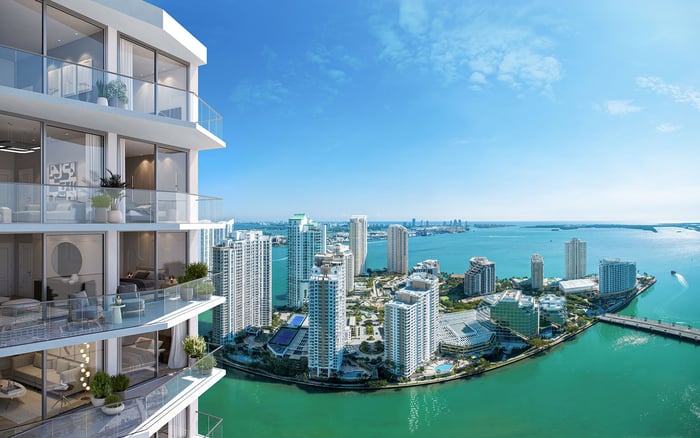
A buyer-focused guide to reading South Florida districts before choosing between oceanfront serenity, bayfront views, and city convenience. The article frames district construction as the full composition of streets, towers, access, privacy, exposure, services, and long-term livability.
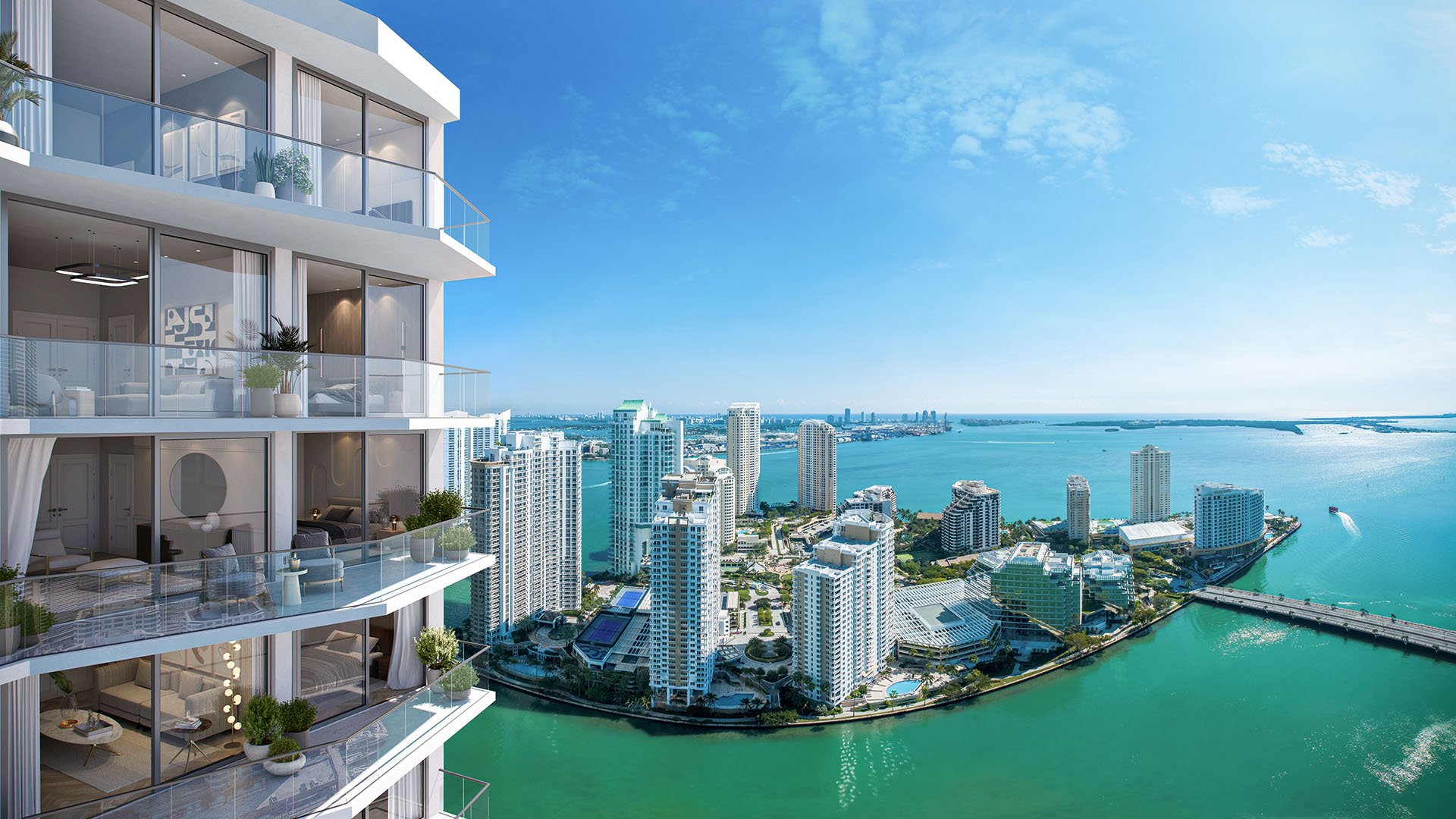
In South Florida luxury real estate, the most consequential decision is often made before a buyer studies floor plans, finishes, or amenity decks. It is the choice of district. Oceanfront, bayfront, and city living each offer a distinct rhythm, but the sharper question is how the district itself is constructed: how buildings meet the street, how privacy is protected, how daily movement functions, how light and exposure behave, and how the neighborhood feels on a Tuesday morning as much as on a holiday weekend.
District construction is not simply about cranes or new towers. It is the full composition of a place: the scale of neighboring buildings, the relationship between private arrival and public energy, the presence of service routes, the quality of pedestrian edges, and the way views are preserved or interrupted. The same discipline applies whether the brief begins with Oceanfront privacy, a Waterview terrace, a Brickell pied-a-terre, a Downtown base, a New-construction tower, or a long-horizon Investment.
For the ultra-premium buyer, this lens is essential. A residence may be impeccable, but the surrounding district determines how it lives over time.
Oceanfront living is often chosen for its emotional clarity. The water is immediate, the horizon is legible, and the residence can feel removed from the city’s pace. Yet the district still deserves precise study. A beautiful shoreline address can vary dramatically depending on building spacing, arrival sequence, beach access patterns, neighboring tower massing, and the degree of separation between residents, guests, and the public realm.
Begin with the approach. A discreet porte cochere, calm lobby arrival, and intuitive valet movement can make daily life feel effortless. A congested frontage or awkward service interface can weaken that sense of calm, even in an extraordinary building. Then study the building line. Oceanfront districts with a consistent setback and clear view corridor often feel more composed than areas where structures are irregularly placed.
Exposure matters as much as view. Buyers should understand how light enters the residence, how terraces respond to wind, and how the unit feels at different times of day. A dramatic panorama is not enough if the outdoor spaces are rarely usable or the interior requires constant shading. The best oceanfront choice balances visual theater with daily comfort.
Bayfront districts offer a different kind of luxury. The water is often more reflective, more architectural, and more connected to the city’s silhouette. This category rewards careful study because the experience can shift from tranquil to highly active depending on the waterway, neighboring uses, marina adjacency, bridge proximity, and circulation patterns.
The first question is view discipline. A bayfront residence may frame open water, passing boats, skyline layers, or a combination of all three. Each carries a distinct value proposition. Open water can feel serene and expansive, while skyline views may add evening drama. Buyers should consider whether the view is central to the residence or simply a backdrop. The stronger purchase is usually the one where the plan, terrace, and principal rooms are organized around the view rather than merely oriented toward it.
The second question is district sound. Bayfront areas can feel sheltered, but they are not automatically quiet. Study road placement, boat activity, restaurant adjacencies, and the position of amenity decks. The most refined bayfront addresses provide energy without surrendering residential composure.
Finally, consider how the district connects to daily life. Bayfront living is most successful when it offers water, privacy, and practical access in equal measure. A district that is beautiful but inconvenient may be better suited to occasional use than to a primary residence.
City living is not a compromise for buyers who value design, service, and proximity. It is a different form of luxury, built around access. The finest city districts compress time. They bring restaurants, offices, culture, wellness, and social life closer to the front door. But convenience alone does not make a district premium. The quality of the street matters.
In urban districts, buyers should study the block, not just the tower. A strong block has coherent sidewalks, logical curb management, pleasant lighting, clear arrival points, and a sense of visual order. A weaker block may still contain an exceptional residence, but the daily experience can feel less composed. For a buyer comparing Brickell with a waterfront alternative, the question is not simply city versus water. It is whether the building creates enough vertical privacy to offset the energy below.
High-floor living can solve some concerns, but not all. Elevator performance, parking flow, lobby sequencing, package handling, guest arrival, and private amenities become part of the district experience. In city living, the residence must work harder as a sanctuary. Glazing, terrace depth, acoustic planning, and amenity separation all deserve careful attention.
City districts can be especially compelling for buyers who want immediacy. The key is determining whether the surrounding construction supports elegance or merely density.
The most effective comparison is not emotional first. It is structured. Begin with privacy. Oceanfront privacy often comes from separation and horizon. Bayfront privacy may come from orientation and water buffer. City privacy usually comes from elevation, controlled access, and thoughtful interior planning.
Next, evaluate movement. How do residents arrive? How do guests enter? Where do service providers go? Where does traffic collect at peak times? A district with poor movement will reveal itself quickly, regardless of price point.
Third, review the view. Not every water view is equal, and not every city view is inferior. The ideal view has permanence, depth, and relevance to the rooms used most often. A secondary bedroom with a dazzling view is less meaningful than a primary suite, living room, and terrace that share the same visual logic.
Fourth, assess resilience of enjoyment. This is not a technical claim about any specific building. It is a lifestyle test. Will the buyer enjoy the residence in high season, during a quiet summer week, in the evening, and through everyday routines? If the answer depends on one perfect condition, the district may be too narrow in its appeal.
Fifth, consider exit logic. Even buyers with no intention to sell should understand who the next buyer would be. Oceanfront may appeal to the privacy-driven collector. Bayfront may attract the view-sensitive buyer who wants water and access. City living may suit executives, seasonal residents, and those who prioritize convenience. The broader the future audience, the stronger the ownership case.
Before committing, visit the district more than once. Arrive by car, walk the immediate blocks, observe the lobby approach, and stand outside the building at different times of day. Luxury is often revealed in transitions: curb to lobby, elevator to residence, terrace to living room, and building to neighborhood.
Inside the residence, test the plan against real life. Where will morning coffee happen? Where will guests gather? How does the primary bedroom feel when the city is active or the shoreline is windy? Is the terrace ornamental, or will it be used? Does the kitchen support entertaining, or is it simply beautiful? These questions are practical, but in the premium market, practicality is part of elegance.
Also study adjacency. Neighboring parcels, public edges, nearby hospitality uses, and traffic patterns all influence long-term enjoyment. A district does not need to be silent to be refined. It needs to be coherent.
The right answer is rarely universal. Oceanfront suits the buyer who wants restoration, horizon, and a resort-like cadence. Bayfront suits the buyer who wants layered views and a closer relationship between water and urban life. City living suits the buyer who values immediacy, service, and the ability to move through the day with minimal friction.
The mistake is choosing a category without understanding the district’s construction. The more sophisticated move is to compare how each place performs against the buyer’s actual life. When the district, building, floor plan, and view all reinforce the same lifestyle, the decision becomes clear.
What does district construction mean for a luxury buyer? It means reading an area as a complete living system, including access, privacy, views, services, streets, and neighboring context.
Is Oceanfront always the most private choice? Not always. Privacy depends on building spacing, arrival design, beach activity, view lines, and how the residence is positioned.
What makes bayfront living different from oceanfront living? Bayfront living often emphasizes layered water and skyline views, while oceanfront living tends to emphasize horizon, beach proximity, and resort calm.
Why is street quality important in city living? The street shapes daily arrival, walkability, noise, curb flow, and the sense of order before a resident ever reaches the lobby.
Should buyers prioritize view or floor plan? The strongest residences align both. A remarkable view is most valuable when the main living areas and primary rooms are planned around it.
How many times should a buyer visit a district before deciding? More than once is ideal. Seeing the district at different times helps reveal traffic, sound, light, and the true daily rhythm.
Can a city residence feel as private as a waterfront residence? Yes, when elevation, access control, acoustic planning, and interior layout create a strong sense of retreat.
What is the biggest mistake when comparing districts? Choosing by address type alone. Oceanfront, bayfront, and city districts each vary widely in how they actually live.
How should Investment buyers think about district choice? They should consider future buyer depth, lifestyle durability, view quality, and whether the district supports long-term desirability.
What is the best first step before touring residences? Define the daily lifestyle you want, then use the district to test whether that lifestyle feels natural, not forced.
For a discreet conversation and a curated building-by-building shortlist, connect with MILLION.
If branded residences are on your mind — as a home or as an allocation — we would be glad to share what we are seeing, privately.
Begin a quiet conversation