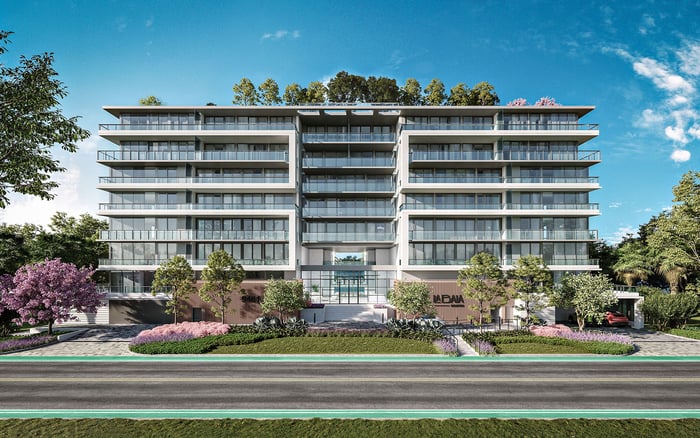
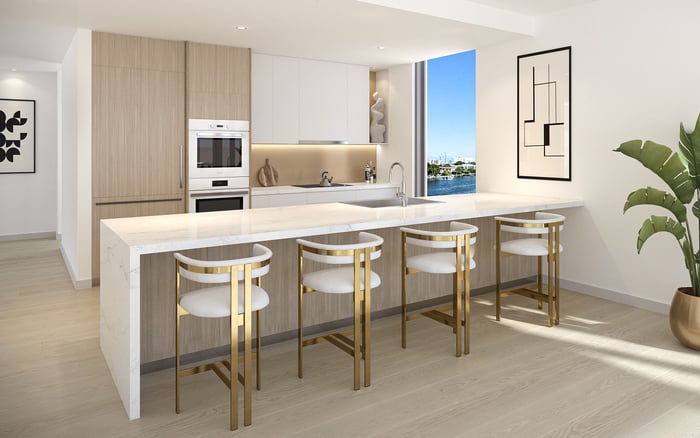
La Baia North pairs a 57-residence format with an extensive rooftop and waterfront amenity program. Its first owner-controlled budget should show whether marketed fees can support actual insurance, staffing, maintenance, utilities and reserves without compromising service.
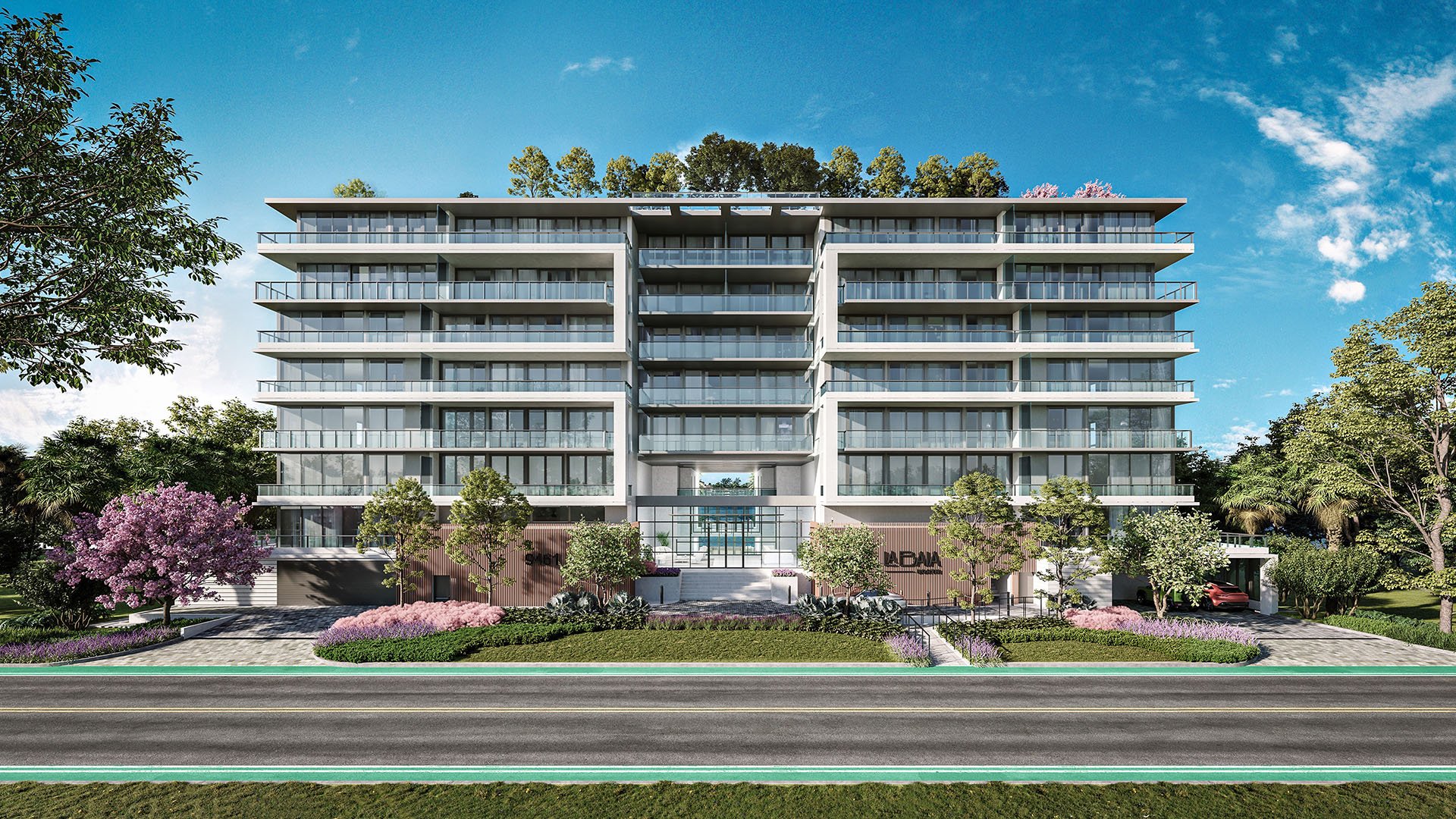
For buyers considering La Baia North Bay Harbor Islands, the most revealing financial document may arrive after the architecture, water views and private amenities have made their impression. It will be the first operating budget adopted under owner control, when projected expenses meet executed contracts, actual consumption and residents’ service expectations.
The eight-story bayfront condominium at 9481 East Bay Harbor Drive is planned with 57 residences. Two- to four-bedroom layouts and penthouses generally span approximately 1,400 to 2,100 square feet. That boutique scale creates privacy, but it also leaves a relatively small ownership base responsible for the building’s fixed expenses.
Estimated HOA charges are approximately $1.84 per square foot per month, including reserves. At that rate, a 1,800-square-foot residence would carry an assessment of about $3,312 per month, while a 2,100-square-foot home would reach approximately $3,864. Those figures are useful for preliminary planning, but they are no substitute for an adopted, owner-controlled budget and its supporting contracts.
The first owner-controlled budget is where projected luxury service meets actual operating cost.
La Baia North is planned with more than 20,000 square feet of amenities, including a roughly 10,000-square-foot rooftop deck. The program includes a pool, sun shelf, spa, summer kitchen, dining areas, splash area and bay-view terraces. Waterfront facilities add private boat slips, dockside pickup and drop-off, and a water-sports launch dock.
That is a substantial operating footprint for 57 homes. Insurance premiums, management, security, cleaning, pool service, dock upkeep and common-area utilities do not necessarily decline in proportion to unit count. Even a modest gap between forecast and contracted costs can quickly become visible in each residence’s monthly obligation.
Staffing is equally consequential. Owners should determine which positions are full-time, which services are outsourced, what hours are promised, and whether overtime and relief coverage are adequately budgeted. Luxury service depends on consistency, yet payroll is among the categories most likely to change once the building is occupied and actual usage patterns become clear.
This is a useful lens across the local Bay Harbor market. Buyers comparing Onda Bay Harbor and Origin Bay Harbor Islands should look beyond headline fees. Unit count, amenity intensity, staffing plans, insurance terms and waterfront infrastructure can make superficially similar figures economically distinct.
The marina provisions may be among the most consequential lines in the declaration and budget. Buyers should establish whether boat-slip and dock expenses are paid exclusively by slip users, allocated through a limited common-element structure, or shared among all 57 residences. The answer can materially affect owners who never intend to keep a boat.
Relevant costs extend beyond routine cleaning. Dock structures and water-sports facilities may carry maintenance, inspection, insurance and liability expenses. Owners should read the governing documents together rather than rely on a summary, focusing on responsibility for repairs, utilities, management, insurance deductibles and eventual replacement.
A clear allocation does not automatically mean a low expense, but it gives buyers a sounder basis for modeling ownership. Ambiguity is more difficult because an owner board may later require legal, engineering or accounting guidance to interpret responsibility.
The phrase “reserves included” is reassuring only when paired with a detailed schedule. Buyers should request the reserve assumptions for the roof, façade, elevators, mechanical systems, pool deck and marina infrastructure. They should also examine estimated useful lives, replacement costs and annual contribution levels.
The first owner board will need to determine whether those contributions remain appropriate after reviewing the property firsthand. If estimates prove optimistic, the board’s options may include increasing regular assessments, reducing service levels or adjusting reserve funding. None is inherently evidence of poor management. The central question is whether the budget recognizes the building’s actual obligations early and transparently.
Waterfront exposure also makes the insurance package essential reading. The board should compare projected figures with final property and windstorm coverage, deductibles, exclusions, and any separate treatment of dock facilities. A low premium line without the corresponding coverage terms presents an incomplete picture.
A disciplined review begins with the developer-prepared budget, declaration, bylaws, insurance estimates, management agreement, marina cost-allocation provisions and turnover triggers. Once contracts are executed, owners should compare projections with actual costs for insurance, payroll, utilities, security, cleaning, pool operations, dock maintenance and management.
La Baia North is the second of two planned La Baia waterfront condominiums, so the post-closing fee and assessment experience at La Baia South may provide useful context. It should not be treated as a direct forecast. Differences in residence count, amenities, insurance contracts and marina arrangements can limit comparability.
The same discipline applies when evaluating nearby Alana Bay Harbor Islands. The strongest comparison is document to document: adopted budget against adopted budget, reserve schedule against reserve schedule, and service plan against service plan.
Construction began in October 2024, when approximately 60 percent of residences were pre-sold. The building topped off in April 2026, with completion targeted for spring 2027. As this pre-construction property advances toward completion, the first owner-controlled budget should reveal whether the initial fee projection anticipated the full cost of operating a highly amenitized waterfront address.
The best outcome is not necessarily the lowest assessment. It is a durable relationship among service, maintenance and reserves, with costs allocated as the condominium documents intend. Available inventory has carried an average asking price near $2,005 per square foot, reinforcing the importance of protecting both the resident experience and the physical asset.
Project details provide specifications, amenities and estimated fees, but not an actual post-turnover operating budget or documented special-assessment history. That makes the eventual owner-controlled figures especially informative. For new-construction purchasers, the fine print should be considered part of the residence itself: less visible than the bay view, but central to preserving it.
For discreet guidance on evaluating La Baia North and South Florida's premier residences, connect with MILLION.
If branded residences are on your mind — as a home or as an allocation — we would be glad to share what we are seeing, privately.
Begin a quiet conversationMarketing materials estimate approximately $1.84 per square foot per month, including reserves. It remains a pre-construction estimate rather than an audited owner-controlled budget.
At $1.84 per square foot monthly, the estimated assessment would be approximately $3,312.
The eight-story condominium is planned with 57 residences, creating a relatively limited base for sharing fixed costs.
It should replace projections with actual contracts and operating experience for insurance, payroll, utilities, maintenance, management and reserves.
Yes, depending on the condominium's cost-allocation provisions. Buyers should determine whether expenses are assigned to slip users or shared more broadly.
The reserve schedule should address the roof, façade, elevators, mechanical systems, pool deck and marina infrastructure.
The project advertises more than 20,000 square feet of amenities, including a roughly 10,000-square-foot rooftop deck and waterfront facilities.
It may offer context, but differences in unit count, amenities, insurance and marina arrangements can limit direct comparisons.
The building topped off in April 2026, and completion is targeted for spring 2027.
No. An increase may reflect actual insurance, service, maintenance or reserve needs that were not fully captured in the preliminary projection.