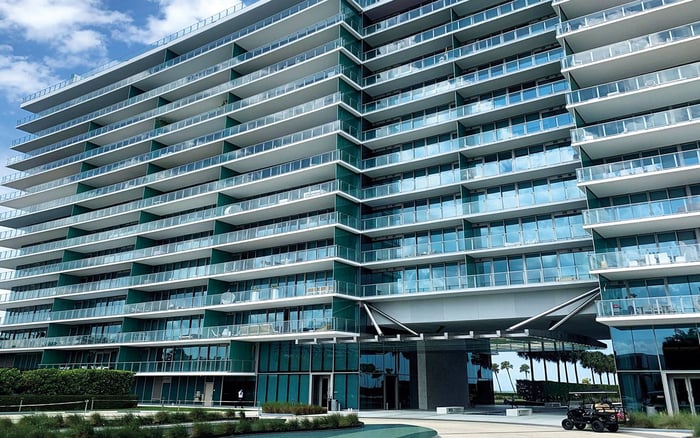
A disciplined Key Biscayne condo review connects structural findings, reserve requirements, adopted budgets and project funding before contract and closing decisions are final.
In Key Biscayne, an elegant interior and exceptional view are only part of a condominium acquisition. The more consequential inquiry may lie in the association's engineering files, reserve schedules and capital-project records. For a buyer, the objective is not merely to confirm that a building has completed the required studies. It is to understand what those studies found, how the association intends to respond and what share of the cost may ultimately attach to the residence.
Florida's Structural Integrity Reserve Study, commonly called a SIRS, applies to residential condominium buildings of at least three habitable stories. Price is irrelevant. A multimillion-dollar residence and a more modest unit in the same qualifying building are governed by the same association-level requirements. The distinction is fundamental: luxury does not replace diligence.
The central question is not whether a study exists, but whether its findings have been translated into a credible funding plan.
A SIRS identifies covered building components, estimates their remaining useful lives and replacement costs, and calculates the reserves required for anticipated work. Covered items include roofs, structural systems, floors, foundations, fire protection, plumbing, electrical systems, waterproofing, exterior painting, windows and exterior doors, as well as qualifying components whose failure could affect structural integrity.
The visual inspection must be completed by a Florida-licensed engineer or architect. Other qualified professionals may assist with reserve calculations where permitted. A qualifying condominium must complete a SIRS at least every 10 years after its creation. Owner-controlled associations that existed on or before July 1, 2022, generally faced an initial completion deadline of December 31, 2025, subject to provisions coordinating certain studies with milestone inspections.
Since December 31, 2024, associations generally cannot use an owner vote to waive or reduce statutorily required reserves for SIRS components. Yet “fully funded” should not be read to mean that every projected replacement dollar must be deposited immediately. It generally means budgeting the calculated annual contributions based on remaining useful life and estimated replacement cost, without an impermissible waiver.
A milestone inspection addresses structural safety. A SIRS translates component condition, useful life and replacement cost into a reserve requirement. The two are related, but they do not answer the same question.
Florida's general milestone framework applies to condominium and cooperative buildings of at least three habitable stories when they reach 30 years of age, followed by inspections every 10 years. In Miami-Dade's coastal regime, a qualifying building within three miles of the coast may face an initial threshold of 25 years, also followed by 10-year cycles. A Key Biscayne buyer should therefore verify the applicable schedule rather than assume that the general 30-year threshold controls.
Phase 1 is a visual examination by a licensed engineer or architect. It evaluates major structural components for signs of substantial structural deterioration. If Phase 1 identifies such deterioration, Phase 2 requires further testing and analysis sufficient to define the damage and recommended repairs. A qualifying recent milestone inspection may satisfy the visual portion of a SIRS, but that coordination does not make the two documents interchangeable.
Miami-Dade recertification and Florida milestone requirements can overlap. Obtain records demonstrating compliance with each applicable regime, including correspondence confirming whether completed work has been accepted by the relevant building authority.
Begin by confirming the original certificate-of-occupancy date and the number of habitable stories. These facts establish whether the building qualifies and help determine timing. Then request the complete Phase 1 report, any Phase 2 report, the current SIRS, repair specifications, compliance correspondence and the latest adopted budget. A seller's summary is no substitute for the underlying documents.
Review the file for substantial structural deterioration, immediate safety concerns, unresolved repairs and work awaiting official acceptance. Compare engineering recommendations with board minutes, contracts and the actual construction schedule. On a Waterfront property, salt exposure may make maintenance feel intuitive, but intuition cannot establish scope, timing or cost. The documents must do that work.
For a Resale purchase at Oceana Key Biscayne or another island condominium, the review should be tied to the specific association and transaction. Do not presume that the condition, reserves or obligations of one building describe its neighbor.
The most useful financial test is a side-by-side comparison. Place the SIRS-recommended annual contribution alongside the adopted reserve budget and current reserve balance. A material shortfall can point to increased fees, catch-up contributions, association borrowing or special assessments.
Next, review board minutes, assessment notices and loan documents. Determine the total approved project scope, funding source, payment timetable and the unit's allocated share. Concrete restoration, waterproofing, façade and balcony work, roofing, plumbing and electrical projects can move through different approval and funding stages. Separate projected costs from approved assessments, and distinguish a preliminary engineering allowance from an executed construction commitment.
A coherent capital-project funding plan should connect four elements: identified work, estimated or contracted cost, available reserves and the method for closing any gap. It should also explain timing. A plan funded partly through reserves and partly through borrowing can create a different owner cash-flow profile from an immediate special assessment, even when the construction scope is similar.
This is the heart of the Investment review. The issue is not simply whether monthly charges are high or low, but whether current contributions and approved financing credibly support the building's known obligations.
Assessment responsibility is a contract issue as well as an association issue. Confirm who pays an assessment that has been approved, levied, partially paid or announced before closing. The purchase agreement should address the relevant timing and allocation rather than leave the parties to interpret them after execution.
The same discipline provides a consistent lens for comparing coastal alternatives such as Arte Surfside, 57 Ocean Miami Beach or Una Residences Brickell. Each property's documents must be evaluated on their own terms, but the buyer's sequence remains constant: verify applicability, read the engineering record, reconcile reserves and identify personal exposure.
Association counsel represents the association, not the buyer. A purchaser should consider independent legal counsel for statutory, document and contract review, together with an independent engineer for technical interpretation. The latest records matter because deadlines, local procedures, repair scope and completion status can change.
A refined Key Biscayne acquisition deserves scrutiny equal to its architecture. For confidential guidance on South Florida luxury real estate, connect with MILLION.
If branded residences are on your mind — as a home or as an allocation — we would be glad to share what we are seeing, privately.
Begin a quiet conversationA SIRS evaluates covered components, estimates remaining useful lives and replacement costs, and calculates the reserve contributions needed for anticipated work.
The mandate applies to residential condominium buildings that are at least three habitable stories high, regardless of unit price.
A qualifying building must complete a SIRS at least every 10 years after the condominium's creation.
No. A milestone inspection evaluates structural safety, while a SIRS translates component condition, useful life and cost into reserve requirements.
Yes. Qualifying coastal buildings within three miles of the coast may be subject to Miami-Dade's 25-year initial threshold rather than the general 30-year schedule.
Phase 2 requires additional testing and analysis sufficient to define the damage and recommend repairs.
Since December 31, 2024, associations generally may not waive or reduce statutorily required reserves for SIRS components through an owner vote.
Request complete Phase 1 and Phase 2 reports, the current SIRS, repair specifications, compliance correspondence, the adopted budget, board minutes, assessment notices and loan documents.
Compare the SIRS-recommended annual contribution with the adopted reserve budget and current reserve balance. A material gap can signal future fees, borrowing or assessments.
Payment depends on the assessment status and the purchase contract. Buyers should have the agreement clearly allocate responsibility for approved, levied or partially paid assessments.