Onda’s early maintenance estimate was a marketing-era projection, not a dependable stabilized cost. Current advertised figures and unit-level charges make document-based due diligence essential.
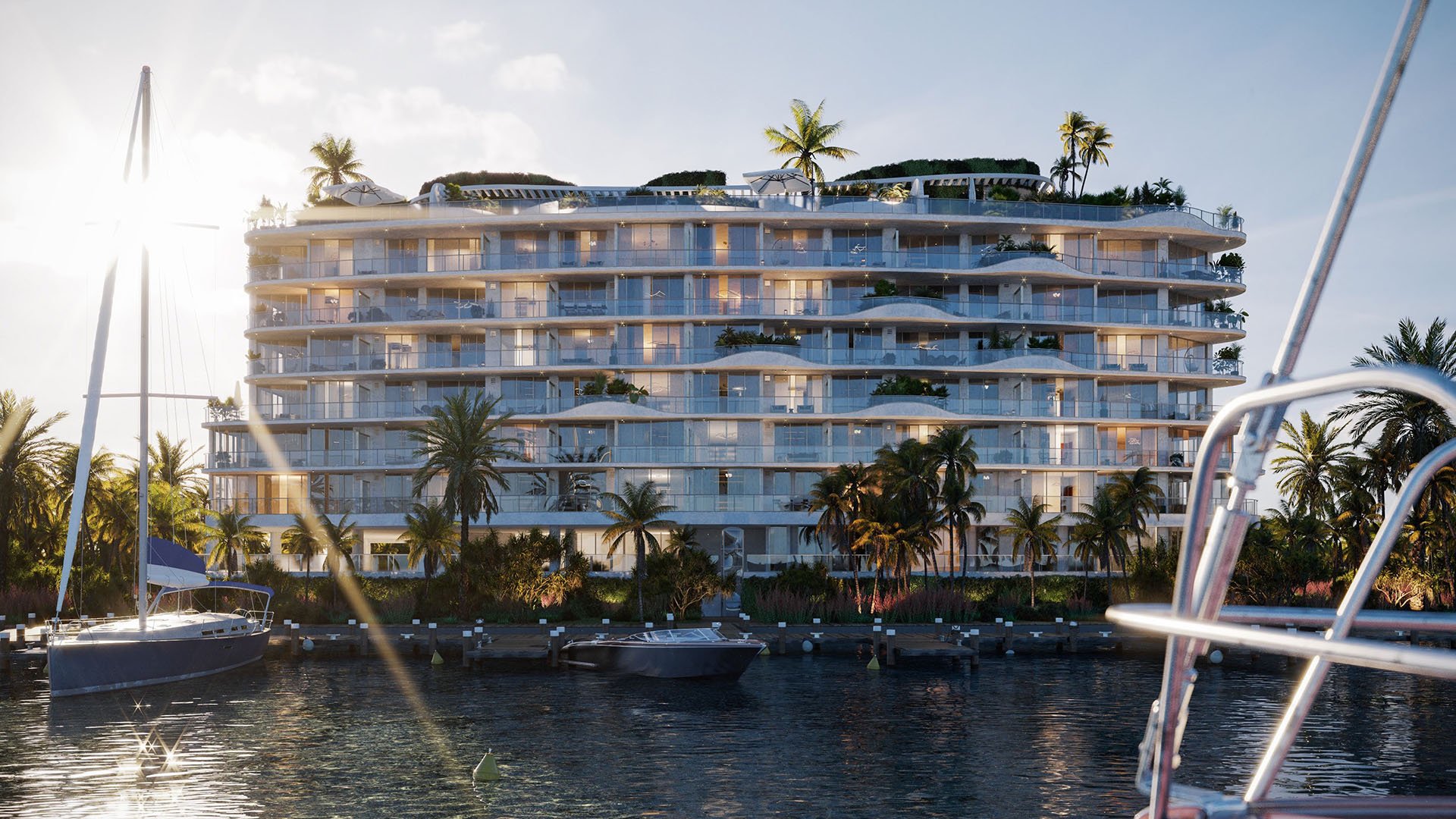
Onda Bay Harbor is a boutique waterfront condominium at 1135 103rd Street in Bay Harbor Islands, with approximately 41 residences and marina facilities. Its intimate scale and waterside setting are easy to appreciate. For a buyer, however, the more consequential question is what the property costs to operate today.
The early preconstruction marketing estimate placed maintenance at approximately $0.75 per square foot per month. Current building figures are materially higher, at approximately $2.10, $2.21 and $2.47 per square foot per month. Actual charges can vary by residence.
That difference is not a minor rounding issue. It changes the ownership-cost premise. A developer’s pro forma is an initial planning and marketing budget prepared before the association has a mature record of actual expenses. It should not be carried forward as though it were a stabilized operating statement.
The current allocation for the target residence matters more than the original marketing estimate.
Unit-level examples at Onda show why a single building-wide rate is insufficient. Unit 602 carries monthly HOA charges of $4,400, while Unit 408 is shown at $4,410 and Unit 203 at $4,689. Higher examples include Unit 303 at $6,041, Unit 504 at $6,976 and Unit 403 at $7,627 per month.
At the upper end, Penthouse 4, measuring 5,073 square feet, carries monthly maintenance or common charges of $10,315. Together, these examples span roughly $4,400 to more than $10,000 per month. The range reinforces a central underwriting rule: obtain the exact allocation for the residence under consideration rather than applying a generalized rate to its interior area.
For a resale acquisition, request written confirmation of the current monthly obligation and determine when that figure took effect. Advertised amounts provide useful orientation, but they may not update simultaneously and cannot replace current association documents.
A high monthly charge cannot be assessed intelligently without understanding its scope. The fee disclosed for Unit 203 includes security, exterior and common-area maintenance, pool service, amenities, cable television, elevator, hot water, management, parking, sewer, water, pest control and internet or Wi-Fi.
Unit 403’s disclosed package includes association management, amenities, common areas, grounds and structural maintenance, sewer, security, trash and water. The descriptions overlap, but they are not identical. Buyers should not assume that every residence carries precisely the same disclosed service package or that every presentation uses consistent terminology.
Request an itemized explanation covering utilities, internet, cable, security, parking, management and any residence-specific arrangements. Then separate association expenses from personal costs. Property taxes, homeowners insurance, financing and other private obligations sit outside the HOA charge. Penthouse 4, for example, carries $150,749 in annual property tax in addition to its $10,315 monthly common charge.
The serious buyer’s checklist begins with the association’s latest adopted budget. Compare its total income and expenses with the amount assigned to the target unit. Confirm that the stated monthly payment reflects the current budget, and ask whether an approved change is pending.
Next, review the association’s financial statements, reserve schedule, insurance costs and assessment history. The purpose is not merely to verify today’s invoice. It is to determine whether recurring operations are supported by recurring assessments, whether reserve funding is separately identified and whether known costs could alter near-term ownership economics.
Use an estoppel and other current association records to confirm the unit’s actual obligation, outstanding balances and applicable charges. The original $0.75-per-square-foot estimate belongs in the historical file, not in the buyer’s forward carrying-cost model.
This discipline is equally useful when comparing Onda with Alana Bay Harbor Islands. Normalize each opportunity using current unit-level charges and documented inclusions rather than placing marketing-era estimates side by side.
A reliable model should separate association dues, property tax, homeowners insurance, debt service where applicable, and residence-specific utilities or services not included in the fee. Keeping these categories distinct prevents an apparently comprehensive HOA number from obscuring substantial costs that remain the owner’s responsibility.
Run the model annually as well as monthly. A charge of several thousand dollars per month becomes more legible as a full-year commitment considered alongside taxes and insurance. Model the exact residence, not an abstract average unit, because Onda’s disclosed charges vary substantially.
When evaluating other Bay Harbor Islands options, such as La Maré Bay Harbor Islands and Origin Bay Harbor Islands, apply the same framework. The objective is not to identify the lowest quoted fee. It is to determine what each charge covers, what remains outside it and which current documents support the number.
Before the diligence period ends, confirm the target unit’s current monthly assessment, its percentage or allocation basis, and every included service. Match that amount to the latest adopted budget and financial statements. Review reserve information, insurance expense and assessment history. Verify taxes, homeowners insurance and financing separately. Finally, ask whether any budget amendment, fee change or assessment has already been approved or is otherwise reflected in the materials provided.
This is the practical standard for a serious buyer. Even within Bay Harbor inventory, presentation should never replace reconciliation. At Onda, the shift from approximately $0.75 per square foot during preconstruction to current figures above $2 per square foot makes that distinction unusually clear. The residence may still fit a buyer’s priorities beautifully, but the decision should rest on current operating evidence and the exact unit allocation.
For discreet guidance on Onda and South Florida’s luxury condominium market, connect with MILLION.
If branded residences are on your mind — as a home or as an allocation — we would be glad to share what we are seeing, privately.
Begin a quiet conversationThe preconstruction marketing estimate was approximately $0.75 per square foot per month.
Current building presentations show approximately $2.10, $2.21 and $2.47 per square foot per month, with actual charges varying by residence.
It was an early planning and marketing estimate, not a mature record of the association’s actual operating expenses.
Published examples run from roughly $4,400 to more than $10,000 per month.
Penthouse 4 has been listed with monthly maintenance or common charges of $10,315.
Property taxes are a separate ownership cost. Penthouse 4 has been listed with $150,749 in annual property tax in addition to its monthly common charge.
Disclosed packages can include security, management, parking, water, sewer, hot water, cable, internet, pool service and common-area maintenance.
Review the latest adopted budget, financial statements, reserve schedule, insurance costs, assessment history and current unit-specific records.
No. The exact allocation and included services for the target residence are more useful because advertised unit charges vary substantially.
Model property taxes, homeowners insurance, financing and any residence-specific utilities or services separately.