South Florida’s most enduring luxury addresses are not always the loudest. Beyond the globally branded islands and headline listings, a second map of wealth runs along barrier islands and Intracoastal towns where scarcity is geographic, not promotional. This guide looks at the enclaves where low density, ocean access, and club culture create privacy by design, and where new, service-forward residences are adding a modern option for buyers who still value discretion.
In South Florida, “hidden” almost never means obscure. It means undisturbed. The most durable privacy is not always a gatehouse, a strict dress code, or a roster of famous neighbors. More often, it is created by constraints that are hard to replicate: a barrier island with limited points of entry, a municipality that resists vertical growth, and a coastline where true waterfront parcels are finite by nature.
That is why select enclaves north of Miami continue to read as quietly dominant. They are not built to compete with the high-visibility glamour of Fisher Island or the hard-security mythology of Indian Creek. Instead, they deliver a softer discretion, shaped by long-established ownership patterns, smaller year-round populations, and the natural “social friction” that forms when inventory is thin and local relationships matter.
For today’s luxury buyer, this distinction is practical, not philosophical. A discreet enclave can deliver the same core outcomes as a headline address: water access, privacy, and long-term value support. The difference is the lifestyle texture. Think early tee times and private dinners instead of velvet ropes, and homes composed around sunrise and routine rather than social media.
This guide focuses on the communities where privacy is engineered by geography, reinforced by culture, and sustained by scarcity. These are markets where quiet is not a lack of luxury. It is the point.
Jupiter Island sits at the far end of the “if you know, you know” spectrum. It is frequently described as low-key while still representing a profound concentration of wealth. Neighborhood profiles commonly referenced in the market point to a tiny year-round population and a notably older median age, both signals that align with multi-decade ownership and a community built for calm rather than constant turnover.
What differentiates Jupiter Island is not simply oceanfront. The defining commodity is the rarer, more valuable configuration: ocean-to-Intracoastal land. In much of South Florida, buyers are forced into a tradeoff between beach exposure and boating convenience. Ocean-to-Intracoastal parcels remove that compromise by controlling frontage on both sides. Properties marketed with both ocean and Intracoastal access illustrate the value proposition clearly: one address can support two distinct daily lives, sand and surf on one side, protected waterway and dockage on the other.
This layout delivers a second-order advantage that experienced buyers recognize immediately: privacy that does not require performance. Ocean-to-Intracoastal parcels allow the home to be composed inward, with layered landscaping, controlled sightlines, and a true separation of leisure zones. That spatial flexibility tends to hold up over time because it allows renovations and future architecture to evolve without eroding the core asset.
For buyers who prioritize discretion, Jupiter Island also benefits from a cultural baseline that is intentionally quiet. The streetscape reads residential, not promotional. Turnover is limited by scarcity, and the scarcity is physical. Those conditions create a market where the right home can feel inevitable once it appears, but seldom appears on schedule.
Between the glamour nodes, you find towns whose luxury case is primarily geographic. Ocean Ridge is a clean example. Positioned between the Atlantic Ocean and the Intracoastal Waterway, it benefits from a simple, unchangeable truth: there is only so much land between two bodies of water, and even less that remains residential in character.
Market snapshots compiled by local brokerage sources often point to an average price around the high seven figures and an average price per square foot in the hundreds, with inventory that can be counted without scrolling for long. Treat listing-based signals as directional rather than definitive, but the message remains consistent. Ocean Ridge is not an “infinite supply” market. It is a “wait your turn” market, where timing, readiness, and clarity on non-negotiables matter as much as budget.
Gulf Stream expresses the same scarcity with a different accent. The town is repeatedly associated with estate-scale homes and a private, club-forward lifestyle. The Gulf Stream Golf Club, founded in 1924 with a Donald Ross-designed course, is more than an amenity. It is an institutional anchor that reinforces continuity. Communities with legacy clubs tend to attract buyers who prefer established rituals to trend cycles, and that preference often correlates with longer holding periods and fewer opportunistic listings.
For buyers comparing options within Palm Beach County, these towns offer a particular advantage: they can feel intensely residential without becoming remote. Daily conveniences exist nearby, but the streets stay quieter, the architecture feels more deliberate, and the social environment is less performative. For many luxury households, that balance is the difference between a home that feels like a retreat and a home that feels like a stage.
In both Ocean Ridge and Gulf Stream, scarcity does not need amplification. It shows up in the map, the scale, and the way the market behaves. When supply is naturally constrained, privacy and value support tend to follow.
Manalapan appears in the same sentence as “ultra-luxury” for a reason. It is a narrow barrier-island town with an exceptionally small population, commonly cited in neighborhood profiles as only a few hundred residents. That scale is not a marketing line. It is the lived experience: fewer neighbors, fewer through-roads, and a built environment that prioritizes privacy.
Like Jupiter Island, Manalapan benefits from the barrier-island form factor. When land is narrow and access is limited, the best parcels can feel singular. Buyers are drawn to the combination of water exposure, distance from high-rise clusters, and an estate-style rhythm that favors discretion over visibility.
Inventory is visible on major portals, but the most compelling opportunities are often relationship-driven. In markets this tight, transactions can circulate privately before they become widely advertised, and some of the most valuable context is local: how a street lives day to day, which pockets are quietest, and what type of renovation appetite the market rewards.
Nearby, Hypoluxo offers a different proposition that suits a specific buyer profile. It is an Intracoastal-oriented alternative where “waterfront” is often framed around the waterway lifestyle. If your priority is boating access, protected water, and a more relaxed cadence, Hypoluxo can function as a quieter counterpoint to oceanfront-first locations. It also provides a practical advantage: buyers can track active waterfront inventory through mainstream platforms, which helps calibrate expectations before engaging in more private conversations.
Together, these two markets underline a crucial point about South Florida: “waterfront” is not a single product. Oceanfront and Intracoastal living deliver different soundscapes, different wind patterns, different maintenance profiles, and different daily rituals. The right choice is less about prestige, and more about how you use the home week to week, season to season, and over time.
Hillsboro Beach in Broward is frequently positioned as an exceptionally exclusive, narrow coastal strip, often associated with a “Millionaire’s Mile” identity. Its physical structure explains the appeal. When a town is essentially a thin ribbon between ocean and waterway, even routine drives feel private, density stays controlled, and the experience reads more residential than touristic.
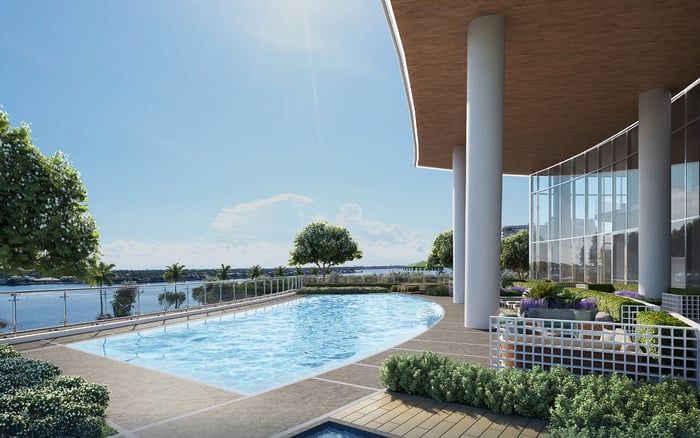
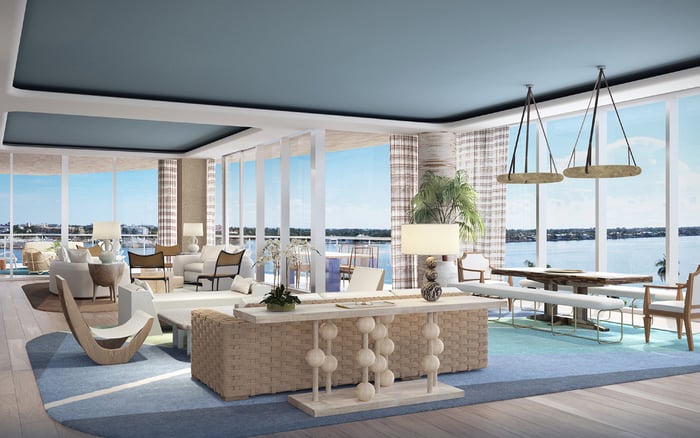
What is changing, in a way that matters to modern luxury buyers, is the arrival of new residential product that pairs geography with service. A notable example is Rosewood Residences Hillsboro Beach, which has been described as spanning approximately 12 acres from ocean to Intracoastal and comprising 92 residences with Rosewood-managed services and amenities.
For buyers who want barrier-island privacy but prefer a contemporary, lock-and-leave model, this kind of development can bridge generations of taste. It supports the buyer who values design, staffing, and consistency, but still wants the psychological calm that comes from limited land and limited access.
It also signals a broader shift in South Florida. Hospitality-branded, service-forward living is no longer confined to the most publicized neighborhoods. It is migrating into places where the underlying scarcity is already proven, and where a quieter pace is a feature, not a compromise.
In practical terms, Hillsboro Beach can be compelling for those who want the “thin strip” geography without the pressure of living in a headline market. The prestige is inherent. The tempo is simply quieter.
West Palm Beach has developed an increasingly nuanced luxury narrative. The city’s historic neighborhoods, including El Cid and Prospect Park, are often profiled as containing more than 200 historic buildings. That continuity creates a sense of place that new construction alone cannot replicate. For many buyers, especially those relocating from legacy cities, architectural texture and neighborhood character matter as much as square footage.
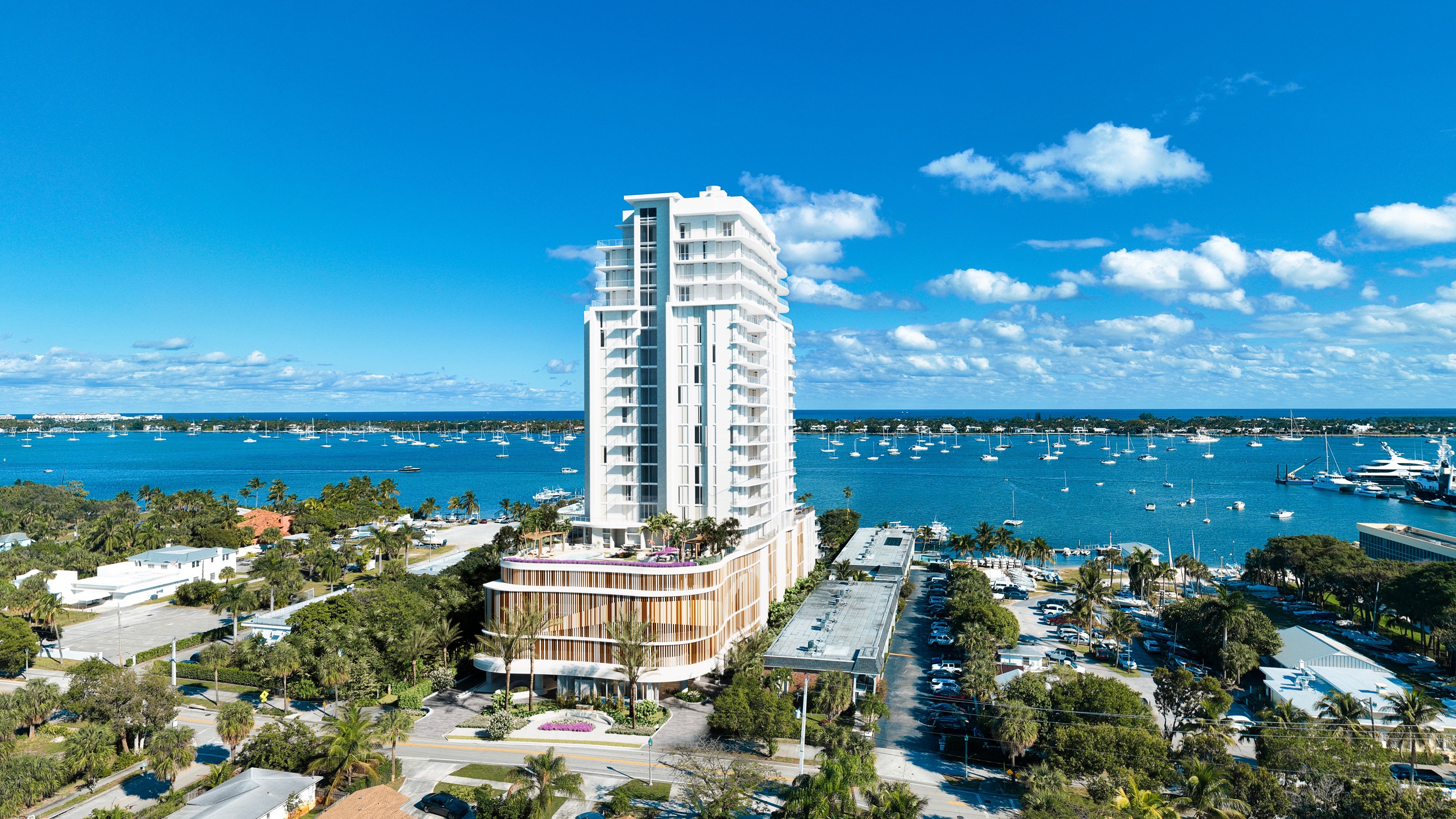
At the same time, West Palm Beach is also where service-driven residences are gaining prominence. Buyers who want waterfront access and Palm Beach adjacency, but prefer a modern, managed lifestyle, now have credible options within a market that continues to mature.
Consider the contrast in positioning among newer residential offerings. Mr. C Residences West Palm Beach leans into an Italian hospitality sensibility that resonates with buyers who value design coherence and a curated lifestyle. The Ritz-Carlton Residences® West Palm Beach carries the reassurance of an internationally recognized service standard, which can be especially important for second-home owners who prioritize consistency and ease. And Alba West Palm Beach adds another contemporary option for buyers focused on new construction with a strong amenity narrative.
The strategic takeaway is that West Palm Beach can serve as a connector market. It offers proximity to Palm Beach County’s most established enclaves while delivering a broader spectrum of housing types, from historic single-family streets to newer, service-led buildings. That range matters for households whose priorities evolve: a primary residence today, a seasonal residence tomorrow, or a lock-and-leave base that supports travel while keeping you close to the cultural and coastal fundamentals that draw buyers to South Florida in the first place.
Discreet markets do not behave like high-velocity, high-visibility neighborhoods. Success is less about watching headlines and more about aligning early with the right access points, then moving with confidence when the window opens.
First, treat scarcity as a feature, not a frustration. In places like Jupiter Island or Manalapan, the “right” home may not appear on your preferred timeline. Buyers who ultimately secure the best fit tend to be clear on non-negotiables, realistic about the tradeoffs, and prepared to act decisively when a match surfaces.
Second, understand that privacy can be structural, social, or governed. Some communities derive exclusivity from geography and low density. Others are defined by private club culture and long-standing social networks. In contrast, certain gated communities are known for formalized standards and buyer processes. The right fit depends on your comfort with visibility, vetting, and community expectations, as well as how much you value anonymity versus community continuity.
Third, be intentional about the kind of waterfront you are buying. Oceanfront can deliver direct beach exposure and dramatic views, but it can also involve more direct weather exposure and a different maintenance profile. Intracoastal living often emphasizes protected water and boating convenience, with a daily rhythm centered on the waterway. Ocean-to-Intracoastal parcels combine both, but their scarcity requires patience and precise criteria. Clarifying this early helps avoid over-shopping and keeps your search aligned with how you actually live.
Fourth, consider the “family compound” strategy when multigenerational use is the real objective. South Florida luxury reporting has described an increase in compound-style buying, where adjacent or nearby properties are assembled to function as a private campus. In low-density towns, this approach can create long-term flexibility without forcing everyone into a single floor plan, while still keeping the household anchored in one tight geographic footprint.
Finally, separate asking prices from market reality. Many public metrics reflect active listings, which can be useful signals but never tell the full story. In relationship-driven enclaves, the most meaningful pricing context often comes from local nuance and private dialogue: what has actually traded, what has been quietly tested, and which properties are truly available.
The common thread across these enclaves is simple. The best addresses protect your time. They reduce friction, reduce noise, and make daily life feel intentional.
Are these enclaves truly “off-market” markets? Not entirely. Listings do appear publicly, but opportunities can be relationship-driven and sometimes circulate privately before broad exposure.
What is the primary value driver: oceanfront or Intracoastal? It depends on use. Oceanfront emphasizes beach and views; Intracoastal often prioritizes boating access and protected water. Ocean-to-Intracoastal parcels combine both and are especially rare.
Why do small towns hold value so consistently? Low density, limited land, and established community patterns tend to reduce supply shocks. When inventory is thin, desirable properties can remain resilient.
Is branded, service-forward living only for Miami buyers? No. New luxury residences in markets like Hillsboro Beach and West Palm Beach show that hospitality-grade services are expanding beyond Miami’s most publicized neighborhoods.
Explore private opportunities with MILLION Luxury.
If branded residences are on your mind — as a home or as an allocation — we would be glad to share what we are seeing, privately.
Begin a quiet conversation