Rivage Bal Harbour advertises personal-chef assistance and in-residence catering, but effortless entertaining depends on residence-specific ventilation, vendor permissions, and service-access arrangements. Here are the technical and operational questions to resolve before purchasing.
A private dinner should feel effortless to the host, not merely look elegant to the guests. At Rivage Bal Harbour, planned at 10245 Collins Avenue, Bal Harbour, Florida 33154, the advertised service program includes a residential butler and estate manager to facilitate in-residence services, including personal-chef assistance. In-residence dining and catering from the signature on-site dining room are also advertised.
Those offerings are a compelling starting point, but they do not resolve the practical questions behind a chef-led evening. Personal-chef assistance does not establish commercial-style ventilation. Catering availability does not establish permission for an independent team, and private-elevator arrival does not explain how rental furniture reaches the residence.
Before purchasing, define how you intend to entertain: regular chef-prepared meals, occasional seated dinners, or larger catered receptions. Ask the developer or management to evaluate that specific brief. Treat advertised services as planned offerings, not proof of current operations, contractual inclusion, or availability without additional charges.
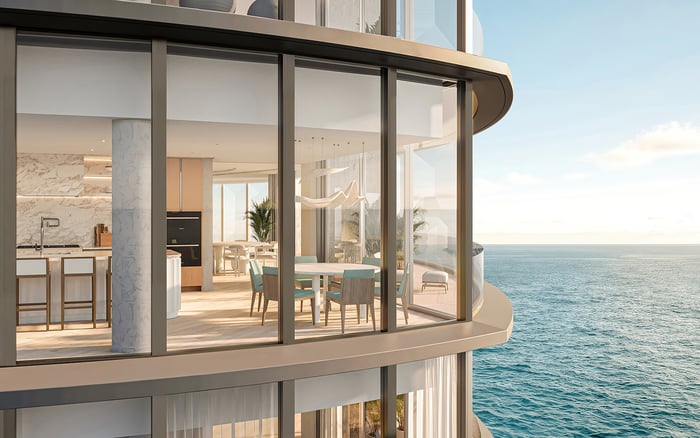
The advertised kitchens combine custom millwork, a fluted island, and an integrated Sub-Zero and Wolf appliance suite. These design specifications matter, but ventilation warrants a separate review. Confirm the selected residence’s final appliance schedule, including whether its cooktop is gas.
Hood airflow, capture area, duct dimensions, discharge location, noise rating, and dedicated versus shared exhaust arrangements have not been publicly disclosed. Whether the hoods recirculate air or exhaust outdoors also remains unestablished. Makeup-air interlocks and pressure-balancing arrangements require residence-specific documentation.
Request the mechanical plans and equipment schedules for the exact residence under consideration. Have your architect or mechanical consultant identify the hood model, airflow in cubic feet per minute, exhaust path, replacement-air provision, controls, and fire/life-safety interfaces. The objective is not to prescribe a commercial kitchen, but to determine whether the proposed residential system suits your chef’s actual cooking methods.
Ask how smoke capture, odor control, and noise are expected to perform when appliances run simultaneously. Discuss high-heat cooking and any restrictions on portable equipment. Establish who maintains the filters, motors, ducts, and controls, and whether maintenance access affects cabinetry or finishes. An attractive appliance schedule should begin this discussion, not conclude it.
Rivage’s advertised in-residence dining and catering should be evaluated separately from the possibility of bringing in a preferred chef or caterer. Outside-caterer eligibility, approval requirements, insurance requirements, and exclusivity arrangements have not been publicly disclosed.
Request written rules for independent chefs, catering companies, and their staff. Clarify registration, licensing and insurance documentation, permitted kitchen use, and whether approval applies to each event or to an ongoing vendor relationship. Ask whether the advertised estate-management team coordinates these steps and which services carry additional charges.
The distinction also matters if your purchase search includes Oceana Bal Harbour. Apply the same questions independently to each property rather than assuming that a dining amenity or service description grants equivalent vendor access.
For Rivage, ask management to explain how an evening would work when its on-site dining service supplies the meal but an outside team provides flowers, tableware, or additional staff. Mixed-vendor events warrant explicit approval; one catering arrangement should not be assumed to cover every participant.
Direct private-elevator entry to each residence is advertised. A separate service entry is also identified alongside the private-elevator arrival area in at least some configurations. That designation does not establish an identical arrangement in every residence or a connection to a dedicated service elevator.
Ask for a marked route from the approved unloading point to your residence’s service entry. Verify whether a dedicated service elevator exists, which floors it serves, its dimensions and capacity, and the clearances along the entire route. Doorways and turns belong in that review alongside the elevator cab itself.
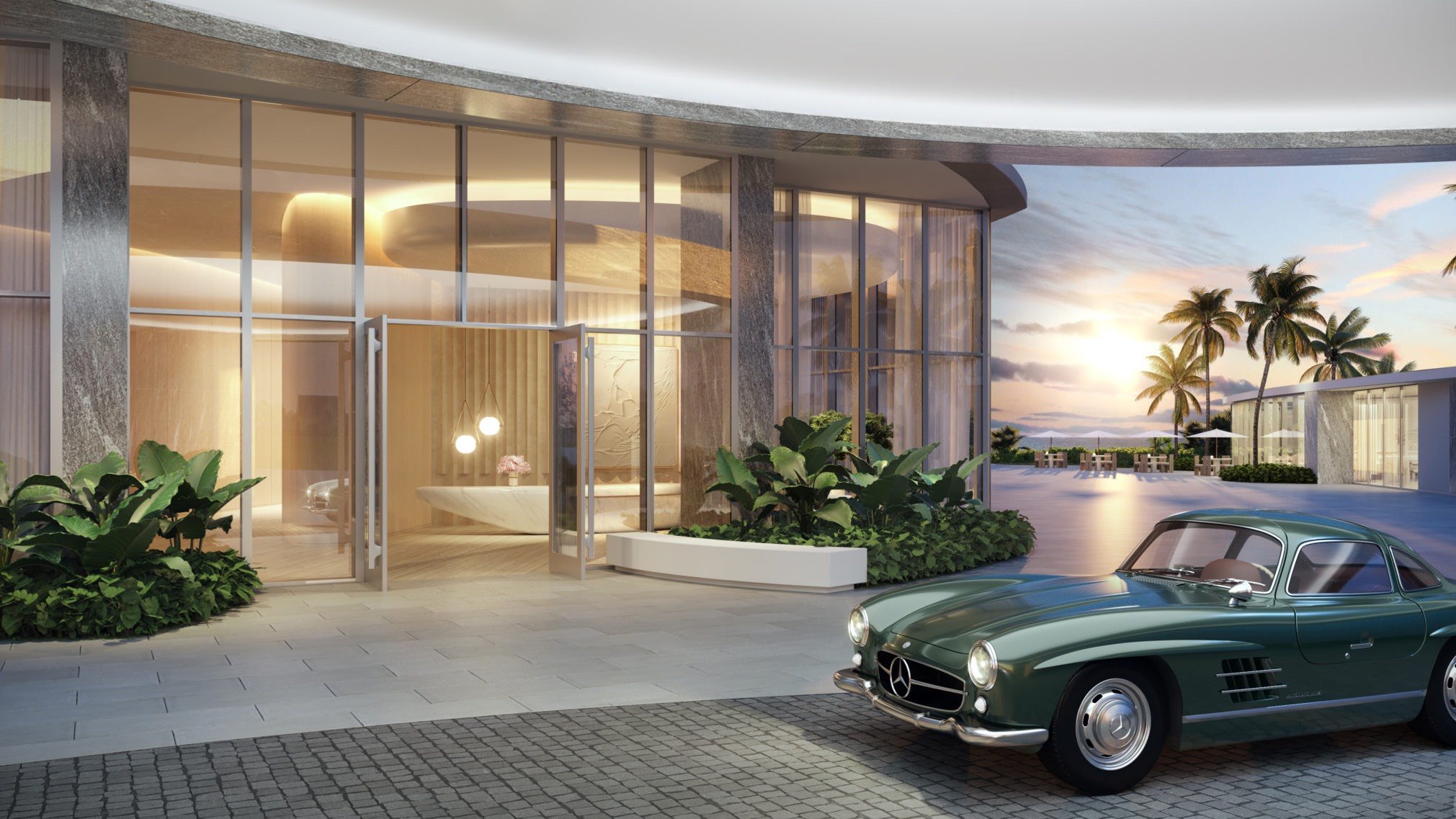
Then resolve the ground-level details: unloading location, vehicle limits, permitted dwell time, equipment staging, and any temperature-controlled holding arrangements. Rivage’s advertised 24-hour security and valet do not establish catering-vendor access procedures. Nor does the advertised mailroom with secure package technology answer questions about large deliveries or catering load-in.
Ask where empty crates, used linens, rental furniture, and refuse may wait during an event. The arrival route is only half the exercise; confirm the collection route and timing as well.
Service-elevator booking lead times, reservation windows, fees, cancellation rules, and multi-trip delivery procedures have not been publicly disclosed. Request the proposed scheduling policy rather than infer one from the presence of a service-entry door.
Clarify whether a reservation covers an uninterrupted window, individual trips, or another arrangement. Ask about protective coverings, attendant requirements, delays, missed slots, and repeated deliveries. Establish how conflicts with other building activities would be handled and who can authorize a schedule change.
Prepare a sample timeline covering equipment arrival, food delivery, staff access, guest arrival, and collection. Ask management to annotate it with permissible windows and anticipated charges. Clarify whether the advertised on-site general manager is responsible for confirming these arrangements, and establish the scope of that role’s authority.
Residential-event limits for guest counts, music, alcohol service, rentals, décor, and cleanup have not been publicly disclosed. Ask separately about permitted hours, terrace use, temporary cooking fuels, and post-event collection. Do not treat an unresolved policy as either a prohibition or permission.
If The Delmore Surfside is also under consideration, carry the same entertaining brief into that evaluation. The useful comparison is the documented fit for your household, not an assumed equivalence between service offerings.
Before committing, request a written response connecting three elements: the selected residence’s technical specifications, the permitted vendor and event arrangements, and the practical delivery schedule. Have your architect or mechanical consultant review the technical answers, and clarify which operational terms are settled and which remain proposed.
The most persuasive outcome is not a broad assurance that entertaining will be accommodated. It is a clear account of who may arrive, what they may bring, how they reach the residence, and when everything can leave. That clarity allows the service to remain discreet while the evening belongs to you.
For a considered approach to your South Florida residence search, connect with MILLION.
If branded residences are on your mind — as a home or as an allocation — we would be glad to share what we are seeing, privately.
Begin a quiet conversationRivage Bal Harbour is planned at 10245 Collins Avenue, Bal Harbour, Florida 33154.
The advertised residential butler and estate manager facilitate in-residence services, including personal-chef assistance. Buyers should confirm the scope, availability, and charges.
Rivage advertises in-residence dining and catering from its signature on-site dining room. That offering does not establish permission to use an outside caterer.
Outdoor exhaust versus recirculation is not established in the reviewed public materials. Request residence-specific mechanical plans and hood specifications.
An integrated Sub-Zero and Wolf appliance suite is advertised. Confirm the selected residence’s final appliance schedule, including its cooktop type.
No. A service entry appears in at least some published layouts, but that does not establish a dedicated service elevator or identical access for every residence.
Request written eligibility, approval, licensing, insurance, staffing, and kitchen-use rules. Outside-caterer requirements and exclusivity arrangements are not disclosed in the reviewed public materials.
Booking lead times, reservation windows, fees, cancellation terms, and multi-trip procedures are not disclosed in the reviewed public materials. Ask for the proposed policy and its application to a sample event timeline.
Guest-count limits are not disclosed in the reviewed public materials. Buyers should also clarify event hours, music, alcohol service, terrace use, rentals, and cleanup.
Request confirmation of residence-specific ventilation, permitted vendors and events, and delivery and collection arrangements. Have an architect or mechanical consultant review the technical specifications against your intended cooking pattern.