A buyer-focused comparison of Tula Residences and Shoma Bay, separating advertised conveniences from the written commitments that matter when owners are away, emergencies arise, or household vendors need access.
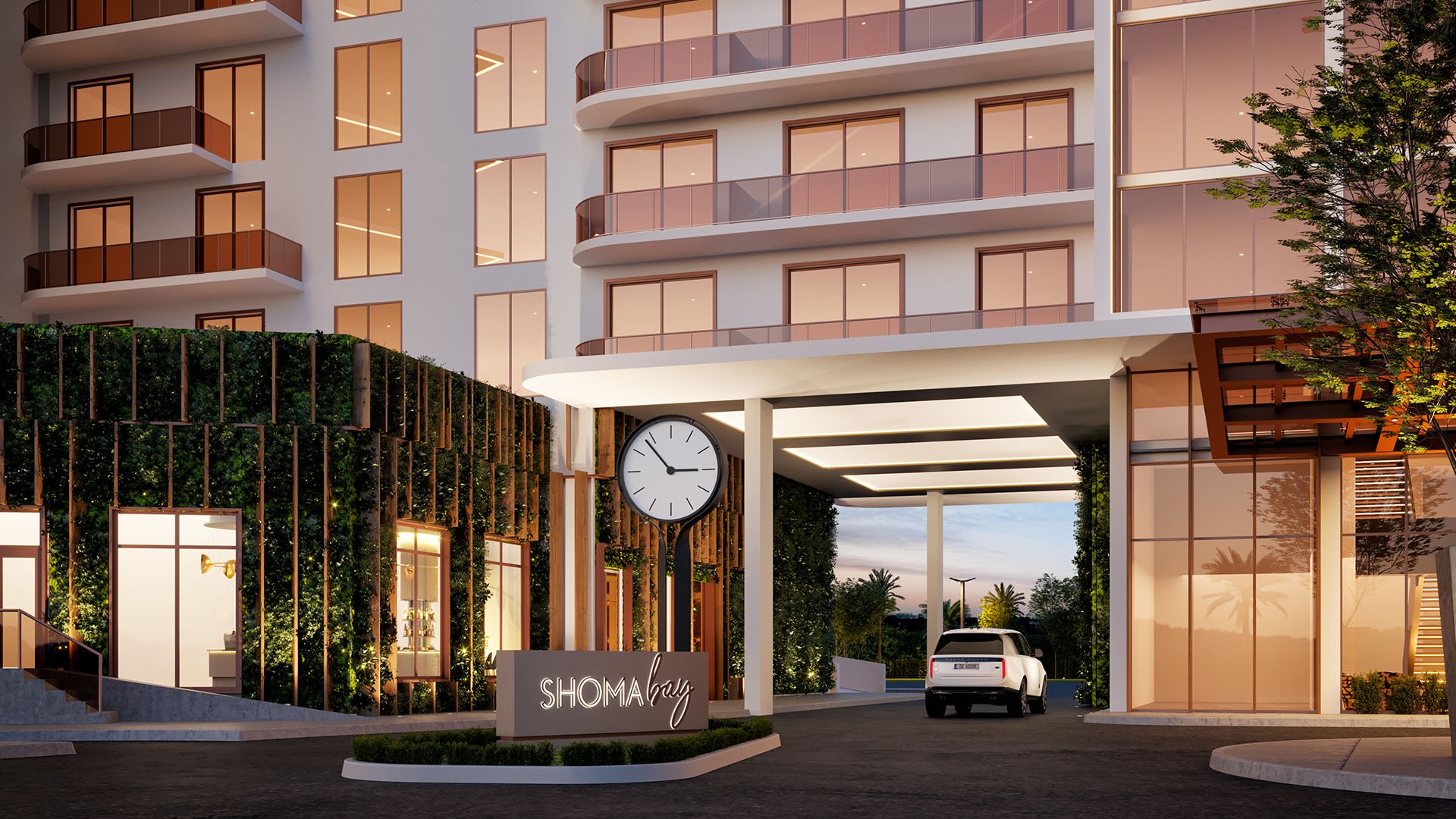
For an owner who divides time between homes, residential luxury is measured partly in quiet continuity: a residence attended to during an extended absence, an urgent issue handled within clear authority, and a trusted vendor admitted without compromising privacy. These are distinct services, even when marketing groups them under the reassuring labels of concierge or security.
At Tula Residences North Bay Village and Shoma Bay North Bay Village, the essential buyer question is not simply whether help is available. It is what that help is authorized, staffed and contracted to do.
Advertised amenities alone cannot establish a complete absence-management program at either property. Nor do they support a verdict on actual resident satisfaction. More detailed marketing is not proof of better service.
Shoma Bay advertises concierge services and residents' storage, alongside a refrigerated grocery-delivery room, mailroom and mobile package system. Its advertised security features include biometric access control, 24-hour security and video surveillance. These describe infrastructure and service categories-not a commitment to inspect private residences.
Tula's advertised 24-hour concierge and secure package room require direct project confirmation. The same caution applies to private storage and an above-ground parking garage. Buyers should separately verify remote guest authorization, emergency-entry procedures and household-vendor monitoring.
The distinction matters. A concierge may facilitate an appointment without supervising the work. Security may control a lobby without authority to enter a residence. A package room may accept deliveries without assuming responsibility for every item. Buyers should request a written scope for each function rather than treating amenity names as interchangeable promises.
A complete absence plan should address residence inspections, leak response, HVAC checks, storm preparation, key custody and owner notification. Whether either property can provide that scope requires written confirmation; it should not be inferred from amenity descriptions.
Start with a written absence scenario: the owner will be away for several weeks, a household contractor may need access, and the designated local representative must be reachable. Ask management to identify which tasks it performs, which require a separate agreement and which remain entirely the owner's responsibility.
For any offered inspection service, request the visit frequency, checklist, documentation and escalation procedure. Clarify whether staff merely observe a problem or may arrange corrective work. Storm preparation needs its own scope; it should not be assumed to fall within general concierge assistance.
A useful answer names the responsible party, the trigger for action and the record the owner receives afterward. A general assurance that someone will take care of the residence leaves all three unresolved.
Shoma Bay's advertised access controls and security provisions should not be mistaken for a documented procedure governing emergency entry into an absent owner's home. Buyers at Tula should likewise seek a separate written procedure rather than infer one from concierge services.
Before purchasing, request the written emergency-entry policy. Establish who can authorize entry, who holds keys or credentials, whether access is logged and when the owner or designated agent is contacted. Ask what happens if neither person answers.
Financial authority deserves equal attention. Determine whether management can approve emergency work, what spending limits apply and how subsequent charges are documented. Have the relevant documents reviewed rather than assuming a verbal explanation captures the building's authority.
Ask management to walk through a hypothetical leak discovered while the owner is abroad. The response should explain authorization, entry, immediate action, contractor involvement and notification. This tests the proposed procedure without presuming an incident has occurred at either building.
Admitting a housekeeper, technician or installer is not the same as overseeing that person's work. At either project, buyers should request a household-vendor protocol rather than assume concierge or security services cover supervision.
Request separate answers for identity verification, owner authorization, arrival and departure logs, elevator access, escorts and access to the private residence. Clarify whether permission is limited to one appointment or remains active until revoked. If temporary credentials are available, ask how they expire and who can cancel them remotely.
Responsibility inside the residence is a separate question. Does any offered supervision mean accompanying the vendor, checking completion or simply confirming departure? Ask whether service records are retained and available to the owner. These distinctions help determine whether building staff can meet the household's needs or a separately engaged representative is necessary.
Shoma Bay lists a pet spa and pet park, but those amenities do not establish entry policies for dog walkers or other pet-service vendors. Recurring appointments need their own authorization and access arrangements.
Its refrigerated grocery-delivery room, mailroom and mobile package system are advertised conveniences. Buyers should separately confirm storage deadlines, oversized-package handling, release procedures, refrigerated-delivery liability and courier access to residential areas.
An owner ordering groceries before arrival should confirm acceptance hours, collection arrangements, storage monitoring and responsibility for spoilage. Valuables and signature-required packages warrant separate questions. At Tula, first confirm the secure package-room offering, then request the handling policy. Storage alone does not define custody or liability.
An association-fee figure alone does not establish that one building provides more attentive management. Nor should buyers assume that an assessment includes residence checks or supervised vendor access.
Request the approved operating budget, the assessment applicable to the intended residence and any separate service charges. Compare defined responsibilities before comparing the cost of delivering them. If a household needs services outside the building's scope, obtain separate proposals before treating the association assessment as the full cost of an absence plan.
Before committing, obtain the declaration, rules, management agreement, access and delivery policies, emergency procedures, insurance information and approved operating budget. Reconcile any promised service with those documents and identify who would deliver it.
Buyers also considering Continuum Club & Residences North Bay Village should apply the same questions there, without assuming equivalent services. Across a North Bay Village search, compare responsibilities, authorization and accountability rather than amenity vocabulary.
For Tula and Shoma Bay, the defensible conclusion is a due-diligence priority, not a service ranking. Favor the residence whose documented arrangements fit your household, including the tasks you must organize separately.
For a discreet perspective on your South Florida residential search, connect with MILLION.
If branded residences are on your mind — as a home or as an allocation — we would be glad to share what we are seeing, privately.
Begin a quiet conversationThe comparison focuses on Tula Residences North Bay Village and Shoma Bay North Bay Village. It examines the written service arrangements buyers should request rather than ranking resident satisfaction.
No. Buyers should request a written scope covering inspections, leak response, HVAC checks, storm preparation, key custody and owner notification.
The advertised 24-hour concierge and secure package room require direct project confirmation. They should not be treated as verified commitments to manage a private residence during an owner's absence.
Shoma Bay advertises a refrigerated grocery-delivery room, mailroom and mobile package system. Those amenities alone do not establish storage deadlines, release procedures or responsibility for loss or spoilage.
No. Advertised biometric access control, 24-hour security and video surveillance do not establish who may authorize emergency entry into an absent owner's residence.
Ask who authorizes entry, who holds keys, how access is recorded and when owners or designated agents are contacted. Also establish emergency spending authority and what happens if contacts cannot be reached.
Admission permits entry, while oversight could include accompanying a vendor or checking completion of work. Buyers should separately confirm authorization, access logs, supervision and recordkeeping.
No. Shoma Bay's advertised pet spa and pet park do not establish policies for pet-service vendors entering private residences.
Fees alone do not establish service quality or the inclusion of residence checks and supervised vendor access. Compare the applicable assessment, approved budget and written service scope.
Request the declaration, rules, management agreement, access and delivery policies, emergency procedures, insurance information and approved operating budget. Match any service promises to a written scope and responsible provider.