A practical ownership review for Miami Art Week 2026, examining delivery scheduling, loading permissions, public circulation and the management protocols that support resident privacy in South Beach.
The most revealing luxury amenity during Miami Art Week may be an uneventful arrival home. For a South Beach owner, the practical question is not simply proximity to the fair. It is whether an artwork delivery, a retail restocking truck and arriving guests can be accommodated without compromising residential access or discretion.
Miami Art Week 2026 is scheduled for November 30-December 6. Art Basel Miami Beach has VIP previews scheduled for December 2-3 and public days on December 4-6 at the Miami Beach Convention Center, 1901 Convention Center Drive. Owners should therefore plan beyond the public opening weekend.
Treat December 2-6 as a prudent coordination period, not a statistically established congestion peak. A calendar can guide preparation; it cannot establish a particular building’s delivery policy, temporary curb restrictions or the time needed to reach its entrance.
Where retail or hospitality activity shares a frontage or service approach with residences, ask management how competing arrivals would be handled. A shop replenishing inventory, a caterer unloading and an owner receiving furniture may require different vehicles and handling times. The question is whether their routes or reservations overlap.
For a buyer evaluating Five Park Miami Beach, the useful exercise is to request the actual service-access plan rather than infer operations from an attractive entrance. Does any nonresidential activity use the same approach? Who coordinates scheduling conflicts? Where can an early vehicle wait lawfully?
A practical review should distinguish the delivery destination, permitted stopping location and internal transfer route. A residential appointment does not, by itself, settle curb access. Nor should a retailer’s loading arrangement be assumed to apply to a condominium delivery.
Miami Beach freight-loading zones are posted on-street areas typically 60-100 feet long, roughly three to five parking spaces. They are intended for commercial vehicles with a gross vehicle weight exceeding 10,000 pounds. A convenient stretch of curb is not automatically an authorized unloading location, and a smaller delivery vehicle should not assume eligibility.
Posted signs specify permitted hours and days, time limits, payment options and prohibitions. Commercial vehicles may need a city permit; violations can result in citations or towing. Delivery prohibitions during posted hours can also be enforced under City Code Section 106-47, and properties accepting prohibited deliveries may receive a notice of violation.
The distinction between on-street freight loading and alley loading matters. Ask the carrier and management to identify the precise stopping location before confirming an arrival. A service address alone may not give the driver enough information to use the correct access point.
Ordinance 2018-4224 is regulatory background, not a universal condominium delivery timetable. Its distinctions depend on vehicle axle count and use, with applicable exceptions and restrictions.
For commercial/hotel loading and trash pickups involving vehicles with more than two axles, weekday commencement windows are 6-7 a.m., 9 a.m.-3 p.m. and 6-9 p.m.; the weekend commencement window is 9 a.m.-9 p.m. For vehicles with two axles or fewer, the windows are 6 a.m.-11 p.m. on weekdays and 9 a.m.-11 p.m. on weekends, within the ordinance’s scope.
None of these windows should be treated as permission to book a residential delivery without further checks. Confirm current city requirements, posted signs, any temporary restrictions and the building’s own acceptance rules. An elevator reservation and lawful vehicle access are separate matters; both require confirmation.
For owners considering Apogee South Beach, delivery due diligence should follow the object from vehicle to residence. Request the service-entrance location, dock capacity if applicable, elevator dimensions and any turn or doorway clearances relevant to a crate. These are questions to resolve, not features to presume.
Management should also clarify insurance requirements, reservation procedures, staffing arrangements and any delivery blackouts. For artwork, give the handler enough information to assess the proposed route before dispatch. If access depends on a reserved elevator, ask what happens when a preceding appointment runs late.
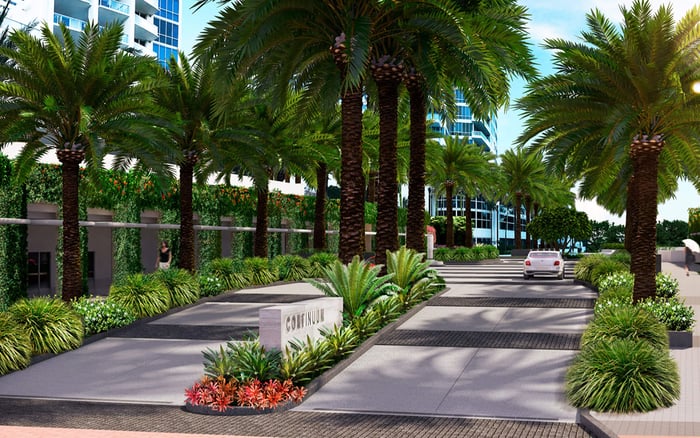
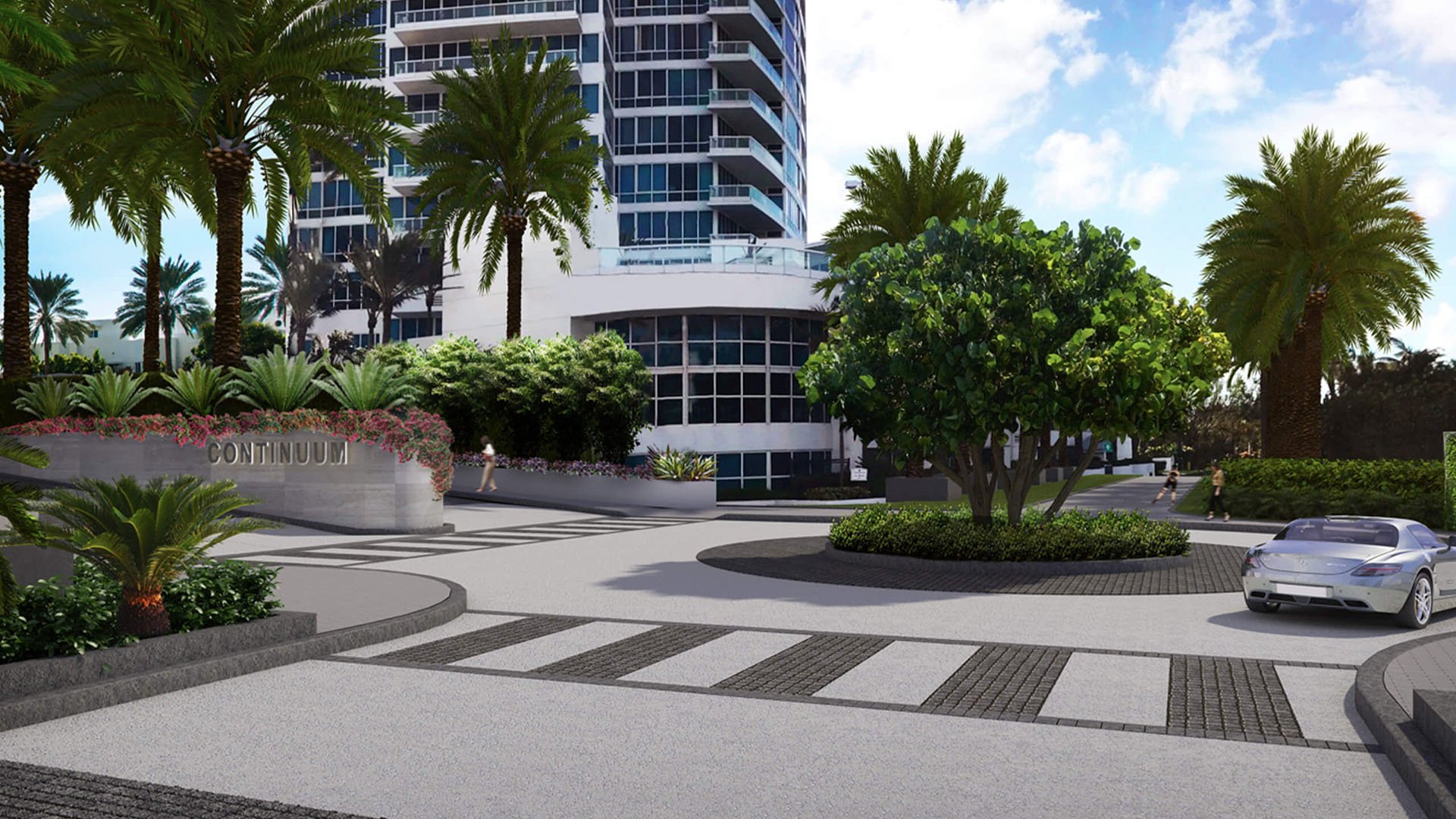
The same review belongs in an ownership conversation about Continuum on South Beach. Seek a written appointment confirmation identifying the approved vehicle approach, receiving contact and procedure for delays. That is more useful than a general assurance that deliveries can be accommodated.
A polished arrival sequence does not establish exclusive access rights. Buyers should request the governing documents and any relevant access agreements before drawing conclusions about a lobby, driveway, terrace or porte-cochère. The central questions are who may use each space, for what purpose and under whose supervision.
When evaluating Setai Residences Miami Beach, ask management to explain the applicable resident, visitor and vendor routes without assuming either unrestricted public access or complete separation. This is a due-diligence exercise, not a claim about the property’s layout or policies.
Ask where visitors are checked, how unexpected arrivals are handled and whether delivery personnel can reach residential circulation without an additional authorization step. If event guests and residents could share a transition point, request the operating procedure that governs it.
Resident privacy is best approached as a sequence of controlled handoffs. Suggested practices include verifying vendor identities in advance, naming the authorized recipient and using escorted access where management permits it. These are recommendations, not established legal or building requirements.
For a collection delivery, share artwork details, residence information and scheduling only with those who need them. Consider a documented handoff identifying the item, its condition on arrival and the person accepting it. Do not treat a busy reception point as informal storage unless management has expressly approved the procedure.
Agree on one owner-side contact for changes. A delayed driver should have someone to call before improvising a stopping location or attempting another entrance. Discretion depends as much on clear instructions as on physical separation.
Before the week begins, reconfirm delivery appointments, guest instructions and management contacts. Where feasible, consider scheduling nonessential furniture moves outside the event dates. That is a planning choice, not a claim that deliveries will be prohibited during Art Week.
Keep fair parking separate from the residential access plan. The Convention Center campus garage has approximately 800 spaces, with event parking advertised at a $20 flat fee, but neither the rate nor space availability is guaranteed for Art Week 2026. A 24/7 Code and Parking Enforcement hotline is available at 305-604-CITY.
For a purchaser, the decisive distinction is between a reassuring presentation and a documented operating plan. Clear permissions, confirmed routes and accountable handoffs make an event-week residence easier to use with confidence.
Explore South Beach ownership with a more discerning view of access and privacy at MILLION.
If branded residences are on your mind — as a home or as an allocation — we would be glad to share what we are seeing, privately.
Begin a quiet conversationMiami Art Week 2026 is scheduled for November 30–December 6, with events across Miami and Miami Beach.
Public days are December 4–6, 2026, with VIP previews scheduled for December 2–3.
The fair takes place at the Miami Beach Convention Center, 1901 Convention Center Drive, Miami Beach.
No. Owners and carriers should confirm lawful vehicle access separately from dock or elevator reservations, including posted signs and any temporary restrictions.
The designated zones are intended for commercial vehicles with a gross vehicle weight exceeding 10,000 pounds. Permit and posted-zone requirements must also be checked.
No. Ordinance 2018-4224 distinguishes vehicle axle count and use, and its commercial/hotel provisions should not be applied as a universal condominium schedule.
Ask whether retail and residential deliveries share an approach or stopping location, who coordinates overlapping appointments and where early vehicles can wait lawfully.
No. Review governing documents and relevant access agreements, and ask management to explain the applicable resident, visitor and vendor routes.
Suggested practices include advance vendor verification, limited sharing of collection details, authorized recipients and documented handoffs. Escorted access should be coordinated with management.
No. The advertised $20 event parking fee is not a guaranteed Art Week 2026 rate, and the garage’s approximately 800 spaces do not assure availability.