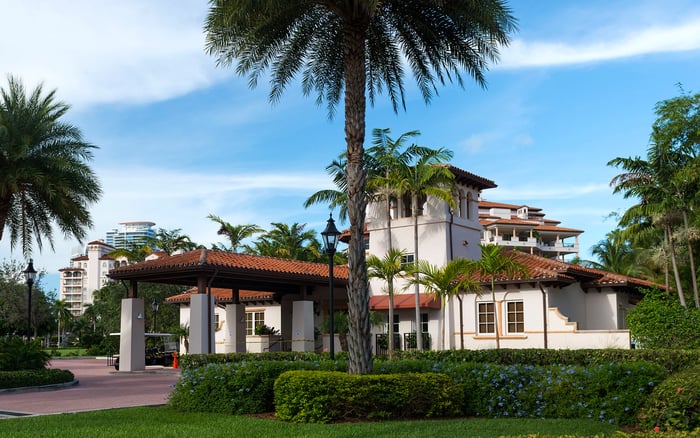
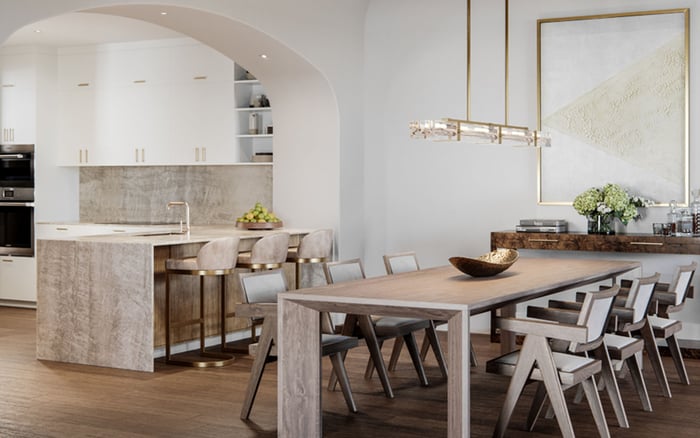
In South Florida’s upper-tier residential market, proximity to elite and non-traditional preparatory schools has become a meaningful valuation driver for family estates. Buyers are not simply purchasing square footage or waterfront frontage; they are also prioritizing time efficiency, educational optionality, and resale resilience in neighborhoods positioned near sought-after prep corridors.
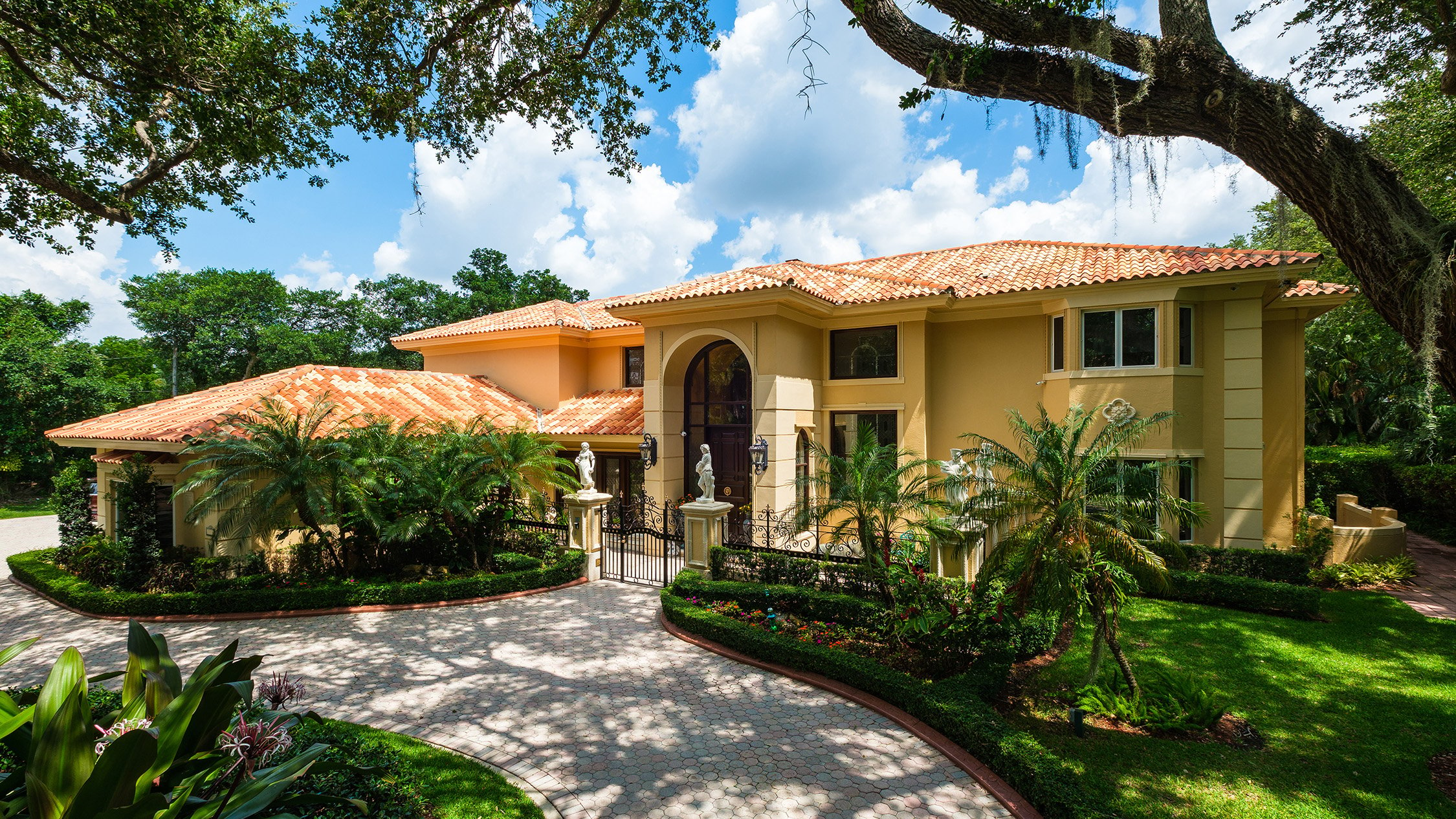
In South Florida, the premium attached to a family estate is no longer defined solely by waterfront exposure, lot width, or pedigree architecture. For a growing share of affluent households, educational access has become both a practical and financial filter from the outset of the home search.
That shift matters because school access can influence how buyers evaluate long-term livability. In family-oriented submarkets, proximity to respected preparatory options can support demand resilience by making a residence more functional for daily life.
For buyers in this segment, the implication is straightforward: school adjacency can be part of the asset itself. In the same way buyers assess privacy, marina access, or club infrastructure, they increasingly evaluate the surrounding school ecosystem within a short, realistic daily drive.
Here, “disruptive” does not imply instability. It refers to schools that depart from conventional college-prep models through International Baccalaureate structures, project-based learning, Montessori influences, interdisciplinary teaching, global language orientation, or other modernized academic approaches.
That distinction matters in South Florida because many family-estate buyers are internationally minded. Some households want a curriculum that translates across borders, supports future university placement in multiple countries, and feels current rather than legacy-bound.
In practice, buyers are often paying for flexibility. A home near a compelling mix of traditional elite schools and progressive college-prep options offers optionality, and optionality can carry value.
Among Miami-Dade’s family-estate zones, the Coral-gables and Coconut-grove corridor stands out because it combines established residential prestige with strong access to major preparatory institutions. That helps explain why the corridor continues to command attention from buyers seeking a primary residence rather than a purely lifestyle-driven second home.
In these neighborhoods, daily logistics support value. The estate becomes not only beautiful, but highly livable for households balancing school schedules, work demands, and family routines.
That logic also helps explain sustained interest around projects such as Ponce Park Coral Gables, The Village at Coral Gables, and Arbor Coconut Grove, where refined residential design aligns with the broader appeal of family-oriented addresses.
At the ultra-premium level, commuting friction is often underestimated. Families purchasing a major residence rarely want educational excellence in the abstract; they want excellence without operational drag.
The difference between a smooth school run and a cross-market daily commute affects staffing, scheduling, after-school programming, and the overall cadence of family life. A shorter drive to a preferred school can make a large residence function more efficiently.
This is why proximity should not be confused with simple map distance. The luxury premium tends to emerge when the route is realistic, repeatable, and embedded in a neighborhood that already satisfies privacy, aesthetics, and social capital.
Pinecrest occupies a distinct position in the school-driven valuation landscape. It is often favored by buyers who want larger homes, more land, and a quieter family setting while still benefiting from access to the region’s private-school ecosystem.
For families who prioritize grounds, guest quarters, or multigenerational living, Pinecrest can represent a compelling value-retention story. The appeal is less about urban prestige and more about functional estate planning: room for children, room for staff, room for entertaining, and room for long-term ownership.
The same broader logic supports nearby luxury inventory in the southern Miami orbit, where Opus Coconut Grove remains relevant to households weighing vertical luxury against estate living in connected family districts.
One reason this trend has depth is that South Florida does not rely on a single school corridor. The region offers a broader private-prep ecosystem across Miami-Dade, Broward, and Palm Beach, giving buyers multiple viable search patterns rather than a single narrow target zone.
For Miami-based families, that broadens the conversation beyond the most traditional estate addresses. For buyers on the Broward side, the same school-driven valuation story can extend into surrounding submarkets, showing that the education premium is not confined to a single municipality.
This regional flexibility matters because affluent families often rank education first, then optimize for lifestyle second. A buyer may begin in Coral-gables, compare Pinecrest, and then evaluate Broward options if the overall fit is stronger.
Developers and marketers may lead with wellness, design, service, and waterfront positioning, but sophisticated buyers often apply a second layer of analysis: whether a residence works for a family in motion.
That is part of the appeal of projects such as Four Seasons Residences Coconut Grove, which speaks to buyers drawn to branded service and Grove placement. Even in a product class associated with second-home glamour, the primary-residence test increasingly turns on whether children can be educated well without sacrificing domestic ease.
For that reason, private-school access now sits alongside security, acreage, and architectural finish as a practical driver of premium pricing. In select submarkets, it can also support resale depth by expanding the pool of serious family buyers.
The most disciplined buyers do not pay extra merely because a home is near schools. They examine the depth of the surrounding prep ecosystem, the diversity of academic models, the reliability of drive times, and the neighborhood’s ability to remain desirable over time.
That final point is essential. The best school-linked luxury locations retain their appeal because the education story is layered onto an already distinguished address. Coral-gables, Coconut-grove, Pinecrest, and select Broward locations are not valuable only because of schools; schools can amplify values already in place, including beauty, reputation, privacy, and enduring family utility.
For estate purchasers, that is the real takeaway. The strongest premiums tend to appear where elite residential character and educational optionality reinforce one another rather than compete.
Do top preparatory schools really influence luxury home values? Yes. In family-oriented luxury markets, strong school access can support demand and strengthen a property’s appeal to primary-residence buyers.
Is the effect stronger in high-end neighborhoods? Often, yes. Affluent buyers may place a premium on educational convenience when choosing among already desirable addresses.
Why are Coral-gables and Coconut-grove so relevant here? They combine prestigious residential settings with access to established preparatory options and daily convenience for families.
Does Pinecrest compete with Coral-gables for family estates? Yes. Pinecrest appeals to buyers seeking larger homes and more land while staying connected to respected school networks.
What makes a school “disruptive” in this context? It usually refers to a more modern academic model, such as IB, project-based learning, or other non-traditional college-prep structures.
Why do globally mobile families care about IB-style programs? They can offer academic continuity and a familiar framework for families managing education across multiple countries or cities.
Is school proximity just about distance on a map? No. Buyers care more about realistic drive times, predictable routines, and how smoothly a location supports daily family life.
Does this trend extend beyond Miami-Dade? Yes. Broward and Palm Beach submarkets can also benefit when strong preparatory options influence where families want to live.
Should luxury condo buyers care about school access too? Absolutely. Many high-end condominiums are considered by buyers who intend to use them as primary residences with family needs in mind.
What should buyers evaluate before paying a school-related premium? They should assess school variety, commute practicality, neighborhood prestige, and whether the property remains desirable beyond a single school stage.
When you're ready to tour or underwrite the options, connect with MILLION Luxury.
If branded residences are on your mind — as a home or as an allocation — we would be glad to share what we are seeing, privately.
Begin a quiet conversation