From mobile credentials to thoughtfully programmed wellness floors, today’s best-in-class South Florida buildings treat privacy and community as complementary design problems. Here is what sophisticated buyers should look for in access control, surveillance, amenities, and governance.
In South Florida’s top tier, sophisticated condo buyers are no longer treating privacy and community as a tradeoff. They are prioritizing buildings that can deliver both in real time: a quiet, unremarked return from travel, then a wellness class, a poolside coffee, or a lounge moment that feels social without feeling exposed.
In multifamily living, privacy is largely operational. It comes from control over access, circulation, and visibility: who enters, when, and under what conditions. Community, by contrast, tends to appear when shared spaces are easy to use and comfortable to occupy, not staged for show. The best buildings treat these needs as one system, where access, staffing, layout, and house rules work together to shape daily life.
For buyers evaluating Miami Beach inventory, that lens is especially useful. The most desirable addresses draw high-profile owners, frequent guests, and steady service traffic. That mix increases the need for controlled entry and common areas designed for both discretion and livability.
The most meaningful privacy feature in a luxury condominium is rarely the dramatic one. It is the daily access protocol, consistently executed.
Across modern apartment and condominium environments, smartphone-based “mobile credentials” are increasingly positioned as an alternative to physical keys and fobs. For residents, the appeal is straightforward: fewer handoffs, fewer lost items, and a cleaner way to manage access for household staff. For the building, the advantage is tighter control over who can enter and when, particularly when the system supports thoughtful credential management.
Many platforms also support biometric options, such as fingerprint or facial recognition, marketed as a way to reduce risk tied to lost, stolen, or shared credentials. Buyers should not assume biometrics are automatically “more private.” The benefit is situational. In buildings with high volumes of guests, vendors, or temporary access needs, reducing credential sharing can support discretion, but only when policies and staff execution match the technology.
A third element is visitor management: tools that issue temporary guest or vendor access and create entry logs. In high-luxury living, the value is not only security. It is choreography. A well-run system allows trusted visitors to arrive smoothly while keeping access contained, and it reduces the need for improvised decisions at the door.
In Miami Beach, buildings such as Setai Residences Miami Beach are often discussed in the same breath as a service-forward lifestyle. For buyers, the practical question is simple: does the technology support discreet service, or does it introduce friction at arrival?
Cameras can be both comforting and intrusive. In condo and co-op environments, surveillance in common areas can also create legal and privacy risk, which is why boards and management must think carefully about placement, notice, and compliance with applicable laws.
From a buyer’s standpoint, the goal is not “more cameras.” It is the right coverage, in the right locations, supported by a clear policy framework. Signs of a mature approach include:
Luxury apartment security guidance often emphasizes layered measures such as access control, lighting, surveillance, and staffing. The layering matters because it prevents over-reliance on any single tool. A lobby camera cannot replace a trained front desk. A biometric reader cannot compensate for unclear guest policies.
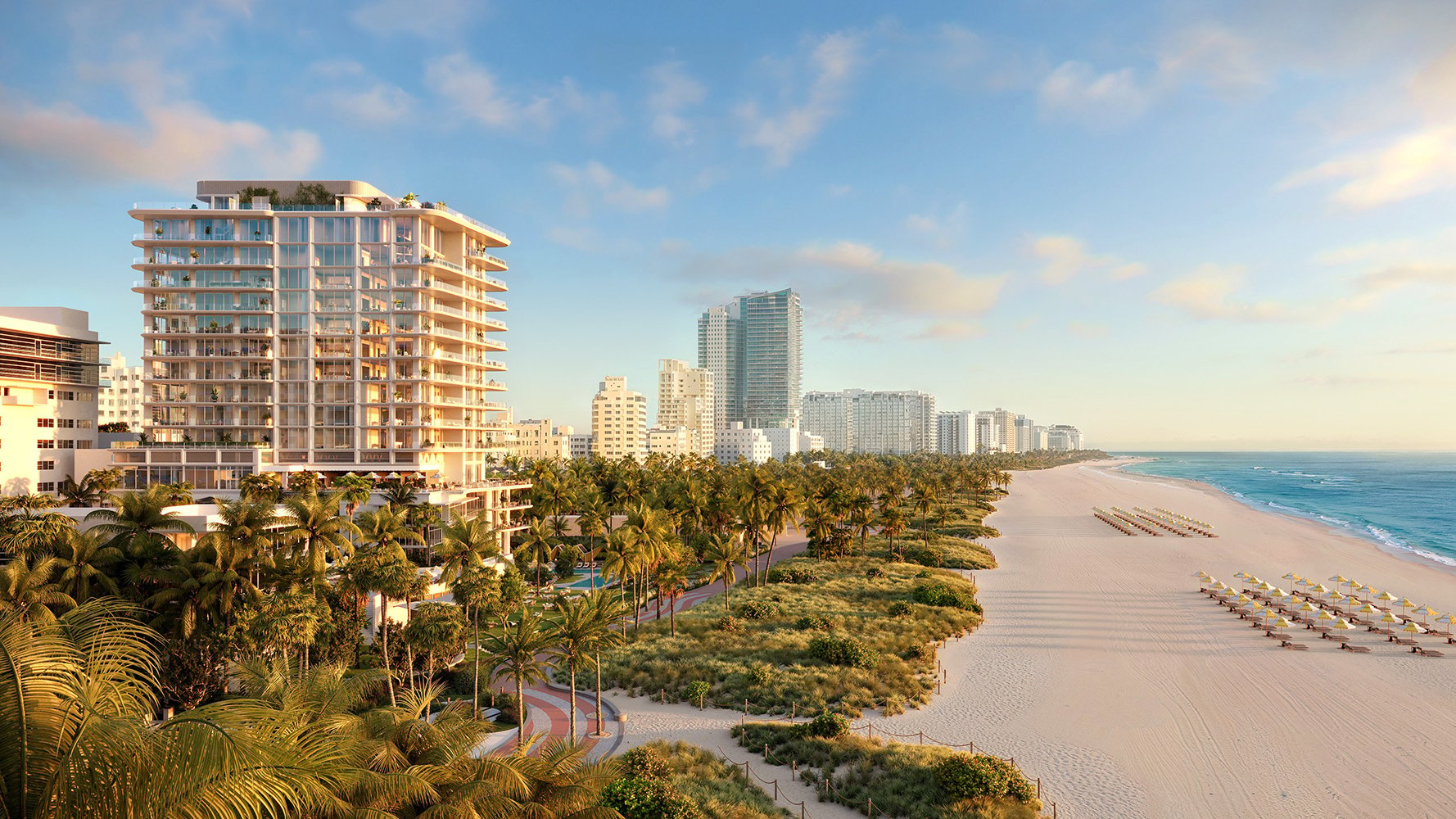
For oceanfront living, where public-to-private transitions are frequent, buyers looking at 57 Ocean Miami Beach may want to evaluate the entire arrival sequence: beach access points, side entrances, resident parking paths, and how staff manage the boundary between public coastline and private residence.
Privacy is also influenced by scale. Smaller, boutique luxury buildings are often perceived as more private because fewer residents share elevators, lobbies, and amenity spaces. If you value quiet hallways, minimal elevator waits, and fewer casual encounters, boutique scale can feel like a daily luxury.
The tradeoff is equally real. Boutique buildings tend to deliver intimacy and calm, but generally with fewer amenities than full-service towers. Full-amenity residential towers, by design, concentrate shared spaces like gyms, pools, and lounges. That concentration can increase casual neighbor interaction and make community easier to form.
Neither approach is inherently “better.” The right choice is about how you live.
On Miami Beach, branded and hospitality-inflected offerings have taught the market that privacy can coexist with activated common spaces, provided circulation is intelligently planned and staffing is disciplined. For instance, The Ritz-Carlton Residences® Miami Beach is often evaluated not only on finishes, but also on how consistently the building delivers a calm, controlled experience from curb to residence.
In the luxury segment, amenities are no longer a simple checklist. Multifamily properties increasingly compete through “experience” amenities, and wellness plus flexible spaces remain central. Operators also report strong resident demand for high-impact offerings that support both socializing and solo use.
For buyers, the better question is not “How many amenities?” It is “How do they function at 7 a.m. on a Tuesday?” Amenity value depends on usability, staffing, and upkeep, not just on what appears in marketing.
Look for:
Associations can also monetize amenities through fees, rentals, or sponsorships. That may be financially attractive, but it requires governance to prevent conflicts and manage wear and tear. In a high-discretion building, monetization should be handled with restraint. Increased foot traffic can dilute the resident-only atmosphere that many buyers are paying for.
Hospitality-branded models often sharpen this balance. Casa Cipriani Miami Beach is a useful reference point for buyers who want the warmth of a private club sensibility while still expecting resident life to stay protected from unnecessary exposure.
The soft infrastructure of privacy is policy. Associations reduce friction between privacy and community by adopting clear written rules for common-area behavior, noise, and guest use. Done well, this is not restrictive. It is protective.
Buyers should ask for clarity on:
Rules matter most when applied consistently. A building can have exceptional finishes and still feel chaotic if guest access is informal, staff turnover is high, or common areas are treated as an extension of the street.
This is where “Boutique” becomes more than a style word. Boutique is an operating model: fewer touchpoints, fewer surprises, and often a more direct relationship between residents, staff, and management.
While much of Miami’s luxury conversation focuses on towers, buyers should also understand the appeal of perimeter control. Gated communities explicitly market controlled entry and restricted access as a privacy and security advantage over non-gated neighborhoods. Luxury gated communities often pair perimeter security with lifestyle amenities, creating community inside a controlled environment.
For condominium buyers, the lesson is transferable even without a literal gate. The closer a building gets to controlling its perimeter, the more predictable privacy can become. That can show up through secured parking, well-lit approaches, staffed entrances, and clearly defined resident-only pathways.
If you are considering a building that markets itself around Gated-community sensibilities, evaluate how the “controlled” environment is maintained day after day, not just how it reads in marketing.
On a showing, you can learn more in ten minutes at the lobby than in an hour on a balcony.
At the highest level, luxury is not only exclusivity. It is ease. The most coveted South Florida buildings make community available without making it mandatory, and they protect privacy without turning daily life into a security procedure.
What does “privacy” really mean in a luxury condo?
Privacy is primarily control over access, plus the ability to retreat even when shared spaces and amenities are active.
Are mobile keys actually more secure than fobs?
They can be, especially when mobile credentials are tightly managed and can be revoked quickly.
Should I look for biometric access?
Biometrics can reduce credential sharing, but the outcome depends on the building’s policies and day-to-day operations.
What is visitor management and why does it matter?
It is a system for granting temporary guest or vendor access with logging, supporting both security and discretion.
Is more surveillance always better?
No. Thoughtful placement, transparent notice, and clear policies are more important than blanket coverage.
Why do boutique buildings feel more private?
Fewer residents share elevators, lobbies, and amenities, which tends to reduce daily exposure.
Do full-amenity towers create more community?
Often yes, because centralized amenities encourage repeated, casual interactions.
How can I tell if amenities are truly high quality?
Focus on usability, maintenance, and whether the spaces work at normal hours, not just on the amenity count.
Can amenity rentals affect privacy?
Yes. Monetizing amenities can increase foot traffic, so strong governance is essential.
Where can I explore more South Florida luxury residences?
Discover discreet guidance and curated inventory with MILLION Luxury.
If branded residences are on your mind — as a home or as an allocation — we would be glad to share what we are seeing, privately.
Begin a quiet conversation