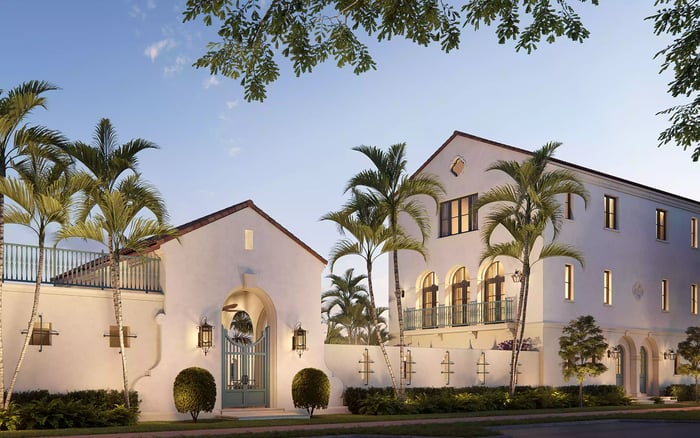
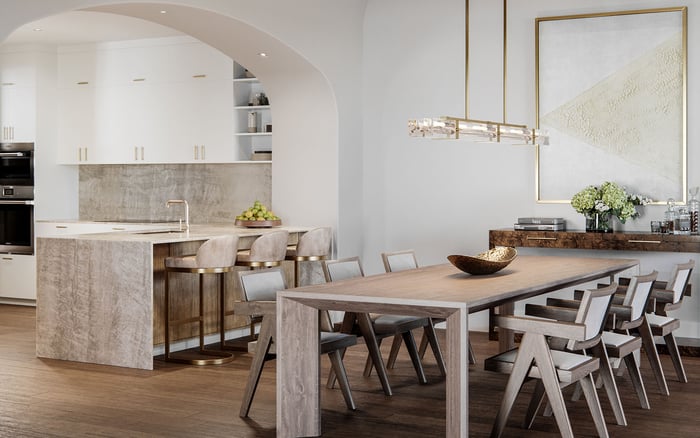
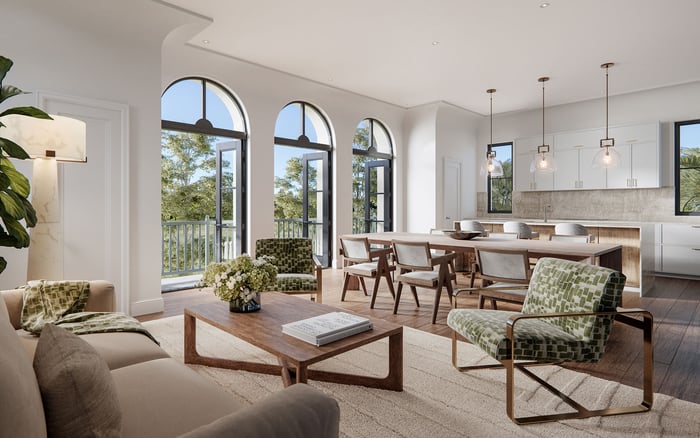
A buyer-focused comparison of Ponce Park Coral Gables and Origin Bay Harbor Islands, centered on whether the better fit is full-time ownership, seasonal use, or a carefully verified rental strategy.
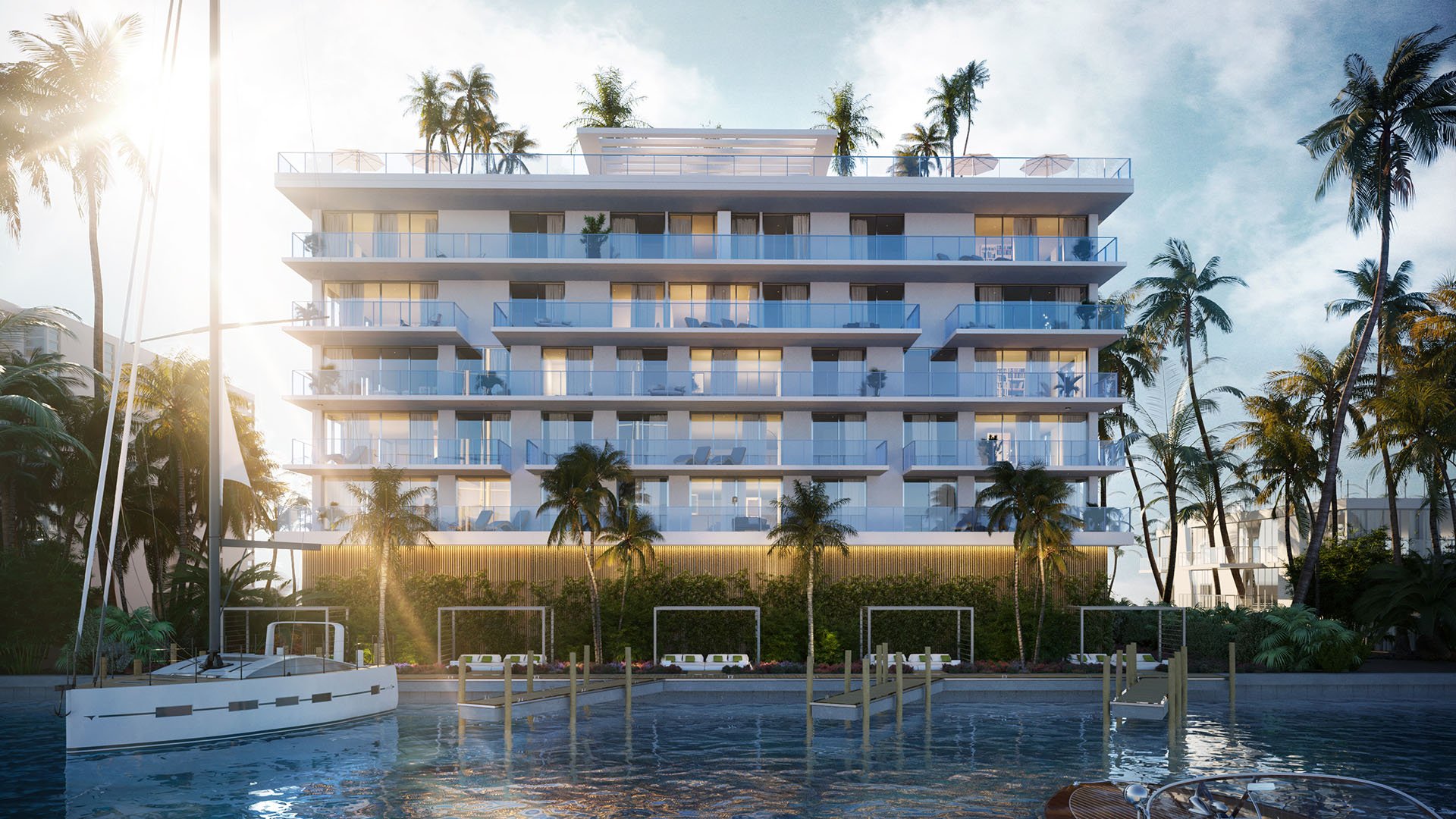
The choice between Ponce Park Coral Gables and Origin Bay Harbor Islands is not simply a contest of polish, location, or architectural preference. For a sophisticated South Florida buyer, the sharper question is how the residence is expected to perform after closing. Will it serve as a true primary home, a seasonal retreat, or an asset that must also accommodate some measure of rental logic?
That distinction matters because the two projects speak to different ownership temperaments. Ponce Park Coral Gables reads as the more natural fit for buyers who want a condominium to function as a long-term home within an established residential city. Origin Bay Harbor Islands reads as the more natural fit for part-time owners and hybrid owner-investors weighing seasonal use, lock-and-leave convenience, and the relationship between personal occupancy and rental restrictions.
Neither posture is inherently superior. The more valuable exercise is to match the building, neighborhood, association culture, and governing documents to the buyer’s actual pattern of use.
For a primary-residence buyer, Ponce Park’s Coral Gables setting is the central variable. Coral Gables carries a sense of permanence that appeals to owners who measure luxury through routine: the morning drive, the walkability of errands, the quiet of weekday evenings, the depth of neighborhood services, and the way a building feels when most residents treat it as home rather than as a transient asset.
That is why Ponce Park reads as the stronger fit for buyers prioritizing stability over income-oriented flexibility. The full-time owner is not usually asking only, “Can this residence rent well?” The better question is, “Will this building support the life I actually intend to live?” That inquiry extends to resident mix, building services, school and work patterns, daily logistics, and association culture.
In this frame, the attraction is less rental optionality than residential coherence. A buyer considering Ponce Park should study how the building is likely to feel in ordinary months, not only during peak season. The practical keywords are Coral Gables stability, neighborhood permanence, and a homestead-style expectation of ownership.
Origin Bay Harbor Islands occupies a different lane. Its Bay Harbor Islands context is especially relevant for buyers seeking a boutique island-condo environment with proximity to beach-area demand drivers. That does not automatically mean unrestricted rental flexibility, but it does make the ownership conversation more seasonal and more operational.
For a second-home buyer, the questions become highly specific. How easy is arrival after several weeks away? How secure and manageable does the residence feel during absence? How convenient is the building for peak-season occupancy? How well does the ownership structure accommodate a pattern of coming and going?
This is where Origin appears more naturally aligned with seasonal, lock-and-leave ownership and hybrid owner-investor use. The buyer is not necessarily seeking a pure investment property. Often, the objective is more nuanced: personal use during preferred windows, controlled absence management during off-periods, and possible rental compatibility if the documents, association procedures, and municipal rules allow it.
For search-minded buyers, the shorthand is Bay Harbor convenience, second-home readiness, and investment discipline. The discipline is in not confusing those ideas with guaranteed rentability.
The most important caution in this comparison is also the most practical: rental-restriction fit should never be assumed from marketing language, neighborhood reputation, or a buyer’s intended use. Actual rental rights depend on condominium documents, association rules, approval procedures, enforcement history, and applicable local ordinances.
That is true for both projects. Ponce Park may appear more full-time-owner oriented, while Origin may appear more seasonal and hybrid-use oriented, but neither conclusion replaces document review. A buyer thinking about rent, occasional leasing, or long-term rentals should verify lease minimums, approval requirements, frequency limits, owner-use rules, and any local restrictions before treating rental income as part of the acquisition thesis.
This is especially important for investor-user buyers. The hybrid profile can be compelling in South Florida because it blends lifestyle and capital planning, but it is also the profile most vulnerable to mistaken assumptions. If the residence must perform financially during periods of non-use, the buyer should underwrite only what can be confirmed, not what feels plausible.
The primary-residence buyer should give Ponce Park the first look. This buyer values continuity, association stability, and a neighborhood that supports daily life. The residence is not a hotel room with a deed. It is the center of a routine, and the building’s culture should reflect that.
The seasonal owner should compare both, but Origin may feel more intuitive if the priorities are convenient arrivals and departures, secure absence, and a boutique island setting near beach-area activity. The seasonal buyer should think less about grand arrival moments and more about friction: key access, service coordination, readiness after absence, and livability during the busiest months.
The investor-user hybrid should be the most disciplined. Origin may invite the more natural conversation around part-time use and possible rental compatibility, but that does not make rental rights automatic. Ponce Park may be less aligned with income-oriented flexibility, but it may still be the better residence if the owner’s true priority is lifestyle stability rather than yield.
In other words, the wrong question is, “Which is more luxurious?” The right question is, “Which one is honest about how I will actually own it?”
Ponce Park and Origin represent two refined but distinct versions of South Florida condominium ownership. One leans toward the settled elegance of Coral Gables and the expectations of a full-time residential environment. The other leans toward seasonal fluidity, island-condo convenience, and the careful possibility of hybrid use.
For the buyer who wants permanence, Ponce Park’s advantage is clarity. For the buyer who wants optionality, Origin’s advantage is fit, provided the rental rules support the plan. The best decision will be made not in the showroom mood of aspiration, but in the quieter review of routine, absence, association culture, and documents.
That is where luxury becomes practical. The right residence is not merely the one that photographs well. It is the one whose rules, setting, and rhythm preserve the owner’s intended life.
Is Ponce Park better for full-time ownership? Ponce Park appears more aligned with primary-residence-style ownership because the Coral Gables setting emphasizes daily life, stability, and neighborhood permanence.
Is Origin better for seasonal use? Origin appears more naturally suited to seasonal and lock-and-leave ownership, especially for buyers focused on arrival ease, absence management, and peak-season convenience.
Can I assume Origin is more rentable? No. Rental compatibility must be verified through condominium documents, association rules, approval procedures, enforcement practices, and local ordinances.
Should rental income drive the Ponce Park decision? It should not be the primary lens unless the documents clearly support that plan. Ponce Park is better framed around full-time residential fit.
What should a primary-residence buyer review first? Review resident mix, association culture, services, routines, school and work logistics, and how the building is likely to feel throughout the year.
What should a seasonal buyer review first? Focus on security, arrival and departure logistics, residence readiness after absence, service coordination, and livability during high-demand months.
What should an investor-user buyer verify? Verify lease minimums, approval rules, municipal limits, association enforcement, and whether the intended rental pattern is actually permitted.
Is the neighborhood difference important? Yes. Coral Gables supports a more established residential rhythm, while Bay Harbor Islands supports a boutique island-condo context near beach-area demand.
Which project is more flexible? Origin may appear more aligned with hybrid use, but true flexibility depends on the governing documents and local rules rather than broad market perception.
What is the simplest way to decide? Decide first whether the residence is mainly a full-time home, a seasonal base, or a rentable asset, then test that intention against the documents.
If you'd like a private walkthrough and a curated shortlist, connect with MILLION.
If branded residences are on your mind — as a home or as an allocation — we would be glad to share what we are seeing, privately.
Begin a quiet conversation