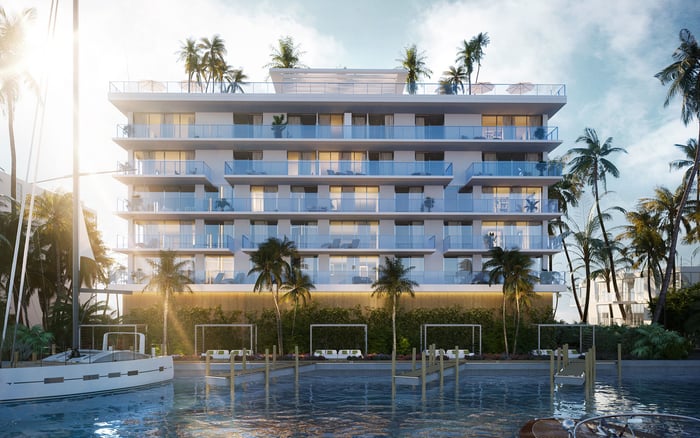
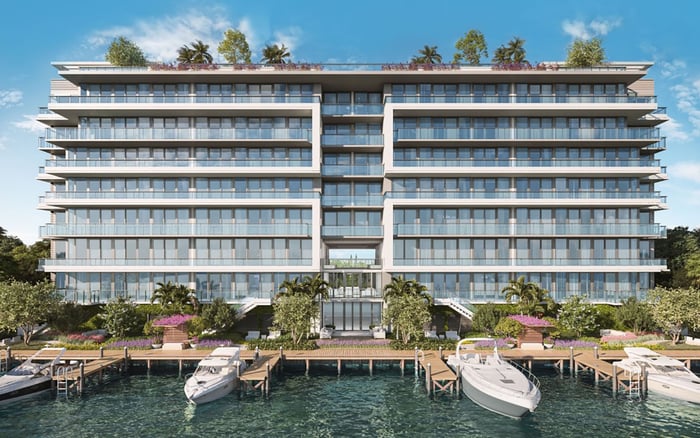
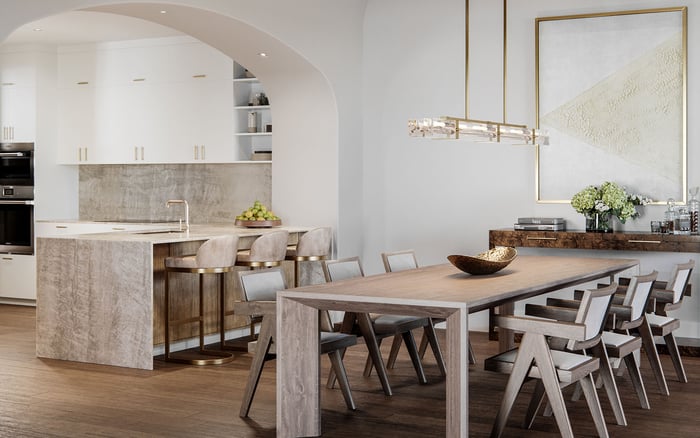
A buyer-focused comparison of Ponce Park Coral Gables and La Baia North Bay Harbor Islands, examining how building culture shapes family amenity value, teen spaces, and guest-suite practicality.
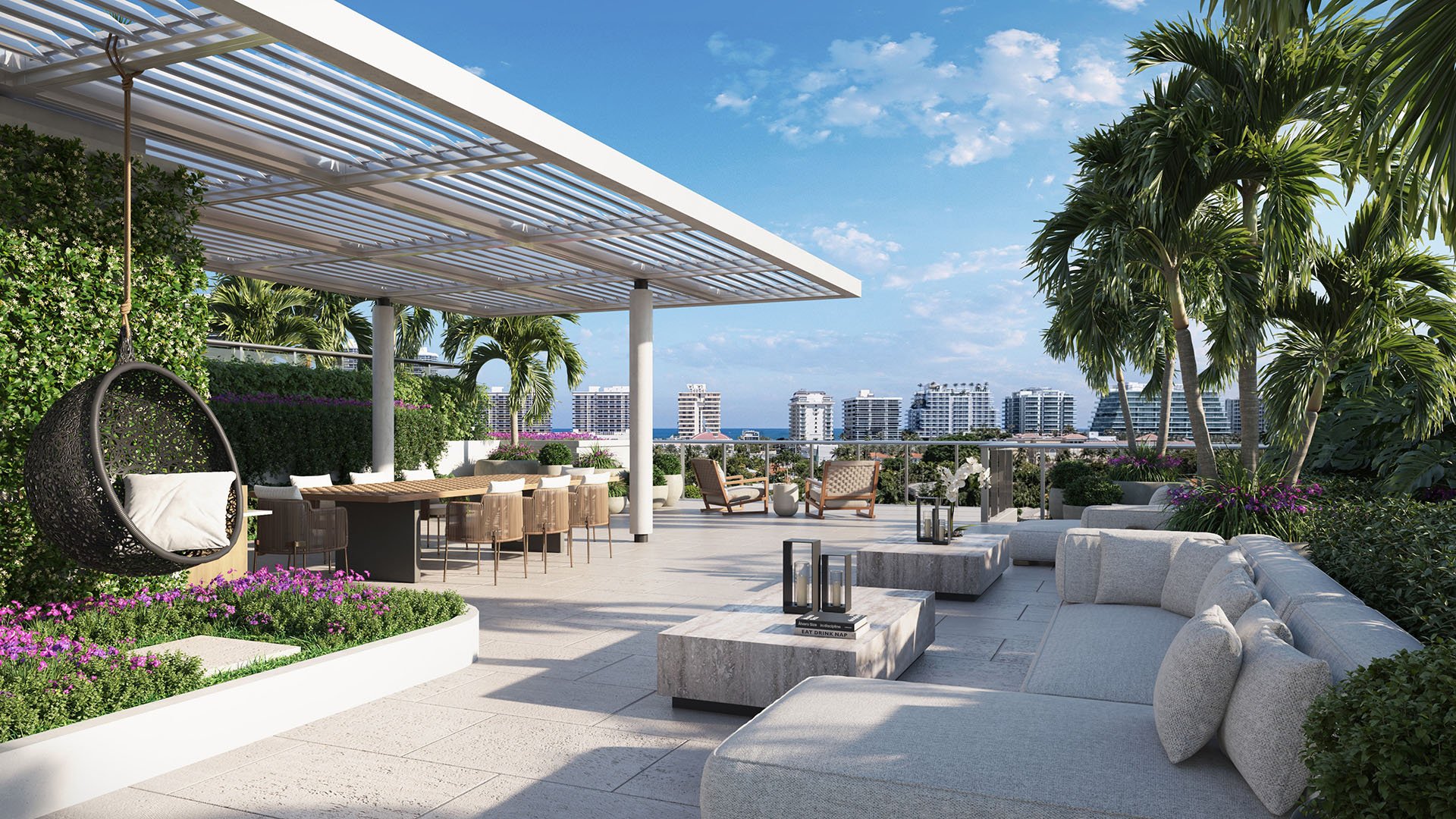
For families shopping at the upper end of South Florida condominium life, amenities are no longer judged by abundance alone. The sharper question is cultural: does the building make family life feel native to the architecture, or does it treat children, teenagers, and overnight guests as occasional exceptions to an adult resort program?
That distinction matters in the comparison between Ponce Park Coral Gables and La Baia North Bay Harbor Islands. Both sit within desirable residential contexts, yet they suggest very different forms of domestic luxury. Ponce Park belongs to the Coral Gables side of the conversation, where continuity, long-term fit, and neighborly rhythm carry weight. La Baia North is the Bay Harbor Islands counterpoint, where privacy, leisure, and flexible family use shape the buyer lens.
For a family comparing Coral Gables permanence with Bay Harbor Islands privacy, the amenity plan should read less like a brochure and more like a house manual. Where do children naturally go after school? Where can teenagers be visible without being infantilized? How are grandparents or adult children welcomed when they stay overnight? These questions reveal whether a building is merely family-tolerant or genuinely family-literate.
For parents with younger children, the most important amenity is often not the most glamorous one. It is proximity, visibility, and ease. A play area or family-friendly lounge has greater value when it is integrated into daily circulation, close enough to feel effortless, and designed so adults do not feel exiled from the building’s more refined spaces.
Ponce Park’s stronger family angle is its emphasis on integration. The building culture is framed around Coral Gables-style architectural continuity and long-term residential life rather than trend-driven resort branding. In practical terms, buyers should study how shared gathering areas support everyday encounters, not only whether a children’s amenity appears on a checklist. If parents expect school-day routines, casual neighbor interaction, and repeated use of common areas, the visibility of family spaces becomes part of the value proposition.
La Baia North calls for a different reading. In a boutique Bay Harbor Islands setting, family use may be less about constant communal movement and more about a composed private rhythm. Leisure, privacy, and flexible common areas can be valuable for younger children when they support relaxed weekend life, supervised outdoor time, and visiting relatives. The key is to distinguish general family friendliness from a dedicated children’s ecosystem. A building can be wonderful for families without presenting itself as a child-centered address.
That nuance extends to nearby searches. A buyer also considering Cora Merrick Park may be thinking about Coral Gables residential continuity, while a buyer drawn to Bay Harbor Islands may study Origin Bay Harbor Islands for the broader island lifestyle. The point is not to rank them here. It is to recognize that each address carries a different assumption about how family life should unfold.
Teen amenities are often the least understood part of luxury residential planning. Younger children are easy to accommodate visibly. Adults receive lounges, wellness rooms, dining areas, and pools. Teenagers, however, need spaces that are neither juvenile nor fully adult. A strong teen environment should feel sophisticated, multipurpose, and socially legitimate.
For Ponce Park, the right teen-space question is whether adolescent use is embedded in the building’s community life. A multipurpose lounge, media area, study-friendly corner, or informal gathering zone can be more useful than a room labeled for teens if the design language feels mature and the location is not marginal. Teenagers are acutely aware of whether a space has status. If the room feels like leftover square footage, it will not become part of their routine.
This is where Ponce Park’s community-oriented positioning becomes relevant. In an interaction-based setting, teenagers may benefit from spaces that connect to resident life without forcing constant adult supervision. Parents should ask whether the building supports quiet independence, small groups, after-school study, and casual socializing in a way that feels respectful rather than hidden.
For La Baia North, caution is essential. Luxury condominium marketing often highlights children’s amenities or leisure spaces while leaving adolescent hangout areas less explicit. That does not mean a building cannot work beautifully for teens. It means buyers should avoid assuming that family-friendly equals teen-specific. In a boutique island setting, teens may value privacy, calm, and flexible shared areas, but buyers should confirm whether there is a genuinely suitable place for them to gather beyond the residence itself.
Guest suites are among the most emotionally appealing amenities for multigenerational buyers. They suggest that grandparents can visit without crowding the residence, that adult children can return comfortably, and that extended family can be hosted without turning a primary home into a hotel suite. Yet guest-suite value depends almost entirely on rules.
For both Ponce Park and La Baia North, guest-suite access should be treated as an operations question before it is treated as a lifestyle promise. Buyers should determine whether any guest accommodations are building-owned, part of individual residences, reservable by owners, fee-based, or governed by condominium rules. They should ask about booking priority, nightly limits, blackout periods, cancellation policies, housekeeping expectations, and whether every owner has equal access.
This matters especially for families who host frequently. A guest suite that is difficult to reserve during holidays may have less practical value than a larger in-unit layout. A suite with clear rules and reliable access may meaningfully reduce the need to buy more bedrooms than the household uses daily. For multigenerational owners, the difference can affect both purchase strategy and long-term satisfaction.
Ponce Park’s guest-suite lens is naturally tied to multigenerational hospitality within a residential community. The question is how visiting family members are absorbed into the building’s daily rhythm. La Baia North’s version is more island-oriented: how does a private Bay Harbor Islands environment accommodate family overflow without compromising the calm that drew buyers there in the first place?
The Ponce Park buyer is likely to care about the social fabric around the residence. Family amenities matter because they support daily life, not because they photograph dramatically. Parents with younger children may value predictable routines and visible shared spaces. Parents with teenagers may look for mature multipurpose areas where adolescents can exist comfortably. Owners who host extended family may focus on whether hospitality feels woven into the building’s residential identity.
The La Baia North buyer may prioritize privacy and a more flexible leisure rhythm. Family amenities matter because they allow the home to expand into island life. Younger children may benefit from calm, supervised leisure settings. Teenagers may appreciate independence and a less urban pace, provided the building offers spaces that do not feel childish. Frequent hosts should focus closely on guest rules, because the residential character is only useful if guests can be accommodated without friction.
For new-construction buyers, boutique scale can be an advantage or a limitation depending on expectations. Smaller-feeling residential cultures can feel more personal, but they may offer fewer highly segmented rooms for every age group. Larger amenity programs can offer more categories, but categories alone do not guarantee warmth, usability, or social ease.
Before choosing between these two cultures, family buyers should walk through three scenarios. First, imagine a weekday afternoon with younger children. Does the building make that routine easier? Second, imagine a Friday evening with teenagers. Is there a place they can gather that feels appropriate, safe, and grown-up enough to use? Third, imagine a holiday visit from grandparents or adult children. Is the hospitality plan clear, dignified, and operationally reliable?
The best answer may not be the building with the longest amenity list. It may be the one whose culture matches the family’s actual pattern of living. Ponce Park appears strongest when the buyer wants Coral Gables residential integration and a sense of community continuity. La Baia North appears strongest when the buyer wants privacy, leisure value, and flexible family use in an island setting.
In South Florida luxury real estate, the most refined family buildings do not announce themselves by shouting about children’s rooms or guest accommodations. They reveal themselves in how naturally every generation can belong.
Is Ponce Park Coral Gables more community-oriented than resort-oriented? Its framing is more about Coral Gables continuity, long-term residential fit, and integrated daily life than resort-style branding.
Is La Baia North Bay Harbor Islands better understood through a privacy-focused lifestyle lens? Yes. Its buyer lens is shaped by Bay Harbor Islands privacy, leisure, and flexible family use.
Should families compare amenity lists directly? Not exclusively. The more useful comparison is how each building’s culture makes family spaces usable in daily life.
What matters most for younger children? Visibility, ease of access, and integration into parent routines often matter more than the label attached to a room.
What makes a good teen space in a luxury condominium? It should feel sophisticated, multipurpose, and socially legitimate rather than like a secondary children’s room.
Does family-friendly always mean teen-friendly? No. Buyers should distinguish children’s amenities from spaces that genuinely work for adolescents.
Are guest suites guaranteed to be easy to use? No. Access depends on building rules, reservation systems, fees, limits, and owner eligibility.
What should multigenerational buyers ask first? They should ask whether guest accommodations are in-unit, building-owned, reservable, fee-based, or restricted by condominium rules.
Which building is better for frequent hosts? The better fit depends on confirmed guest access and whether the building’s culture supports overnight family without friction.
What is the central difference between these two buildings? Ponce Park leans toward integrated Coral Gables residential life, while La Baia North leans toward private Bay Harbor Islands living.
For a tailored shortlist and next-step guidance, connect with MILLION.
If branded residences are on your mind — as a home or as an allocation — we would be glad to share what we are seeing, privately.
Begin a quiet conversation