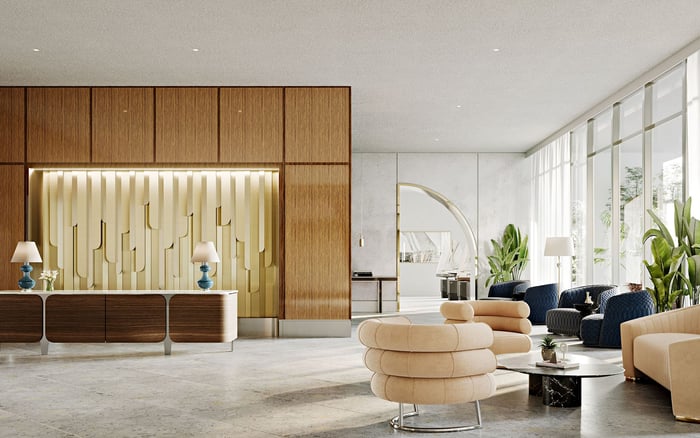
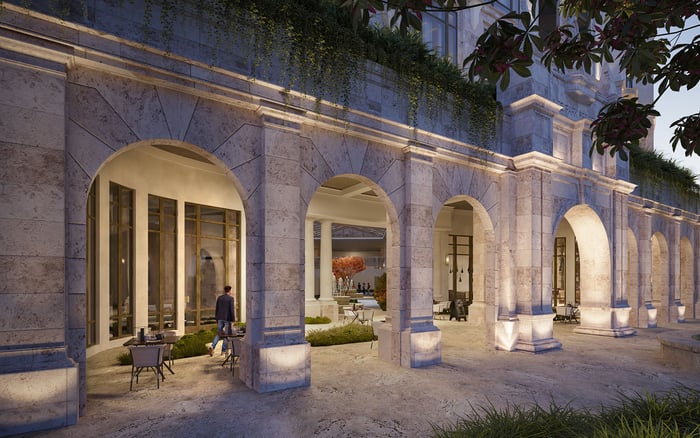
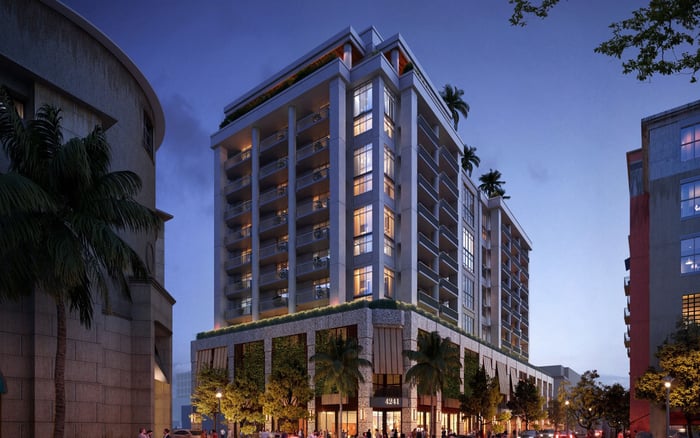
A buyer-focused comparison of Ponce Park in Coral Gables and Ziggurat in Coconut Grove, examining how historic streetscape integration and sculptural privacy-led design create two distinct luxury propositions in Miami's most character-rich neighborhoods.
In South Florida luxury real estate, some comparisons are really comparisons of taste. That is precisely the case with Ponce Park Coral Gables and Ziggurat Coconut Grove. On paper, both occupy coveted submarkets with enduring cachet. In practice, they express very different ideas of what premium living should feel like.
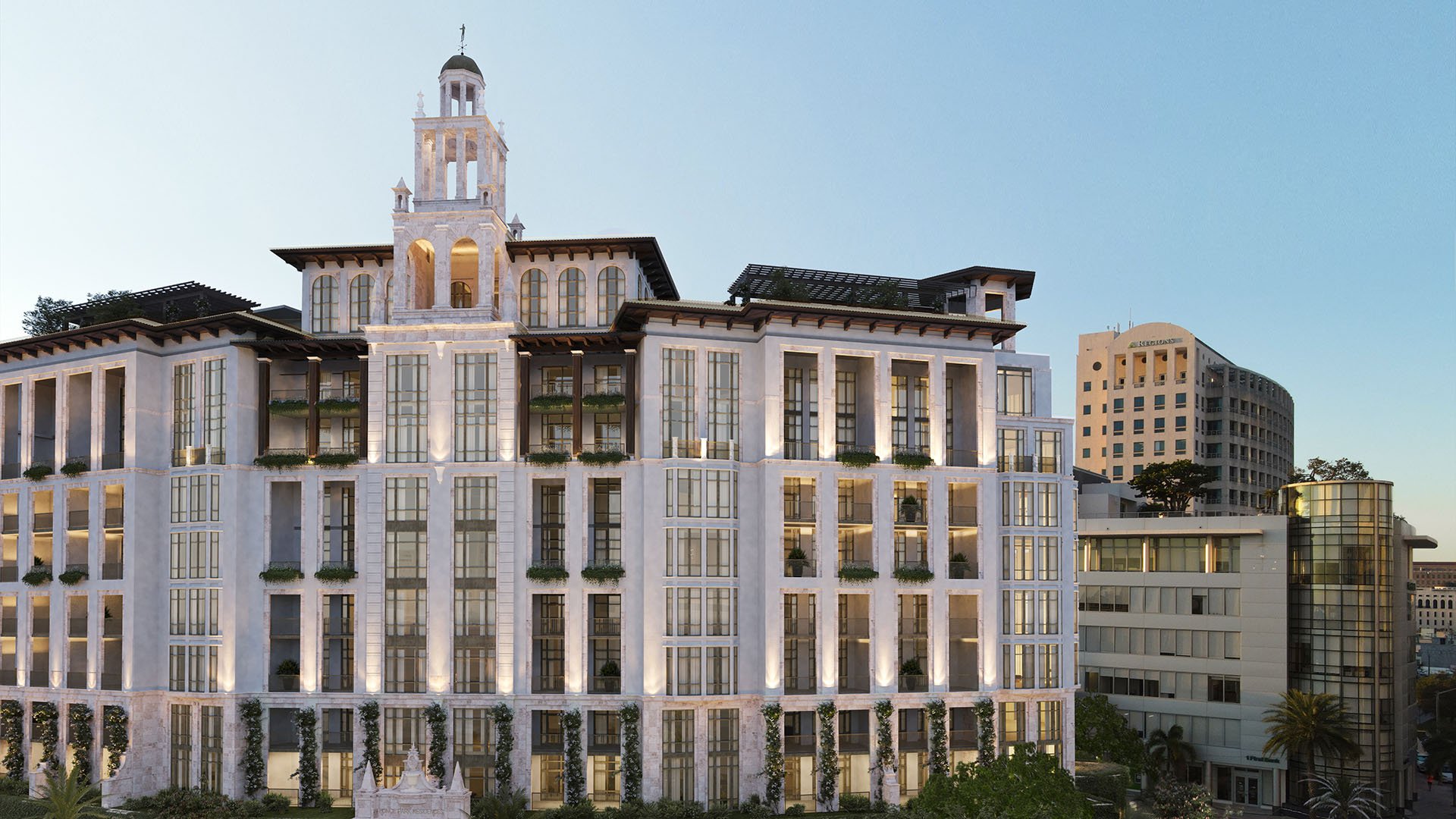
Ponce Park is defined by its position on Miracle Mile, within the historic commercial core of Coral Gables. Its proposition is urban, social, and deeply contextual. The project is preservation-oriented, mixed-use, and shaped by the architectural language that made Coral Gables one of South Florida’s most legible planned cities. It is not simply a residential address. It is part of the streetscape.
Ziggurat Coconut Grove begins from an entirely different premise. In Coconut Grove, where Miami’s oldest residential neighborhood has long carried a bohemian and waterfront identity, Ziggurat is framed as a sculptural, contemporary residential tower with a more private and exclusive posture. Its appeal is not civic continuity but authored design, scarcity, and the sense that the residence itself is a collectible object.
For the sophisticated buyer, this is less a contest between old and new than a choice between two luxury grammars: public urban fabric versus artistic modernism.
Coral Gables remains one of the region’s clearest examples of a place where planning discipline still matters. The city’s 1920s master-planned origins and strict architectural controls continue to shape what can be built and how it relates to the public realm. That context is central to understanding Ponce Park.
Rather than operate as an isolated trophy tower, Ponce Park is conceived as a mixed-use environment blending residential, office, and commercial components. Its street-level retail and dining reinforce the pedestrian culture that gives Miracle Mile its enduring relevance. For buyers who value the convenience of stepping directly into an established shopping and dining district, that is not a peripheral amenity. It is the lifestyle itself.
Its design language draws from the facades and streetscape patterns associated with the 1920s through 1940s urban core. The result is a residence that seeks legitimacy through belonging. In that sense, Ponce Park has more in common with the neighborhood-sensitive logic behind Cora Merrick Park and The Village at Coral Gables than with the glass-first iconography seen elsewhere in Miami.
This also shapes the buyer profile. Ponce Park is likely to resonate with those who prioritize walkability, a polished civic environment, and the reassurance of living in a district whose character has been maintained over time. That does not make the proposition lesser. It makes it different: value here is anchored in context, continuity, and daily usability.
If Coral Gables rewards coherence, Coconut Grove has always rewarded personality. Its history is older, looser, and more expressive, and that gives Ziggurat a different kind of cultural permission. Here, the building does not need to defer to a rigid historic code in the same way. It can assert itself.
Ziggurat is positioned as a primarily residential, ultra-luxury offering with limited commercial emphasis. The center of gravity is private life rather than public activation. Its architectural language is geometric, modernist, and artistically inflected, with a form-driven identity that stands apart from the preservationist logic of Coral Gables.
That distinction matters because it changes what buyers are purchasing. At Ziggurat, the draw is exclusivity, design pedigree, and scarcity. Public positioning suggests larger-format homes, including full-floor layouts and penthouses, with an emphasis on spacious residences rather than high-volume inventory.
The lifestyle pitch also differs markedly from Ponce Park. Ziggurat leans into marina-adjacent access, wellness amenities, curated interiors, and a more insulated residential rhythm. In that sense, it sits comfortably in the same broader Coconut Grove conversation as Four Seasons Residences Coconut Grove and Park Grove Coconut Grove, where privacy, lush surroundings, and design sophistication often eclipse conventional urban bustle.
The clearest way to understand these two projects is to ask a simple question: where does the luxury experience begin?
At Ponce Park, it begins the moment you step onto the street. The project’s public-facing orientation, retail activation, and alignment with Miracle Mile suggest that the neighborhood is part of the amenity package. Buyers are not merely acquiring square footage. They are buying into foot traffic, visibility, convenience, and a social rhythm that already exists.
At Ziggurat Coconut Grove, the luxury experience begins at the threshold and moves inward. The building is framed more as a destination residence, with a gated or highly private sensibility. The outside world remains important, especially the Grove’s waterfront atmosphere and cultural identity, but it is filtered through a more protected and curated lens.
This is why the comparison is so compelling. Ponce Park treats the city as an extension of home. Ziggurat treats home as a deliberate retreat from the city.
Ponce Park will likely appeal to the buyer who wants South Florida luxury without surrendering urban legibility. This is someone who values established neighborhoods, recognizes the social capital of Miracle Mile, and prefers architecture that contributes to a larger civic picture. They may divide time between business, dining, and residential life, and appreciate mixed-use environments where everything feels integrated rather than separated.
Ziggurat is better suited to a buyer who sees architecture as identity. This purchaser is often less concerned with foot traffic than with authorship, proportion, privacy, and the emotional charge of distinctive design. They may already know Coconut Grove well and want a residence that feels less like part of a district and more like a singular object within it.
Neither instinct is more sophisticated than the other. They are simply different forms of discernment.
For investors and end users alike, the value logic also diverges. Ponce Park benefits from being embedded in one of the region’s most established walkable districts, where mixed-use functionality and heritage character can help preserve long-term relevance. The surrounding Coral Gables market has historically attracted buyers who favor stability, recognizable planning, and neighborhood permanence.
Ziggurat’s value case is more scarcity-driven. Its larger-format homes, artistic positioning, and privacy-first identity place it closer to the collectible end of the market. That can be powerful for buyers who are less price-sensitive and more focused on singularity. Yet that same positioning means the audience is narrower and more exacting.
For many readers, the most useful distinction is this: Ponce Park monetizes context, while Ziggurat monetizes distinction.
The most refined luxury markets are often built on nuance, not scale. Ponce Park Coral Gables and Ziggurat Coconut Grove are both credible expressions of premium residential ambition, but they belong to separate cultural lineages.
Ponce Park derives its elegance from continuity with Coral Gables and from a belief that luxury can be woven into the public realm. Ziggurat derives its power from artistic self-definition and from the idea that the rarest homes are often those willing to stand apart.
For the buyer deciding between them, the real question is not which project is better. It is whether your ideal life is framed by the cadence of a historic boulevard or by the serenity of a sculptural private retreat.
What is the core difference between Ponce Park and Ziggurat? Ponce Park is a mixed-use, street-oriented Coral Gables project, while Ziggurat is a more private, design-led residential tower in Coconut Grove.
Is Ponce Park more connected to daily walkability? Yes. Its Miracle Mile setting places it within an established pedestrian shopping and dining district.
Is Ziggurat primarily a residential building? Yes. It is framed mainly as an ultra-luxury residential address with limited commercial presence.
Which project is more aligned with historic architecture? Ponce Park, which is positioned to reflect the preservation-minded fabric of Coral Gables.
Which project is better for buyers seeking privacy? Ziggurat generally fits that brief more closely because its value proposition centers on exclusivity and curated seclusion.
Are Ziggurat residences generally larger in format? Public positioning points to larger-format homes, including full-floor layouts and penthouses.
Does Ponce Park function like a standalone luxury tower? No. Its concept blends residential, office, and commercial uses into a broader mixed-use environment.
How does the neighborhood experience differ between the two? Ponce Park is tied closely to the public life of Miracle Mile, while Ziggurat emphasizes a more inward, private residential experience in Coconut Grove.
What kind of buyer is drawn to Coral Gables in this comparison? Typically, someone who values walkability, planning discipline, and a residence integrated into an established urban district.
What kind of buyer is drawn to Coconut Grove in this comparison? Usually, someone seeking privacy, marina-adjacent lifestyle cues, and a residence with stronger architectural individuality.
For a confidential assessment and a building-by-building shortlist, connect with MILLION Luxury.
If branded residences are on your mind — as a home or as an allocation — we would be glad to share what we are seeing, privately.
Begin a quiet conversation