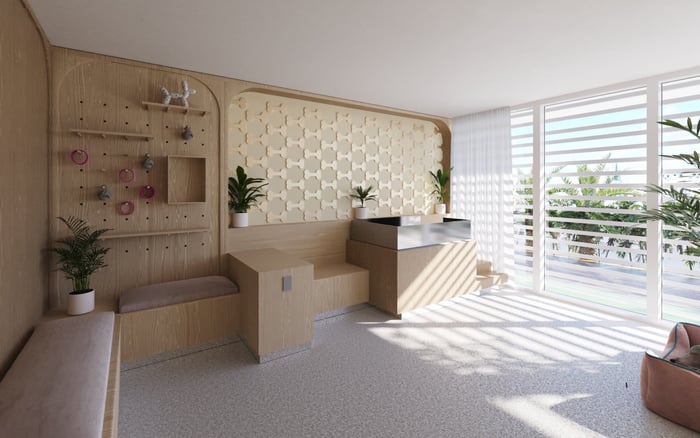
West Palm Beach condominium buyers are increasingly evaluating pet-friendly living as a core expression of luxury rather than a concession. The new standard is quieter, more intentional, and tied to daily comfort, from private outdoor space to building operations.

Pet-friendly living in West Palm Beach condominiums is no longer a footnote in association documents. For many affluent buyers, it has become part of the core lifestyle test: Can the residence accommodate a beloved dog, a quiet routine, a visiting trainer, a private elevator arrival, and a daily life that feels polished rather than improvised?
The answer increasingly depends less on whether a building simply allows pets and more on how gracefully it absorbs them into the residential experience. Luxury pet ownership is not about novelty. It is about calm logistics, durable materials, thoughtful circulation, and rules that are clear before a buyer falls in love with a view. In the most considered residences, a pet does not interrupt the rhythm of the home. The home is designed with that rhythm already in mind.
This is especially relevant in West Palm Beach, where a refined residential audience often blends full-time occupancy, seasonal use, family visits, and frequent entertaining. In that context, pet-friendly features must be discreet enough for a formal setting and practical enough for a daily walk after dinner.
The first generation of pet-friendly condominium language was largely permissive: pets allowed, subject to restrictions. The next standard is more service-led. Buyers now ask how a building manages arrival, walking routes, grooming logistics, noise control, staff familiarity, and the transitions between private residence and shared common areas.
That shift matters. A building may be technically pet-friendly while still making ownership feel inconvenient. A more sophisticated condominium experience considers where a resident exits with a dog, how close that route is to the elevators, whether the lobby sequence feels awkward, and how easily a pet can be cared for after a rainy walk. These are not extravagant questions. They are operational questions, and in luxury real estate, operations often define the difference between a beautiful address and a truly livable one.
When buyers compare West Palm Beach residences such as Alba West Palm Beach, Forté on Flagler West Palm Beach, and Mr. C Residences West Palm Beach, the pet conversation should sit beside the usual questions about views, layouts, arrival experience, and wellness amenities. The strongest choice is rarely based on a single feature. It comes from the cumulative ease of living.
For pet owners, private outdoor space has moved from aesthetic preference to functional advantage. A generous balcony or terrace can support morning routines, fresh air, and a sense of openness between walks. It also gives the residence a softer domestic quality, particularly for owners who split time between Palm Beach County and other homes.
The most appealing private outdoor areas are not merely decorative. They are large enough to be used, shaded enough to be comfortable, and connected naturally to living spaces. For pet owners, that connection matters. A terrace that flows from a primary living area can feel integrated into daily life, while an awkward balcony may photograph beautifully but carry less value in practice.
This is where floor plan discipline becomes essential. Buyers should study door swings, thresholds, flooring transitions, and furniture placement. A pet-friendly condominium does not need to feel casual. It simply needs to be honest about movement, maintenance, and comfort. Search filters can be blunt instruments, but practical terms such as Pets, Dog-park, Balcony, Terrace, Pool, and West-palm-beach can still help frame the first pass before a more nuanced evaluation begins.
Pet-friendly luxury is often expressed through restraint. Hardwearing flooring, washable surfaces, sensible entry sequences, and well-placed storage can matter as much as dramatic finishes. The goal is not to turn a residence into a pet facility. It is to preserve the elegance of the home while acknowledging how people actually live.
Durability should not be confused with compromise. In high-end condominiums, the best material choices feel elevated and forgiving at once. Flooring should support entertaining and everyday use. Upholstery and rugs should be selected with longevity in mind. Millwork, wall coverings, and thresholds should be considered not only for their visual impact, but also for how they age under real residential patterns.
For buyers evaluating The Ritz-Carlton Residences® West Palm Beach or Shorecrest Flagler Drive West Palm Beach, the more revealing question may be simple: Can this home remain serene with a dog, guests, deliveries, and seasonal movement through the space? If the answer is yes, the residence has achieved something more valuable than a marketing label.
A sophisticated pet strategy begins with documents. Weight limits, breed language, number-of-pet limits, elevator protocols, registration requirements, fees, and guest pet policies can all shape the owner experience. These rules should be reviewed early, not after emotional momentum has taken over.
For ultra-premium buyers, clarity is a form of comfort. A pet policy that is specific, consistently administered, and easy to understand can be preferable to a vague policy that leaves too much to interpretation. It allows owners to make decisions with confidence, especially when household staff, family members, or seasonal guests may also be involved in pet care.
The best buildings balance courtesy and privacy. They protect the quiet enjoyment of all residents while allowing pet owners to live without feeling conspicuous. That balance is central to the next phase of West Palm Beach condominium living: hospitality without fuss, rules without friction, and amenities that support rather than announce themselves.
The essential question is not whether a condominium is pet-friendly. It is whether the building understands pets as part of a luxury household. That means evaluating the path from residence to street, the feel of common areas, the practicality of private outdoor space, and the responsiveness of building staff.
Buyers should also consider the pet’s temperament and routine. A quiet older dog may need different building conditions than an active puppy. A frequent traveler may place greater value on trusted service access and easy coordination. An owner who entertains regularly may prioritize layouts that allow pets to be comfortably separated from formal rooms when needed.
West Palm Beach offers a particularly compelling setting for this conversation because the market is defined by lifestyle precision. Buyers are not only purchasing square footage. They are curating daily rituals: the morning walk, the elevator ride, the shaded terrace, the return home after dinner, and the sense that every member of the household has been considered.
What makes a luxury condominium genuinely pet-friendly? A genuinely pet-friendly condominium combines clear rules, practical circulation, durable residences, and a building culture that treats pets as part of daily life.
Should buyers rely only on listing language about pets? No. Listing language is a starting point, but association documents and direct policy review are essential before making a decision.
Why is private outdoor space important for pet owners? A usable balcony or terrace can support fresh air, routine, and comfort between walks, especially in a high-rise lifestyle.
Are pet amenities more important than floor plan quality? Not always. A thoughtful floor plan with practical thresholds, storage, and circulation can be more valuable than a highly promoted amenity.
What pet rules should be reviewed first? Buyers should review size limits, number-of-pet limits, breed language, guest pet rules, elevator procedures, and any registration requirements.
Can a formal residence still work well for pets? Yes. With durable materials, smart space planning, and discreet maintenance strategies, a formal home can remain elegant and pet-compatible.
Do seasonal owners need different pet considerations? Seasonal owners should focus on service coordination, guest policies, easy arrival routines, and how smoothly the residence functions after time away.
How should buyers compare West Palm Beach projects? Compare the entire living sequence, including private space, common areas, staff interaction, building policies, and proximity to daily walking routines.
Is a dog park necessary in a luxury condominium? Not necessarily. Some owners prefer refined walking access and private outdoor space over a dedicated on-site pet area.
When should pet policies be reviewed during a purchase? They should be reviewed early, before negotiations become advanced, so the buyer can assess lifestyle fit with full confidence.
To compare the best-fit options with clarity, connect with MILLION.
If branded residences are on your mind — as a home or as an allocation — we would be glad to share what we are seeing, privately.
Begin a quiet conversation