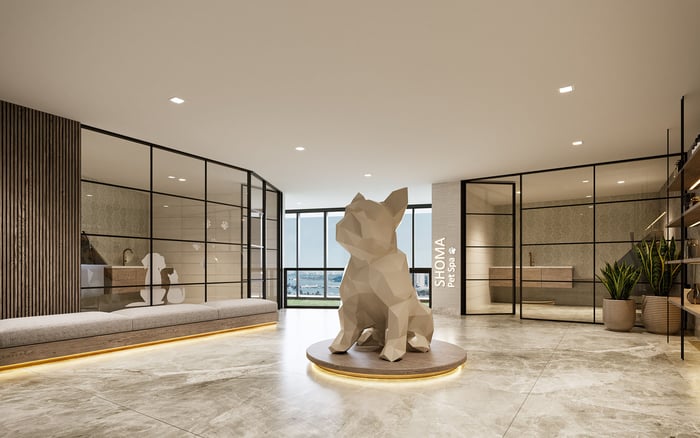
A buyer-oriented look at how South Florida luxury condo associations frame pet-friendly living in shared spaces, with practical questions for common areas, amenity decks, elevators, and closing diligence.

In South Florida’s highest-end condominium buildings, pet-friendly no longer reads as a casual afterthought. It is part of a broader residential promise: privacy, ease, presentation, and service, extended to every member of the household. Yet the phrase can mean very different things from one association to another, especially once the conversation moves beyond the residence door and into lobbies, elevators, amenity decks, garage corridors, pool areas, and landscaped arrival courts.
For buyers, the central question is not simply whether a building allows pets. It is how the association expects owners, residents, staff, guests, and animals to share common space without compromising the atmosphere that drew everyone to the property in the first place. In a trophy tower, a pet policy is not only about permission. It is about choreography.
That choreography matters whether the search is centered on Brickell, the beaches, Fort Lauderdale, Sunny Isles, Bay Harbor Islands, Coconut Grove, or Palm Beach. A waterfront residence may feel serene inside the private foyer, but daily life still passes through elevators, porte cochères, package rooms, lounges, spa corridors, and outdoor paths. The best-prepared buyer studies those touchpoints before signing, not after moving in.
Pet-related common area regulations are designed to protect three values: the condition of the property, the comfort of other residents, and the predictability of daily operations. In luxury buildings, those values are heightened by finishes, staffing standards, guest expectations, and the premium placed on quiet arrival.
A well-run association may address how pets move through the lobby, which elevators are preferred, whether carriers are expected for smaller animals, where leashes are required, how accidents are handled, and whether certain amenity areas are restricted. It may also distinguish between resident pets, visiting pets, service needs, and animals brought by guests or household staff. The exact language belongs in the condominium documents, rules, policies, and management guidance, which should be reviewed carefully with qualified counsel.
This is especially important for buyers comparing very different building types. At St. Regis® Residences Brickell, a buyer’s questions may center on vertical living, arrival sequence, valet areas, and elevator protocol. At a lower-density coastal address, the conversation may shift toward outdoor paths, beach-adjacent routines, and how pets move between private terraces and shared resort-style amenities.
The most sensitive pet rules often concern the spaces everyone sees first. Lobbies, elevator banks, valet entrances, and reception areas set the tone for a building. They are also where pets, residents, staff, children, luggage, deliveries, and guests converge.
A buyer should ask whether the association has preferred pet routes, designated elevators, size or leash expectations, cleaning responsibilities, and guest-pet procedures. The goal is not to make daily life feel policed. The goal is to understand whether the building’s standards match the owner’s habits. A resident with two active dogs will experience common areas differently from a seasonal owner with a small companion animal.
In Miami Beach, where lifestyle often blends indoor elegance with outdoor ritual, buildings such as The Perigon Miami Beach invite buyers to think carefully about transition zones: from residence to elevator, from lobby to car, from amenity floor to landscaped exterior. Pet-friendly living is most successful when those movements are intuitive and consistently managed.
Outdoor amenities are where pet policies can become most nuanced. A terrace may be privately owned, limited common area, or part of a shared amenity environment, depending on the building’s legal structure and documents. A balcony may feel private, but use, noise, safety, sanitation, and visibility can still be governed by association rules.
Buyers should distinguish between private outdoor space and common outdoor space. They should ask whether pets are allowed on amenity decks, lawns, cabanas, pool-adjacent seating, fitness terraces, private dining areas, marina promenades, or wellness gardens. A dog park or pet relief zone, if present, should be evaluated not only for convenience but also for access, cleanliness expectations, hours, and proximity to elevators or residences.
At The Ritz-Carlton Residences® Sunny Isles, the buyer mindset should be the same as at any ultra-premium coastal address: confirm the building’s actual procedures rather than relying on the general impression of pet friendliness. Oceanfront and resort-style settings can be deeply appealing for pet owners, but the daily rules are what shape lived comfort.
Pet diligence should begin early, particularly for buyers relocating from single-family homes or from buildings with informal management cultures. The contract period is the time to request the condominium declaration, bylaws, rules and regulations, frequently used management forms, application materials, pet addenda if any, and any board guidance that affects daily movement through common areas.
The review should be practical. Ask how rules are enforced, who answers pet-policy questions, whether guest pets are treated differently, how violations are communicated, and whether fines, deposits, cleaning charges, or remediation procedures may apply. Ask whether building staff can describe the normal resident routine without hesitation. Clarity is part of luxury.
For buyers considering Four Seasons Hotel & Private Residences Fort Lauderdale or other service-oriented residences, the inquiry should also include hotel-style or hospitality-adjacent operations where relevant. Shared services can create exceptional convenience, but they also make common area expectations more important, not less.
The strongest pet-friendly buildings do not necessarily have the loosest rules. Often, the opposite is true. Clear standards allow residents to enjoy animals at home while preserving the composure of the lobby, the serenity of the spa, and the usability of shared outdoor areas.
A sophisticated buyer compares three things. First, the written documents: what is actually permitted, restricted, or subject to approval. Second, the operating culture: how management communicates and whether staff can explain daily procedures. Third, the physical design: whether the building makes pet routines graceful or awkward.
Design is frequently underestimated. A separate service corridor, generous elevator planning, durable transitional flooring, quick access to exterior walks, discreet wash areas, or a well-positioned relief zone can make a pet-friendly building feel effortless. Conversely, a beautiful tower with unclear routing may create friction even if pets are allowed.
The best outcome is alignment. The owner’s lifestyle, the pet’s temperament, the building’s finishes, and the association’s rules all need to work together. When they do, pet-friendly living feels quiet, polished, and natural.
Does pet-friendly mean pets can use every common area? No. Pet-friendly permission and common area access are separate questions that should be confirmed in the building documents and management policies.
Should I review pet rules before making an offer? Ideally, yes. Early review helps avoid surprises about elevators, amenity decks, outdoor areas, guest pets, or approval procedures.
Can a luxury condo association set different routes for pets? Many buildings use routing expectations to protect finishes and resident comfort. Buyers should confirm the actual procedure for the specific association.
Are private balconies always unrestricted for pets? Not necessarily. A balcony can still be subject to rules involving safety, sanitation, noise, and appearance.
What should I ask about a pet relief area? Ask where it is, how it is accessed, how it is maintained, and whether hours or conduct standards apply.
Do guest pets follow the same rules as resident pets? They may be treated differently. Confirm guest procedures before hosting visitors with animals.
Are pet deposits or cleaning charges always required? Requirements vary by association. The governing documents and management forms should make any fees or charges clear.
Who should review the rules for me? Use qualified Florida counsel and a broker familiar with luxury condominium operations. Management can clarify procedure, but legal interpretation belongs with counsel.
What is the biggest mistake pet owners make when buying? They focus on whether pets are allowed and overlook how pets move through the building each day.
Can pet rules affect resale value? They can influence buyer fit and daily satisfaction. Clear, well-managed policies may make a building easier for pet owners to evaluate.
When you're ready to tour or underwrite the options, connect with MILLION.
If branded residences are on your mind — as a home or as an allocation — we would be glad to share what we are seeing, privately.
Begin a quiet conversation