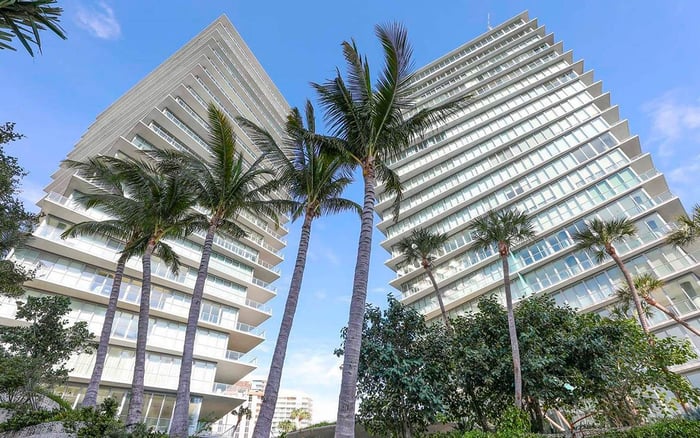
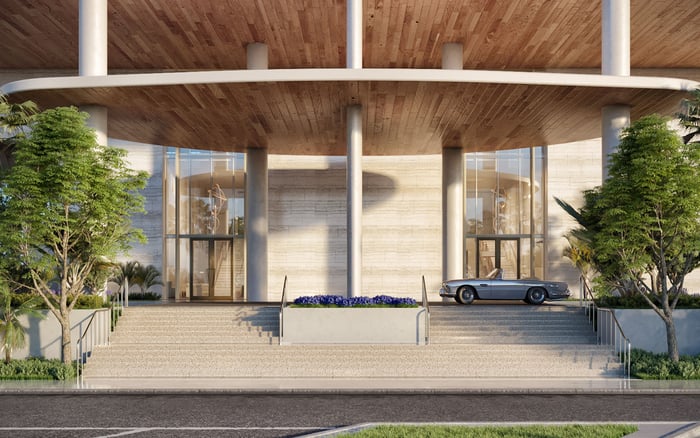
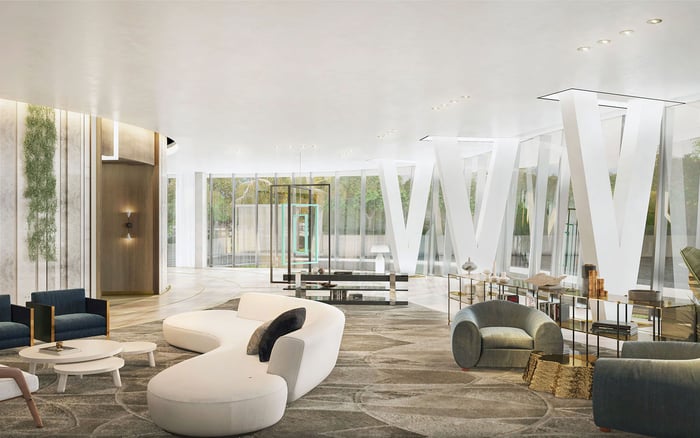
In Coconut Grove, the choice between Park Grove and Mr. C often comes down to how you want luxury to feel day to day. One direction leans Ultra-modern: light, glass, and a clean, contemporary rhythm that frames the bay and the skyline. The other favors an old-world hospitality sensibility, where arrival, service, and social energy are part of the appeal. This guide compares lifestyle, design cues, privacy, and ownership considerations so buyers can match a residence to their personal definition of ease.
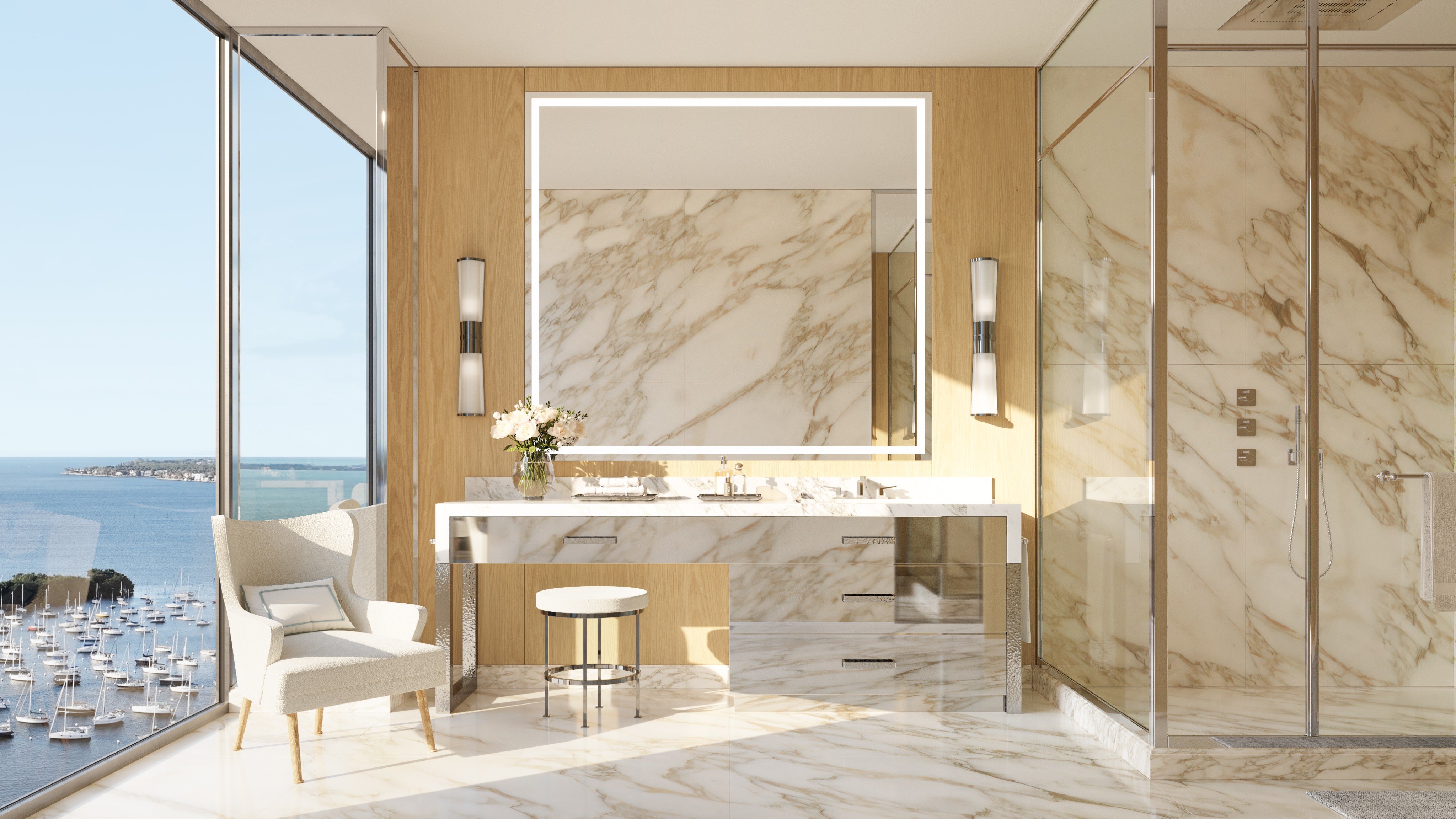
Coconut Grove rewards buyers who think in layers. There is the bayfront presence, the tree canopy, the village-scale streets, and the easy connection to Miami’s financial and cultural core. What makes the Grove especially compelling, though, is how quickly the “feel” of luxury can change from one property to the next.
If you are weighing Park Grove Coconut Grove against Mr. C Tigertail Coconut Grove, you are not simply comparing two addresses. You are selecting a tone for everyday life.
One tone is contemporary and visually quiet. It favors clean lines, open sightlines, and a highly edited, gallery-like sensibility where views and light do much of the work. The other is romantic and hospitality-driven, shaped by European traditions of service, ritual, and social energy.
Both can read as luxury in every meaningful way, yet the lived experience can feel distinct the moment you arrive.
Because the Fact Table provided for this article is empty, this comparison does not assert specific features, policies, counts, or amenity lists for either property. Instead, it offers a buyer’s framework for evaluating modern bayfront luxury versus old-world charm, along with practical questions to use during tours and due diligence.
Buyers drawn to a modern, waterfront-forward residence are often seeking a home that “disappears” in the best sense. The daily goal is not to be impressed on command. It is to feel unburdened.
Modern bayfront living often optimizes for:
This is why the Park Grove Coconut Grove conversation so often starts with an emotional descriptor like “calm.” Even without referencing specifics, many buyers who prefer this style want sophistication that never feels performative.
Old-world charm in South Florida is not nostalgia. It is choreography.
Hospitality-influenced residences, especially those with a brand-adjacent sensibility, tend to optimize for the experience around the home as much as the home itself:
For buyers considering Mr. C Tigertail Coconut Grove, the discussion often shifts away from the sharpness of a line and toward the sensation of being supported. The question becomes less “Is it beautifully designed?” and more “Does it make daily life feel elevated and well handled?”
In high-end Coconut-grove real estate, it is easy to get pulled into surface comparisons: finishes, staging, a lobby impression, a view from one corner of a room. The most consequential differences, however, tend to appear in habits.
Ask yourself how you actually live in Miami:
Neither is “better.” Alignment is what matters.
A modern bayfront concept often fits buyers who travel frequently, prefer clean photographic lines, and want a residence that adapts easily as life changes.
An old-world, hospitality-coded concept often fits buyers who host, value service as a core part of luxury, and enjoy the subtle ease of being recognized and cared for.
Every luxury buyer has a privacy threshold. In Coconut Grove, that threshold becomes a practical selection tool.
Some buildings and resident communities feel intentionally discreet. You can come and go with minimal social interaction, and your home life stays contained.
Other buildings feel more interconnected. That can be a positive if you enjoy meeting neighbors, prefer an active lobby culture, or like the idea that your building contributes to your social fabric.
During tours, watch for signals that affect your daily comfort:
If your ideal is minimal visibility, a modern approach can feel naturally aligned.
If your ideal includes community and gentle social energy, an old-world approach can feel more intuitive.
Luxury design is often autobiography in architectural form.
A buyer who gravitates toward ultra-modern architecture may be saying, “I value clarity.” That clarity can be aesthetic, but it also tends to reflect decision-making style and lifestyle preferences. A modern residence can feel like a controlled baseline, a blank canvas that supports many versions of the owner over time.
A buyer who gravitates toward old-world charm may be saying, “I value narrative.” The residence does not simply hold your life; it participates in it through ritual, warmth, and an emphasis on experience.
If you feel torn, do not ask which building is more “luxurious.” Ask which one feels more like you when no one is watching.
With no property-specific details asserted here, the cleanest way to compare Park Grove Coconut Grove and Mr. C Tigertail Coconut Grove is to run the same checklist at each visit, then follow up with the same due-diligence questions.
Treat every tour like a working session, not a mood board. Take notes on what you notice without trying to interpret it on the spot. Then compare later, when the novelty has cooled.
Use the sections below as your framework, and repeat the process more than once if possible. Luxury decisions age better when they are tested across different times of day and different levels of building activity.
Water views are not all equal, and “nice view” is not a metric. What matters is how the view behaves in real life.
During a showing, notice:
If modern bayfront luxury is your goal, you may place extra value on a seamless relationship between interior and exterior, with the view functioning like an additional “wall” of the home.
If old-world charm is your goal, you may still want strong views, but you might prioritize atmosphere and comfort over a perfectly minimal frame.
Coconut Grove is lively, and waterfront living can bring its own soundtrack. Serenity is not just about decibels. It is about whether the sound profile fits how you live.
Ask practical questions and test conditions in person:
Luxury is often defined by what you do not have to notice. A residence can be visually stunning and still feel mentally busy if the sound profile is not aligned with your routines.
The best luxury residences reduce decisions. They make the predictable parts of life feel handled.
When comparing your options, ask for clarity on day-to-day operations such as:
Service culture can be a real differentiator here. Some buyers want a more hands-on experience, where the building feels like an extension of hospitality. Others prefer streamlined, quiet efficiency that stays out of sight.
Your goal is not to pick the “most service.” Your goal is to pick the type of service, or lack of it, that makes your life easier.
Even if you are buying for love, you are also buying an asset. The most satisfying purchases are the ones that remain satisfying after the initial excitement fades.
Without citing specific market data, consider general forces that can influence resale and long-term satisfaction:
A useful standard: the right building is the one that will still feel right when you are no longer in the honeymoon phase.
Entertaining style is one of the simplest differentiators, and one of the easiest to overlook when you are focused on finishes and views.
If your entertaining is intimate, design-forward, and centered on conversation, a modern environment can be an ideal frame. It keeps the attention on people, food, art, and the horizon.
If your entertaining is frequent, fluid, and oriented around hospitality, an old-world sensibility can make hosting feel less like work. The environment itself may do some of the welcoming for you.
Tour with your real habits in mind. Stand in the main living area and imagine where guests gather, where privacy holds, and how transitions work as the evening moves from arrival to conversation to departure. Then imagine the morning after. The practicalities often reveal the answer.
Some buyers worry that modern design will feel sterile. Others worry that old-world warmth will feel heavy. In practice, both moods can be tuned.
If you choose modern, you can add warmth through lighting, textiles, art, and layered natural materials. The advantage is that the architecture provides a calm baseline.
If you choose old-world charm, you can keep the look crisp through a disciplined palette and a contemporary art strategy. The advantage is that the building’s tone can make the home feel welcoming immediately.
When touring, pay attention to whether the public spaces feel like a true extension of the private residences, or a separate mood entirely. Consistency matters because you will live in the transitions, not only inside your front door.
Even inside Coconut Grove, micro-location matters. Your personal map is not only about distance; it is about how you move through your days.
Consider questions like:
A modern bayfront residence can read as a retreat with city access.
A hospitality-driven residence can read as a lifestyle hub that feels ready at all times.
Neither is universally better. The “right” micro-location is the one that makes your most frequent routines easier.
Luxury buyers often face a paradox: the more exclusive the property, the less public detail you may have. Confidence comes from process, not assumptions.
If you are comparing Park Grove Coconut Grove and Mr. C Tigertail Coconut Grove, build leverage and clarity through a disciplined approach:
When information is limited, consistency is your advantage. Ask the same questions, document the answers, and compare what is confirmed, not what is implied.
Strip away finishes, views, and status, and the decision becomes emotional in the most practical way.
Modern bayfront luxury tends to deliver a feeling of clarity: space, light, and a sense that the home supports you by staying quiet.
Old-world charm tends to deliver a feeling of being looked after: a residence that feels curated, warm, and supported by a service-oriented rhythm.
Both can be extraordinary. The best match is the one that makes your everyday feel more like your ideal life, not only your ideal weekend.
How should I compare Park Grove Coconut Grove and Mr. C Tigertail Coconut Grove if I care about privacy?
Start by defining your privacy threshold in plain terms: how often you want to see neighbors, how much lobby energy feels comfortable, and how discreet you want arrival to feel. On tours, observe how people move through common areas and how the building “feels” during busy moments. Choose the residence whose default culture matches your baseline, not the one you think you can adapt to.
What should I ask management about day-to-day operations before I commit?
Ask how the building handles the repeatable parts of life: deliveries, guest arrival, vendor access, communications, and maintenance coordination. The goal is clarity on process. Request that key policies and practical details be confirmed in writing, and review governing documents with your advisors so expectations are aligned before closing.
Which lifestyle fits ultra-modern buyers versus buyers who want old-world charm?
Ultra-modern typically fits buyers who want visual quiet, clean lines, and a retreat-like rhythm where the home is the center of calm. Old-world charm often fits buyers who value hospitality cues, a sense of ritual in arrival, and a slightly more social, club-like temperature. Neither is a status decision. It is a daily-living decision.
What documents should I review to confirm rules, costs, and restrictions?
Request the full set of association documents and disclosures available to buyers, including rules and regulations, budgets, and any materials that address costs and restrictions. Confirm figures and policies directly with the association and your legal and financial advisors. In a luxury purchase, certainty is part of the value.
For discreet guidance on Coconut-grove living and a tailored shortlist, connect with MILLION Luxury.
If branded residences are on your mind — as a home or as an allocation — we would be glad to share what we are seeing, privately.
Begin a quiet conversation