Coconut Grove’s appeal is unusually layered: Miami’s earliest-settled neighborhood character, a canopy-forward streetscape, and a luxury market now defined by discreet waterfront estates and design-forward condo living. This buyer’s guide maps the Grove’s cultural anchors, mobility patterns, and the current luxury pricing cadence, then translates those signals into practical decision points for primary residents, second-home owners, and long-term investors.
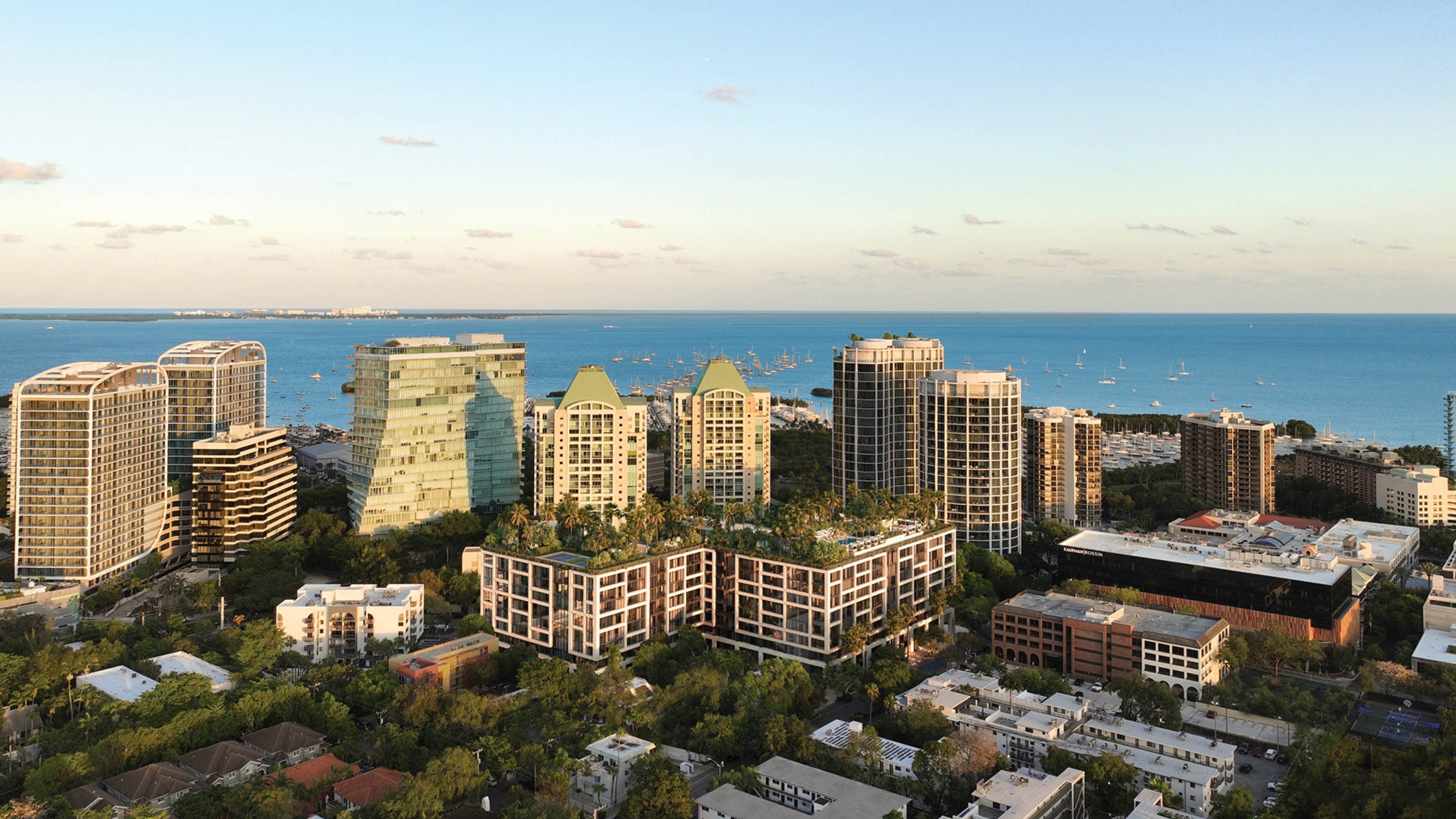
Coconut Grove is often described as one of Miami’s earliest settled neighborhoods, with roots tracing to the late 1800s. That long timeline still shows up in how the area lives today: not a single master-planned statement, but a layered accumulation of residential streets, waterfront pockets, and cultural landmarks that hold their own even as new luxury inventory arrives.
The Grove’s origin story is also inseparable from the Bahamian migrants who began arriving in the late 1880s and helped build the early community and economy. For luxury buyers, that history matters less as trivia and more as texture. It helps explain why the neighborhood’s identity feels earned rather than manufactured-and why buyers who value authenticity often view Coconut Grove as a long-term hold.
What makes the Grove especially compelling in a South Florida context is the rare pairing of village-scale walkability with real coastline. You can move from leafy residential streets to marinas and bayfront viewpoints without losing the neighborhood’s center of gravity.
Luxury markets stay resilient when they offer enduring reasons to be visited. In Coconut Grove, those reasons are embedded in the neighborhood’s DNA.
Start with The Barnacle, Ralph Munroe’s 1891 home, widely cited as Miami-Dade County’s oldest standing home and preserved as a historic state park. It’s a reminder that the Grove’s idea of “old” is older than most of Miami.
Coconut Grove also developed a long-running reputation as a creative and bohemian enclave, especially associated with the 1960s and 1970s era. That legacy continues to shape today’s buyer profiles: founders, creatives, and executives who want a refined address without the high-gloss anonymity of denser districts.
Then there is the Coconut Grove Playhouse, which began as a 1927 theater and cinema building and later became a major performing-arts venue. It has been closed since 2006 and remains central to ongoing preservation and redevelopment debate. Its local landmark designation and National Register listing reinforce a broader point for homeowners: this is a neighborhood where civic identity is actively defended. For many buyers, that reads as stewardship.
Finally, the King Mango Strut, an annual satirical community-run parade, captures the Grove’s self-confidence. In a luxury context, it’s another signal that the neighborhood is not merely an address, but a community with tradition.
Coconut Grove’s lifestyle advantage isn’t only the water. It’s also the shade. Researchers in Miami have documented the value of the urban tree canopy as a resilience and livability asset, and the Grove’s streetscape makes that concept tangible: temperature, light, and walkability simply feel different under mature trees.
For buyers who prioritize a lower-friction daily routine, internal mobility matters. The neighborhood is served by a free local trolley circulator-an underappreciated detail that supports car-lite living for errands, dining, and local appointments.
The Grove’s central social and retail node, CocoWalk, functions as an open-air shopping and dining hub and an informal gathering point. Buyers who split time between a primary residence and a second home often value places like this because it simplifies the “arrive and live” rhythm: a coffee, a dinner reservation, a casual retail run, all without leaving the neighborhood.
The nearby presence of Vizcaya Museum & Gardens adds another layer of cultural gravity within easy reach, offering a counterpoint to the Grove’s village energy: formal gardens, historic architecture, and a sense of permanence.
The right way to read those numbers is not as a forecast, but as a set of signals. Faster absorption relative to the broader market suggests liquidity for well-positioned inventory. A modest pullback in price per square foot can point to a market that’s normalizing after a run-up-which often creates a more negotiable environment for buyers who care about basis.
At the ultra-high end, Coconut Grove continues to attract globally visible capital. A widely covered example is a pair of estate purchases totaling $173.4 million, comprised of two disclosed transactions reported as $101.5 million and $71.9 million. While not representative of the typical buyer, transactions of this magnitude tend to reinforce the neighborhood’s positioning as a long-term wealth enclave.
Coconut Grove’s new luxury development story isn’t about sheer scale. It’s about discreet addresses, curated amenities, and a stronger emphasis on privacy than you typically find in high-rise districts.
On Grove Isle, Vita at Grove Isle has been covered as a major luxury delivery, marketed as a 65-residence condo project on a private island community in Biscayne Bay. For buyers who want a quieter perimeter and controlled access, the “island within the city” proposition can feel uniquely complete.
On the village side of the Grove, a different type of product competes for attention: residences designed for owners who want walkability, polished interiors, and proximity to the neighborhood’s central routines. In that context, Four Seasons Residences Coconut Grove speaks to a service-driven lifestyle where arriving home can feel more like checking into a private club than returning to a conventional building.
For buyers focused on the long horizon, mixed-use investment can also matter, because it shapes what the neighborhood becomes. Ziggurat at 3101 Grand Avenue is planned as a mixed-use project with office, residences, and retail, and it has recently been associated with a $138.5 million construction loan. The takeaway isn’t the financing headline, but the direction: Coconut Grove’s future includes more integrated, pedestrian-oriented nodes that can reinforce local convenience.
Coconut Grove is best understood as a series of micro-markets that reward specificity.
If you want a village-forward lifestyle, prioritize a radius that keeps CocoWalk and the Playhouse corridor within easy reach. This is where evenings feel spontaneous and where the trolley can meaningfully reduce car dependence.
If privacy is your primary objective, consider how you’ll buffer yourself from through-traffic and weekend peaks. Grove Isle is an obvious example, but even on the mainland, the right streets can trade a small amount of proximity for a noticeable gain in quiet.
If you’re buying for long-term resilience, pay attention to canopy, setbacks, and how the streetscape feels at midday. In Coconut Grove, the comfort of walking in real shade can translate into more frequent outdoor living, and that lifestyle trait tends to retain value.
For buyers considering newer boutique inventory, Mr. C Tigertail Coconut Grove aligns with a hospitality-inflected approach that appeals to owners who travel often and want a consistent service standard when they’re in town.
And for those who want a modern residential perspective tied to the Grove’s design evolution, Park Grove Coconut Grove sits naturally within a conversation about contemporary architecture meeting established neighborhood character.
Coconut Grove performs well precisely because it accommodates different versions of luxury.
Primary residents often prioritize daily livability: shade, walkability, and a neighborhood rhythm that feels human. They may value the Grove’s cultural anchors and prefer buildings that support a full-time lifestyle rather than a purely seasonal one.
Second-home buyers tend to optimize for frictionless arrival and lock-and-leave capability. Here, service, security, and controlled-access environments become the deciding factors.
Long-term investors typically focus on liquidity and durability. The combined-area luxury metrics cited earlier, including faster days on market relative to Miami overall, suggest that well-priced, well-positioned units can move efficiently-even in a market that is no longer uniformly accelerating.
Before you write an offer, ask questions that match the Grove’s particularities.
Confirm how you plan to live: village-walkable, bayfront-private, or a hybrid. Tour at different times of day to understand traffic patterns and ambient noise.
For condo buyers, clarify the building’s positioning: service-forward, design-forward, or privacy-forward. In Coconut Grove, those categories can translate into meaningfully different daily experiences.
For estate buyers, consider not only waterfront exposure but also how the property relates to the neighborhood’s protected heritage fabric. In markets with strong identity, community expectations can influence future changes.
Is Coconut Grove considered one of Miami’s oldest neighborhoods? Yes. It traces its roots to the late 1800s and is commonly described as one of Miami’s earliest settled neighborhoods.
What is The Barnacle and why does it matter to the Grove? The Barnacle is Ralph Munroe’s 1891 home, widely cited as Miami-Dade County’s oldest standing house and preserved as a historic state park.
Why is Coconut Grove known for a bohemian or creative reputation? The neighborhood developed a long-running creative identity, especially associated with the 1960s and 1970s, and that legacy still influences its vibe.
What is happening with the Coconut Grove Playhouse? The Playhouse began as a 1927 theater building, has been closed since 2006, and remains the subject of preservation and redevelopment debate.
Is there a signature community event that captures Grove culture? Yes. The King Mango Strut is an annual satirical, community-run parade that reflects the neighborhood’s distinct personality.
Can you get around Coconut Grove without driving everywhere? Often, yes. A free local trolley circulator supports short trips within the neighborhood.
What is CocoWalk in the context of daily living? It is a major open-air shopping and dining hub and a central gathering node in Coconut Grove.
How has the luxury condo market been moving recently? In a recent snapshot combining Coconut Grove and Coral Gables, average days on market was cited at 56 days versus 81 days for Miami overall.
Are there notable ultra-luxury estate deals in Coconut Grove? Yes. A widely covered example involved two Coconut Grove estates purchased for a combined $173.4 million.
What nearby cultural attraction is worth noting outside the Grove proper? Vizcaya Museum & Gardens is a major nearby historic estate and cultural destination open to the public.
For a confidential assessment and a building-by-building shortlist, connect with MILLION Luxury.
If branded residences are on your mind — as a home or as an allocation — we would be glad to share what we are seeing, privately.
Begin a quiet conversation