A buyer-focused guide to evaluating protected view corridors in South Florida, from Miami Beach and Brickell to Coconut Grove, with a Parisian eye for permanence, proportion, and horizon value.
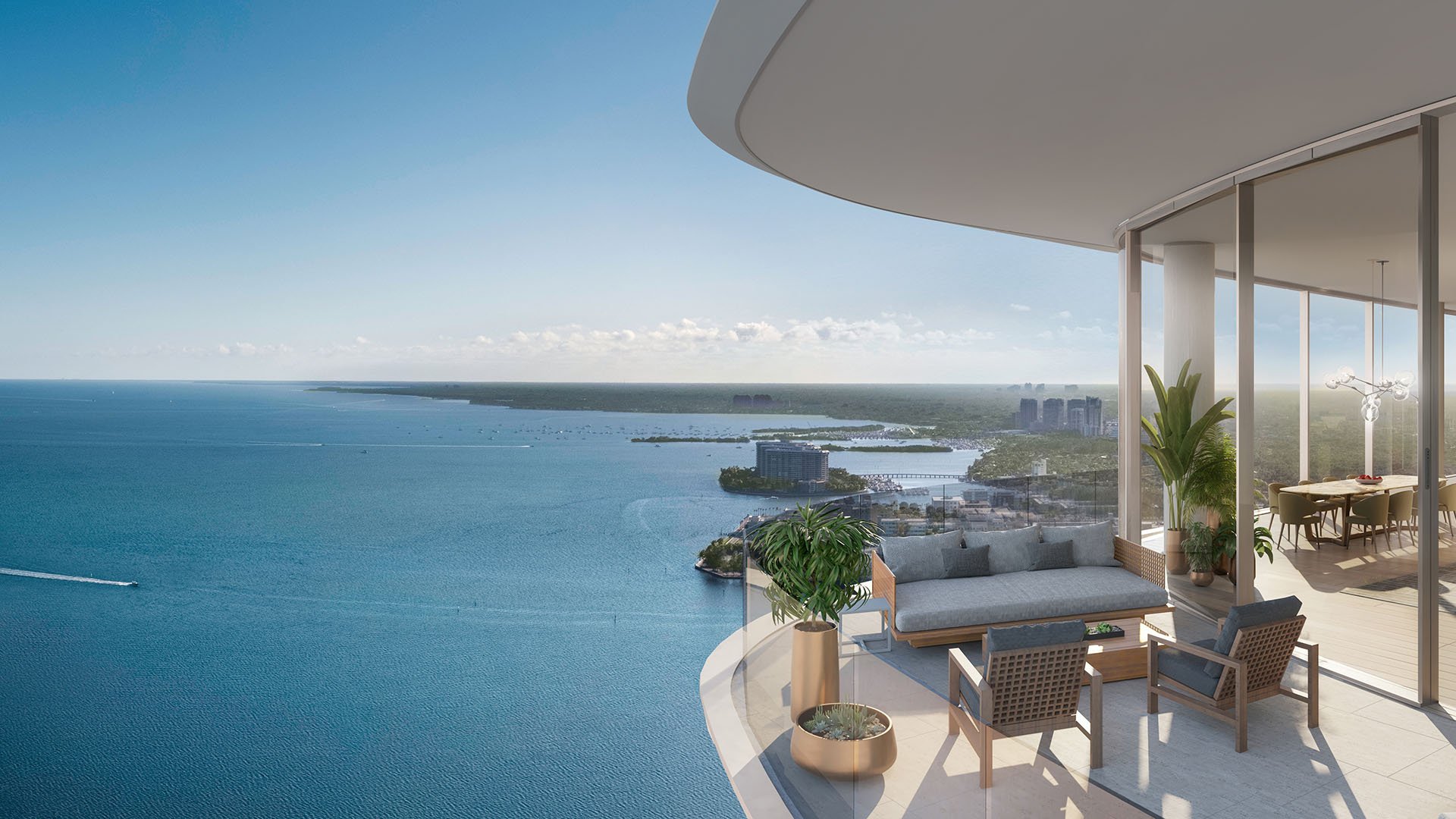
For a Paris buyer, the idea of a protected view is almost instinctive. A residence is judged not only by its interior finish, but by the permanence of what its windows frame: a dome, a garden, a river bend, a disciplined roofline. In South Florida, the language shifts. The horizon is broader, the light is sharper, and the view often depends on water, setbacks, neighboring parcels, public open space, and the geometry of future development.
The mistake is treating every blue-water or skyline exposure as equal. A spectacular view today can become a different composition tomorrow if the corridor is not meaningfully protected. The more refined approach is to separate a pretty view from a durable one. That distinction can shape not only daily pleasure, but also privacy, resale resilience, and the emotional gravity of a home.
A protected view corridor is not always a formal legal promise. Sometimes it is created by geography: a broad bay, oceanfront exposure, or an island edge. Sometimes it is supported by civic or architectural conditions, including parks, road alignments, lower-scale neighborhoods, setbacks, or existing buildings that are unlikely to change quickly. In the luxury market, the strongest view is often the one with multiple layers of defense.
Start by asking what sits between the glass and the horizon. Open water is different from a vacant parcel. A park is different from a surface lot. A low-rise district is different from a block in transition. The view should be studied in plan, not only in photographs, because the angle from the primary bedroom may be more defensible than the angle from the living room, or the reverse.
This is where South Florida rewards discipline. The best homes do not simply announce water-view living. They control the line of sight through depth, proportion, and orientation.
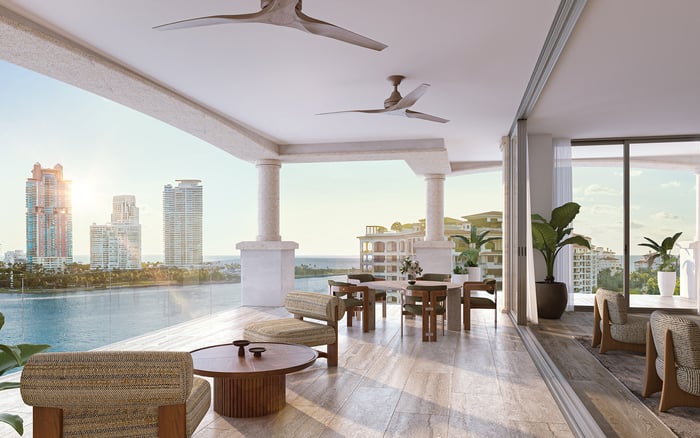
Miami Beach remains one of the clearest places to understand view value because the ocean creates an unusually legible horizon. Yet even here, not all exposures carry the same long-term confidence. Direct oceanfront frontage, park adjacency, corner placement, and elevation can all influence whether the view feels open, private, and enduring.
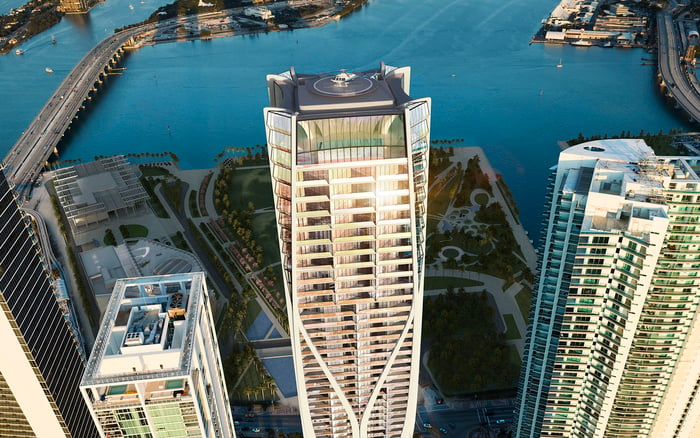
For buyers who want an architectural residence with a strong coastal frame, The Perigon Miami Beach illustrates the value of studying the relationship between building form and water exposure. The question is not only whether a residence faces east. It is whether the living spaces, terraces, and primary suite capture a clean visual sequence without unnecessary obstruction.
A Parisian buyer may also be sensitive to the street experience. In Miami Beach, the most satisfying homes often balance the drama of the ocean with a composed arrival, discreet service, and a sense of retreat from the public realm. The view should feel grand, but the building should not feel exposed.
Brickell offers a different proposition. Here, the view can be urban, cinematic, and highly dynamic, with Biscayne Bay, the Miami River, and the skyline all competing for attention. The reward is energy. The risk is change. A buyer should never assume that height alone guarantees permanence.
In Brickell, high floors can help, but they are not a complete strategy. The more important exercise is to map neighboring sites, street corridors, waterfront edges, and the actual angle of exposure. A high residence with a narrow protected slice may be less compelling than a slightly lower residence with a broader, more defensible bay or river composition.
At Una Residences Brickell, the appeal for many buyers lies in the way a residential tower can use waterfront orientation to create a more deliberate sense of outlook. The due diligence remains the same: stand inside the actual line of glass, look left and right, and ask what could reasonably enter the frame over time.
Brickell is not the place for passive view buying. It is the place for buyers who want urban intensity and are willing to scrutinize the corridor as carefully as the floor plan.
Coconut Grove speaks more softly. For a Parisian sensibility, its appeal may be less about spectacle and more about atmosphere: mature greenery, bay glimpses, low-slung streets, and an older rhythm of privacy. In the Grove, a protected view corridor can be vertical as much as horizontal. Tree canopy, garden depth, and distance from adjacent towers can matter as much as the water itself.
Projects such as Four Seasons Residences Coconut Grove and Vita at Grove Isle invite a more nuanced reading of waterfront living. The buyer is not only purchasing a bay outlook. They are choosing a mood: quieter light, softer edges, and a daily experience that feels residential rather than metropolitan.
The key is to avoid confusing greenery with guaranteed privacy. Trees grow, thin, and change. Neighboring homes can be altered. The best Grove acquisitions combine natural screening with intelligent orientation and a site condition that gives the view more than one reason to endure.
First, visit at several times of day. Morning glare, afternoon reflection, and evening darkness can transform the same corridor. A view that photographs beautifully at noon may feel exposed at night if neighboring buildings look directly into the residence.
Second, evaluate the view from where life actually happens. Dining tables, bedroom pillows, bathtubs, kitchens, and terraces all create different sightlines. The premium should attach to the lived view, not only the brochure view.
Third, distinguish width from depth. A wide panorama may feel impressive, but a deeper corridor across water, parkland, or a low-scale district may have greater staying power. The most valuable views often have both.
Fourth, consider privacy as part of the view. A corridor that keeps other residences at a respectful distance can feel more luxurious than a louder panorama with compromised intimacy.
Finally, make the view part of the negotiation. Interior finishes can be changed. A compromised horizon cannot be renovated.
What is a protected view corridor in South Florida luxury real estate? It is a sightline with some degree of durability because of water, open space, setbacks, building placement, or surrounding conditions.
Is an ocean view always more protected than a skyline view? Not always, but direct ocean exposure often has a clearer horizon than dense urban settings where neighboring parcels may evolve.
Why do Paris buyers focus so intensely on views? Many are accustomed to valuing permanence, symmetry, light, and civic sightlines as part of a property’s long-term character.
Are high floors always the safest choice? High floors can improve exposure, but angle, neighboring sites, and the depth of the corridor matter just as much.
How should I compare Miami Beach and Brickell views? Miami Beach often emphasizes ocean and resort calm, while Brickell offers skyline energy with more development variables.
Can a garden or tree canopy protect a view? It can enhance privacy and atmosphere, but natural screening should be evaluated alongside site conditions and building orientation.
Should I visit a residence more than once before buying for the view? Yes. Light, glare, privacy, and reflections can change substantially between morning, afternoon, and evening.
Which room’s view matters most? The most important view is the one from the spaces you will use daily, especially living areas, terraces, and the primary suite.
Can interiors compensate for a weak view corridor? Beautiful interiors help, but they cannot replace a durable horizon, privacy, or a well-framed exposure.
What is the best way to shortlist comparable options for touring? Start with location fit, delivery status, and daily lifestyle priorities, then compare stacks and elevations to validate views and privacy.
For a confidential assessment and a building-by-building shortlist, connect with MILLION.
If branded residences are on your mind — as a home or as an allocation — we would be glad to share what we are seeing, privately.
Begin a quiet conversation