A discreet buyer’s guide to balancing airport access with the daily pleasures of South Florida living, from Miami Beach and Brickell to Coconut Grove, Fort Lauderdale and West Palm Beach.
For a Paris buyer considering Miami Beach or the wider South Florida coast, airport access often feels like the practical question that unlocks the search. It should not be allowed to become the search. The best home is not simply the one that looks easiest on a map. It is the one that preserves the reason for coming here in the first place: light, water, privacy, generous entertaining, wellness, family time and an ease of living that feels distinct from the pace of a European capital.
A useful starting point is to separate access from dominance. Access means the airport is manageable within the rhythms of your household. Dominance means every decision, from neighborhood to floor plan to social life, is quietly ruled by departures and arrivals. The first is intelligent. The second can flatten the experience of owning in South Florida.
This is where a luxury search becomes more nuanced than a commute calculation. A buyer may be tempted to prioritize the route to a preferred airport above all else, yet the more durable value is often found in a residence that feels complete on the days when no one is flying. The right choice supports both the international calendar and the morning walk, the weekend lunch, the school visit, the boat day, the gallery evening and the quiet season at home.
Lifestyle is not decorative. It is the central asset. A home chosen only for airport convenience can feel efficient but emotionally thin. A home chosen only for romance can create friction when travel becomes frequent. The sweet spot sits between the two.
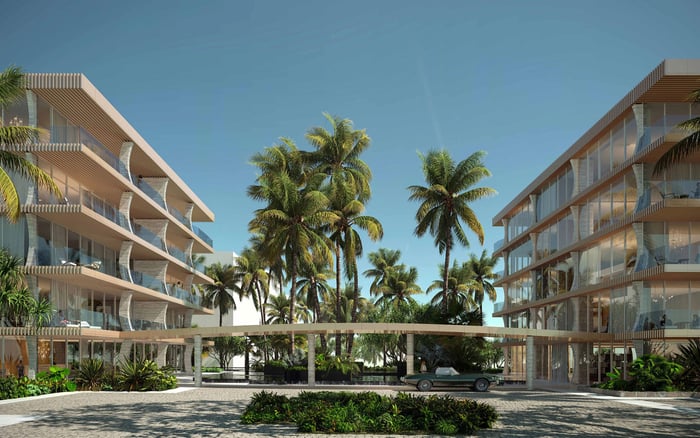
For Miami Beach buyers, the question is often whether the beach lifestyle is the true priority or simply an image attached to the move. If the daily fantasy is sand, ocean air, sunset dinners and a neighborhood that feels resort-like without needing to leave the island, the airport question should be framed as a manageable tradeoff rather than a veto. In that context, a residence such as The Perigon Miami Beach fits naturally into a conversation about choosing setting and atmosphere first, then refining the access plan around it.
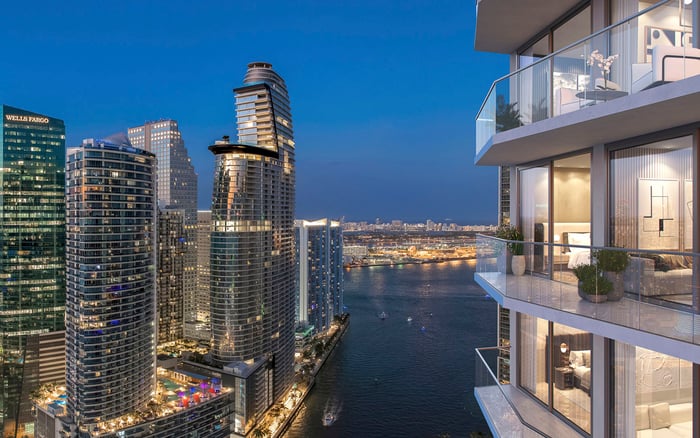
In Brickell, the lifestyle logic is different. The appeal is urban energy, restaurants, offices, vertical views and a more metropolitan rhythm. A buyer comparing 2200 Brickell is typically weighing a city-forward pattern of living, where a lock-and-leave residence can support frequent travel without making the home feel temporary. The airport remains relevant, but the sharper question is whether the buyer wants South Florida to feel like a city base, a coastal retreat or something in between.
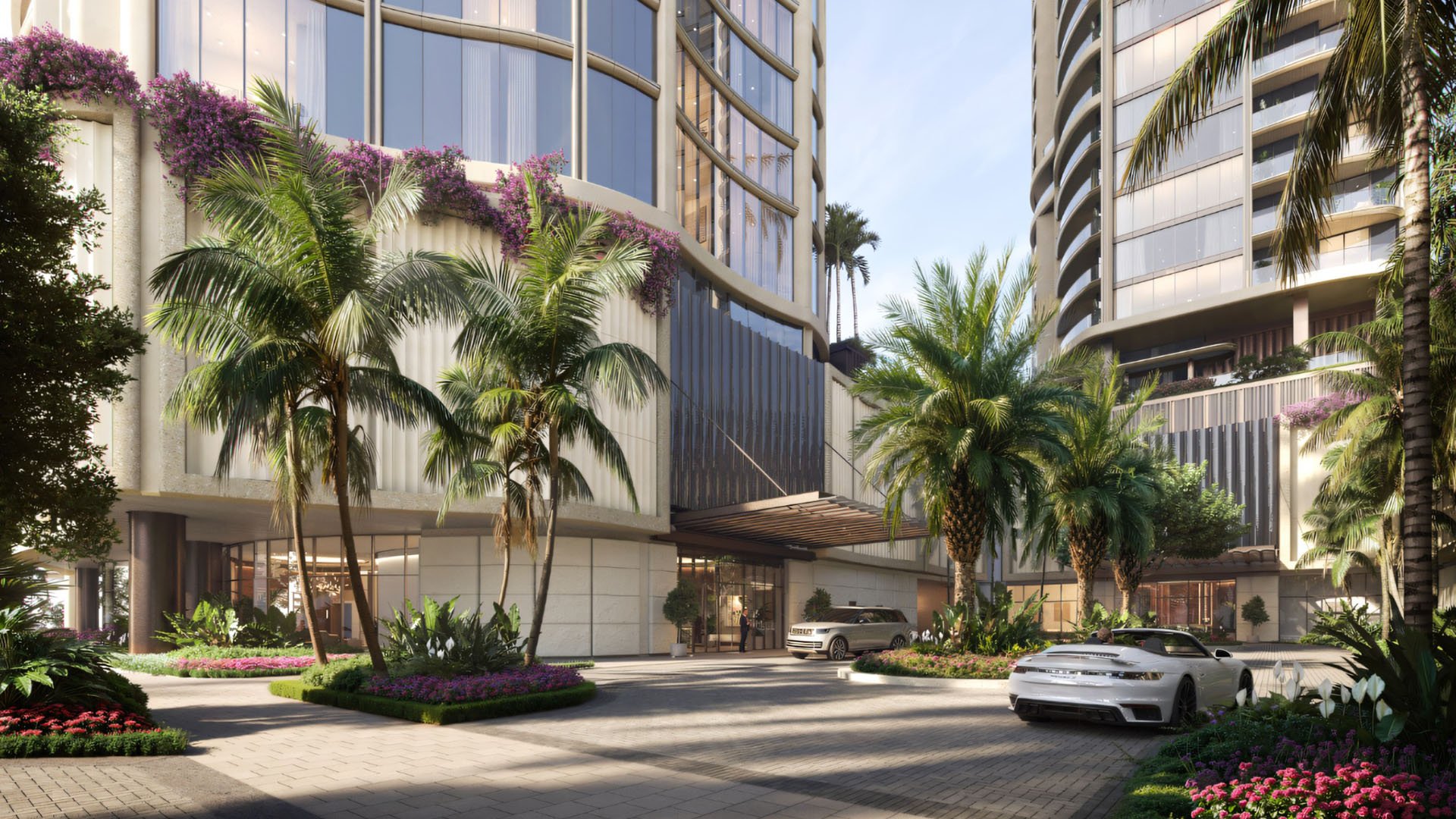
Many buyers over-focus on the morning they leave for the airport. The more revealing test is the evening they return. After a long flight, with luggage, family, staff coordination or a late dinner ahead, the home must still feel like a reward. That means reviewing not only the broad route, but also the final approach to the building, the arrival sequence, valet flow, lobby privacy, elevator experience and the ease of resetting into domestic life.
This is especially important for buyers arriving from Paris, where the contrast between city density and South Florida openness can be part of the appeal. The transition should feel intentional. If the return home feels stressful, the residence may be too dependent on a single promise of convenience. If the return feels graceful, airport access has been properly absorbed into the lifestyle rather than placed above it.
A strong due diligence exercise is to visit the same neighborhood at different times of day, including moments that resemble your actual travel rhythm. Walk the immediate streets. Sit for coffee. Observe how the building receives residents. Notice whether the area feels pleasant when you are not being escorted from curb to lobby. Luxury is not only the private interior. It is also the quality of the transition from public movement to private calm.
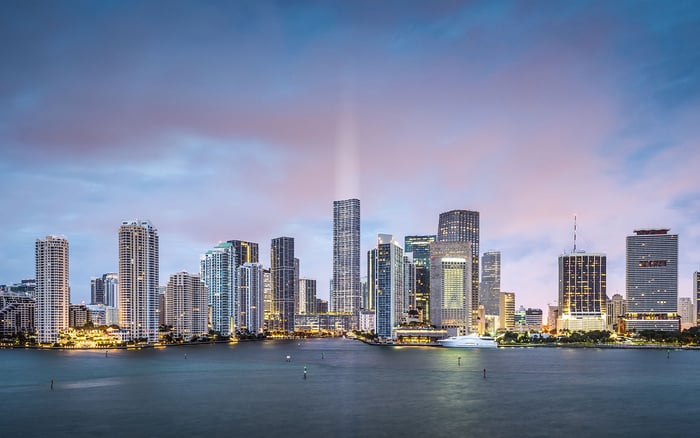
South Florida offers markedly different residential temperaments, and the airport question should be filtered through that character. Miami Beach provides an emotionally clear proposition: beach, design, dining and a sense of arrival. Brickell provides urban convenience and a vertical lifestyle. Coconut Grove leans toward shade, greenery, privacy and a softer village atmosphere. Fort Lauderdale can appeal to buyers who want a coastal city with boating culture and a different pace. West Palm Beach speaks to those who prefer a polished, composed environment with a distinct social register.
In Coconut Grove, the airport conversation is often less about speed and more about preserving serenity. A buyer drawn to Four Seasons Residences Coconut Grove is likely considering the value of a neighborhood that can feel removed from the harder edges of urban movement. The practical question becomes whether the added calm is worth the travel routine. For many global buyers, that answer depends on how often the home will be used and whether it functions as a primary base, seasonal residence or family gathering point.
Fort Lauderdale introduces another calculus. The lifestyle can feel maritime, social and residential at once, with a different relationship to the coast than Miami Beach. A residence such as Riva Residenze Fort Lauderdale may enter the conversation for buyers who want a less Miami-centric pattern while still remaining within South Florida’s luxury corridor. The important point is not to rank one area universally above another. It is to identify which neighborhood temperament matches the buyer’s real life.
A second-home buyer and a full-time buyer should not use the same airport logic. For a second home, the arrival ritual may carry outsize importance, because every visit begins and ends with travel. If the property is used for long weekends, family holidays or periodic escapes, friction can feel larger. The residence should therefore offer immediate decompression: strong service, intuitive parking, privacy, storage and a layout that works without elaborate setup.
For a full-time or near-full-time owner, the calculation changes. Airport access remains useful, but daily neighborhood quality becomes far more important. Where do you walk in the morning? How does the building feel during the quiet months? Does the home support entertaining, remote work, guests, wellness and family routines? A property that saves a small amount of travel anxiety but compromises everyday pleasure may not be the wiser purchase.
West Palm Beach, for example, may appeal to buyers who prefer a more composed residential rhythm. In that context, Alba West Palm Beach can be part of a broader evaluation of whether the buyer wants the South Florida experience to feel more urban, more coastal, more garden-like or more socially discreet. The airport should be part of that equation, not the master of it.
Rather than asking which neighborhood has the best airport access, create a personal access profile. How many trips do you expect each month? Are departures usually early, midday or evening? Are you traveling alone, with children, with staff or with guests? Do you carry art, pets, sports equipment or extended wardrobes? Will you require privacy at arrival, or is simplicity the priority?
The answers can change the meaning of convenience. A single executive who travels lightly may value a different residence than a family coordinating multiple arrivals. A couple coming from Paris for longer stays may accept a more deliberate transfer if the home itself delivers a deeper sense of place. A buyer who entertains often may prioritize guest arrival and building hospitality as much as their own routine.
The most sophisticated buyers also ask what happens when plans change. Weather, events, late flights and shifting schedules are part of international life. A resilient home choice gives you alternatives: a neighborhood you enjoy even when delayed, a building that manages arrivals gracefully, and a residence that feels private once the door closes.
There is a particular elegance in refusing to over-optimize. The search should be rigorous, but not reduced to one metric. Airport access matters because it protects time. Lifestyle matters because it gives that time meaning. When the two are balanced, the home feels effortless rather than strategic.
For the Paris buyer, the right South Florida residence should not feel like a logistical outpost. It should feel like a parallel life, fully formed. That might mean Miami Beach for the oceanic mood, Brickell for city intensity, Coconut Grove for privacy, Fort Lauderdale for nautical ease or West Palm Beach for refined composure. The correct answer is personal, and it should be tested through lived rhythm rather than assumed from a map.
Should airport access be the first criterion when buying in South Florida? It should be an early filter, not the primary reason to choose a home. The neighborhood and residence must still support the life you want when you are not traveling.
Is Miami Beach a sensible choice for frequent international travelers? It can be, if the beach lifestyle is central to the decision and the arrival routine feels comfortable. The key is to test the full door-to-door experience before committing.
How should a Paris buyer compare Miami Beach and Brickell? Miami Beach is more lifestyle and resort oriented, while Brickell is more urban in character. The better choice depends on whether the buyer wants coastal immersion or a city base.
Why consider Coconut Grove if airport access is important? Coconut Grove may appeal to buyers who value calm, greenery and neighborhood intimacy. If those qualities matter daily, they can justify a more considered travel routine.
Can Fort Lauderdale be part of a Miami-focused search? Yes, if the buyer is open to a different coastal rhythm within South Florida. It should be evaluated on lifestyle fit, not as a simple substitute for Miami.
When does West Palm Beach make sense? West Palm Beach can suit buyers seeking a polished, composed residential setting. It may be especially compelling when social tone and daily ease matter as much as travel logistics.
What should second-home buyers prioritize? They should pay close attention to the arrival ritual, building service and how quickly the home feels ready to enjoy. Short stays make friction more noticeable.
What should full-time buyers prioritize? Full-time buyers should weigh walkability, privacy, daily services, entertaining and household routines. Airport convenience should support the life, not define it.
How can a buyer avoid over-optimizing for airport access? Visit neighborhoods at realistic travel times and also during ordinary days. If the area only makes sense because of the airport, the search may be too narrow.
What is the best way to make the final decision? Compare the emotional return home with the practical route to the airport. The right residence should make both feel composed and sustainable.
If you'd like a private walkthrough and a curated shortlist, connect with MILLION.
If branded residences are on your mind — as a home or as an allocation — we would be glad to share what we are seeing, privately.
Begin a quiet conversation