A discreet buyer’s guide to bayfront privacy at Palazzo della Luna, with questions on sightlines, terrace exposure, marine noise, water-side security, and long-term ownership risk.
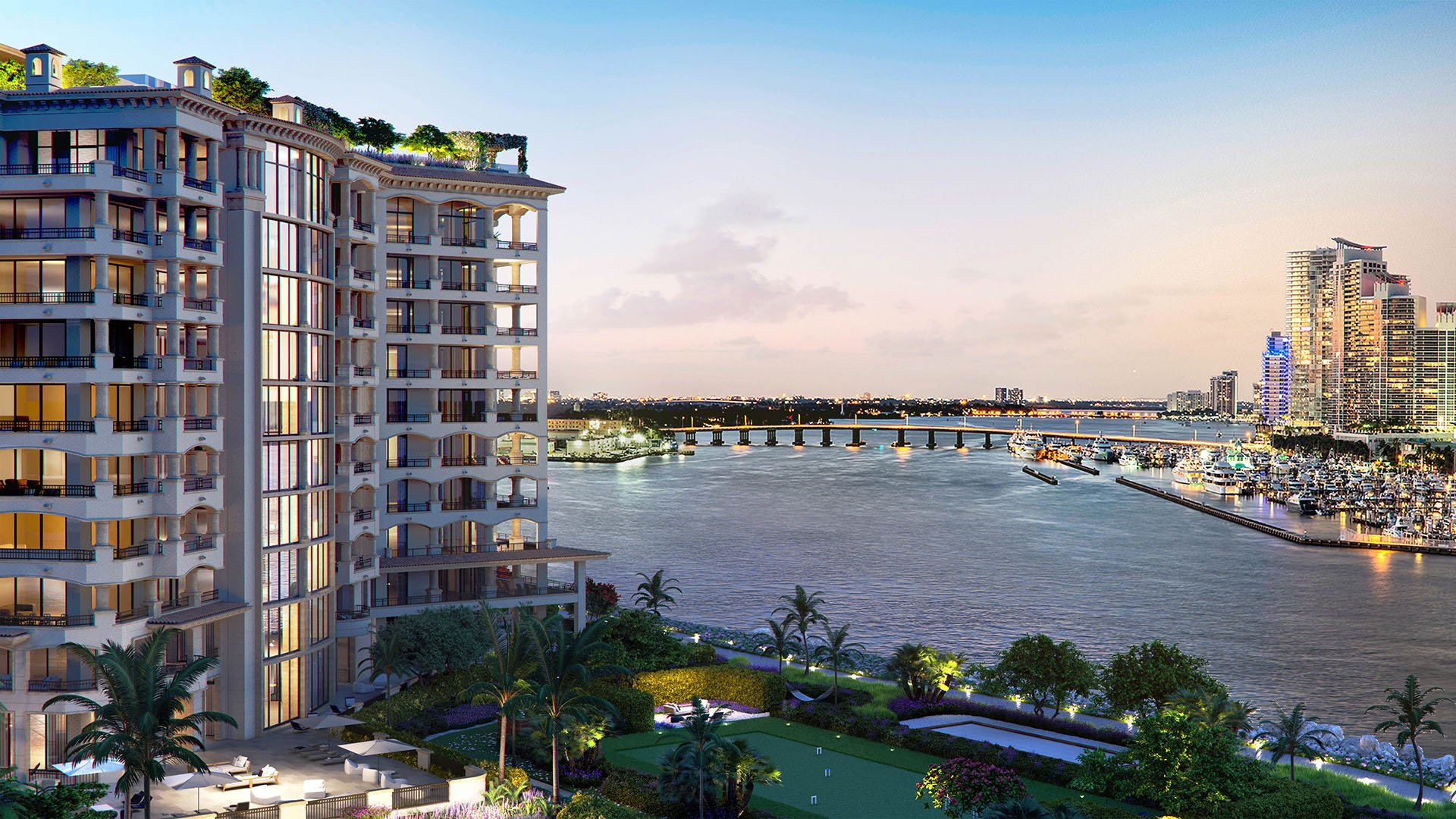
At Palazzo della Luna, bayfront privacy should be treated as a specific performance attribute rather than a general impression. Open water can create separation, atmosphere, and dramatic light, but it can also introduce sightlines that change by floor, stack, terrace position, and time of day.
For buyers evaluating a residence at this level, the question is not simply whether the setting feels exclusive. The better question is whether a specific home, terrace, living room, bedroom, and glass line perform privately in the way the owner expects to live.
That requires disciplined observation. A bayfront residence may feel secluded in one exposure and more visible in another. It may read as calm during daylight, more revealing at dusk, and notably different at night when interiors are illuminated.
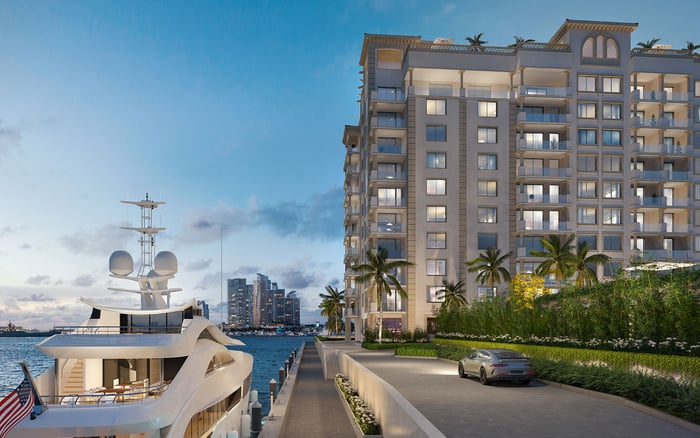
Many buyers begin with arrival, service, and access control. Those details matter, but bayfront privacy requires a separate map. The relevant sightlines begin offshore, where boats, ferries, commercial vessels, and general water activity can create angles that are not obvious from inside the residence.
A water view is not automatically private. Buyers should ask what can be seen from the bay, how often those sightlines matter, and whether terraces or interior living areas feel exposed during ordinary routines such as dining, relaxing, entertaining, or using the residence after dark.
The inquiry should not stop at the property line. Water is a distinct edge condition, and the strongest privacy diligence addresses both the beauty of the view and the practical visibility that may come with it.
Floor height and residence stack can materially affect perceived privacy. Higher floors may reduce some direct sightlines, but they do not remove every angle. Lower residences may feel more connected to the water, yet that closeness can increase the need to understand exposure from marine movement or nearby structures.
Buyers should request stack-specific or residence-specific privacy analysis. General language about seclusion is not enough because orientation, terrace depth, railing design, setbacks, glazing, and furniture placement can all shape how private the home feels in daily use.
Terrace design deserves particular attention. A wide terrace may be exceptional for entertaining, but buyers should ask where guests naturally gather, what is visible from the water, and whether dining or lounging zones feel protected or performative.
Privacy is not static. Daylight can be forgiving because glass may reflect sky and water. Dusk can reveal more interior depth. Nighttime lighting can make a residence feel more visible if window treatments, layout, or glazing do not match the owner’s habits.
Buyers should compare conditions during daylight, dusk, and evening, especially with interior lights on. This matters most in rooms with large glass exposures and on terraces intended for frequent use.
The most useful observations are often quiet ones. Can the owner sit outside after dinner without feeling observed? Can the living room be used naturally at night? Do the primary suite and bath feel protected when lights are on? These questions shape how the home will actually live.
Bayfront privacy is also acoustic. Open-water exposure can make a residence more sensitive to boats, ferries, commercial vessels, and general activity on the bay. For some owners, that movement adds atmosphere. For others, it may affect sleep, work, or outdoor dining.
A private showing should include listening, not only looking. Buyers should spend time on the terrace, open and close doors, and notice how the residence feels when the bay is active.
The goal is not necessarily silence. In ultra-prime waterfront ownership, the goal is control over the sensory environment and a realistic understanding of how the residence feels across ordinary days and evenings.
A secure arrival experience does not answer every bayfront question. Water-side security is distinct from land-based access and should be addressed directly during diligence.
Buyers should ask what physical measures exist along the bayfront edge, what operational protocols are used, what monitoring addresses activity from the water, and who is responsible for response if an issue arises.
These questions are not signs of distrust. They are part of normal ultra-prime waterfront diligence, especially when the residence depends on the water for both beauty and separation.
Long-term privacy is not only about today’s view. Buyers should ask whether nearby construction, marina changes, seawall work, infrastructure activity, or other bayfront conditions could alter views, sound, circulation, or exposure over time.
Maintenance and resilience questions also belong in the privacy conversation. Waterfront ownership can involve weather exposure, salt air, storm planning, and ongoing maintenance considerations, all of which may influence long-term comfort and confidence.
The best diligence reframes the question. Instead of asking whether a residence is private in the abstract, buyers should ask whether it will feel private in the way they intend to live, now and later.
Is Palazzo della Luna on Fisher Island? Yes. Buyers commonly evaluate Palazzo della Luna in the context of Fisher Island’s controlled residential environment.
Why does bayfront privacy require special diligence? Bayfront exposure can create extraordinary views, but it can also introduce sightlines from boats, nearby buildings, and water activity.
Should buyers evaluate privacy by unit or by building? Buyers should evaluate privacy at the residence or stack level because height, orientation, terrace design, and glass exposure can vary.
Do higher floors always mean better privacy? Not always. Higher floors may reduce some direct exposure, but buyers should still test sightlines, evening visibility, and terrace usability.
When should a buyer test privacy conditions? Buyers should compare daylight, dusk, and nighttime conditions, especially when interior lights are on.
Does terrace design affect privacy? Yes. Terrace depth, railings, setbacks, glazing, and furniture placement can influence how private outdoor living feels.
Is marine noise part of privacy diligence? Yes. Boats, ferries, commercial vessels, and general bay activity can affect the acoustic experience of a residence.
Is water-side security different from building security? Yes. Buyers should ask separate questions about physical measures, operating procedures, monitoring, and response along the bayfront edge.
Can future bayfront changes affect privacy? Yes. Marina changes, seawall work, infrastructure activity, or nearby construction may alter views, sound, or exposure over time.
What is the core buyer question at Palazzo della Luna? The essential question is whether a specific residence performs privately in the way the owner intends to live every day.
When you're ready to tour or underwrite the options, connect with MILLION.
If branded residences are on your mind — as a home or as an allocation — we would be glad to share what we are seeing, privately.
Begin a quiet conversation