A buyer-focused look at how Palazzo della Luna pairs Fisher Island privacy with guest-ready design, separated hosting zones, private circulation, and resort-style amenities.
For a certain South Florida buyer, privacy alone is not enough. The residence must also receive adult children, grandchildren, international friends, advisers, and the occasional business guest without turning the home into a lobby. Palazzo della Luna Fisher Island addresses that tension directly: how to live quietly while still hosting well.
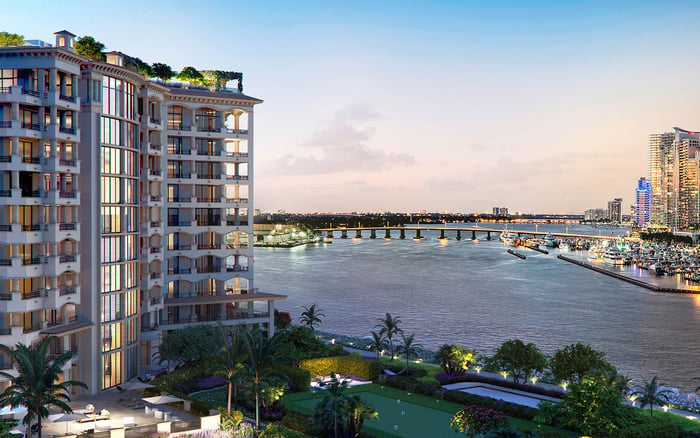
Its advantage begins before the front door. Fisher Island is separated from Miami Beach by Biscayne Bay and reached by private ferry, private vessel, or helicopter rather than a typical public street grid. That controlled-access setting gives arrivals a different rhythm from mainland luxury towers, where the line between public city movement and private residential life can feel thinner. Here, guest logistics can be staged through the island environment before visitors ever reach the residence.
The result is not seclusion for its own sake. It is a more composed form of hospitality. Palazzo della Luna can function as a private retreat most days, then expand into a guest-ready resort residence when family or visitors arrive.
In Miami, many trophy addresses offer views, finishes, and service. Fisher Island adds something more structural: distance. The island’s access model creates a privacy buffer that is difficult to replicate in mainland neighborhoods, even at the highest end of the market.
That does not mean owners should assume every operational detail is automatic. Guest registration, club privileges, ferry timing, and building protocols should be confirmed directly with the appropriate representatives before purchase or arrival planning. But the larger lifestyle proposition is clear: visitors do not simply appear at the curb from a public avenue. Movement onto the island is more deliberate, giving owners greater control over the cadence of hosting.
For high-profile residents or buyers who regularly host recognizable guests, that matters. The controlled island environment can reduce exposure to casual onlookers when compared with public Miami districts. It also allows the residence to remain understated in daily use, even when the owner’s social life is active.
In buyer shorthand, this is a Fisher-island, Exclusive-area, Gated-community, Second-home, Marina conversation as much as it is a Palazzo della Luna Fisher Island conversation. The words are not mere labels. They describe the layered way privacy, access, water, and hospitality interact.
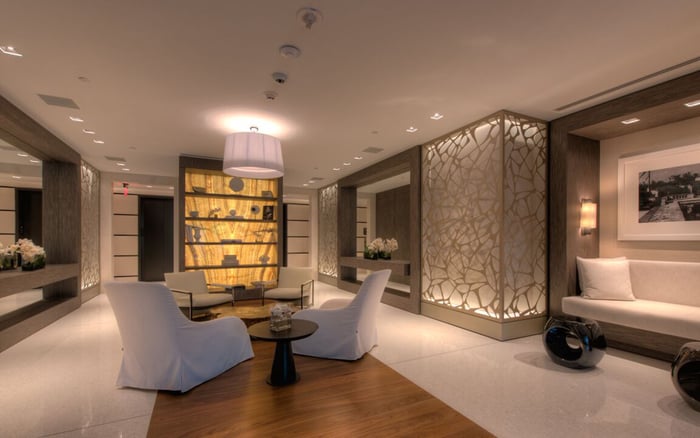
Guest logistics are not only about arrival by ferry, vessel, or helicopter. They continue inside the building. Palazzo della Luna’s private elevator foyers help reduce unwanted interaction in common residential circulation areas, a feature that matters to buyers who value discretion as much as square footage.
Private circulation gives the home a more composed arrival sequence. Instead of moving through highly visible shared corridors, residents and guests can transition into a more controlled residential zone. For owners who entertain business associates, family offices, public figures, or extended family, this quiet detail can become central to daily comfort.
It also supports a more elegant separation between household privacy and hospitality. A guest may be welcomed formally, a family member may arrive for a longer stay, or a service-oriented visit may be coordinated with less friction. The residence does not have to sacrifice calm every time the owner hosts.
The strongest guest-ready homes do not force every visitor into the owner’s most private rooms. Palazzo della Luna is relevant for privacy-focused buyers because its residential design supports separation between owner space and guest activity. Separated guest wings allow overnight visitors to be accommodated while preserving a more private primary living zone.
This is especially important for multigenerational use. Adult children may arrive with their own routines. Grandchildren may have different schedules. Friends may want independence. A home that can host those groups without making the primary suite or central living areas the only hub feels calmer, more resilient, and more livable.
The point is not simply to have extra bedrooms. It is to create a hierarchy of use. Owners can maintain their daily rituals, breakfast, calls, reading, wellness routines, or quiet evenings, while guests have space to occupy themselves. That distinction often separates a residence that is impressive from one that is genuinely easy to live in.
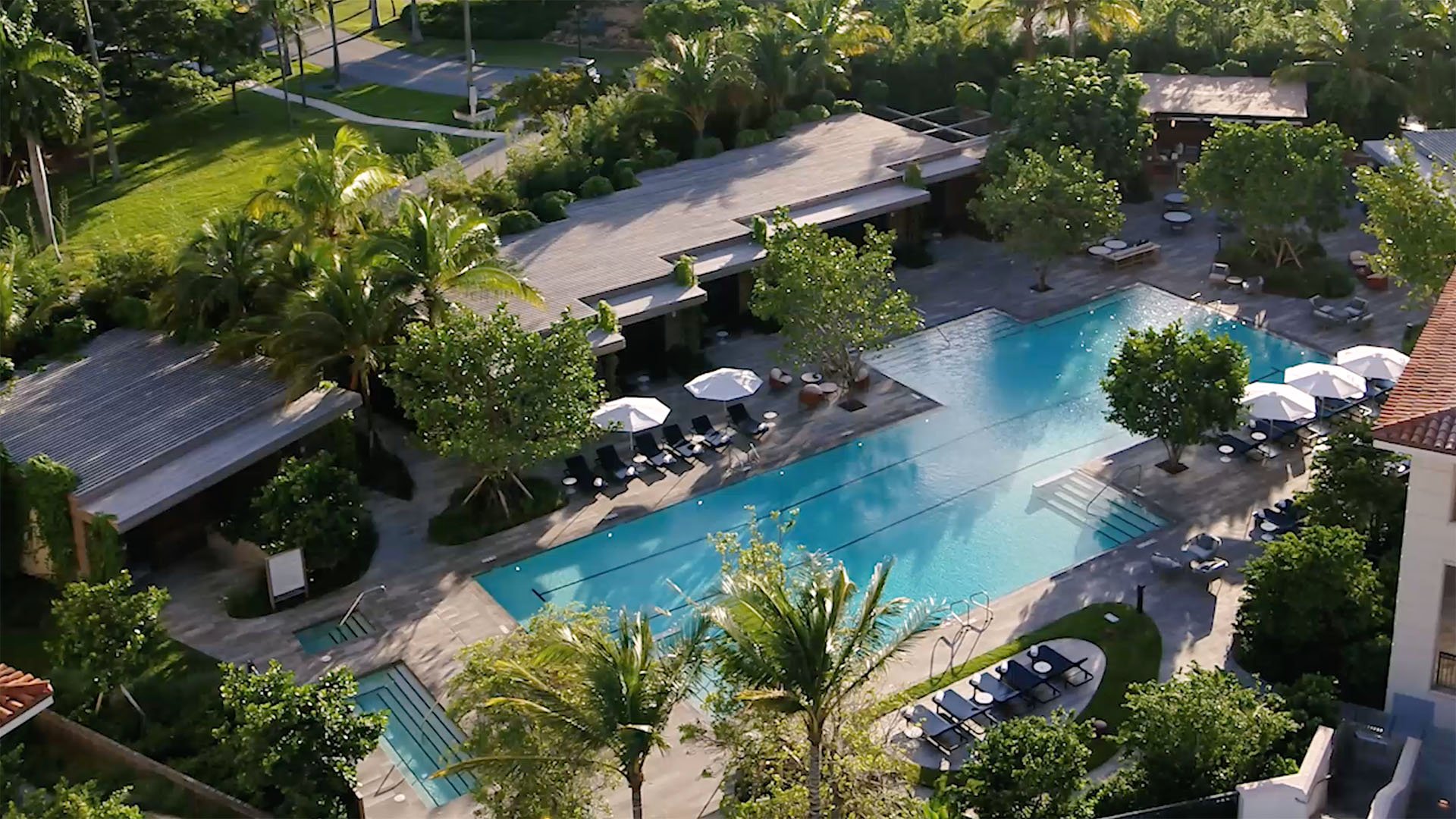
Palazzo della Luna’s guest appeal also depends on the broader Fisher Island lifestyle ecosystem. Dining, spa, beach, recreation, marina, tennis, and golf-style infrastructure within the island footprint can absorb activity that might otherwise fall entirely on the residence.
This is a subtle but meaningful difference. In a mainland condominium, hosting may default to the apartment itself, the pool deck, or a restaurant reservation off property. On Fisher Island, the surrounding environment can help distribute the day. Guests can move through a resort-style setting while the owner’s residence remains protected as the private core.
For buyers who entertain in waves, this is valuable. A holiday week, a family reunion, or a high-touch weekend can be organized across multiple environments rather than concentrated in one living room. The home remains the anchor, not the entire itinerary.
This residence profile is best suited to buyers who want a low-profile daily home that can still receive periodic waves of visitors. It may appeal to families who split time between markets, international buyers who host relatives for extended stays, and executives who need discretion without giving up the pleasures of Miami waterfront living.
It also suits owners who understand that privacy is a system, not a single feature. The in-residence plan, private elevator foyers, guest wings, island access, and amenity network all work together. Remove one layer, and the experience changes. Align them, and the home becomes unusually capable.
Buyers should evaluate the residence through the lens of actual use. How often will guests come? Will they stay overnight? Are they family, friends, advisers, or business contacts? Will they expect independence? How important is it that the primary living zone remains quiet while guests are present? The clearer the answers, the easier it is to see why Palazzo della Luna has a specific role in the Fisher Island market.
The central takeaway is that Palazzo della Luna is not merely a private building on a private island setting. It is a residence concept for owners who want to host without feeling overrun.
The Fisher Island access model can help manage arrivals before they reach the building. Private elevator foyers reduce exposure in residential circulation. Separated guest wings preserve a more private owner zone. Resort-style amenities give guests places to go and things to do without making the residence the only stage.
That combination is rare because it solves two opposing desires at once. The owner can live discreetly, yet still be generous. The home can feel protected, yet not closed off. For the right buyer, that balance is the luxury.
Is Palazzo della Luna mainly about privacy? Privacy is central to the appeal, but the residence is also positioned for owners who want to host family, friends, or business guests smoothly.
How does Fisher Island improve guest logistics? The island is separated from Miami Beach by Biscayne Bay and accessed by private ferry, private vessel, or helicopter, making arrivals more deliberate than in a public street-grid setting.
Does controlled access mean buyers should skip due diligence? No. Owners should confirm guest procedures, ferry rules, and amenity access details directly before relying on any specific arrangement.
Why do private elevator foyers matter? They help reduce unwanted interaction in common circulation areas and create a more discreet arrival experience for residents and guests.
Are separated guest wings useful for families? Yes. They allow overnight visitors to stay comfortably while helping preserve a more private primary living zone for the owner.
Can the residence work for multigenerational stays? Yes. The layout concept supports visitors without requiring the owner’s main living areas to become the only activity hub.
Do island amenities matter for hosting? Yes. Dining, spa, beach, recreation, marina, tennis, and golf-style amenities can help absorb guest activity beyond the residence.
Is Palazzo della Luna suited to high-profile guests? It can be relevant because the controlled island environment may reduce exposure to casual onlookers compared with public Miami neighborhoods.
Is this more of a primary home or second home? It can function as either, depending on the buyer’s lifestyle, especially for those who want privacy in daily use and flexibility during guest visits.
What is the best way to shortlist comparable options for touring? Start with location fit, delivery status, and daily lifestyle priorities, then compare stacks and elevations to validate views and privacy.
For a confidential assessment and a building-by-building shortlist, connect with MILLION.
If branded residences are on your mind — as a home or as an allocation — we would be glad to share what we are seeing, privately.
Begin a quiet conversation