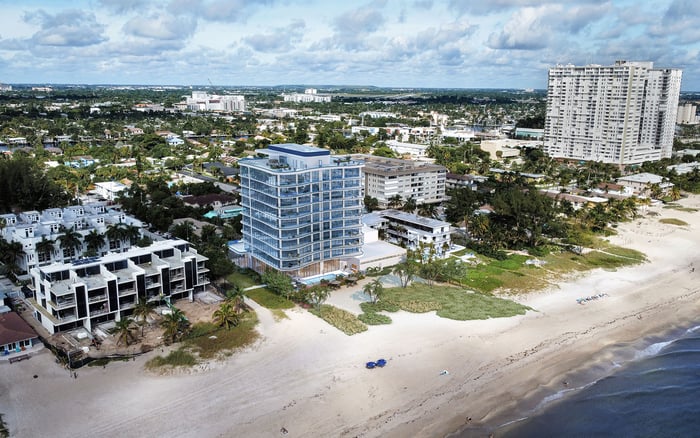
A practical luxury-condo comparison focused on the ownership mechanics that matter after closing: parking rights, EV charging, and the daily choreography of private drivers.
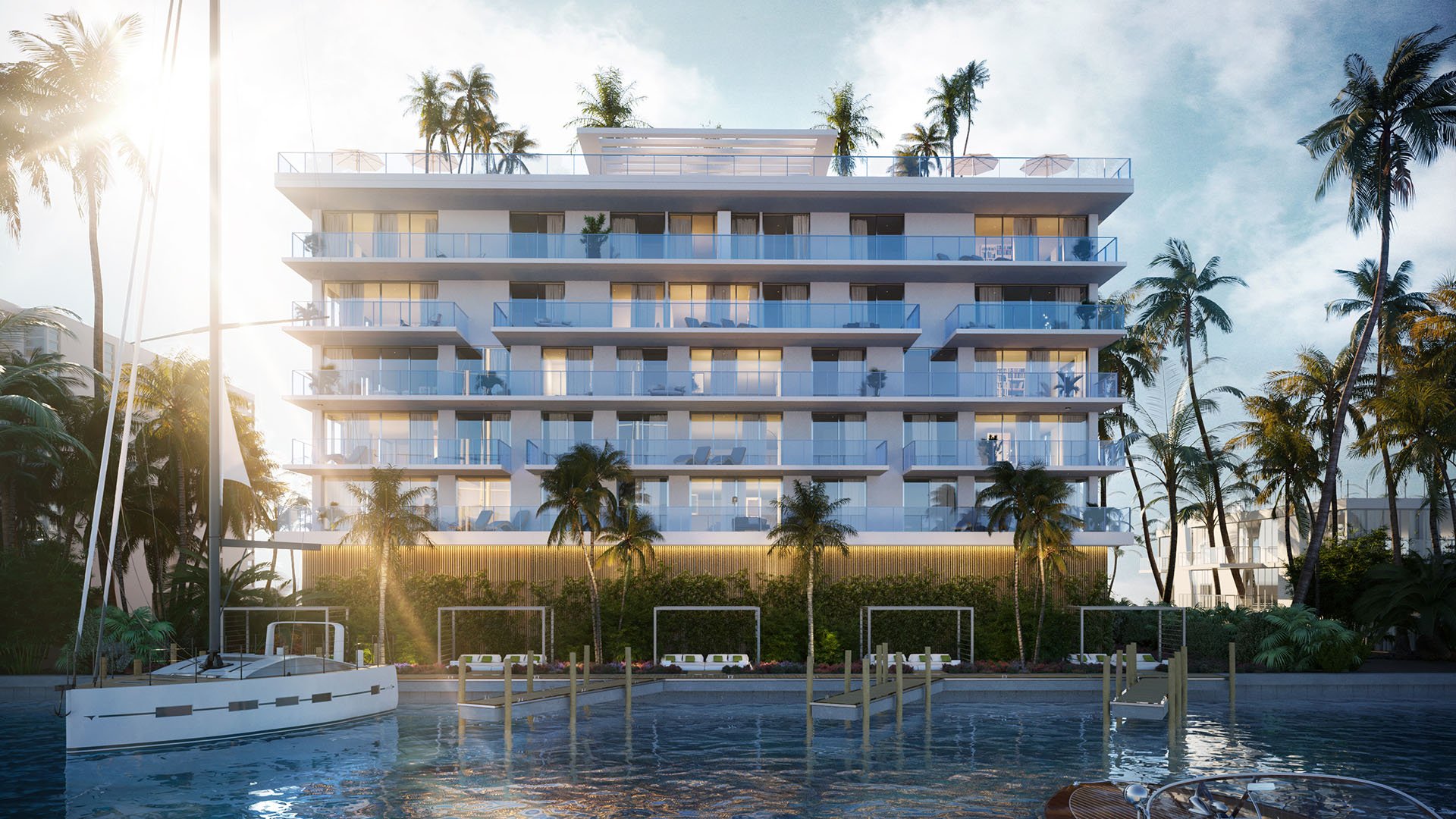
For a certain South Florida buyer, the most important question is not which condominium photographs better. It is whether the building can absorb the household’s daily pattern without friction: two cars, an EV, a house manager, visiting family, deliveries, aides, guests, and a private driver who may need to circle, wait, clear security, and return several times in one afternoon.
That is the more useful lens for comparing Origin Bay Harbor Islands with Ocean 580 Pompano Beach. Origin sits within the Bay Harbor Islands conversation, where the bayfront setting makes access, garage circulation, and association rules a Miami-Dade due-diligence issue. Ocean 580 sits within the Pompano Beach conversation, where the oceanfront address makes curb choreography, valet flow, and guest-driver staging a Broward due-diligence issue.
Both should be evaluated as boutique luxury condominiums. That can mean intimacy, privacy, and less of the anonymity found in larger towers. It can also mean fewer redundancies in parking inventory, valet depth, EV capacity, or driver waiting areas. The real choice is not brand mood. It is operating fit.
Parking is where luxury language becomes legally precise. At Origin, a buyer should verify whether parking spaces are deeded, assigned, treated as limited common elements, controlled by valet, or governed primarily by association rules. Those distinctions matter because they affect resale value, guest access, household staffing, and the owner’s ability to treat parking as a durable property right rather than a convenience.
At Ocean 580, the parallel question is whether parking rights are attached to the residence, sold separately, assigned by the association, or subject to garage and valet procedures. An oceanfront site can be highly desirable while still requiring careful attention to how residents, visitors, service vehicles, and chauffeurs move through the property.
For multi-car households, the inquiry should be blunt. Can the residence support more than one resident vehicle without relying on informal exceptions? How are guests handled during peak periods? Are aides, household staff, and family drivers processed differently from owners? If a buyer expects a daily driver plus periodic guest vehicles, the parking schedule deserves the same scrutiny as the floor plan.
This is also where area comparison becomes useful. Buyers studying Bay Harbor options such as Bay Harbor Towers often discover that the right building is the one whose documents match the household’s actual routine. The same applies in a Pompano Beach search, where beachfront prestige should be tested against the mechanics of access.
EV charging should not be reduced to a brochure line. The serious questions are electrical capacity, charger ownership, installation rights, metering, billing, maintenance responsibility, and association approval procedures. A buyer who owns one EV today may own two tomorrow; the building’s policy must be able to support that evolution without turning every upgrade into a negotiation.
At Origin, the question is whether a resident can charge in a private space, whether installation requires board approval, who pays for electrical work, and how power is measured. If charging is shared rather than private, the buyer should understand reservation rules, overnight use, pricing, and enforcement.
At Ocean 580, EV buyers should confirm whether charging is available in private spaces, shared stations, valet-managed arrangements, or through a future association installation process. The distinction is material. A shared station may be acceptable for an occasional-use second home, while a full-time EV household may need direct control over access and timing.
The most elegant answer is not always the most visible one. A discreetly metered, owner-controlled installation may be more valuable than a more glamorous shared amenity that becomes congested. For this buyer profile, EV readiness is a governance and engineering question before it is a lifestyle feature.
Private-driver logistics reveal the difference between arrival glamour and everyday convenience. A beautiful approach is useful only if it works on a rainy weekday, during guest arrivals, while a delivery is being cleared, and when a driver must wait without blocking the building’s rhythm.
At Origin, the bayfront context calls for close attention to drop-off geometry, garage entry, lobby approach, security procedures, and where a private driver may legally and practically wait. The key issue is repeated use. A residence may feel composed during a single showing, yet still create friction if the household depends on multiple daily pickups.
At Ocean 580, oceanfront prestige should be separated from operational access. Beachfront buildings can place additional pressure on arrival sequencing, valet flow, guest staging, and curbside management. A buyer should ask how car services are cleared, whether chauffeurs can wait on-site or nearby, how guests are announced, and what happens when multiple vehicles arrive at once.
Comparable Pompano Beach buyers looking at projects such as Armani Casa Residences Pompano Beach should ask the same questions. The practical luxury is not simply being received at the door. It is knowing that the building can repeat that choreography calmly, privately, and predictably.
Origin may suit the buyer who wants a bayfront Bay Harbor Islands lifestyle and is prepared to examine the condominium documents, parking schedule, EV rules, guest-parking procedures, and garage operations before committing. It may be especially compelling if the documents support the buyer’s need for multiple vehicles, predictable EV charging, and low-friction driver circulation.
Ocean 580 may suit the buyer who prioritizes an oceanfront Pompano Beach setting but understands that beachfront ownership must be tested through operational access. The buyer should review valet and garage rules, guest parking, charger policy, and any engineering information related to electrical capacity before assuming the building can accommodate a complex household pattern.
The most sophisticated buyer will not ask which name sounds more luxurious. The better question is: which building will feel effortless on the hundredth arrival, not the first? Parking rights, EV policy, and private-driver logistics are not secondary details. They are the systems that determine whether a residence lives as beautifully as it presents.
Is Origin Bay Harbor Islands better than Ocean 580 Pompano Beach for parking? Not automatically. The buyer should verify whether spaces are deeded, assigned, limited common elements, valet-controlled, or governed by association rules.
Is Ocean 580 Pompano Beach better for an oceanfront lifestyle? It is the oceanfront option in this comparison. The key is confirming that beachfront access patterns work for resident vehicles, guests, and chauffeurs.
Why do parking rights matter so much in a luxury condominium? Parking rights affect convenience, resale value, household staffing, and daily autonomy. A beautiful residence can still feel constrained if parking is unclear.
What should EV owners ask before buying? They should ask about charger ownership, capacity, metering, billing, installation approvals, and whether charging is private, shared, or valet-managed.
Can a boutique building be less flexible for cars and charging? Sometimes. Boutique buildings can feel private and calm, but may have fewer operational redundancies than larger towers.
What should private-driver households inspect in person? They should study the drop-off path, lobby approach, garage entry, security clearance, waiting rules, and repeated pickup flow.
Should buyers rely on sales language about parking or EV charging? No. The condominium documents, parking schedule, EV policy, valet rules, and garage procedures should control the decision.
Does a bayfront building create different logistics than a beachfront building? Yes. A bayfront site may raise different circulation questions, while a beachfront site may place more pressure on curb and valet sequencing.
What documents should be requested before contract? Buyers should request condominium documents, parking schedules, EV policies, valet or garage rules, guest-parking rules, and electrical capacity information.
What is the cleanest way to choose between the two? Match the building’s operating rules to the household’s real daily pattern. The better fit is the one that makes cars, charging, guests, and drivers feel effortless.
If you'd like a private walkthrough and a curated shortlist, connect with MILLION.
If branded residences are on your mind — as a home or as an allocation — we would be glad to share what we are seeing, privately.
Begin a quiet conversation