Seasonal buyers in South Florida should evaluate private club overlap differently, with attention to calendar friction, household use, guest access, and the true role of a second home.
For a full-time resident, a private club can become part of the weekly architecture of life. Lunch recurs. The fitness routine becomes automatic. Children see familiar faces. The calendar absorbs golf, marina time, tennis, spa appointments, dining, and events with relatively little friction. A seasonal buyer lives by a different equation. The asset is not only membership or proximity. The asset is concentration.
That is why private club overlap requires a separate standard for seasonal owners. The question is not whether two or three clubs carry enough prestige to justify attention. The question is whether they create a more elegant season or a more complicated one. A South Florida second home should reduce decisions, not multiply them.
The most sophisticated buyers treat club overlap as an operational matter. They evaluate the residence, household calendar, transportation pattern, guest rules, and family priorities as one system. A home near the right private access point can feel effortless. A home surrounded by too many competing privileges can feel oddly underused.
Overlap occurs when a buyer’s residential choice, existing memberships, prospective memberships, and social orbit cover similar lifestyle territory. A household may have access to a beach club, a golf club, a yacht or marina environment, a dining club, or a branded residential amenity program, all competing for the same limited afternoons and evenings.
For year-round residents, overlap may be absorbed naturally. For seasonal buyers, it can compress value. If the household is in South Florida for defined windows, each additional club commitment must justify its place in the rhythm of the stay. The strongest overlap is complementary. The weakest overlap is duplicative.
A buyer considering Shell Bay by Auberge Hallandale, for example, should not assess the address in isolation. The smarter review asks how a club-oriented residential environment would interact with existing memberships, friends’ clubs, boating habits, school breaks, holiday hosting, and the preferred drive pattern from the airport or family office.
South Florida has a way of making access feel urgent. The social landscape rewards privacy, recognition, and ease of entry, especially during peak winter weeks. Yet prestige alone is a poor filter for seasonal buyers because it does not reveal how often the household will actually use the club.
A club that is ideal for weekday lunches may be irrelevant if the owner mainly arrives for long weekends. A beach setting may be central for one family and incidental for another that spends every available day on the water. A dining room may matter less than whether guests can be accommodated gracefully during holiday periods. A golf program may be essential for one buyer and merely decorative for another.
This is where the standard changes. Full-time residents can buy into optionality. Seasonal buyers should buy into precision. The goal is not more access. The goal is the right access, at the right distance, with the right social tone, during the exact weeks the home is occupied.
The residence is the fixed point. Clubs may evolve, memberships may shift, children’s schedules may change, and social circles may widen. The home remains the daily base. For that reason, seasonal buyers should begin by asking what the residence must do before asking which clubs can be layered around it.
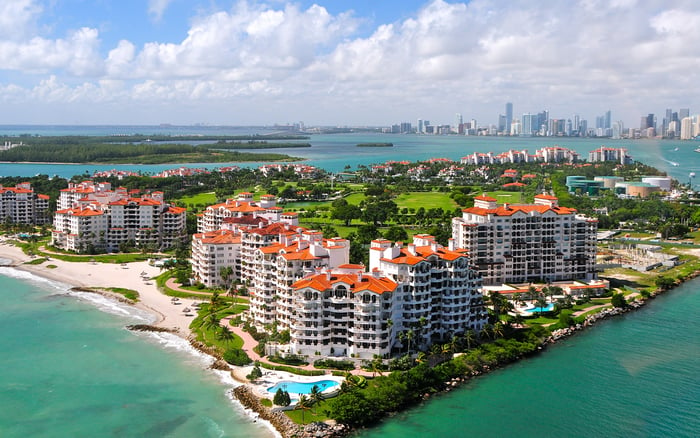
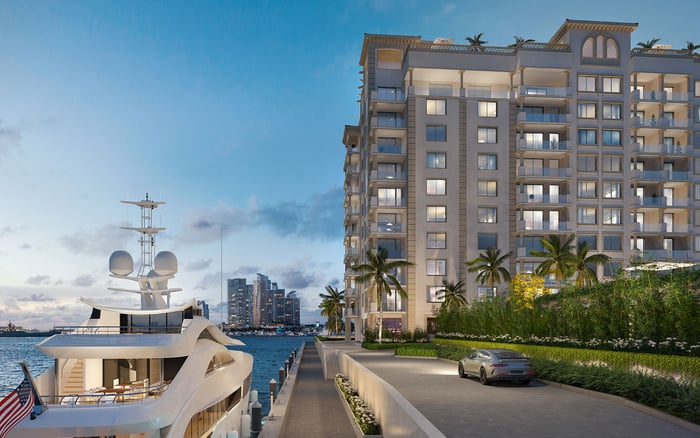
In Miami Beach, a buyer looking at The Perigon Miami Beach might prioritize a coastal residential rhythm that reduces the need to leave the neighborhood for every pleasure. On Fisher Island, a buyer studying The Residences at Six Fisher Island may be thinking less about public-facing convenience and more about controlled arrival, privacy, and a contained social atmosphere. In Palm Beach, the residential decision may be framed by a quieter cadence, family visits, and proximity to established routines.
The key is alignment. If the residence already offers a compelling daily environment, a second or third club must fill a genuine gap. If the residence is more of a private retreat, the club network may need to carry more of the social and recreational burden.
A useful overlap audit begins with a simple map of actual behavior. Where does the household have breakfast? Where do children and grandchildren want to spend afternoons? Who plays golf, who wants beach time, who expects wellness programming, who needs a marina relationship, and who only wants quiet dinners with close friends?
Then comes the calendar. Seasonal ownership is often concentrated around holidays, school breaks, art and cultural weeks, long weekends, and winter stays. A club that works beautifully in March may be less useful if the family’s true occupancy is December and January. Guest policies, reservation patterns, and access during peak demand should be treated as practical considerations, not afterthoughts.
Finally, buyers should assess emotional duplication. Two venues can offer similar amenities but very different feelings. One may be formal, another relaxed. One may suit business hosting, another family life. Overlap is not automatically wasteful if each environment serves a distinct purpose. It becomes wasteful when the household uses one out of loyalty and the other out of obligation.
A full-time resident may tolerate a longer drive for a favorite court time or dinner reservation. A seasonal owner is less forgiving because every transition consumes scarce time. Ten minutes saved repeatedly across a stay can change the feel of ownership.
This is why neighborhood selection matters. Brickell, Miami Beach, Surfside, Bal Harbour, Coconut Grove, Fort Lauderdale, Boca Raton, and Palm Beach each support different versions of private life. The best address is not always the one closest to the most clubs. It is the one closest to the clubs and routines that will actually be used.
A buyer considering The Ritz-Carlton Residences® Palm Beach Gardens may weigh a different kind of seasonal rhythm than a buyer focused on Rivage Bal Harbour. Neither approach is inherently superior. The better choice is the one that makes the owner’s limited time feel seamless.
Private club overlap should be judged by the rituals it enables. The ideal seasonal arrangement creates repeatable pleasures: the first dinner after arrival, the morning workout, the standing tee time, the afternoon swim, the boat day, the quiet table, and the family gathering that does not require planning from scratch.
If a club does not support a ritual, it may still have value, but it should be viewed carefully. Seasonal buyers are especially vulnerable to acquiring access that sounds impressive yet does little to improve the stay. Discretion lies in saying no to privileges that do not serve the household.
The refined standard is not maximalism. It is orchestration. A residence, one primary club relationship, and one complementary access point may deliver more satisfaction than a scattered collection of memberships. In the ultra-premium market, the true luxury is not having every option. It is having the right option already arranged.
What is private club overlap? It is the duplication or interaction between a buyer’s residence, memberships, amenities, and social access points.
Why is overlap different for seasonal buyers? Seasonal owners have limited time in residence, so every club relationship must earn its place in the calendar.
Should a buyer avoid multiple clubs? Not necessarily. Multiple clubs can work if each serves a distinct purpose and does not create planning friction.
Is prestige enough to justify a club decision? Prestige matters, but fit matters more. The most valuable club is the one the household will actually use.
How should a second-home buyer begin the review? Start with the household’s real routines, then test whether each club supports or complicates those routines.
Does proximity always matter? Proximity matters more when stays are short. A beautiful venue can become inconvenient if it consumes too much time.
How should guest access be considered? Guest access should be reviewed through the lens of family visits, holiday hosting, and peak-season expectations.
Can residential amenities reduce the need for club access? Yes. A strong residential environment can make certain outside memberships less essential for seasonal use.
What is the biggest mistake seasonal buyers make? They sometimes buy access for status before confirming whether it improves the lived experience of the home.
What is the best standard for private club overlap? The best standard is practical elegance: fewer conflicts, better rituals, and access that supports the season.
When you're ready to tour or underwrite the options, connect with MILLION.
If branded residences are on your mind — as a home or as an allocation — we would be glad to share what we are seeing, privately.
Begin a quiet conversation