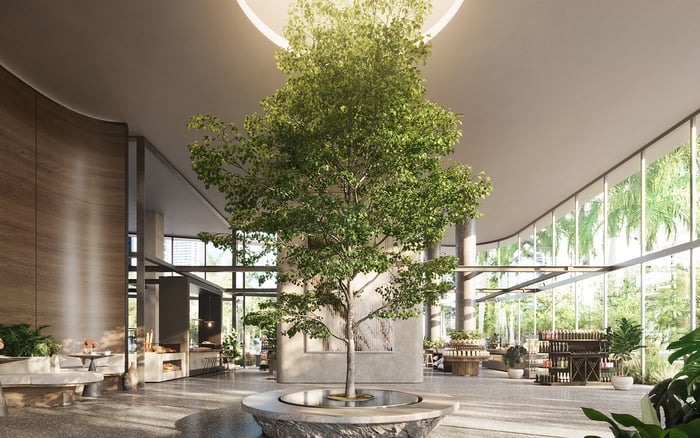
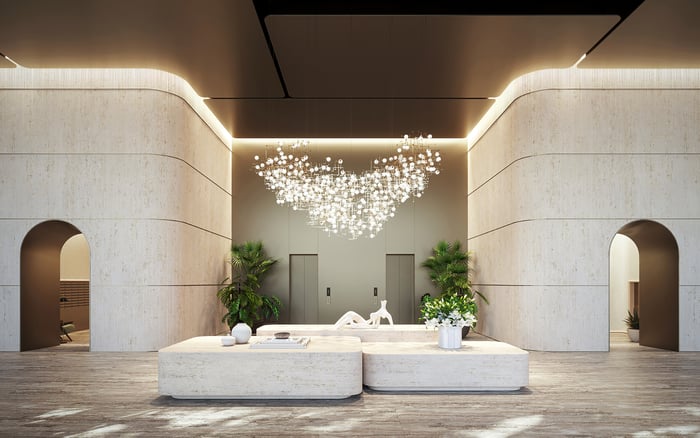
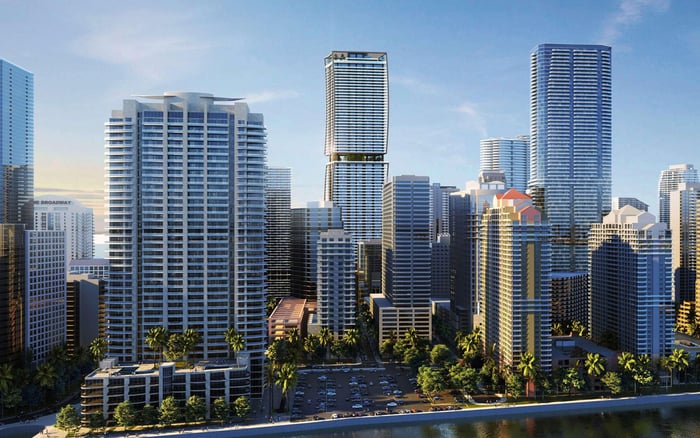
ORA by Casa Tua reframes restaurant proximity in Brickell as a controlled-luxury amenity, where hospitality energy matters only if private interiors remain composed, discreet, and acoustically protected.
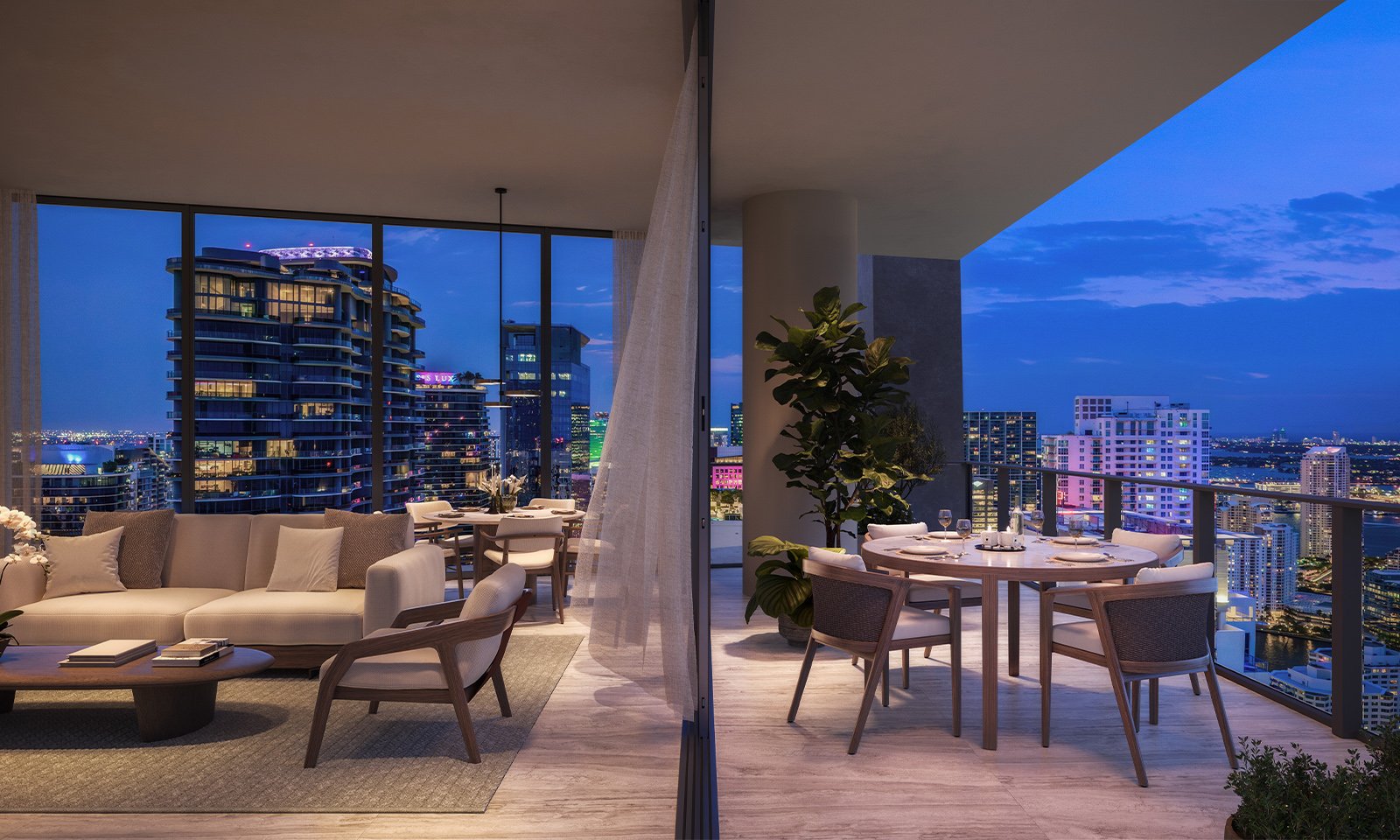
For a certain Brickell buyer, silence has never been the full measure of luxury. The more relevant question is command over atmosphere: when to engage, when to retreat, and how completely the private residence is insulated from the public life below. That is the quiet-luxury case for ORA by Casa Tua Brickell, a project positioned around the Casa Tua hospitality and lifestyle identity within a luxury residential setting.
The premise is deliberately urban. ORA by Casa Tua does not ask buyers to pretend Brickell is a secluded enclave. It embraces the neighborhood’s density, dining culture, finance rhythm, retail access, and nightlife adjacency. Its most interesting argument is that restaurant exposure, if carefully controlled, can become part of the building’s value proposition rather than a defect to be minimized.
That distinction matters. Restaurant proximity is not automatically an amenity. It becomes one only when the vibrancy is curated, the operations are disciplined, and the residences above or alongside the hospitality spaces remain sanctuary-like. The strongest case for ORA is not that there will be no sound. It is that residents should have agency over when they participate in the social scene and when they close the door to it.
In resort language, quiet often means physical distance: a private beach, a gated approach, a low-density landscape. In Brickell, quiet luxury has to be more sophisticated. It is less about withdrawal from urban life and more about sensory discretion within it.
That idea suits ORA by Casa Tua Brickell because the Casa Tua name shifts the conversation from architecture alone to hospitality culture. Dining, service energy, social programming, and a curated sense of arrival become part of the residential narrative. For buyers who already live globally, this can feel familiar. The most compelling mixed-use luxury buildings in major cities often pair public magnetism with private calm.
The buyer is not necessarily seeking monastic stillness. Many are choosing Brickell precisely because the evening can begin downstairs, continue nearby, or remain entirely private. What matters is the ability to decide. In that sense, quiet luxury is not silence. It is authorship over exposure.
Within the broader MILLION lens, ORA by Casa Tua Brickell sits naturally within Brickell, New-construction, Pre-construction, Bars, and Top Project conversations because it turns hospitality into a core residential theme rather than a secondary convenience.
A luxury restaurant produces a particular kind of sound: softened voices, low music, movement of service, the ambient rhythm of people enjoying themselves. When contained in the right places, those sounds can contribute to a building’s personality. They are different from nuisance noise, which buyers should evaluate more critically.
Nuisance is less romantic. It includes mechanical vibration, loading activity, late-night spillover, unmanaged valet patterns, or any sound that travels unpredictably into private areas. This is where restaurant exposure becomes a design and management question rather than a branding question.
For ORA, the credibility test is straightforward. The public hospitality component can add identity only if the private residences remain protected from unwanted intrusion. Spatial organization matters. So do acoustic assemblies, operational protocols, resident circulation, and the expectations set before purchase. The restaurant should feel available, not unavoidable.
This is the difference between living above a destination and feeling trapped inside one. The former can be glamorous. The latter is a liability.
Casa Tua’s involvement gives ORA a lifestyle story centered on dining, social connection, and refined hospitality. That is different from a conventional amenity checklist. It suggests a building where the social life is not merely adjacent to the residence, but part of its identity.
For some buyers, this is precisely the point. A branded residence can create emotional shorthand. The name signals a hospitality standard, a certain aesthetic expectation, and a way of entertaining without fully leaving home. In a market crowded with impressive towers, that narrative can help a project stand apart.
Yet the brand also raises the bar. When a project is built around hospitality, residents will expect the choreography to feel seamless. The transition from public to private must be legible. The energy downstairs should not compromise the composure upstairs. The dining room may be part of the attraction, but the residence remains the product.
That balance is what gives the restaurant-noise discussion its importance. It is not a minor objection. It is the stress test for the entire quiet-luxury promise.
Brickell’s luxury appeal is inseparable from its convenience. The neighborhood rewards those who want restaurants, offices, retail, and nightlife woven into daily life. For this buyer, the city is not a backdrop to avoid. It is part of the asset.
ORA’s proposition depends on that urban logic. The restaurant and social programming support a private-retreat-above-public-hospitality model, one that resonates with buyers who prefer immediacy over distance. Instead of driving to atmosphere, residents can descend into it. Instead of committing to a full evening out, they can sample the building’s social life and return home.
That flexibility is increasingly central to affluent urban living. Luxury is not only the absence of friction. It is the ability to calibrate one’s day. A morning can be discreet, an afternoon productive, an evening social, and the residence can remain the constant point of calm.
The question for buyers is whether ORA’s version of that calibration feels convincing. If the building successfully separates public energy from private refuge, restaurant exposure becomes less a compromise and more a feature of place.
The most elegant way to evaluate restaurant exposure is not to ask whether sound exists. It will. The better question is where it travels, when it occurs, and whether it can be anticipated.
Buyers should think in layers. First, consider the relationship between hospitality areas and residential entries. A well-composed building should make the resident experience feel intentional, not like a back route through a public venue. Second, consider the separation between restaurant operations and residences. The glamorous dining room is rarely the issue. Service corridors, deliveries, equipment, and closing procedures deserve equal attention.
Third, consider expectations. A building with Casa Tua at its center is not promising suburban quiet. It is promising controlled vibrancy. Residents should understand the lifestyle before they buy into it. The right buyer will see value in proximity to energy. The wrong buyer may interpret the same proximity as exposure.
Finally, buyers should remember that acoustics are not only technical. They are emotional. A faint sense of life below can feel cosmopolitan at one volume and invasive at another. The line is subjective, but luxury buildings must design and manage for the most discerning interpretation.
ORA by Casa Tua is most persuasive when viewed through the lens of controlled vibrancy. The building’s hospitality component can make it a social destination, but the residence must remain a retreat. That duality is not a contradiction. It is the modern urban luxury bargain.
For Brickell buyers who entertain often, dine out regularly, or value the convenience of a curated social environment, the restaurant component may be central to the appeal. It creates texture. It gives the building a pulse. It signals that residential luxury is no longer confined to finishes, views, or private amenities. It can also be about the quality of life immediately outside the front door.
Still, discretion is the luxury standard. A resident should feel invited into the scene, never drafted into it. The best expression of ORA’s promise would be a building where the social world feels close enough to access in moments and distant enough to forget when privacy matters.
That is the quiet-luxury argument in its purest Brickell form: not an escape from the city, but a refined command of it.
Is restaurant exposure automatically a negative for ORA by Casa Tua? Not necessarily. The case for ORA depends on whether restaurant energy is curated and private residences remain protected from unwanted noise.
What does quiet luxury mean in this context? It means sensory control, discretion, and the ability to choose exposure, not literal silence or withdrawal from Brickell.
Why is Brickell important to ORA’s appeal? Brickell supports the lifestyle argument because restaurants, finance, retail, and nightlife are part of the neighborhood’s daily rhythm.
Who is the likely buyer for this concept? The concept suits buyers who want social energy close at hand but still expect a calm, private home environment.
What kind of noise should buyers distinguish from ambience? Curated ambience is different from mechanical vibration, loading activity, late-night spillover, or unmanaged operational sound.
Does Casa Tua change the residential value proposition? It changes the narrative by emphasizing hospitality identity, dining culture, service, and social programming within a residential setting.
Should buyers expect complete silence? Complete silence is not the premise. The better expectation is controlled vibrancy with meaningful separation between public and private spaces.
What is the main credibility test for ORA? The restaurant and social spaces add value only if the residences preserve privacy, comfort, and acoustic composure.
How should buyers evaluate the lifestyle fit? They should ask whether they want a building that offers social life on demand, rather than a residence defined by separation from the city.
What is the best way to shortlist comparable options for touring? Start with location fit, delivery status, and daily lifestyle priorities, then compare stacks and elevations to validate views and privacy.
When you're ready to tour or underwrite the options, connect with MILLION.
If branded residences are on your mind — as a home or as an allocation — we would be glad to share what we are seeing, privately.
Begin a quiet conversation