
A buyer’s framework for evaluating Cipriani Residences Brickell beyond its advertised arrival amenities, with practical questions about event-week access, valet performance, guest authorization, and service accountability.
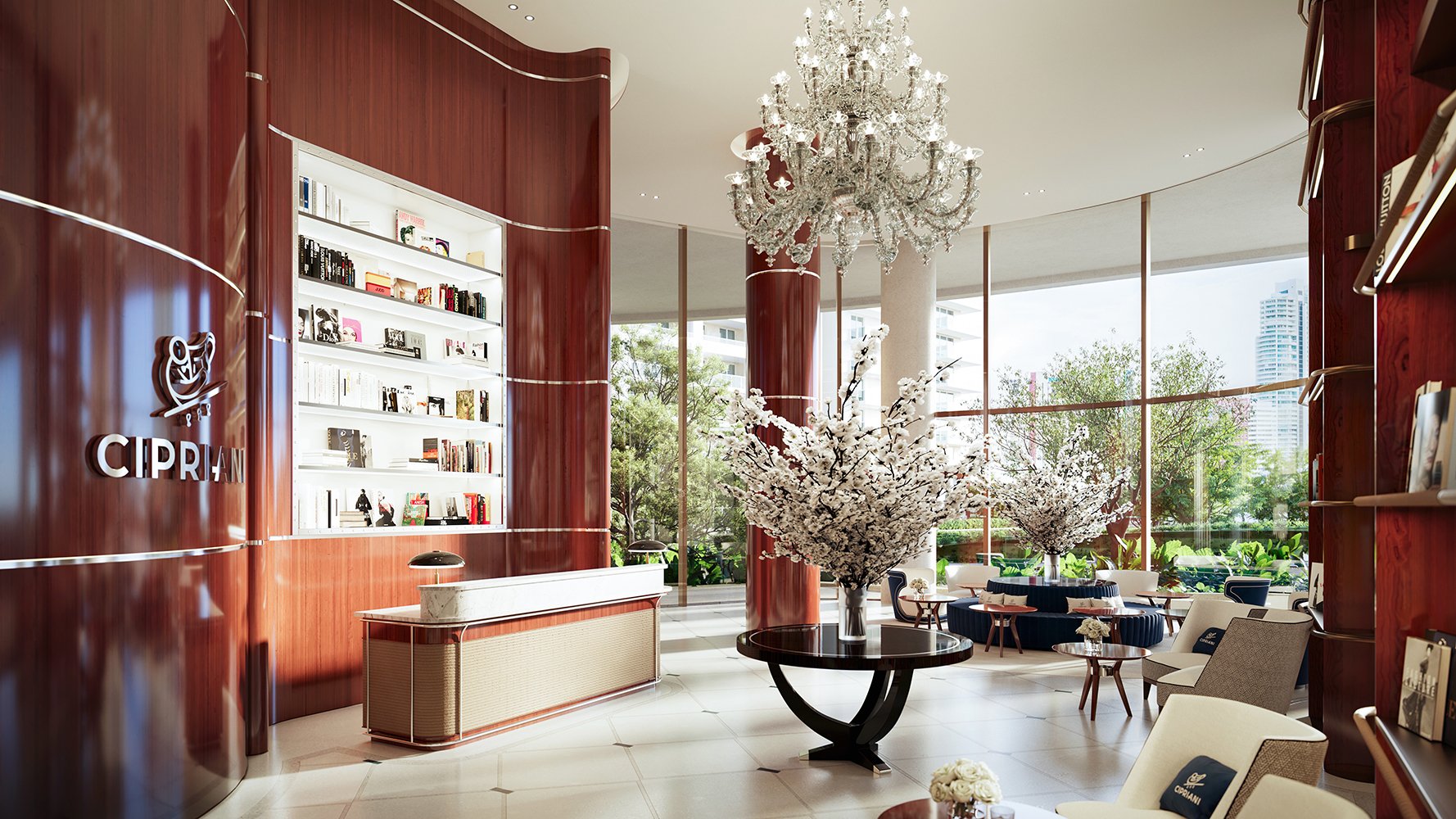
For a residence intended to make daily life feel effortless, arrival deserves the same scrutiny as the floor plan. At Cipriani Residences Brickell, marketed at 1420 South Miami Avenue, the advertised offering includes a private landscaped entrance, a porte-cochère, private valet pickup, and a secure, covered garage with complimentary valet. These are meaningful design and service features. On their own, they do not establish how a busy evening will unfold.
An event-week review should focus on the transition from street to residence: where a vehicle waits, how a guest is recognized, and who takes responsibility when arrivals coincide. The buyer’s objective is not an assurance that delays will never occur, but a clear account of how the residence intends to manage them.
The advertised offering includes 24-hour security guards, controlled building access, Cipriani Residential Concierge, and a designated Director of Residences. Complimentary valet is advertised as available around the clock. Together, these describe the services presented to purchasers-not their staffing levels, escalation procedures, or performance standards.
Request the applicable operating rules and establish whether each document is proposed or adopted. A useful review separates three things: the amenity being marketed, the procedure intended to support it, and the commitment contained in the governing or purchase documents. Have counsel assess which representations are enforceable and which remain subject to operational discretion.
This distinction matters particularly during event weeks. Neither a private entrance nor controlled access establishes mandatory guest preapproval, restricted guest circulation, or special calendar-based entry rules. Each requires separate confirmation.
Request a walkthrough of the intended arrival sequence, using plans if an operational visit is unavailable. Follow a resident driving home, an invited guest arriving by car, and a passenger stepping out of a hired vehicle. Ask where each stops, who gives directions, and how the next vehicle proceeds if the first arrival needs assistance.
Evaluate the porte-cochère as a working arrival space, not simply an architectural gesture. Ask about its intended vehicle-holding arrangement, pedestrian path, and overflow procedure. The advertised amenities establish neither queue capacity nor an event-week traffic arrangement.
Clarify which matters building staff can manage and which depend on conditions beyond the property. A private arrival sequence is not a promise of uninterrupted access from surrounding streets. Request a resident communication plan for anticipated access changes, without assuming any changes have already been prescribed.
Twenty-four-hour complimentary valet describes availability and advertised cost, not retrieval speed. Private valet pickup likewise establishes neither priority nor booking rules nor a guaranteed departure time. A buyer with tightly scheduled evenings should ask how requests are received, acknowledged, and fulfilled when departures overlap.
The most useful questions are concrete:
Is there a written retrieval target, and how is it measured?
How would resident retrievals and guest drop-offs be coordinated?
Where would vehicles wait if the arrival area reached capacity?
Who would communicate delays and address a missed departure?
If operating records exist, request an anonymized view of performance during comparable busy periods, including longer waits rather than averages alone. If the service is not yet operating, request the planned staffing and queue-management approach. It should be clearly identified as a plan, not demonstrated performance.
Optional self-parking in assigned spaces is also advertised. Confirm the specific residence’s parking rights, space allocation, access conditions, and applicable restrictions before treating self-parking as an alternative to valet. The option is not established as an entitlement for every purchaser.
Guest preclearance remains a due-diligence question, not a verified feature. Controlled building access can encompass different procedures; the advertised security offering does not establish visitor-log requirements, advance notice periods, or authorization technology.
Ask management to explain the intended distinction between a dinner guest, an overnight visitor, a recurring household professional, and an invited service provider. For each category, establish whether advance authorization is required, how an owner submits it, and what happens when a name changes or a guest arrives early.
Discretion also requires attention to information handling. If visitor information will be collected, ask what is necessary, who can view it, how long it is retained, and how an owner withdraws permission. These are requests for policy clarity, not assertions about an existing system.
Finally, test the exception: an authorized guest arrives while the owner is unreachable. Ask who may resolve the situation and what limits apply. A clear answer is more valuable than a general promise of seamless hospitality.
Advertised services include plant care, away-from-home maintenance, in-residence spa treatments, and personal training. These offerings warrant a review of residence-level authorization alongside lobby access. Ask how permissions would be granted, recorded, limited, and revoked when an owner is absent.
A house limousine service is also advertised for transportation within a three-mile radius. Confirm reservation procedures, availability, pickup arrangements, and any applicable charges or exclusions. Neither that service nor in-residence wellness appointments should be treated as evidence that curb congestion will be reduced.
For an owner who travels frequently, the key distinction is between permission to enter the building and permission to enter the home. Request written clarity on both, including who is responsible for communicating changes to the relevant staff.
Buyers also considering Baccarat Residences Brickell should bring the same arrival questionnaire to each discussion. Compare the completeness and status of the answers, rather than assuming similarities between residential brands. One project’s advertised service vocabulary does not establish another’s operating policy.
For a shortlist that includes The Residences at 1428 Brickell, use a consistent written comparison: parking rights, visitor authorization, retrieval expectations, and escalation responsibility. Mark each answer as documented, proposed, or unresolved. This places operational fit alongside architecture and residence layout without inventing a service ranking.
Before committing, ask the designated contact to walk through one hypothetical evening: the owner returns, dinner guests arrive separately, and another household requests several vehicles. Then add a late guest and an unreachable host. Identify who handles each decision and which written rule supports the response.
The strongest conclusion is not that Cipriani’s arrival experience will be flawless. It is that the buyer understands what is advertised, what is documented, and what still requires confirmation. In an ultra-premium purchase, operational clarity is part of the comfort being sought.
For a discreet perspective on your South Florida residential shortlist, explore MILLION.
If branded residences are on your mind — as a home or as an allocation — we would be glad to share what we are seeing, privately.
Begin a quiet conversationThe marketed address is 1420 South Miami Avenue, Miami, Florida.
The offering includes a private landscaped entrance, a porte-cochère, private valet pickup, and a secure, covered garage with complimentary valet.
Yes, 24-hour complimentary valet service is advertised. That does not establish a retrieval-time guarantee or event-week performance standard.
No mandatory guest-preclearance requirement is established by the advertised amenities. Buyers should request the applicable visitor authorization policy.
The advertised offering includes 24-hour security guards and controlled building access. Specific visitor-log and guest-circulation procedures require separate confirmation.
No. Buyers should request the intended vehicle-holding arrangement, overflow procedure, and coordination plan for simultaneous arrivals.
Optional self-parking in assigned spaces is advertised, but unit-specific rights and rules require confirmation. It should not be assumed to be an entitlement for every purchaser.
Cipriani Residential Concierge and a designated Director of Residences are included in the advertised offering. Buyers should confirm which role is responsible for access decisions, delays, and escalation.
Ask how access permissions for plant care, maintenance, and wellness appointments would be authorized and revoked. Building-entry permission and permission to enter the residence should be clarified separately.
No event-week departure guarantee is established. The advertised service covers transportation within a three-mile radius, with availability and operating conditions requiring confirmation.

.jpg&width=700&height=438&fit=cover)