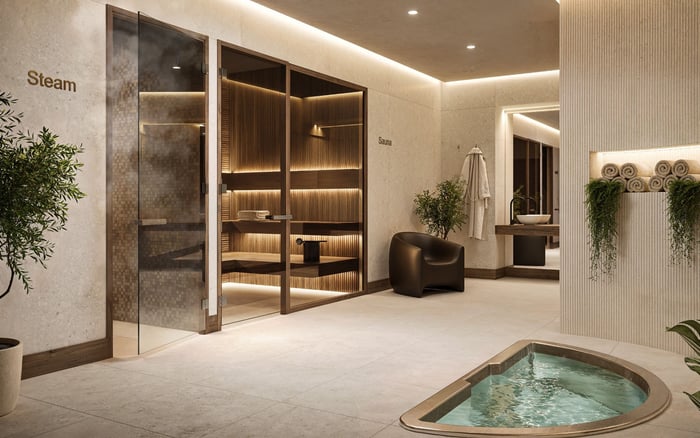
A buyer-focused due-diligence framework for evaluating wellness-led amenity design, access, staffing, fees, reserves, and long-term operations at Cipriani Residences Brickell and The Residences at 1428 Brickell.

Wellness-led residential design can influence daily life, but buyers should evaluate more than the visual presentation. The central questions concern who will operate each space, how residents and guests will gain access, what common charges will cover, and which services may be billed separately.
That framework is useful when comparing Cipriani Residences Brickell and The Residences at 1428 Brickell. Rather than assuming that a polished amenity concept guarantees a particular service level, purchasers should verify the commitments contained in the current project documents.
A hospitality-branded proposition invites questions about the relationship between brand expectations and condominium operations. Buyers should determine which service standards, staffing obligations, and management responsibilities are contractually defined, as well as what could change after turnover.
A design-led residential proposition requires comparable scrutiny. Purchasers should ask how the design vision will translate into daily management, maintenance, reservations, programming, and future capital planning.
In either framework, a name or concept can establish expectations, while governing documents define practical rights and responsibilities. The analysis should therefore focus on enforceable terms rather than marketing language alone.
For any proposed spa environment, buyers should ask whether the space is intended for self-directed resident use, staffed treatments, or both. Relevant details include operating schedules, appointment procedures, guest privileges, cancellation terms, private-use rules, and separate service charges.
A fitness program should be reviewed in the same way. Equipment, interiors, and layout are only part of the experience; hours, maintenance responsibility, class capacity, trainer access, private-instruction rules, and programming costs also affect usability.
Outdoor amenity areas warrant questions about reservations, household and guest access, private functions, music, weather closures, food service, and the allocation of space among different uses. Buyers should not infer operating rules from renderings.
An association-fee estimate is most useful when reviewed with the proposed operating budget. Purchasers and their advisers should identify the assumptions for payroll, management, security, housekeeping, utilities, insurance, amenity maintenance, and specialist contracts without presuming that every promoted service is included.
A written schedule should distinguish common services from separately billed offerings. Possible categories to clarify include treatments, personal training, private events, food and beverage, guest access, and reservations. The objective is to understand whether the funding model aligns with the buyer’s expected use.
Reserve assumptions also deserve attention. Buyers should ask how routine maintenance is separated from longer-term repair or replacement and how future capital needs for amenity spaces are addressed in the available documents.
For a branded residence, review may include applicable management and licensing terms, performance obligations, renewal provisions, staffing control, service protocols, and the circumstances under which an operator or brand relationship could change.
For a design-led residence, buyers should examine how management is selected, which services are required, who establishes access and reservation policies, and what authority a future board may have to modify programming.
Related Brickell comparisons may include House of Wellness Brickell and St. Regis® Residences Brickell. Each project should be assessed through its own current documents, budgets, agreements, rules, and schedules.
Before signing, purchasers and their advisers should request the latest available condominium documents, proposed operating budget, reserve assumptions, management agreement, applicable brand terms, amenity rules, and schedule of separately charged services. Any representation material to the purchase decision should be reconciled with those records.
The review should address booking priority, household and guest access, operating hours, staffing responsibility, service pricing, amenity capacity, and the authority to revise programs. Buyers should obtain project-specific legal and financial advice rather than relying on general assumptions.
The strongest wellness proposition is one in which design, service, governance, and funding support one another. Looking beyond the renderings allows a buyer to test whether the proposed operating structure fits the intended lifestyle.
How should buyers compare the two projects? Compare their current documents, operating assumptions, management structures, access rules, and schedules of included and separately billed services.
Should buyers assume every wellness service is included? No. Buyers should request written confirmation of what common charges cover and what may require an additional payment.
What should buyers ask about spa operations? Ask about staffing, treatment availability, booking procedures, guest privileges, private access, cancellation terms, and service charges.
What matters when reviewing a fitness space? Consider operating hours, equipment maintenance, class capacity, trainer policies, private instruction, and programming costs.
Why review the proposed operating budget? It helps buyers evaluate whether the stated assumptions account for staffing, management, maintenance, utilities, insurance, and other operating needs.
Why are reserve assumptions important? They help clarify how the available plan addresses longer-term repair and replacement separately from routine maintenance.
Which brand-related terms deserve attention? Review applicable management and licensing provisions, performance obligations, renewal terms, service controls, and operator-change conditions.
Can amenity rules change after turnover? The governing documents should explain who controls access, programming, reservations, and operating policies and how those rules may be revised.
How should guest access be evaluated? Buyers should verify eligibility, limits, fees, reservation priority, supervision requirements, and any restrictions stated in the project documents.
What is the key step before signing? Reconcile the amenity presentation with current budgets, agreements, condominium documents, access rules, and service schedules, with advice from appropriate professionals.
If you'd like a private walkthrough and a curated shortlist, connect with MILLION.
If branded residences are on your mind — as a home or as an allocation — we would be glad to share what we are seeing, privately.
Begin a quiet conversation