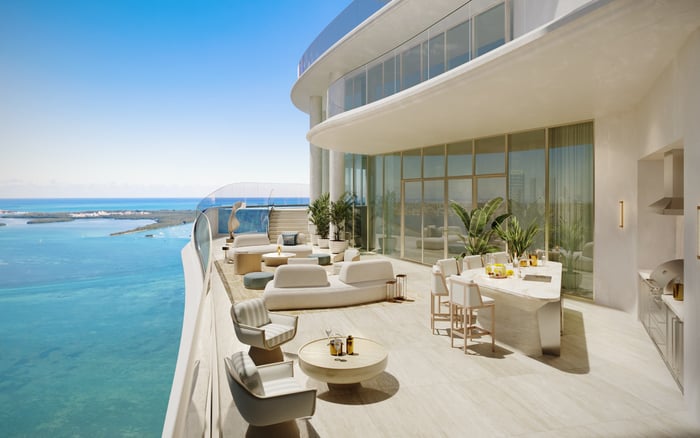
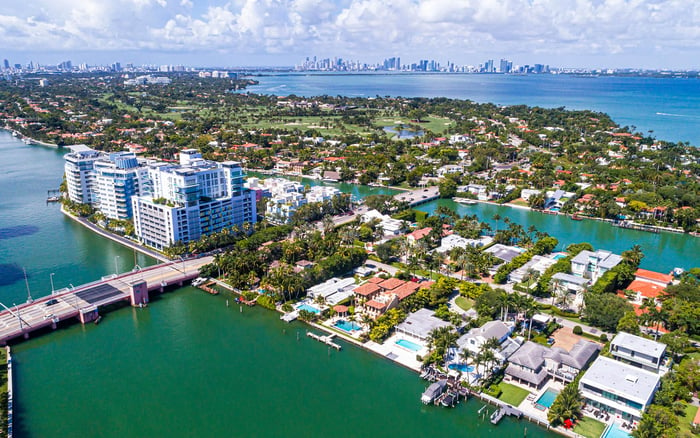
The right waterfront purchase balances the pleasure of the view with the discipline of the balance sheet. Compare recurring dues, optional services, reserve funding, insurance and assessment exposure before deciding between ocean, bay and skyline outlooks.

A direct ocean view makes the horizon a daily constant. A bay and skyline outlook offers a different pleasure: water framed by the city. For a South Florida luxury buyer, either can justify a deeply personal preference. Neither, on its own, establishes the better financial purchase.
The meaningful comparison begins beyond the asking price. Association dues, separately billed services, reserve funding, insurance and special assessments determine how comfortably a residence can be held. Lower monthly dues do not necessarily represent better value if important work remains unfunded. Higher dues are not automatically excessive if they support services the owner values and a credible capital plan.
Choose the view for the life it enables, then test the building for the obligations it creates.
Florida’s post-Surfside reforms introduced structural inspections, expert evaluations and reserve-funding requirements for covered condominium buildings. Both oceanfront and bayfront towers can fall within that framework. A skyline-facing residence does not escape building-wide obligations because its windows face away from the sea.
There is no sound basis here for assigning a standard percentage discount to bayfront dues, insurance or maintenance. Rising insurance premiums compound inspection, repair and reserve costs for coastal and high-rise associations. The useful comparison is between specific buildings, not view categories.
For a Miami Beach shortlist that includes 57 Ocean Miami Beach, evaluate the desired outlook and the association’s finances separately. First establish which residence delivers the experience you want. Then determine whether its documented ownership obligations fit your intended holding period and tolerance for unexpected expenditure.
Luxury condominium dues generally combine operating expenses, reserve contributions and shared services. Depending on the building, they can include common-property insurance, water, concierge, security, valet, pools, gyms, cleaning and sometimes basic cable or internet. Calling the entire amount maintenance obscures what you are purchasing.
Separate each candidate’s costs into four categories:
Recurring association dues, including operating costs and reserve contributions.
Separately billed services, distinguishing mandatory charges from elective spending.
Existing assessments and their remaining payment schedules.
Future capital exposure identified in studies, findings and funding plans.
For a Sunny Isles Beach search involving Jade Signature Sunny Isles Beach, this framework is more useful than judging a monthly figure in isolation. Request the actual budget and service schedule for the residence under consideration. Do not infer inclusions, opt-out rights or financial strength from a project’s positioning.
The appeal of a highly serviced residence lies not merely in the number of amenities, but in how well those services match what the owner will use. For a seasonal resident, that distinction deserves particular attention.
A service funded through common dues is different from an individually ordered extra. Declining to use a shared service does not necessarily remove its cost from the owner’s obligation. Nor should you assume that every service mentioned in marketing is included in the monthly assessment.
Ask for written confirmation of included services, separate charges and any genuine opt-out provisions. When considering Una Residences Brickell within a Brickell search, apply the same questions without presuming a particular service menu. The objective is a realistic personal budget, not an amenity count.
Structural Integrity Reserve Studies, or SIRS, recur every 10 years for covered associations and inform funding for major building components. Reserve planning addresses substantial systems, including roofs, plumbing, electrical infrastructure and fire safety. These are ownership obligations, not simply aesthetic upgrades.
Post-Surfside legislation restricted the ability to waive structural reserves, changing the economics of keeping dues low by postponing contributions. A reserve-funding requirement, however, is not the same as an obligation to hold every component’s full replacement cost in cash immediately.
Read the reserve balance alongside anticipated work, its timing and the funding schedule. Ask whether the adopted budget follows that schedule and how identified gaps will be addressed. A cash balance alone cannot answer those questions.
Examine non-SIRS reserves as well. Different, more flexible rules apply to those funds, so structural-reserve compliance does not establish that amenity replacements or interior renovations are adequately funded. Financial readiness should encompass both building integrity and the shared spaces that support the desired lifestyle.
Some South Florida condominium owners have faced special assessments exceeding $100,000 per unit for substantial repair and safety work. That calls for precise diligence, not a prediction that every waterfront purchase will carry similar exposure.
Review approved and proposed assessments separately. Establish the amount attributable to the residence, the payment schedule, the work being funded and how responsibility will be addressed in the purchase agreement. Ask counsel to clarify unresolved obligations before closing.
Financing deserves equal attention. HB 913 expanded reserve-funding options through loans, lines of credit or special assessments, subject to approval by a majority of total voting interests. Financing can spread costs over time; it does not eliminate the underlying expense.
Request borrowing terms and repayment schedules alongside insurance coverage, exclusions and deductibles. Have counsel confirm the current requirements applicable to the association rather than relying on historical deadlines or broad assumptions about coastal buildings.
An unobstructed outlook today is not the same as a legally protected view. Before paying a premium for that description, ask counsel to examine parcel-specific zoning, relevant easements and development restrictions. Clarify what, if anything, limits future obstruction.
For a comparison that includes Aria Reserve Miami, assess the particular residence’s outlook rather than assuming every orientation carries identical protection. Neither a project name nor an open panorama is evidence of permanence.
Keep this inquiry separate from reserve diligence. View protection concerns the durability of an attribute you value; reserve strength concerns the association’s ability to address capital needs. Neither substitutes for the other.
Before committing, assemble the adopted budget, SIRS, milestone findings, reserve balances and funding schedule, assessment details, insurance terms, borrowing documents and service-fee schedule. Compare each residence over the same intended ownership period, keeping known payments separate from uncertain future exposure.
The strongest case for either ocean or bay is not that one is inherently cheaper. It is that the chosen view delivers personal value while the building’s finances support an acceptable ownership commitment. The luxury is enjoying the outlook with a clear understanding of the obligations behind it.
Explore South Florida residences with MILLION and bring the same discernment to the ownership structure as to the view.
If branded residences are on your mind — as a home or as an allocation — we would be glad to share what we are seeing, privately.
Begin a quiet conversationNo reliable standard cost difference is established. Compare each building’s dues, insurance, reserves, services and assessment obligations rather than assuming a discount based on its view.
No. Both oceanfront and bayfront towers can fall within Florida’s structural-safety framework for covered condominium buildings.
Depending on the building, dues can fund operations, reserves, common-property insurance, utilities and shared services such as concierge, security and valet. Confirm the actual inclusions in the association’s documents.
Do not assume nonuse creates an opt-out right. Distinguish services funded through common dues from separately billed extras and obtain written confirmation of any opt-out provisions.
Structural Integrity Reserve Studies recur every 10 years for covered associations. They inform funding for major building components.
A reserve-funding requirement is not the same as an immediate cash requirement for every component’s full replacement cost. Examine balances together with work timing and the funding schedule.
No. Non-SIRS reserves follow different, more flexible rules, so amenity replacements and interior renovations require separate review.
Borrowing can spread repair costs over time but does not eliminate the underlying expense. Examine repayment obligations alongside any existing or proposed assessments.
Ask counsel to review parcel-specific zoning, easements and development restrictions. An unobstructed view today does not establish permanent legal protection.
Review the adopted budget, SIRS, milestone findings, reserve balances and funding schedule, approved or proposed assessments, insurance terms, association borrowing and service-fee schedule.