A discreet, buyer-oriented comparison of two very different North Miami and Aventura towers: One Park Tower by Turnberry inside SoLé Mia and Avenia Interiors by Fendi Casa. We focus on what sophisticated owners actually feel day to day: arrival sequences, access control, concierge bandwidth, and how rental rules shape building rhythm.
In South Florida’s new-development market, luxury is no longer measured only by ceiling height or a signature finish package. For many buyers, the day-to-day reality is defined by what happens before you reach your front door: how the car is received, how guests are processed, how packages are handled, and how consistently access is enforced.
That is why a security-and-concierge comparison of One Park Tower by Turnberry and Avenia Interiors by Fendi Casa is so useful. Each reflects a distinct operating philosophy.
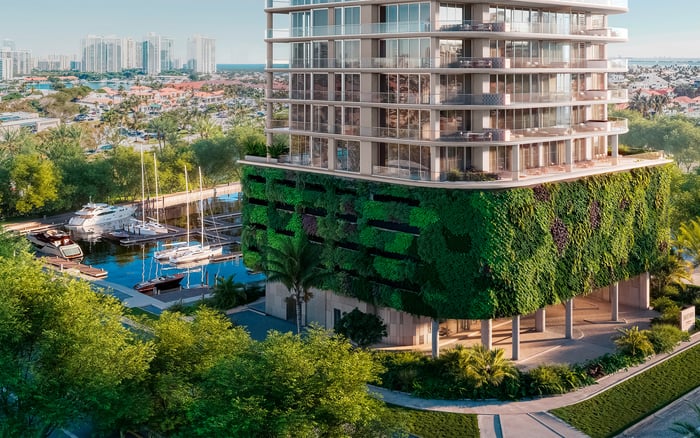
One Park Tower by Turnberry is planned as a 33-story luxury condominium tower within the 184-acre SoLé Mia master-planned community in North Miami, marketed at roughly 292 residences across one- to three-bedroom layouts plus penthouses. Avenia, by contrast, is a boutique waterfront condominium in Aventura: an 18-story building with 22 residences, marketed as two residences per floor with a brand-led interior identity.
Both can feel high-touch. They simply deliver it in different ways.
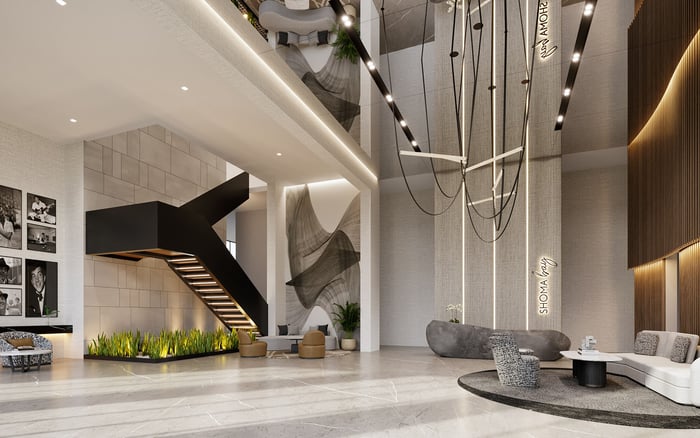
One Park Tower’s service model is built for volume without giving up discretion. It is marketed with a private residential porte-cochère and a private lobby for residents-an immediate signal that arrival is treated as an owner experience rather than a shared, hotel-like threshold.
It is also marketed with 24-hour security and controlled-access entry. In practice, the value is not the phrase; it is the implication: multiple checkpoints and a building culture that prioritizes separation between residents, guests, vendors, and deliveries. Sales materials emphasize layered access control, which is where large-format towers either feel effortless-or start to feel chaotic. When entry and circulation are properly planned, the building can stay calm even when the surrounding community is active.
A defining difference is the dedicated concierge platform. The building promotes “One Park Concierge,” positioned around resident requests rather than incidental front-desk tasks. The concierge brand states it operates 24/7/365 and accepts requests by phone, email, and in person, with a published service menu that includes travel and hotel booking assistance. For owners who keep irregular hours, travel frequently, or use the residence as a second home, that always-on posture can be as meaningful as a private elevator.
If you are also comparing other new-build service ecosystems, it helps to recognize how scale changes expectations. In larger buildings, residents typically want predictable systems: controlled entry, consistent staffing coverage, and a clear guest process. In boutique towers, residents often want recognition. One Park Tower’s promise is that a structured system can still feel personal.
As you compare North Miami inventory, you may also look at Solana Bay North Miami to understand how neighborhood-adjacent towers handle arrival, staffing, and the line between resident life and the surrounding district.
Avenia’s security and concierge narrative begins with scarcity. With 22 residences across 18 stories, marketed as two residences per floor, it is inherently low-density. That is not just a luxury statistic-it can mean fewer daily touchpoints: fewer deliveries, fewer visitors, and fewer moments when the building feels busy.
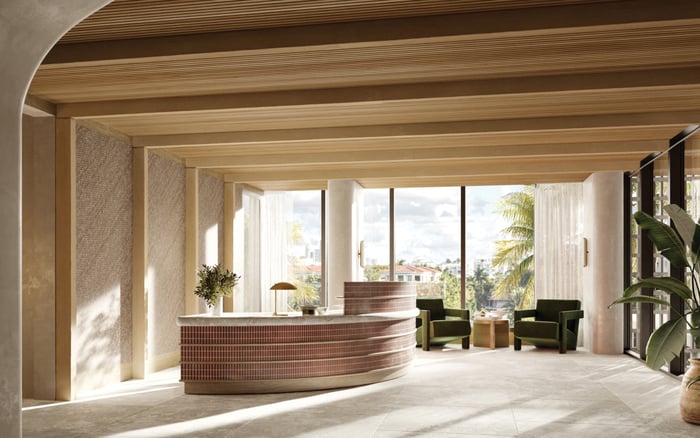
Avenia is marketed with 24/7 security and valet service, along with a private reception offering concierge services. The operational cue is clear: staffing is deliberate and concentrated where residents feel it most-curbside, reception, and vertical circulation.
Privacy is further reinforced through private elevator access features marketed around a private elevator lobby or entry experience per residence. Buyers should confirm the specifics of access and programming during contract review, but the intent is straightforward: less shared hallway exposure and a more controlled transition from public to private.
Avenia’s waterfront component introduces an additional access-control layer. The project advertises a private marina with yacht slips, effectively creating a second front door. Marina access can be a lifestyle differentiator, but it also raises the bar for credentialing, guest management, and physical security beyond the lobby. In a boutique building, that can be an advantage: fewer residents means fewer variables, and policies can be applied with consistency.
For buyers drawn to branded interiors and a deliberately designed sense of arrival, Aventura’s boutique set functions as its own micro-market. To contextualize where Avenia sits, compare it to larger, amenity-dense experiences nearby like Turnberry Ocean Club Sunny Isles, where staffing and security must support a broader resident-and-guest ecosystem.
Many buyers treat rental policy as a financial footnote. Operationally, it is one of the most consequential inputs to concierge performance and security posture.
Avenia is marketed with restrictive rental rules: two leases per year with a minimum of six months. That framework typically supports a quieter building rhythm. Fewer short stays usually mean fewer rotating visitors, fewer key handoffs, and fewer unfamiliar faces moving through the property. It can also shift concierge work toward lifestyle management for known residents, rather than continuous guest processing.
One Park Tower’s surrounding rental environment is marketed with a 30-day minimum, implying greater flexibility. Flexibility can broaden the owner profile: executives in town seasonally, families testing the neighborhood before buying, or owners who value optionality. The trade-off is operational load. More turnover demands tighter credentialing, clearer guest procedures, and a concierge presence that can sustain frequent check-ins, questions, and coordination.
Neither policy is inherently better. They simply optimize for different lifestyles. If you want a residence that behaves like a private club, restrictive leasing supports that outcome. If you want a residence that can accommodate varied use patterns, flexibility may matter more-but only if the building’s systems are designed to keep the experience discreet.
For buyers weighing rental posture elsewhere, compare how buildings positioned for owner-occupancy feel against those with broader use cases, such as Aria Reserve Miami in a high-energy, amenity-driven district.
Security is often discussed as if it lives only at the front desk. In reality, it also depends on how amenities are accessed and supervised.
At One Park Tower, the amenity program is positioned as resort-style and includes the Crystal Lagoon beach club concept within SoLé Mia. That kind of amenity can anchor lifestyle, but it also means access management extends beyond the tower itself-especially when amenities operate within a larger master-planned community. Residents will care about how credentials work, how guests are admitted, and how the building maintains a residential feel during peak periods.
At Avenia, the marina changes the geometry. The building’s security strategy must account for water-side arrivals, dock access, and the relationship between marina users and residential circulation. It is a different kind of discretion: less about crowd management, more about controlled permeability.
In both cases, sophisticated buyers should watch where the building draws its boundaries. The best buildings feel welcoming to invited guests-and effectively closed to everyone else.
On a tour, the most revealing details are often the most ordinary.
In a larger tower like One Park Tower, track how many steps exist between curb and elevator. A private residential porte-cochère and private lobby suggest separation from non-resident movement, but the real test is whether that separation holds when multiple cars arrive at once.
In a boutique building like Avenia, the question is not capacity-it is discipline. A private reception with concierge services and valet matters most when the team is empowered to enforce access. Private elevator access features can deepen the sense of privacy, especially for owners who prefer minimal shared circulation.
In both buildings, ask how visitor flow works for dinner guests, deliveries, and household help. The goal is not to make life difficult; it is to make it predictable.
For those also considering ultra-boutique living in other submarkets, it can be instructive to compare the two-per-floor sensibility to the sculpted privacy of Arte Surfside, where the experience is intentionally quiet and highly curated.
One Park Tower is positioned at a lower entry point, commonly cited as under $1 million in marketing, which naturally widens the buyer funnel. With that comes a different operational mandate. The building must deliver a premium experience at scale-staffing, access control, and concierge responsiveness that remain consistent across a larger resident population.
For buyers, this is less about expensive versus less expensive and more about the kind of community you want. Boutique towers can feel like private clubs. Larger towers can feel like full-service resorts, especially when tied to a master-planned environment.
One Park Tower broke ground in early 2024, placing it in an in-progress phase where staffing, security routines, and concierge cadence are often refined as delivery approaches. Buyers who purchase in advance should treat the published service model as a target operating philosophy, then evaluate how it is translated into building management, training, and vendor relationships.
Avenia’s boutique positioning suggests a tighter operating footprint from day one, but in any new building, the early months are when access rules are tested and refined. The best owners approach this period with clarity: insist on consistent enforcement, especially around guest handling and deliveries.
Choose One Park Tower by Turnberry if you want a master-planned, resort-adjacent lifestyle with layered access control, a private residential arrival sequence, and a dedicated concierge platform designed to handle daily logistics and travel requests around the clock.
Choose Avenia Interiors by Fendi Casa if you want boutique waterfront living in Aventura with two-per-floor privacy cues, a curated reception-and-valet model, and the quieter cadence that often comes with restrictive leasing.
Both can deliver discretion. The decision is whether you want discretion through systems and scale, or discretion through scarcity and control.
Is One Park Tower by Turnberry a large building? Yes. It is planned as a 33-story tower and marketed at roughly 292 residences.
Where is One Park Tower located? It is planned within the SoLé Mia master-planned community in North Miami.
What concierge model is associated with One Park Tower? The building promotes One Park Concierge, which states it operates 24/7/365.
Does One Park Concierge help with travel planning? Yes. Its published services include travel and hotel booking assistance.
How many residences are planned at Avenia? Avenia is planned with 22 total residences, emphasizing a boutique scale.
What is Avenia’s privacy profile? It is marketed as two residences per floor with private elevator access features.
Does Avenia have a marina component? Yes. It advertises a private marina with yacht slips.
How do rental rules differ between the two? Avenia is marketed with stricter rules, while the SoLé Mia rental environment is marketed with a 30-day minimum.
Which tower is better for a quieter building rhythm? Avenia’s restrictive leasing and low unit count generally support a calmer cadence.
Which is more aligned with resort-style amenities? One Park Tower’s amenity positioning includes a Crystal Lagoon beach-club concept within SoLé Mia.
When you're ready to tour or underwrite the options, connect with MILLION Luxury.
If branded residences are on your mind — as a home or as an allocation — we would be glad to share what we are seeing, privately.
Begin a quiet conversation